From time to time, you hear some farmers comment that sheep have a low water intake requirement, with a follow-up remark that their sheep are performing OK without access to a fresh water source. This statement may be somewhat plausible at certain times – for example, dry ewes during the winter months or during periods of regular rainfall and a high moisture content in grass. But in general, performance will be affected by restricted water intake.
Current weather conditions are typical of such cases, with a reducing dry matter content in grass and rising temperatures increasing the water intake requirement of ewes at a critical stage of lactation. Failing to provide access to water can affect potential milk yield and in turn lamb performance. It is also critical to provide lambs consuming creep feed with access to water. Some larger troughs in mixed grazing systems are too high for sheep to drink from and in these cases it is important to provide an alternative water source. Some farmers put a T joint in the water pipe supplying the main trough and use the outlay to feed a smaller trough while another option is to simply fill a water tub from the main trough and protect it from grazing cattle using a single strand of wire.
ADVERTISEMENT
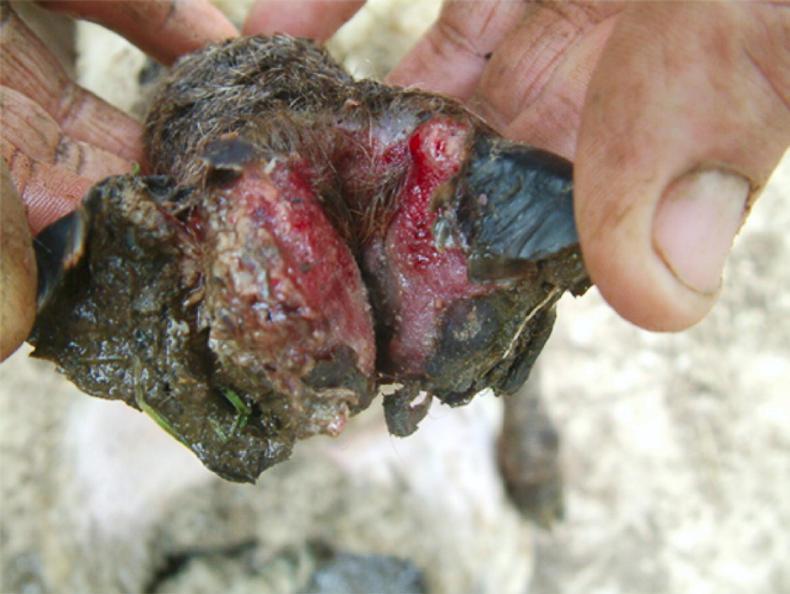
Scald in lambs:
Many farmers are reporting a greater incidence of scald in lambs with higher covers and hard ground contributing to issues. Once established, scald can spread quickly through lambs and if untreated can open the door for secondary bacterial infection, progressing to footrot. The most straightforward treatment option is footbathing, with the three most commonly used products being copper sulphate, formalin and zinc sulphate. Dilution rates for zinc and copper sulphate are 10% where treating animals. The dilution rate for formalin is 3% and it is worth remembering that while it is relatively cheap to purchase and is effective, it is painful on young lambs and not recommended for frequent use. It is also important to take into account operator health and safety as formalin is a carcinogen that should only be used with the correct protective clothing and in areas of good ventilation. Aerosol sprays can also be used to good effect for spot treatment but are labour-intensive and expensive for using where large numbers are concerned.
This content is available to digital subscribers and loyalty code users only. Sign in to your account, use the code or subscribe to get unlimited access.
The reader loyalty code gives you full access to the site from when you enter it until the following Wednesday at 9pm. Find your unique code on the back page of Irish Country Living every week.
CODE ACCEPTED
You have full access to the site until next Wednesday at 9pm.
CODE NOT VALID
Please try again or contact support.
Water intake:
From time to time, you hear some farmers comment that sheep have a low water intake requirement, with a follow-up remark that their sheep are performing OK without access to a fresh water source. This statement may be somewhat plausible at certain times – for example, dry ewes during the winter months or during periods of regular rainfall and a high moisture content in grass. But in general, performance will be affected by restricted water intake.
Current weather conditions are typical of such cases, with a reducing dry matter content in grass and rising temperatures increasing the water intake requirement of ewes at a critical stage of lactation. Failing to provide access to water can affect potential milk yield and in turn lamb performance. It is also critical to provide lambs consuming creep feed with access to water. Some larger troughs in mixed grazing systems are too high for sheep to drink from and in these cases it is important to provide an alternative water source. Some farmers put a T joint in the water pipe supplying the main trough and use the outlay to feed a smaller trough while another option is to simply fill a water tub from the main trough and protect it from grazing cattle using a single strand of wire.
Scald in lambs:
Many farmers are reporting a greater incidence of scald in lambs with higher covers and hard ground contributing to issues. Once established, scald can spread quickly through lambs and if untreated can open the door for secondary bacterial infection, progressing to footrot. The most straightforward treatment option is footbathing, with the three most commonly used products being copper sulphate, formalin and zinc sulphate. Dilution rates for zinc and copper sulphate are 10% where treating animals. The dilution rate for formalin is 3% and it is worth remembering that while it is relatively cheap to purchase and is effective, it is painful on young lambs and not recommended for frequent use. It is also important to take into account operator health and safety as formalin is a carcinogen that should only be used with the correct protective clothing and in areas of good ventilation. Aerosol sprays can also be used to good effect for spot treatment but are labour-intensive and expensive for using where large numbers are concerned.
If you would like to speak to a member of our team, please call us on 01-4199525.
Link sent to your email address
We have sent an email to your address. Please click on the link in this email to reset your password. If you can't find it in your inbox, please check your spam folder. If you can't find the email, please call us on 01-4199525.
ENTER YOUR LOYALTY CODE:
The reader loyalty code gives you full access to the site from when you enter it until the following Wednesday at 9pm. Find your unique code on the back page of Irish Country Living every week.







SHARING OPTIONS