Sheep have been identified as one of the main tools to maintain an upland landscape while producing a unique protein source on land unsuitable for other purposes.
Research conducted by the College of Agriculture, Food and Rural Enterprise (CAFRE) has examined ways to address low productivity on hill farms and what effect this has on the environment.
CAFRE researcher Eileen McCloskey first conducted a crossbreeding study involved Scottish Blackface ewes crossed with Swaledales, Cheviots, Llyens and Texels.
As expected, it was found the crossbred ewes produced heavier lambs but this was on marginal areas rather than hills.
McCloskey said: “We can improve productivity on hill farms with different breeds but does this have an impact on the environment and managing these uplands?”
An upland study examined how Texel-Blackface crossbred ewes coped against their pure Blackfaced counterparts on a 163ha hill.
The crossbred ewes stayed predominantly on the lower parts of the hill covering just 26ha, the equivalent of 16% of the total area.
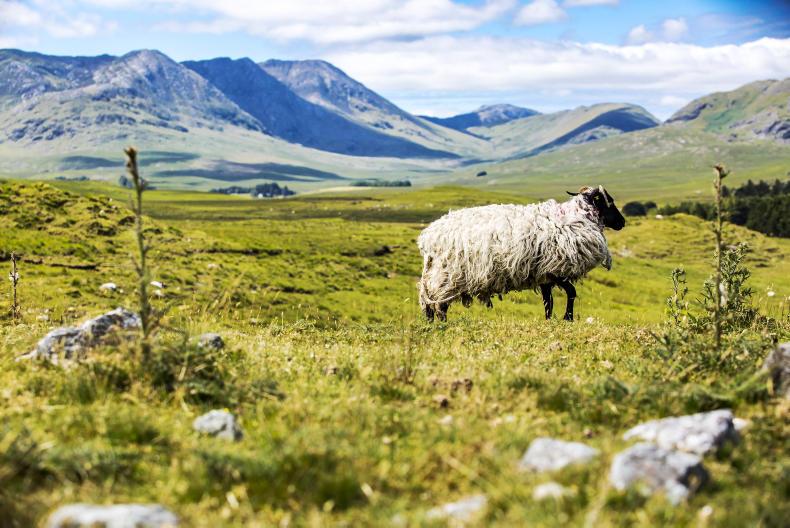
The Blackface ewes covered 85ha, over half the total area, and spent more time in upland habitats such as blanket bogs and heathland.
Beneficial
McCloskey told the Irish Farmers Journal: “Some people may think that’s negative but it’s extremely beneficial because to manage those habitats we need sheep to graze them.
"Those habitats aren’t natural; they’re semi-natural, manmade as such, and managed through livestock.”
McCloskey said there was potential for traditional upland breeds to manage hill environments better than crossbred ewes.
“We’re in a situation that biodiversity is becoming more important.
"Hill farmers have always known it was important. Good biodiversity and good management of hills is mutually beneficial to them because you can better graze livestock.”
Results-based
On the prospect of moving to results-based environmental schemes, Niall Ryan of the Department of Agriculture said the payment would have to be for the product, not the action.
For example, Ryan said farmers could not be paid to graze the hills.
That is considered managing the commonage using sheep as a tool. Instead, he said a model like the Burren LIFE scheme was needed.
In this, farmers were paid for the species richness of their pastures that were a result of actions taken.
The role of hill lamb for processors
Hill lamb has a major role to play in ensuring a year-round supply of lamb and producing a suitable light carcase for niche markets, according to Irish Country Meats (ICM) group procurement manager James Smith.
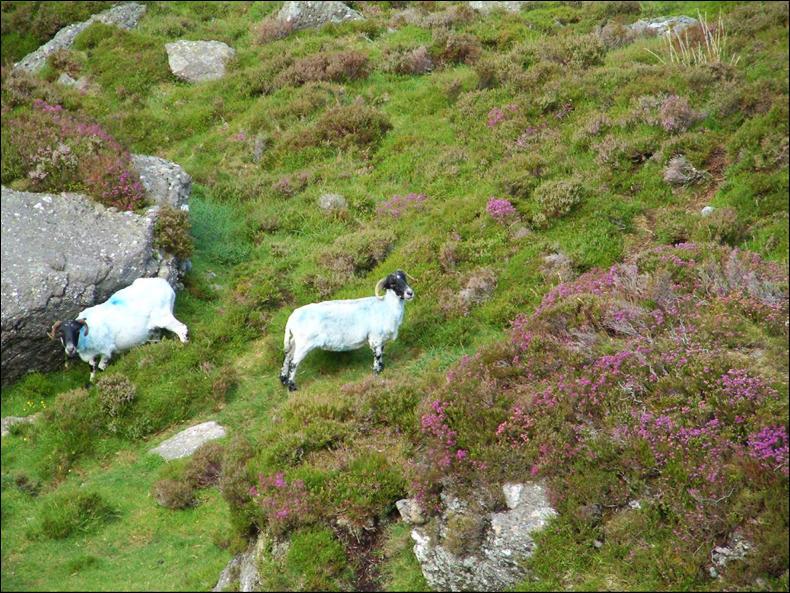
Blackfaced ewes grazing heather in the Wicklow uplands.
Smith said there needed to be a continual flow of lambs: “It is a worry when you’re out in these markets and you’re speaking to various buyers.
"They are interested in a 52-week supply, not 40 weeks.”
He said to ensure this supply, hill lambs needed to be bred to come into high enough weights.
“These guys [store feeders] will need a carcase to die at 21kg-22kg to make it work.
"The store feeder makes it available to us at a crucial time when we are very short of sheep from 1 February onwards,” Smith explained.
The sourcing of lamb next spring is set to be challenging. There will be strong demand for a month prior to Easter Sunday, which falls on 12 April.
This will be closely followed by the month-long festival of Ramadan on 23 April.
While there were a lot of influences as to what price will turn out to be for feeders, Smith said the hill sector should benefit from a strong store lamb price.
Light lambs
The traditional light lamb markets of Portugal, Spain and Italy have proven difficult in recent years as they are more self-sufficient.
Smith said ICM had some seasonal jobs with hill lamb, particularly in Sweden: “On a weekly basis, we are exporting 100 to 300 lambs about 40 weeks of the year.
“It’s an ethical consumer we’re aiming for, so there has been a small growth area sourcing lamb 17kg, 18kg [carcase weight] plus.”
Comment: farming for
nature needs an incentive
The challenges for farming the uplands of Ireland are numerous are well documented.
Fewer active farmers on the hills lowers output, leading to lower margins and there is the landscape itself.
However, an increased awareness of the public goods delivered by these farmers presents opportunities to reward those farming nature as well as livestock.
At the forum, a point repeatedly made was that on hill farms, what is perfect for biodiversity is often deemed as unsuitable for receiving payments.
Farmers improving their output through crossbreeding and focusing on their less-marginal land could result in hill abandonment.
Sticking to traditional breeds and increasing time spent grazing the hills will hit profitability for what is currently little or no reward.
As many speakers said, farmers will have to be incentivised to farm for nature but the payment must acknowledge the sacrifices they will make to do so.
Sheep have been identified as one of the main tools to maintain an upland landscape while producing a unique protein source on land unsuitable for other purposes.
Research conducted by the College of Agriculture, Food and Rural Enterprise (CAFRE) has examined ways to address low productivity on hill farms and what effect this has on the environment.
CAFRE researcher Eileen McCloskey first conducted a crossbreeding study involved Scottish Blackface ewes crossed with Swaledales, Cheviots, Llyens and Texels.
As expected, it was found the crossbred ewes produced heavier lambs but this was on marginal areas rather than hills.
McCloskey said: “We can improve productivity on hill farms with different breeds but does this have an impact on the environment and managing these uplands?”
An upland study examined how Texel-Blackface crossbred ewes coped against their pure Blackfaced counterparts on a 163ha hill.
The crossbred ewes stayed predominantly on the lower parts of the hill covering just 26ha, the equivalent of 16% of the total area.
The Blackface ewes covered 85ha, over half the total area, and spent more time in upland habitats such as blanket bogs and heathland.
Beneficial
McCloskey told the Irish Farmers Journal: “Some people may think that’s negative but it’s extremely beneficial because to manage those habitats we need sheep to graze them.
"Those habitats aren’t natural; they’re semi-natural, manmade as such, and managed through livestock.”
McCloskey said there was potential for traditional upland breeds to manage hill environments better than crossbred ewes.
“We’re in a situation that biodiversity is becoming more important.
"Hill farmers have always known it was important. Good biodiversity and good management of hills is mutually beneficial to them because you can better graze livestock.”
Results-based
On the prospect of moving to results-based environmental schemes, Niall Ryan of the Department of Agriculture said the payment would have to be for the product, not the action.
For example, Ryan said farmers could not be paid to graze the hills.
That is considered managing the commonage using sheep as a tool. Instead, he said a model like the Burren LIFE scheme was needed.
In this, farmers were paid for the species richness of their pastures that were a result of actions taken.
The role of hill lamb for processors
Hill lamb has a major role to play in ensuring a year-round supply of lamb and producing a suitable light carcase for niche markets, according to Irish Country Meats (ICM) group procurement manager James Smith.
Blackfaced ewes grazing heather in the Wicklow uplands.
Smith said there needed to be a continual flow of lambs: “It is a worry when you’re out in these markets and you’re speaking to various buyers.
"They are interested in a 52-week supply, not 40 weeks.”
He said to ensure this supply, hill lambs needed to be bred to come into high enough weights.
“These guys [store feeders] will need a carcase to die at 21kg-22kg to make it work.
"The store feeder makes it available to us at a crucial time when we are very short of sheep from 1 February onwards,” Smith explained.
The sourcing of lamb next spring is set to be challenging. There will be strong demand for a month prior to Easter Sunday, which falls on 12 April.
This will be closely followed by the month-long festival of Ramadan on 23 April.
While there were a lot of influences as to what price will turn out to be for feeders, Smith said the hill sector should benefit from a strong store lamb price.
Light lambs
The traditional light lamb markets of Portugal, Spain and Italy have proven difficult in recent years as they are more self-sufficient.
Smith said ICM had some seasonal jobs with hill lamb, particularly in Sweden: “On a weekly basis, we are exporting 100 to 300 lambs about 40 weeks of the year.
“It’s an ethical consumer we’re aiming for, so there has been a small growth area sourcing lamb 17kg, 18kg [carcase weight] plus.”
Comment: farming for
nature needs an incentive
The challenges for farming the uplands of Ireland are numerous are well documented.
Fewer active farmers on the hills lowers output, leading to lower margins and there is the landscape itself.
However, an increased awareness of the public goods delivered by these farmers presents opportunities to reward those farming nature as well as livestock.
At the forum, a point repeatedly made was that on hill farms, what is perfect for biodiversity is often deemed as unsuitable for receiving payments.
Farmers improving their output through crossbreeding and focusing on their less-marginal land could result in hill abandonment.
Sticking to traditional breeds and increasing time spent grazing the hills will hit profitability for what is currently little or no reward.
As many speakers said, farmers will have to be incentivised to farm for nature but the payment must acknowledge the sacrifices they will make to do so.






SHARING OPTIONS