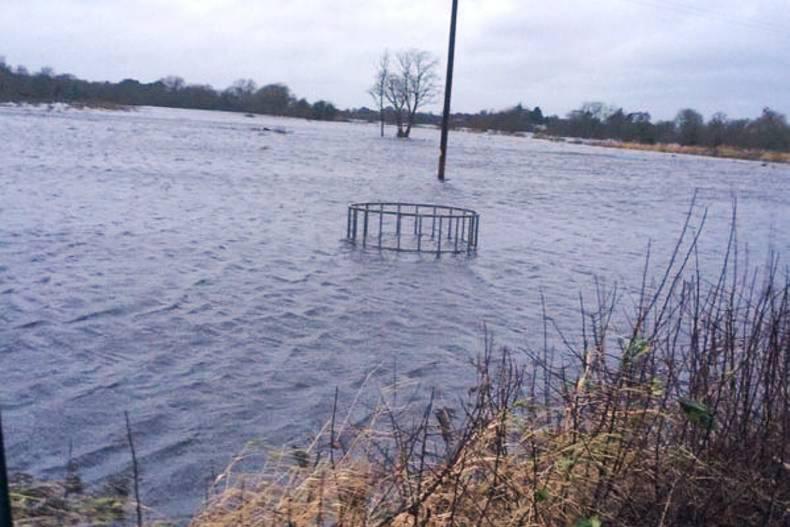
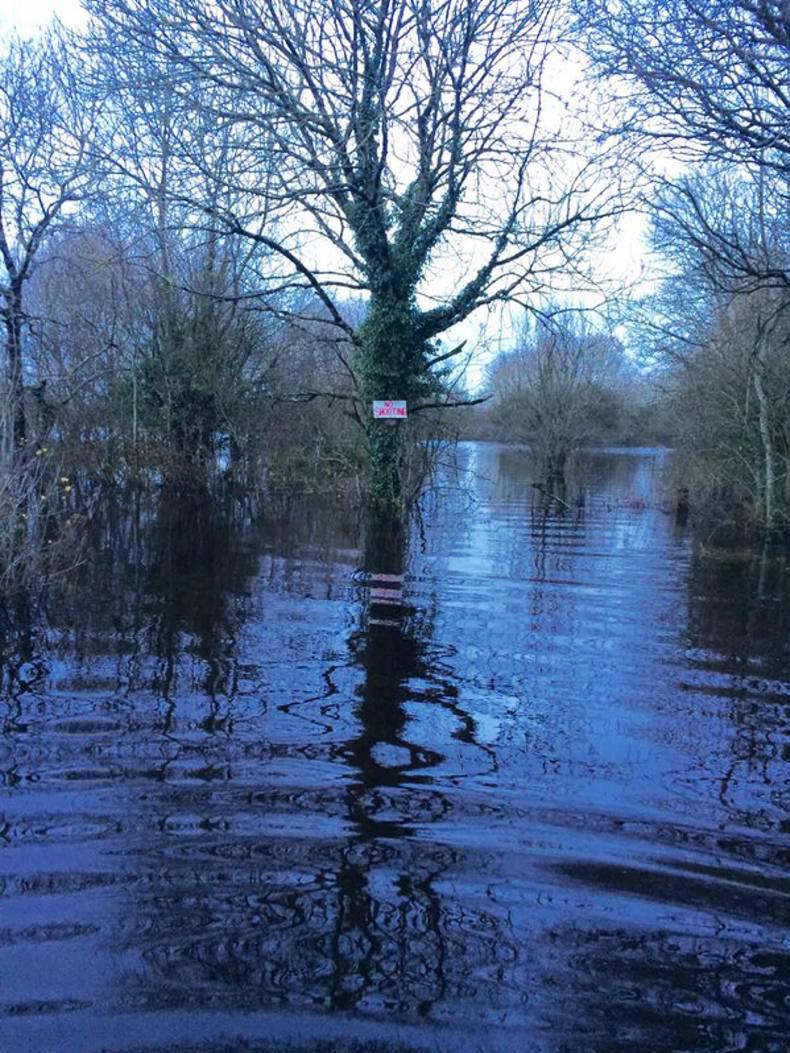
Colin (38) is a beef suckler farmer with approximately 100 acres. Between 60 and 70 acres of this land mass is currently under water, with about 30 acres still dry due to its position on higher ground. This is where Colin has moved his 30 cows which are due to calve at the end of January 2016.
The cows are all pure-bred Angus and Colin counts himself lucky that he has somewhere to put them while the rest of his land is submerged. "There are some people who are not so lucky," he told the Irish Farmers Journal. "They have to move their cattle to another farm."
He says the flooding on his land is the worst he has ever seen, although he has heard some locals saying it is not as bad as 2009, when the Shannon last flooded. "I've heard some people say it's not as bad as 2009, but it's certainly the worst I've ever seen. But then what do you expect? We've just had around six weeks of non-stop rain."
Colin's land began flooding with the onset of Storm Clodagh in late November. This was soon followed by the destructive Storm Desmond, which led to the implementation of a red rainfall warning for the west and midlands. Then came Storm Eva, and now Frank.
"The storms have come in quick succession," he said. "My land has a river running through it, the River Boor, which leads into the Shannon. This started rising on 17 November and it has not stopped rising since. And, of course, the water has to go somewhere so it ends up on the land. Every time the rain stops I try to get down and clean the drains. It's the only useful thing I can do now to try and alleviate the situation."
We have to use the tractor for everything, to do the groceries, go visit people, everything. I don't know how people without tractors are coping, or how they coped over the Christmas
Colin says the roads around his land are impassable and the only way to get around is to use a tractor. "We have to use the tractor for everything, to do the groceries, go visit people, everything. I don't know how people without tractors are coping, or how they coped over the Christmas."

Colin Duffy's land submerged in water
His three-and-a-half-year-old son wants to go and visit the "big floods", but Colin says he'll be keeping him well away. "It's very dangerous at the moment out there, for people and livestock. I'd agree with what Teresa Mannion said on RTÉ News the other night, 'don't make unnecessary journeys', it's just not worth it."
Latest update on flooding
In its latest update on flooding conditions across the country, issued on Tuesday 29 December, the Office of Public Works (OPW) said the Shannon remains in a "severe flooding situation and it is likely that ongoing flood defence efforts (for example, pumping) will have to continue for some time". It also said it is expected there will be surface water flooding on the road network throughout the country on Wednesday morning.
Following more heavy rain overnight, water levels in the upper catchment of the Shannon, Carrick-on-Shannon, have risen by 1cm in the past 48 hours. This is after a fall in the upper catchment in the previous 48 hours.
In the mid-catchment area, the Athlone area, levels rose by approximately 4cm and they are currently 3cm above their peak of 16 December.
In the lower catchment, Lough Derg, levels rose by up to 2cm and Limerick city by approximately 6cm.
The Department of Agriculture announced on Tuesday that 80 farmers are receiving emergency fodder supplies. Minister for Agriculture Simon Coveney said: "The assistance we are providing is modest, but important for those hardest hit by these floods. I am particularly anxious to ensure that we avoid animal welfare problems arising from loss of fodder in the floods.“
The minister also confirmed that flexibilities introduced to facilitate the removal of water from flooded slurry tanks and the movement of animals for welfare reasons in areas worst affected by the flooding remain in place.
Read more
What to do with silage in flooding
Substitutions for silage in flooding
Operating machinery in flooded conditions
Full coverage: Storm Frank
Colin (38) is a beef suckler farmer with approximately 100 acres. Between 60 and 70 acres of this land mass is currently under water, with about 30 acres still dry due to its position on higher ground. This is where Colin has moved his 30 cows which are due to calve at the end of January 2016.
The cows are all pure-bred Angus and Colin counts himself lucky that he has somewhere to put them while the rest of his land is submerged. "There are some people who are not so lucky," he told the Irish Farmers Journal. "They have to move their cattle to another farm."
He says the flooding on his land is the worst he has ever seen, although he has heard some locals saying it is not as bad as 2009, when the Shannon last flooded. "I've heard some people say it's not as bad as 2009, but it's certainly the worst I've ever seen. But then what do you expect? We've just had around six weeks of non-stop rain."
Colin's land began flooding with the onset of Storm Clodagh in late November. This was soon followed by the destructive Storm Desmond, which led to the implementation of a red rainfall warning for the west and midlands. Then came Storm Eva, and now Frank.
"The storms have come in quick succession," he said. "My land has a river running through it, the River Boor, which leads into the Shannon. This started rising on 17 November and it has not stopped rising since. And, of course, the water has to go somewhere so it ends up on the land. Every time the rain stops I try to get down and clean the drains. It's the only useful thing I can do now to try and alleviate the situation."
We have to use the tractor for everything, to do the groceries, go visit people, everything. I don't know how people without tractors are coping, or how they coped over the Christmas
Colin says the roads around his land are impassable and the only way to get around is to use a tractor. "We have to use the tractor for everything, to do the groceries, go visit people, everything. I don't know how people without tractors are coping, or how they coped over the Christmas."
Colin Duffy's land submerged in water
His three-and-a-half-year-old son wants to go and visit the "big floods", but Colin says he'll be keeping him well away. "It's very dangerous at the moment out there, for people and livestock. I'd agree with what Teresa Mannion said on RTÉ News the other night, 'don't make unnecessary journeys', it's just not worth it."
Latest update on flooding
In its latest update on flooding conditions across the country, issued on Tuesday 29 December, the Office of Public Works (OPW) said the Shannon remains in a "severe flooding situation and it is likely that ongoing flood defence efforts (for example, pumping) will have to continue for some time". It also said it is expected there will be surface water flooding on the road network throughout the country on Wednesday morning.
Following more heavy rain overnight, water levels in the upper catchment of the Shannon, Carrick-on-Shannon, have risen by 1cm in the past 48 hours. This is after a fall in the upper catchment in the previous 48 hours.
In the mid-catchment area, the Athlone area, levels rose by approximately 4cm and they are currently 3cm above their peak of 16 December.
In the lower catchment, Lough Derg, levels rose by up to 2cm and Limerick city by approximately 6cm.
The Department of Agriculture announced on Tuesday that 80 farmers are receiving emergency fodder supplies. Minister for Agriculture Simon Coveney said: "The assistance we are providing is modest, but important for those hardest hit by these floods. I am particularly anxious to ensure that we avoid animal welfare problems arising from loss of fodder in the floods.“
The minister also confirmed that flexibilities introduced to facilitate the removal of water from flooded slurry tanks and the movement of animals for welfare reasons in areas worst affected by the flooding remain in place.
Read more
What to do with silage in flooding
Substitutions for silage in flooding
Operating machinery in flooded conditions
Full coverage: Storm Frank






SHARING OPTIONS