Conor Callan
Ardee, Co Louth
The sun was shining in Louth over the weekend, allowing Conor to get back out in the fields to get fertiliser spread and winter crops sprayed. Land is still wet though and Conor says there is still a wet spot in nearly every tramline.
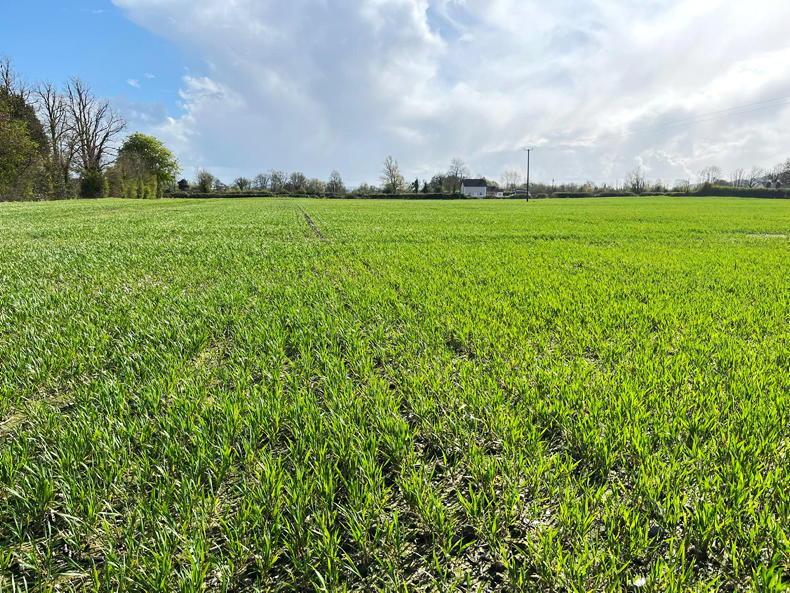
He applied three bags/ac of 10-5-25+S to the KWS Tardis winter barley and Graham winter wheat last week. The crops had not quite greened up yet at the weekend, but Conor was hoping that the warm weather combined with the nitrogen will get the crops going this week.
The winter barley has received a herbicide and some of the winter wheat received a pre-emergence herbicide in the autumn. The rest of the wheat is on wetter land so Conor is letting the soil soak before he goes in with a herbicide, especially with some water lying in the tramlines after spreading fertiliser.
Slurry was applied to the forage rye recently. Conor says the farm was running tight on slurry storage and they were running out of dry fields to spread it on. No tracks were left in the crop, but some of the plants in the wheel marking have died off due to the wet soils and cold nights soon after the slurry was applied.
Conor adds that it’s not the end of the world. The rye is primarily a cover crop and the main crop will be the maize that goes in once it’s harvested.
The only spring crop to be planted is maize which is still a while away. Conor sprayed off the stubble last week and will aim to get dung spread and to start the ploughing in the next week. He will be aiming to get as much work as possible done, including planting most of the maize before the forage rye is harvested, as the pressure will then be on to get the remaining maize planted in this ground as soon as possible. First-cut silage will be following close behind this too.
Nicholas Ryan
Clonmel, Co Tipperary
The improved weather has led to a busy time for Nicholas, as the spring workload increases. Certain spots in fields are still a bit wet, so Nicholas has tried to drive through them when the spreader and sprayer are nearly empty to lighten the load as much as possible and reduce the amount of tracks made in the fields.
The winter oilseed rape is just beginning to flower. Fertiliser has been applied and it also received a spray of Caryx, Olbran and Bortrac. The crop has received 310kg/ha of 10-10-20, 185kg/ha of SulCAN and 250kg/ha of ASN so far. The winter rye received a herbicide spray recently and is up to date with fertiliser. The herbicide spray included Monolith at 200g/ha, Galaxy at 1l/ha, and BioPower at 1l/ha. It is growing strongly and will receive a growth regulator and fungicide soon.
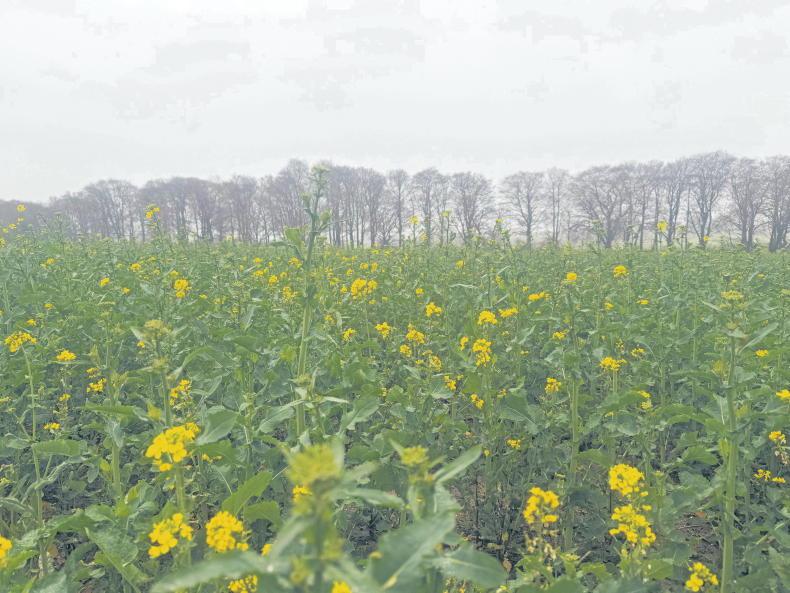
Nicholas' winter oilseed rape is just beginning to flower in Tipperary.
A herbicide was also applied on the winter wheat, with Pixxaro applied at 0.375l/ha. It received 430kg/ha of 10-10-20 earlier in the spring and Nicholas then came back to apply a split of nitrogen with sulphur too. An application of CeCeCe 750 is next on the cards for the wheat.
The winter oats has got 430kg/ha of 10-10-20 so far, with Nicholas saying that it is due more fertiliser in the next two weeks. The crop is relatively clean due to the oats’ natural ability to suppress weeds, but Nicholas says that the headlands will still need a herbicide soon.
Nicholas is hoping to plant 40ac of LG Mermaid and Hurler spring barley this week if the weather stays dry. Some of this barley is for malting while the rest is destined for feed.
On the research side of the farm, funding has been acquired in association with Canvas Brewery for research on heritage spring barley and wheat, while many other trials will be beginning on the farm next week too.
Shaun Diver
Tullamore Farm, Co Offaly
The drier weather of the past week was welcome on Tullamore Farm, but it will be another few weeks before Shaun gets his spring crops in the ground.
He sprayed off 8.5ac of grass in the past week and this is destined for spring barley. It was grazed with sheep earlier in the spring to clean off the sward on the field. The ground is still wet enough and Shaun will have to wait for the spray to take effect before spreading dung on the field too. The barley will be planted in April.
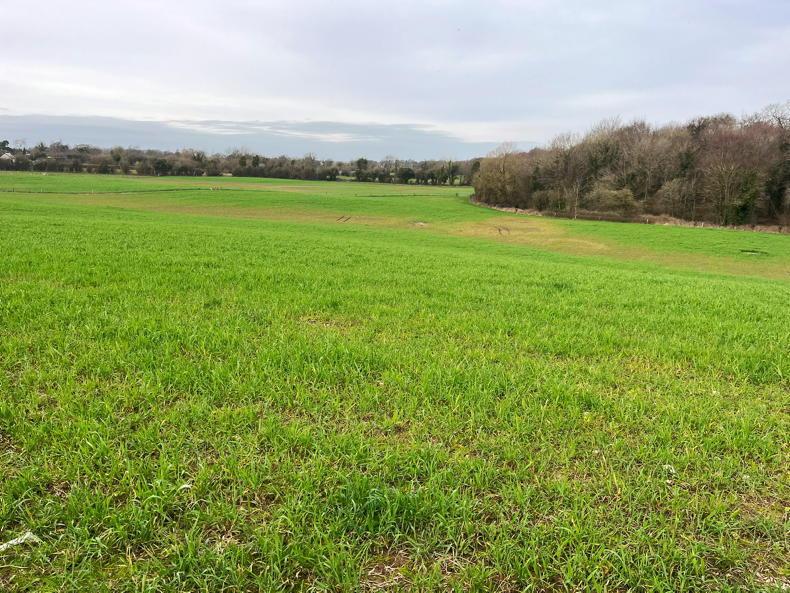
The forage rye on Tullamore Farm is very good except for a few poor wet patches.
The combi-crop ground is still in grass and is being grazed. He will spray the ground off in a couple of weeks and hopes to plant the combi-crop at the end of April or the beginning of May.
The forage rape was grazed in the autumn in fairly challenging conditions. Shaun says the crop is great feeding, but it was just very wet. This led to lower utilisation and some poaching in the field. Shaun says it will take a bit of work to get the land in good condition again. He aims to plant spring barley here too.
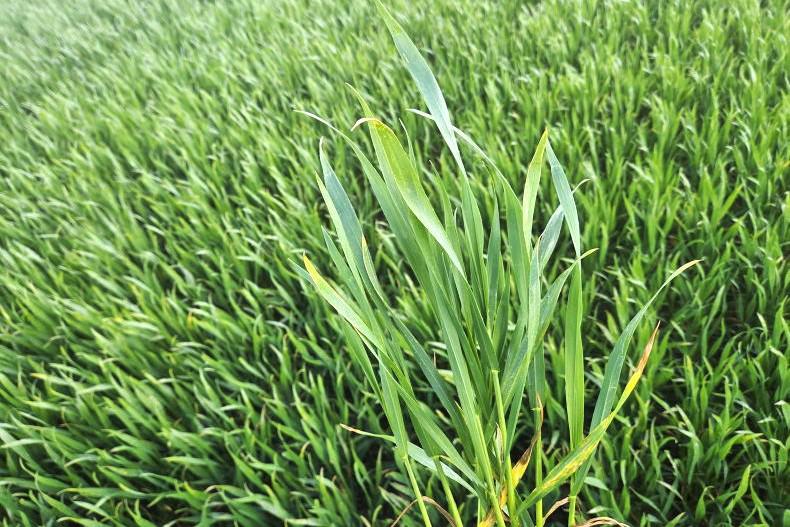
The forage rye planted after the spring barley looks very good. Shaun says it is a very vigorous crop.
There were some patches where water was lying that were quite poor, but they have started to grow again over the past week as the areas started to dry up.
Most of the crop is in excellent condition and came through the winter in good shape.
Shaun hopes to apply some nitrogen to the rye in the coming days to push it on. He says that the increase in fertiliser prices will probably result in a reduction in the amount of nitrogen he will spread on the rye. The plan is to harvest the rye in May and put it in the pit.
Conor Callan
Ardee, Co Louth
The sun was shining in Louth over the weekend, allowing Conor to get back out in the fields to get fertiliser spread and winter crops sprayed. Land is still wet though and Conor says there is still a wet spot in nearly every tramline.
He applied three bags/ac of 10-5-25+S to the KWS Tardis winter barley and Graham winter wheat last week. The crops had not quite greened up yet at the weekend, but Conor was hoping that the warm weather combined with the nitrogen will get the crops going this week.
The winter barley has received a herbicide and some of the winter wheat received a pre-emergence herbicide in the autumn. The rest of the wheat is on wetter land so Conor is letting the soil soak before he goes in with a herbicide, especially with some water lying in the tramlines after spreading fertiliser.
Slurry was applied to the forage rye recently. Conor says the farm was running tight on slurry storage and they were running out of dry fields to spread it on. No tracks were left in the crop, but some of the plants in the wheel marking have died off due to the wet soils and cold nights soon after the slurry was applied.
Conor adds that it’s not the end of the world. The rye is primarily a cover crop and the main crop will be the maize that goes in once it’s harvested.
The only spring crop to be planted is maize which is still a while away. Conor sprayed off the stubble last week and will aim to get dung spread and to start the ploughing in the next week. He will be aiming to get as much work as possible done, including planting most of the maize before the forage rye is harvested, as the pressure will then be on to get the remaining maize planted in this ground as soon as possible. First-cut silage will be following close behind this too.
Nicholas Ryan
Clonmel, Co Tipperary
The improved weather has led to a busy time for Nicholas, as the spring workload increases. Certain spots in fields are still a bit wet, so Nicholas has tried to drive through them when the spreader and sprayer are nearly empty to lighten the load as much as possible and reduce the amount of tracks made in the fields.
The winter oilseed rape is just beginning to flower. Fertiliser has been applied and it also received a spray of Caryx, Olbran and Bortrac. The crop has received 310kg/ha of 10-10-20, 185kg/ha of SulCAN and 250kg/ha of ASN so far. The winter rye received a herbicide spray recently and is up to date with fertiliser. The herbicide spray included Monolith at 200g/ha, Galaxy at 1l/ha, and BioPower at 1l/ha. It is growing strongly and will receive a growth regulator and fungicide soon.
Nicholas' winter oilseed rape is just beginning to flower in Tipperary.
A herbicide was also applied on the winter wheat, with Pixxaro applied at 0.375l/ha. It received 430kg/ha of 10-10-20 earlier in the spring and Nicholas then came back to apply a split of nitrogen with sulphur too. An application of CeCeCe 750 is next on the cards for the wheat.
The winter oats has got 430kg/ha of 10-10-20 so far, with Nicholas saying that it is due more fertiliser in the next two weeks. The crop is relatively clean due to the oats’ natural ability to suppress weeds, but Nicholas says that the headlands will still need a herbicide soon.
Nicholas is hoping to plant 40ac of LG Mermaid and Hurler spring barley this week if the weather stays dry. Some of this barley is for malting while the rest is destined for feed.
On the research side of the farm, funding has been acquired in association with Canvas Brewery for research on heritage spring barley and wheat, while many other trials will be beginning on the farm next week too.
Shaun Diver
Tullamore Farm, Co Offaly
The drier weather of the past week was welcome on Tullamore Farm, but it will be another few weeks before Shaun gets his spring crops in the ground.
He sprayed off 8.5ac of grass in the past week and this is destined for spring barley. It was grazed with sheep earlier in the spring to clean off the sward on the field. The ground is still wet enough and Shaun will have to wait for the spray to take effect before spreading dung on the field too. The barley will be planted in April.
The forage rye on Tullamore Farm is very good except for a few poor wet patches.
The combi-crop ground is still in grass and is being grazed. He will spray the ground off in a couple of weeks and hopes to plant the combi-crop at the end of April or the beginning of May.
The forage rape was grazed in the autumn in fairly challenging conditions. Shaun says the crop is great feeding, but it was just very wet. This led to lower utilisation and some poaching in the field. Shaun says it will take a bit of work to get the land in good condition again. He aims to plant spring barley here too.
The forage rye planted after the spring barley looks very good. Shaun says it is a very vigorous crop.
There were some patches where water was lying that were quite poor, but they have started to grow again over the past week as the areas started to dry up.
Most of the crop is in excellent condition and came through the winter in good shape.
Shaun hopes to apply some nitrogen to the rye in the coming days to push it on. He says that the increase in fertiliser prices will probably result in a reduction in the amount of nitrogen he will spread on the rye. The plan is to harvest the rye in May and put it in the pit.






SHARING OPTIONS