


Barty O’Connor – Clohamon, Co Wexford
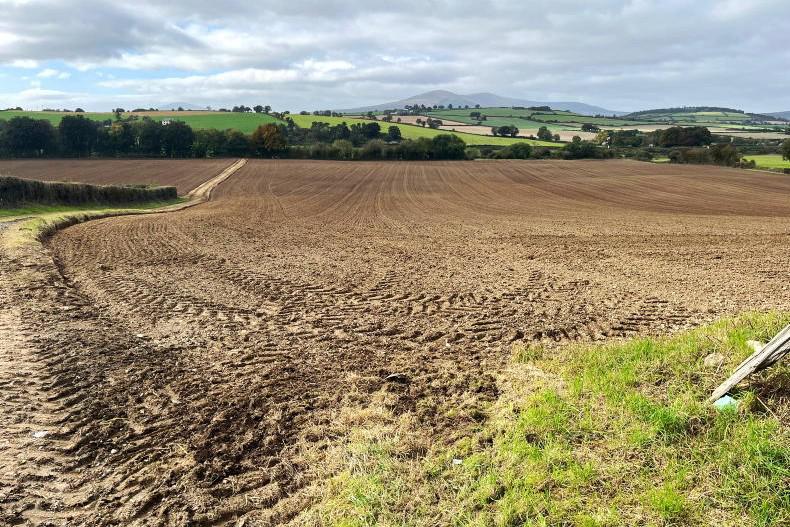
The heavy rain at the weekend has brought a halt to field work in Wexford, but Barty had finished planting his winter barley beforehand.
Orcade winter barley was planted on 8 October at 188kg/ha.
The ground ploughed up very well and Barty says it was white in no time. It was the first time that he had ever rolled a winter cereal, as the conditions were far better than he could ever have hoped for.
There was an inch of a sprout out of the barley after only nine days. Barty will wait until the two-leaf stage to apply an aphicide and a herbicide. Despite the BYDV tolerance of the Orcade barley, he says he is applying an aphicide because it has been quite mild recently and the barley was planted relatively early. The herbicide will consist of Firebird Met at 0.7l/ha and DFF at 0.1l/ha.
The cover crops on the farm are coming along very nicely, with Barty saying they are covering the ground and doing their job. He wonders if there is less residual nitrogen in the soil after harvest this year, as they do not seem to be growing quite as strong as some other years.
However, they are catching any spare nutrients in his lighter soils, which he notes is very important.
Barty is disappointed with the recent budget. He believed there would be more in it for tillage farmers after all the talk of the past couple of months, and with the high levels of sustainability associated with Irish-grown grains and the Government targets to reach 400,000ha by 2030.
On top of this, he is concerned that farmers have no choice but to plant their crops when they have very little idea of what will happen next year in terms of supports and contracts.
This needs to be sorted out in good time to allow farmers to put plans in place.
Pa Shine – Ardfinnan, Co Tipperary
There was 30mm of rain over the weekend in Tipperary, but it did not matter too much, as Pa had all of his winter cereals in the ground by the end of last week.
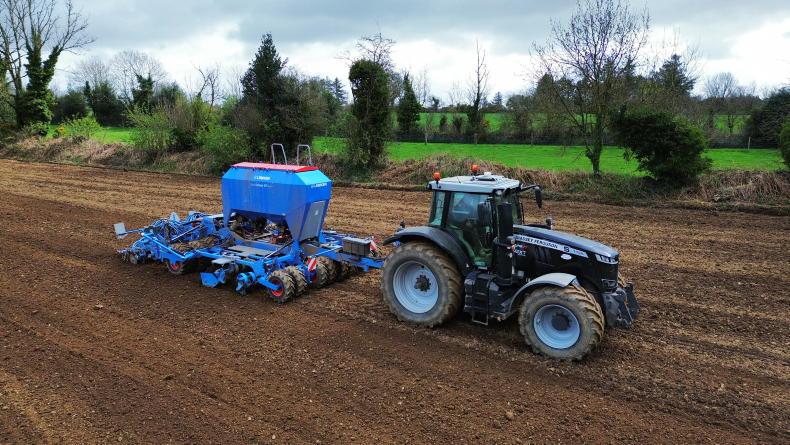
He started planting winter barley on 1 October. He started with the BYDV tolerant varieties, KWS Joyau and Orcade. The ground was in great condition after the dry weather and Pa managed to get the crops rolled.
He then moved on to Champion winter wheat, which was planted at 165kg/ha. The remainder of the barley, KWS Tardis and SY Canyon, were not planted until after the wheat as they do not have BYDV tolerance.
The last crop to be planted was winter oats, and Pa managed to get this planted by Friday evening just before the rain. The two varieties are Husky, planted at 165kg/ha, and WPB Enya, planted at 173kg/ha. They are being drilled on contract for Flahavan’s.
Pa has not applied any herbicides yet, but will begin this week if the weather allows. Tower will be applied to the winter rye first, before starting on some of the barley that has already emerged. Slug pellets were applied to the winter rye after it emerged and Pa has not seen much damage so far.
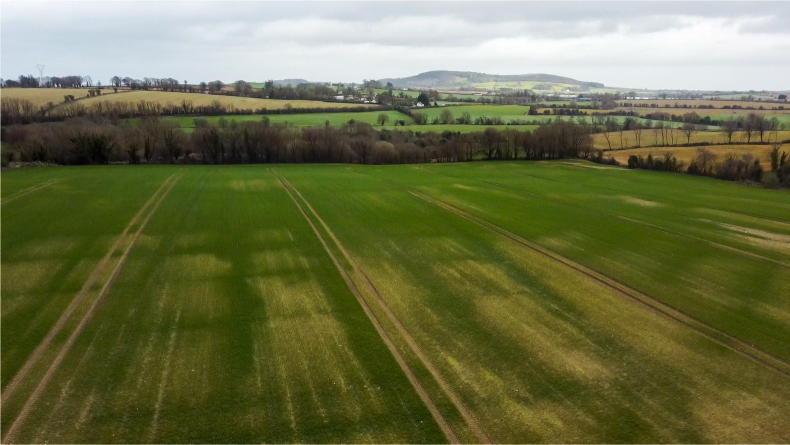
The winter oilseed rape is quite thick and growing very strongly. He says it will have a huge biomass by spring, if the mild temperatures continue.
He applied a graminicide to the crop a couple of weeks ago, and a fungicide will be applied in a couple of weeks’ time. Pa is very disappointed with the grain price this year. He says it shows a lack of support for the tillage sector and that farmers will not be able to keep going if things stay like this for the coming year. He notes it is especially tough for those on rented land.
Shaun Diver – Tullamore Farm, Co Offaly
There has been a good amount of rain in Tullamore in the past week, but it has not affected the tillage side of Tullamore Farm – as there is no more field work to do in the tillage fields.
It is making conditions that bit trickier for grazing, with Shaun saying that there is now a fine line between keeping stock out and housing them.
The forage rape on the farm has done quite well. Shaun thinks it currently has a cover of about 2,500kg DM/ha, but this is continuing to increase, as it is still growing away. Shaun will begin to graze some of the calves on this in November. These calves have been weaned for about 10 days now.
The forage rye has established very well on the farm. It has covered the ground and is reaching nine to ten centimetres in height. The slugs have not done much damage at all to the crop, helped by the dry weather of late September and the first half of October.
If ground conditions remain decent, Shaun aims to graze the rye with ewes towards the end of November. The plants will be strong enough at this stage to survive grazing, which will hopefully allow for a cut of silage to be taken from the rye in April next year.
Planning ahead for next year, Shaun hopes to keep the same acreage for tillage crops, if not increase it slightly. While the combi-crop is doing very well, having his own straw is the main reason that Shaun grows spring barley on the farm.
However, it also is a great way of providing a break before reseeding ground. This allows for improved weed control through ploughing, the growing of a different crop, and the use of different herbicides. Shaun says it leaves ground in perfect condition to establish a very good reseed.


SHARING OPTIONS