David Hobson, Dunsany, Co Meath
Plenty of rain fell in September in Meath, which slowed the farm’s wheat drilling progress. The first of the Graham wheat was sown on 16 September. The seeding rate has been between 175kg and 195kg/ha. Champion and KWS Extase are also being planted this year. Some milling wheat varieties are being trialled on a small area too.
Although it was early for sowing, David says there is plenty of work to get through and the farm would sow a significant area using minimal cultivation, especially after break crops. Land was disced to chit weed seeds followed by a tine machine working to a depth of between 4” and 5”. Ploughs and a one-pass are still in use where necessary on the farm. So far, all fields have received Firebird Met at 1l/ha immediately after sowing.
The farm has re-introduced winter rye back into the rotation this year with KWS Tayo. David says they have grown it with great success previously. Planting of winter barley will begin this week.
Integral, Orcade, SY Canyon, and some KWS Cassia will be drilled this year. Some of the barley land received 1,500 gallons/ac of digestate from an anaerobic digestion (AD) plant close by. The farm continuously sources as much organic manure as possible to build soil indices and reduce fertiliser costs, especially in lean years such as this year.
Some of the oilseed rape is notably more sluggish after wheat and growth is slow. Some crops received an application of nitrogen (110l/ha of Omex 24%N 3%S) before the close of the fertiliser spreading season to help crops build biomass over the winter period.
There is plenty of slug activity and David is keeping a close eye on the level of grazing. Some crops will also require a clean-up herbicide such as Belkar or Galera to tackle chickweed and other broadleaved weeds.
David hopes to get through a lot of the work in the next two weeks if the weather remains favourable.
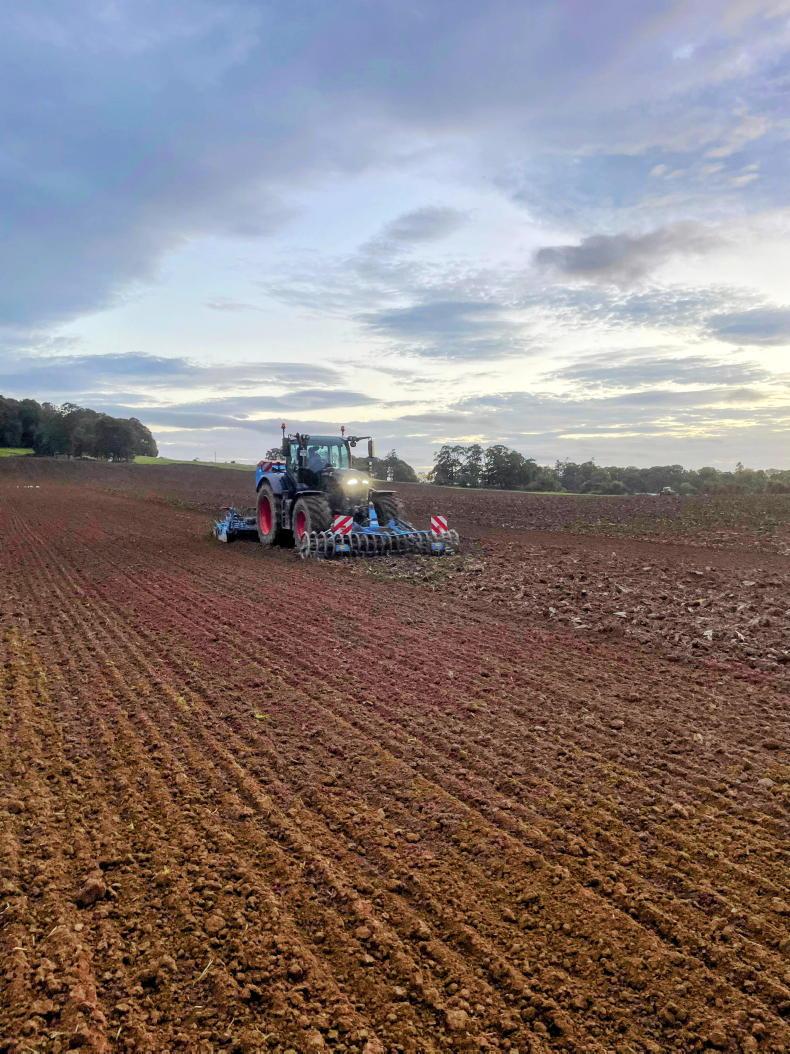
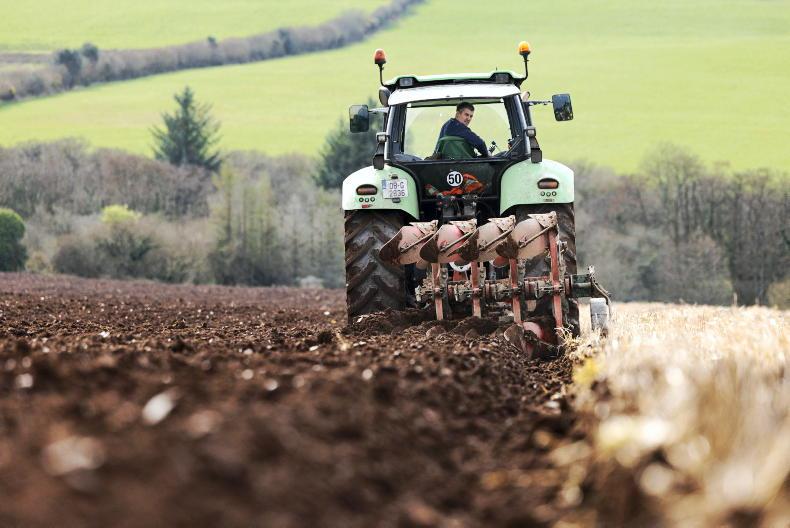
Integral winter barley going in on David's farm.
Pádraig Connery, Villierstown, Co Waterford
Ground was wet in Waterford over the weekend after lots of rain during storm Amy last week. However, Pádraig started to plough and then sow winter barley on Monday as the soil had dried well in the strong winds.
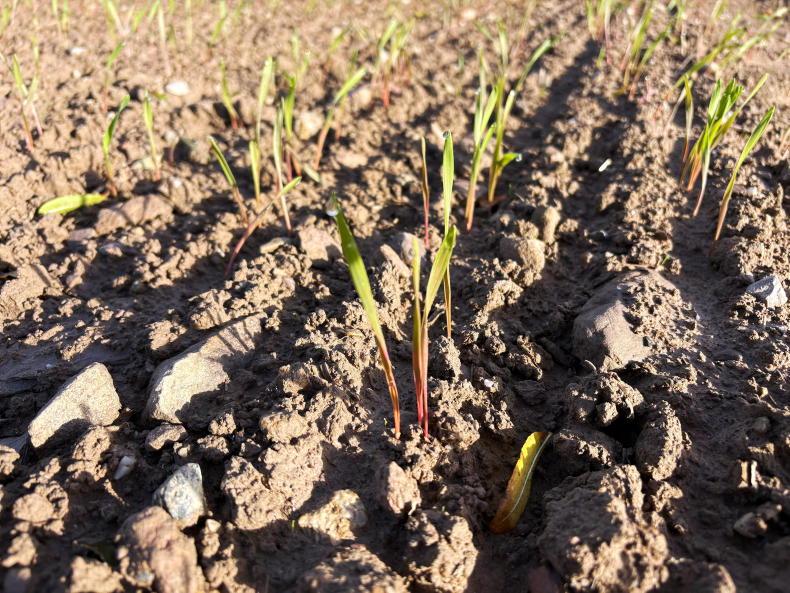
He did get an opportunity to plant KWS Tayo winter rye on 24 September. It was planted at a rate of 65kg/ha and was peeping through just nine days later. Slug pellets were applied earlier this week once ground conditions improved.
The headlands were ploughed once the rest of the field was drilled, and the field was rolled afterwards. Pádraig would have preferred to let it dry for an extra day before rolling but rain was forecast and he wanted to have it done, especially to reduce slug pressure.
He started drilling BYDV-tolerant winter barley varieties first. He is planting a new variety, Organa, in addition to KWS Joyau. These are being planted at 195kg/ha after beans and oats respectively.
He will then move to SY Canyon, which will be after winter barley, with a seeding rate of around 100kg/ha. Pádraig will be delighted if he manages to get all of the barley in this week.
After that, he will just have 30ha of winter wheat and oats left to sow, with no big rush if conditions continue to be OK.
There has been good growth in the cover crops on the farm, but Pádraig has found a lot of barley volunteers coming through. There were some blind grains in the barley ears, which may be contributing to it, but Pádraig says he will also keep a close eye next year in case the combine’s settings need to be adjusted compared to the typical barley settings.
Finally, he says that the low grain prices being released are taking the wind out of everyone’s sails. He says it’s very disappointing and that the sector needs to be supported by the Government, the industry, and fellow farmers.
Stephen Wallace, Mountrath, Co Laois
Fields have become pretty wet in Laois after the heavy rain at the end of last week. Stephen had ploughed and prepared 20ac to sow winter wheat but got caught out by unexpected rain on Tuesday night last week. He hopes to get it sowed in the next few days if the weather suits before starting on the remainder of the planned winter cereals.
This 20ac was where Stephen had his winter and spring beans, which were harvested around 15 September. They yielded 1.8t/ac with a moisture content in the mid-20s. The winter and spring beans were harvested together and not kept separate, so Stephen is not sure of the different yields, but he says the spring beans yielded better than the winter crop.
The May-sown spring oats were harvested too. They were quite variable, with the yield ranging between 2t/ac and 2.5t/ac.
This was on quite poor land, which Stephen plans to make some drainage improvements to this week. He then hopes to plant winter rye in the field as it may be able to cope with the low fertility of the soil.
Stephen has winter barley and maybe oats to plant too, but he says it is quite difficult to plan when grain prices are not even set for this year.
Stephen also got his winter oilseed rape planted. This had got delayed because of a tractor breakdown and then rain, but he got it drilled on 20 September. He applied Katamaran as a pre-emergence herbicide after sowing.
The cover crops on the farm have grown quite well during the past few weeks.
They will be ploughed down in the next couple of weeks to make way for the winter cereals. Stephen finds that his fields drain a bit better with the cover crops and let him get in with the plough a couple of days earlier than usual.
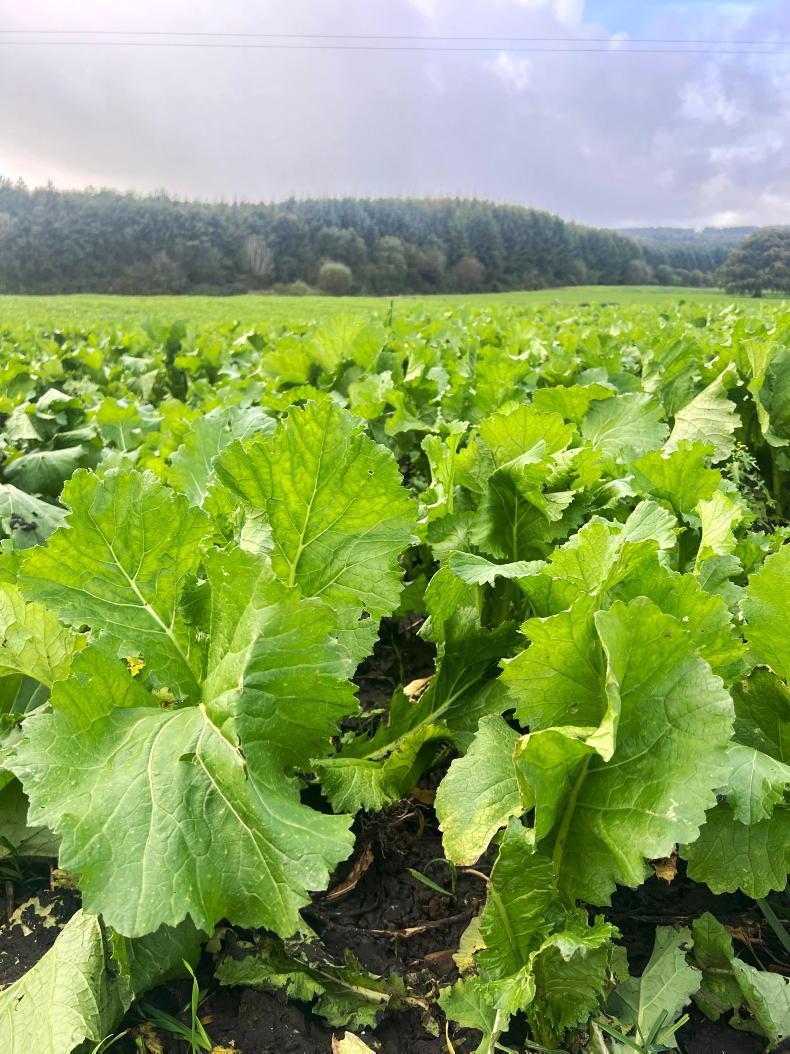
The cover crops on Stephen's farm have grown well over the past month.
David Hobson, Dunsany, Co Meath
Plenty of rain fell in September in Meath, which slowed the farm’s wheat drilling progress. The first of the Graham wheat was sown on 16 September. The seeding rate has been between 175kg and 195kg/ha. Champion and KWS Extase are also being planted this year. Some milling wheat varieties are being trialled on a small area too.
Although it was early for sowing, David says there is plenty of work to get through and the farm would sow a significant area using minimal cultivation, especially after break crops. Land was disced to chit weed seeds followed by a tine machine working to a depth of between 4” and 5”. Ploughs and a one-pass are still in use where necessary on the farm. So far, all fields have received Firebird Met at 1l/ha immediately after sowing.
The farm has re-introduced winter rye back into the rotation this year with KWS Tayo. David says they have grown it with great success previously. Planting of winter barley will begin this week.
Integral, Orcade, SY Canyon, and some KWS Cassia will be drilled this year. Some of the barley land received 1,500 gallons/ac of digestate from an anaerobic digestion (AD) plant close by. The farm continuously sources as much organic manure as possible to build soil indices and reduce fertiliser costs, especially in lean years such as this year.
Some of the oilseed rape is notably more sluggish after wheat and growth is slow. Some crops received an application of nitrogen (110l/ha of Omex 24%N 3%S) before the close of the fertiliser spreading season to help crops build biomass over the winter period.
There is plenty of slug activity and David is keeping a close eye on the level of grazing. Some crops will also require a clean-up herbicide such as Belkar or Galera to tackle chickweed and other broadleaved weeds.
David hopes to get through a lot of the work in the next two weeks if the weather remains favourable.
Integral winter barley going in on David's farm.
Pádraig Connery, Villierstown, Co Waterford
Ground was wet in Waterford over the weekend after lots of rain during storm Amy last week. However, Pádraig started to plough and then sow winter barley on Monday as the soil had dried well in the strong winds.
He did get an opportunity to plant KWS Tayo winter rye on 24 September. It was planted at a rate of 65kg/ha and was peeping through just nine days later. Slug pellets were applied earlier this week once ground conditions improved.
The headlands were ploughed once the rest of the field was drilled, and the field was rolled afterwards. Pádraig would have preferred to let it dry for an extra day before rolling but rain was forecast and he wanted to have it done, especially to reduce slug pressure.
He started drilling BYDV-tolerant winter barley varieties first. He is planting a new variety, Organa, in addition to KWS Joyau. These are being planted at 195kg/ha after beans and oats respectively.
He will then move to SY Canyon, which will be after winter barley, with a seeding rate of around 100kg/ha. Pádraig will be delighted if he manages to get all of the barley in this week.
After that, he will just have 30ha of winter wheat and oats left to sow, with no big rush if conditions continue to be OK.
There has been good growth in the cover crops on the farm, but Pádraig has found a lot of barley volunteers coming through. There were some blind grains in the barley ears, which may be contributing to it, but Pádraig says he will also keep a close eye next year in case the combine’s settings need to be adjusted compared to the typical barley settings.
Finally, he says that the low grain prices being released are taking the wind out of everyone’s sails. He says it’s very disappointing and that the sector needs to be supported by the Government, the industry, and fellow farmers.
Stephen Wallace, Mountrath, Co Laois
Fields have become pretty wet in Laois after the heavy rain at the end of last week. Stephen had ploughed and prepared 20ac to sow winter wheat but got caught out by unexpected rain on Tuesday night last week. He hopes to get it sowed in the next few days if the weather suits before starting on the remainder of the planned winter cereals.
This 20ac was where Stephen had his winter and spring beans, which were harvested around 15 September. They yielded 1.8t/ac with a moisture content in the mid-20s. The winter and spring beans were harvested together and not kept separate, so Stephen is not sure of the different yields, but he says the spring beans yielded better than the winter crop.
The May-sown spring oats were harvested too. They were quite variable, with the yield ranging between 2t/ac and 2.5t/ac.
This was on quite poor land, which Stephen plans to make some drainage improvements to this week. He then hopes to plant winter rye in the field as it may be able to cope with the low fertility of the soil.
Stephen has winter barley and maybe oats to plant too, but he says it is quite difficult to plan when grain prices are not even set for this year.
Stephen also got his winter oilseed rape planted. This had got delayed because of a tractor breakdown and then rain, but he got it drilled on 20 September. He applied Katamaran as a pre-emergence herbicide after sowing.
The cover crops on the farm have grown quite well during the past few weeks.
They will be ploughed down in the next couple of weeks to make way for the winter cereals. Stephen finds that his fields drain a bit better with the cover crops and let him get in with the plough a couple of days earlier than usual.
The cover crops on Stephen's farm have grown well over the past month.





SHARING OPTIONS