O’Shea Farms, Piltown, Co Kilkenny
The last of the salad potatoes were lifted a couple of weeks ago in Kilkenny. This is about two weeks ahead of normal. They are now in store at storage temperature, or in the process of being cooled down. Yields were average, and Tom says that the yield does not tend to vary too much with the salads. He also says that the crop gives great flexibility as you are not bound as much by calendar dates.
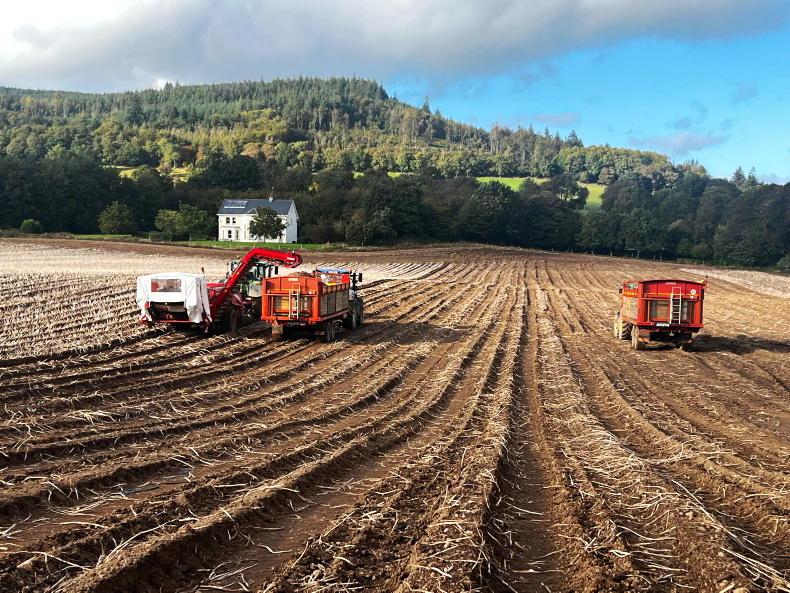
The maincrop potato harvest is in full swing, and around 30% has been completed around Kilkenny. It has been a little bit stop-start with the showers, but Tom says ground has held up well. It was even too dry for harvesting a couple of weeks ago, so the rain has helped to minimise rollback and damage. The good soil structure from planting in dry conditions earlier this year means that the soil is soaking very well.
The focus is also on storage at present. Tom says the capacity and quality of potato storage in Ireland is amazing. He says there is still old season stock in store, and the quality has remained very high despite being in store for longer than the crop was in the ground.
The carrots continue to be harvested too. Once the potato harvest is over, Tom will begin to start covering the carrots.
The maize harvest will be on the cards around the end of the month.
Some cover crops have been planted on the farm. Mixes containing phacelia, vetch and either rye or buckwheat will be incorporated before planting; forage rye has been planted too. This will be harvested for the dairy cows next April before maize is drilled.
Tom says that farmers need to be careful about the use of brassicas and legumes in cover crop mixes. While farmers are being incentivised to grow cover crops at the moment, they need to ensure it does not cause issues down the line.
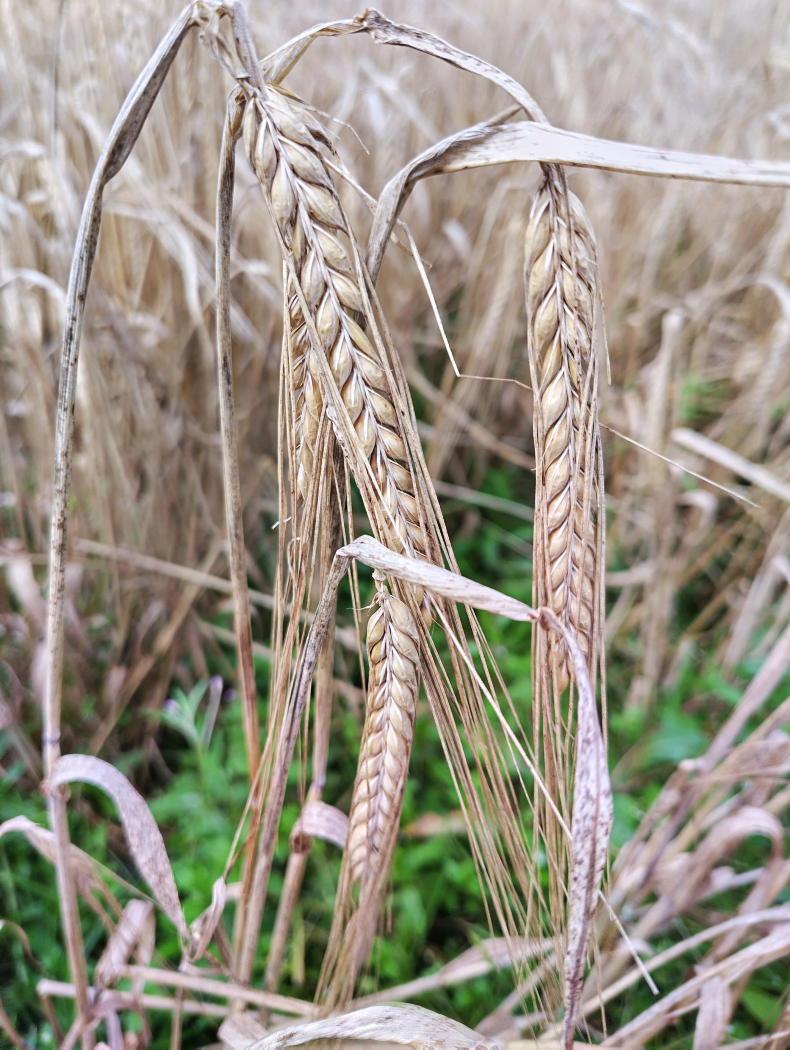
Victor's spring barley is ripe but the weather has not played ball to allow him to harvest it.
Strabane, Co Tyrone
Normal service has resumed in Tyrone, with rain falling on most days in the past four weeks since 22 August. This has come at the wrong time for Victor, as some of his crops were just coming ripe when the rain began. The only silver lining is that the ground seems to be taking the rain pretty well so far, but if there is much more rain this will change. He also managed to get all of his hay baled before the rain returned.
The spring wheat will be the first crop to be harvested. It has been ripe for two to three weeks at this stage, and Victor is worried that the grains could start to sprout if it is left much longer. Despite this, Victor says it looks like a promising crop. He will not pay too much attention to the moisture content now once the crop is dry itself. If needed, propcorn will be used on the grain before Victor sells it directly to farmers.
The spring barley will be next to be harvested. It has only recently come ripe so there has been no straw breakdown as of yet. However, Victor still wants to get it harvested as soon as he can. He says that it is actually not too late for his area, with the spring cereal harvest usually taking place in early September.
The spring beans are fully ripe now too. They ripened in quite quickly as chocolate spot came into the crop. The crop looks to have good potential.
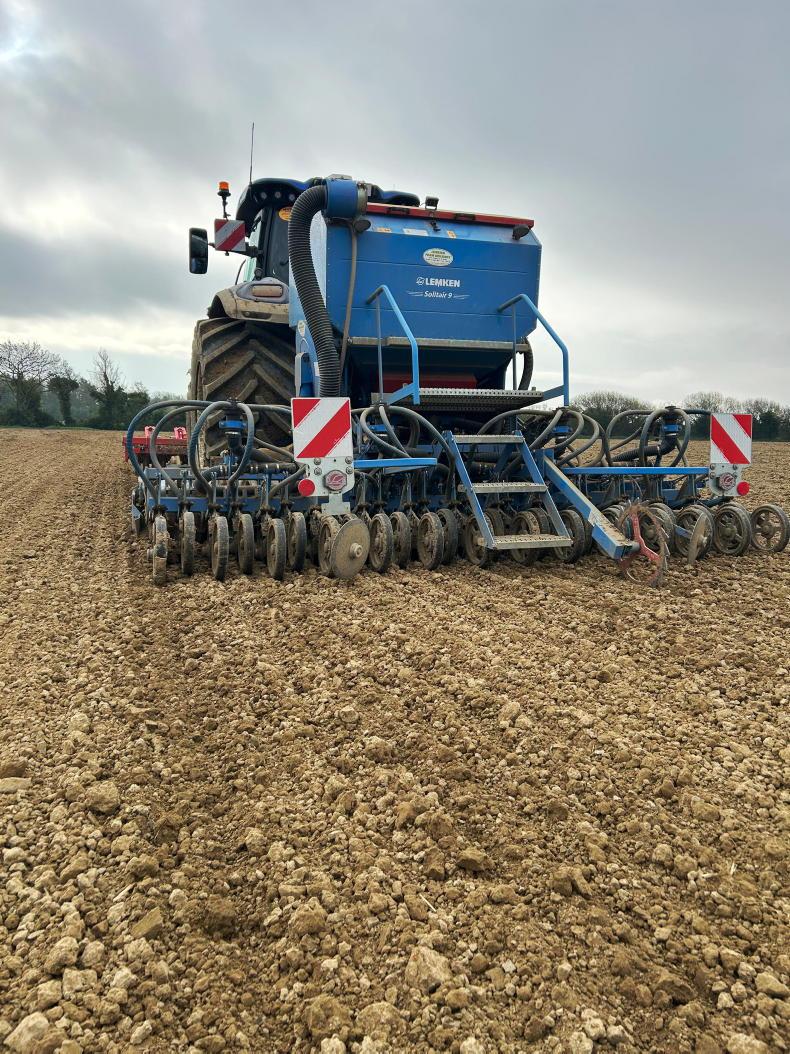
If a good week of weather is forecasted, Victor will bale the straw, but he is not too bothered if this does not come as the straw will do plenty of good to his soil. Victor will try to get winter crops in straight after harvest. They will be direct drilled in, which will help to reduce the workload on what is looking to be a couple of busy weeks ahead for Victor.
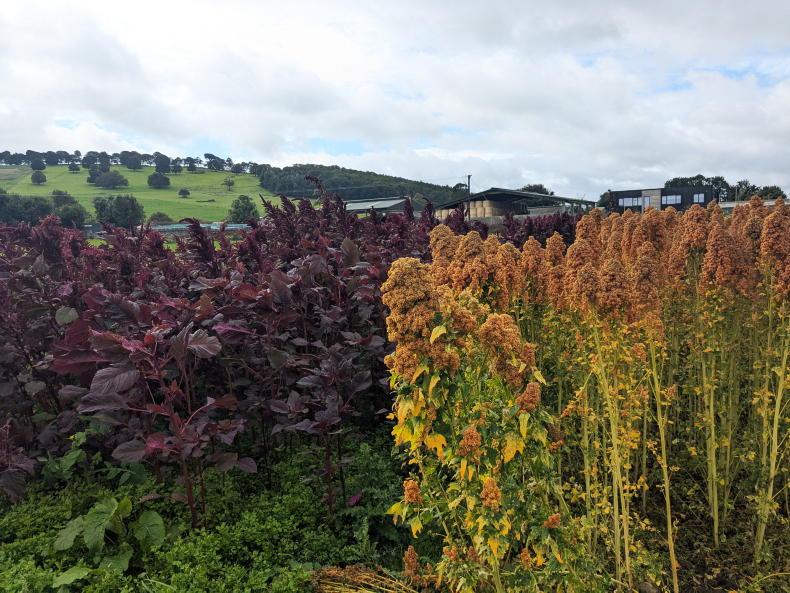
The amaranth (left) and quinoa (right) are nearly ripe on UCD Lyons Farm.
UCD Lyons Farm, Celbridge, Co Kildare
The weather has been quite wet in Kildare over the past few weeks. Soil conditions have gotten worse, but they are not too bad just yet.
Gary had hoped to plant a winter oilseed rape trial in early September but this has not been possible. He may still try to drill it if it is dry in the next few days, even though it is a bit late for oilseed rape.
Cover crop species were planted at the trial site during the summer. These included tillage radish, mustard, vetch, phacelia, oats, rye, forage rape and stubble turnips. Some of the plots were topped to mimic grazing and will be assessed to see which species have better growth after topping.
Some of the more exotic crops are getting quite close to harvest, despite the later than normal sowing dates and drought conditions directly after sowing.
Even the warm weather crops like amaranth, sunflower, millet, and quinoa will reach full ripeness, or very near to it. Gary did not expect this at the beginning of the year.
The very hot temperatures in July will have played a large role in this, but it will be interesting to grow these crops again next year with refined agronomy to see if they may be a viable crop.
The strong winds at the weekend do not seem to have had an effect on these crops, despite the fact that they are quite tall, with some of them nearly reaching two metres in height.
Some of the industrial crops are doing quite well too. The calendula is currently flowering. Calendula is the official term for marigolds.
The petals can be used as an industrial dye and food colouring, while the oil from the seeds can be used in printer inks.
These plots are grown for this dual purpose, and will inform future research into their potential.
O’Shea Farms, Piltown, Co Kilkenny
The last of the salad potatoes were lifted a couple of weeks ago in Kilkenny. This is about two weeks ahead of normal. They are now in store at storage temperature, or in the process of being cooled down. Yields were average, and Tom says that the yield does not tend to vary too much with the salads. He also says that the crop gives great flexibility as you are not bound as much by calendar dates.
The maincrop potato harvest is in full swing, and around 30% has been completed around Kilkenny. It has been a little bit stop-start with the showers, but Tom says ground has held up well. It was even too dry for harvesting a couple of weeks ago, so the rain has helped to minimise rollback and damage. The good soil structure from planting in dry conditions earlier this year means that the soil is soaking very well.
The focus is also on storage at present. Tom says the capacity and quality of potato storage in Ireland is amazing. He says there is still old season stock in store, and the quality has remained very high despite being in store for longer than the crop was in the ground.
The carrots continue to be harvested too. Once the potato harvest is over, Tom will begin to start covering the carrots.
The maize harvest will be on the cards around the end of the month.
Some cover crops have been planted on the farm. Mixes containing phacelia, vetch and either rye or buckwheat will be incorporated before planting; forage rye has been planted too. This will be harvested for the dairy cows next April before maize is drilled.
Tom says that farmers need to be careful about the use of brassicas and legumes in cover crop mixes. While farmers are being incentivised to grow cover crops at the moment, they need to ensure it does not cause issues down the line.
Victor's spring barley is ripe but the weather has not played ball to allow him to harvest it.
Strabane, Co Tyrone
Normal service has resumed in Tyrone, with rain falling on most days in the past four weeks since 22 August. This has come at the wrong time for Victor, as some of his crops were just coming ripe when the rain began. The only silver lining is that the ground seems to be taking the rain pretty well so far, but if there is much more rain this will change. He also managed to get all of his hay baled before the rain returned.
The spring wheat will be the first crop to be harvested. It has been ripe for two to three weeks at this stage, and Victor is worried that the grains could start to sprout if it is left much longer. Despite this, Victor says it looks like a promising crop. He will not pay too much attention to the moisture content now once the crop is dry itself. If needed, propcorn will be used on the grain before Victor sells it directly to farmers.
The spring barley will be next to be harvested. It has only recently come ripe so there has been no straw breakdown as of yet. However, Victor still wants to get it harvested as soon as he can. He says that it is actually not too late for his area, with the spring cereal harvest usually taking place in early September.
The spring beans are fully ripe now too. They ripened in quite quickly as chocolate spot came into the crop. The crop looks to have good potential.
If a good week of weather is forecasted, Victor will bale the straw, but he is not too bothered if this does not come as the straw will do plenty of good to his soil. Victor will try to get winter crops in straight after harvest. They will be direct drilled in, which will help to reduce the workload on what is looking to be a couple of busy weeks ahead for Victor.
The amaranth (left) and quinoa (right) are nearly ripe on UCD Lyons Farm.
UCD Lyons Farm, Celbridge, Co Kildare
The weather has been quite wet in Kildare over the past few weeks. Soil conditions have gotten worse, but they are not too bad just yet.
Gary had hoped to plant a winter oilseed rape trial in early September but this has not been possible. He may still try to drill it if it is dry in the next few days, even though it is a bit late for oilseed rape.
Cover crop species were planted at the trial site during the summer. These included tillage radish, mustard, vetch, phacelia, oats, rye, forage rape and stubble turnips. Some of the plots were topped to mimic grazing and will be assessed to see which species have better growth after topping.
Some of the more exotic crops are getting quite close to harvest, despite the later than normal sowing dates and drought conditions directly after sowing.
Even the warm weather crops like amaranth, sunflower, millet, and quinoa will reach full ripeness, or very near to it. Gary did not expect this at the beginning of the year.
The very hot temperatures in July will have played a large role in this, but it will be interesting to grow these crops again next year with refined agronomy to see if they may be a viable crop.
The strong winds at the weekend do not seem to have had an effect on these crops, despite the fact that they are quite tall, with some of them nearly reaching two metres in height.
Some of the industrial crops are doing quite well too. The calendula is currently flowering. Calendula is the official term for marigolds.
The petals can be used as an industrial dye and food colouring, while the oil from the seeds can be used in printer inks.
These plots are grown for this dual purpose, and will inform future research into their potential.





SHARING OPTIONS