Last week, the Irish Farmers Journal reported that nearly 40,000t of straw were imported into Ireland from January to August. This figure could reach 45,000t by the year end. The importation of straw poses a massive biosecurity risk for Irish tillage farms and agriculture in general, as there are biosecurity risks with most products transported from one farm to another, whether that be weeds, or plant and animal diseases.
In total, 19,865t of straw were imported from Britain and a further 9,845t crossed the border from Northern Ireland. However, it is likely that a large proportion of this straw did not originate in Northern Ireland, but travelled through. A massive 10,440t of straw came from Spain.
A large proportion of the straw coming from Britain is reported to have come from the east of England, where blackgrass is a major issue. Blackgrass was classified as a noxious weed here in Ireland this year and, as such, is identified as a threat to agriculture. It has invasive characteristics and can be spread very easily due to its ability to produce large amounts of seed per plant.
How many seeds could be in straw?
The Irish Farmers Journal spoke to Teagasc researcher Vijaya Bhaskar about the number of seeds this straw could be bringing into the country.
Vijaya gave an example, assuming a field with a low-infestation of blackgrass could contain 10 seeds/kg of straw and a highly infested field could contain 100 seeds/kg of straw. On the 19,865t of straw from Britain that equates to between approximately 200 million seeds and nearly two billion seeds being imported from Britain, depending on infestation levels.
There will also be seeds in the straw travelling via Northern Ireland, but we do not know the breakdown.
How much seed on a load?
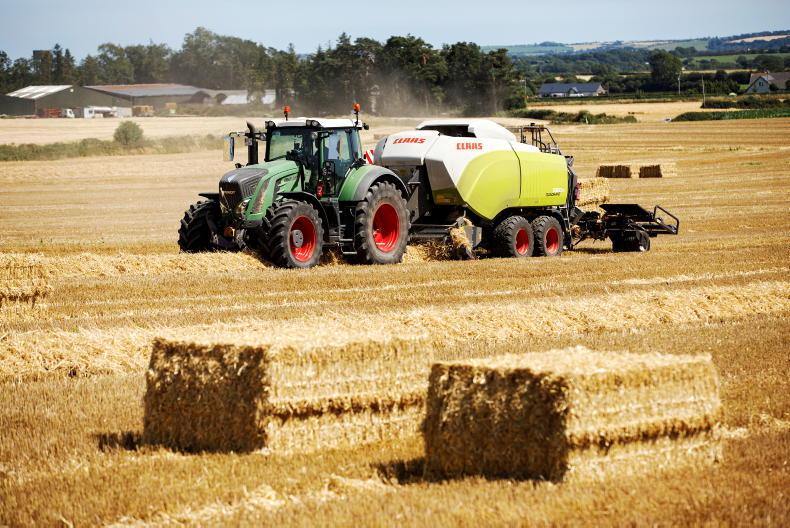
You’ll fit about 32 bales onto a curtain sider lorry, equating to about 16t and on a flatbed trailer you’ll fit about 44 8X4X3 bales, equating to about 22t.
So, loads coming from a farm with low levels of infestation could be carrying an estimated 160,000 seeds, while a load coming from a highly infested field could be carrying 1.6 million seeds. On a flatbed trailer the amount of seeds would range from an estimated 220,000 seeds to 2.2 million seeds. It should be noted rules demand that straw be covered on transport, so hopefully there is a cover on this straw and it is not losing seeds along the way. Some covers appear significant, but some may be limited in preventing weeds blowing away.
Where does the straw go?
This straw is travelling to farms across the country from livestock to mushrooms. Let’s be clear, blackgrass is not just a tillage issue. Blackgrass can seriously impact the quality of a grassland swards, so if it germinates once spread as farmyard manure it can be a problem.
If the farmyard manure or compost is spread on tillage farms, then those farms are at high risk of acblackgrass problem.
Vijaya explained that if 1t of straw was spread on 0.25ha then 10,000 seeds could be spread on that quarter of a hectare. That’s 40,000 seeds per hectare and this figure climbs to 400,000 seeds/ha where the straw is highly infested.
If even 1% of those seeds germinate there is a blackgrass problem on the farm that could cost the tillage farmer as much as €280/ha/year without full control of the weed.
Serious threat
Vijaya warned that the practice of importing could have serious consequences.
“Even small amounts of contaminated straw can introduce thousands of blackgrass seeds per ha, as a noxious weed, spreading it could have serious repercussions and pose a major biosecurity risk.”
ADAS researcher in England John Cussans said recently that the idea of importing straw from England to Ireland sent shivers down his spine.
Lobbying
The answer from the Department of Agriculture on the importation of grass weed seeds in cover crop seed was that trade rules state we must allow these products in with EU tolerances. There are no checks on straw.
Ireland is an island. We need native supplies of grain and straw. The importation of seeds of weeds deemed a threat to Irish agriculture is unbelievable.
Ireland should lobby to change EU rules so that these weed seeds cannot be imported. We should be protecting Irish agriculture. If a weed is noxious, meaning farmers have to destroy it, it should not be imported.
What can be done?
Lobbying to get rules changed that prevent importation of these weeds.There are ample straw supplies in Ireland and it should not be imported. - Order straw early if you are a livestock farmer.
- Tillage farmers should only take farmyard manure from farms which have purchased their straw or where they are sure there were no grass weeds on the farm the farmer purchased the straw from.
- Livestock and tillage farmers could come up with agreements to exchange straw for farmyard manure .
Further biosecurity risks
We know there is blackgrass in English straw. We do not know the biosecurity risks from the 10,440t of straw imported from Spain so far, as well as the straw imported from Belgium, France, Germany, India, Italy, Latvia, Netherlands and Poland.
We have not even mentioned other weeds like wild oats, brome, Italian ryegrass and broad-leaved weeds.
Last week, the Irish Farmers Journal reported that nearly 40,000t of straw were imported into Ireland from January to August. This figure could reach 45,000t by the year end. The importation of straw poses a massive biosecurity risk for Irish tillage farms and agriculture in general, as there are biosecurity risks with most products transported from one farm to another, whether that be weeds, or plant and animal diseases.
In total, 19,865t of straw were imported from Britain and a further 9,845t crossed the border from Northern Ireland. However, it is likely that a large proportion of this straw did not originate in Northern Ireland, but travelled through. A massive 10,440t of straw came from Spain.
A large proportion of the straw coming from Britain is reported to have come from the east of England, where blackgrass is a major issue. Blackgrass was classified as a noxious weed here in Ireland this year and, as such, is identified as a threat to agriculture. It has invasive characteristics and can be spread very easily due to its ability to produce large amounts of seed per plant.
How many seeds could be in straw?
The Irish Farmers Journal spoke to Teagasc researcher Vijaya Bhaskar about the number of seeds this straw could be bringing into the country.
Vijaya gave an example, assuming a field with a low-infestation of blackgrass could contain 10 seeds/kg of straw and a highly infested field could contain 100 seeds/kg of straw. On the 19,865t of straw from Britain that equates to between approximately 200 million seeds and nearly two billion seeds being imported from Britain, depending on infestation levels.
There will also be seeds in the straw travelling via Northern Ireland, but we do not know the breakdown.
How much seed on a load?
You’ll fit about 32 bales onto a curtain sider lorry, equating to about 16t and on a flatbed trailer you’ll fit about 44 8X4X3 bales, equating to about 22t.
So, loads coming from a farm with low levels of infestation could be carrying an estimated 160,000 seeds, while a load coming from a highly infested field could be carrying 1.6 million seeds. On a flatbed trailer the amount of seeds would range from an estimated 220,000 seeds to 2.2 million seeds. It should be noted rules demand that straw be covered on transport, so hopefully there is a cover on this straw and it is not losing seeds along the way. Some covers appear significant, but some may be limited in preventing weeds blowing away.
Where does the straw go?
This straw is travelling to farms across the country from livestock to mushrooms. Let’s be clear, blackgrass is not just a tillage issue. Blackgrass can seriously impact the quality of a grassland swards, so if it germinates once spread as farmyard manure it can be a problem.
If the farmyard manure or compost is spread on tillage farms, then those farms are at high risk of acblackgrass problem.
Vijaya explained that if 1t of straw was spread on 0.25ha then 10,000 seeds could be spread on that quarter of a hectare. That’s 40,000 seeds per hectare and this figure climbs to 400,000 seeds/ha where the straw is highly infested.
If even 1% of those seeds germinate there is a blackgrass problem on the farm that could cost the tillage farmer as much as €280/ha/year without full control of the weed.
Serious threat
Vijaya warned that the practice of importing could have serious consequences.
“Even small amounts of contaminated straw can introduce thousands of blackgrass seeds per ha, as a noxious weed, spreading it could have serious repercussions and pose a major biosecurity risk.”
ADAS researcher in England John Cussans said recently that the idea of importing straw from England to Ireland sent shivers down his spine.
Lobbying
The answer from the Department of Agriculture on the importation of grass weed seeds in cover crop seed was that trade rules state we must allow these products in with EU tolerances. There are no checks on straw.
Ireland is an island. We need native supplies of grain and straw. The importation of seeds of weeds deemed a threat to Irish agriculture is unbelievable.
Ireland should lobby to change EU rules so that these weed seeds cannot be imported. We should be protecting Irish agriculture. If a weed is noxious, meaning farmers have to destroy it, it should not be imported.
What can be done?
Lobbying to get rules changed that prevent importation of these weeds.There are ample straw supplies in Ireland and it should not be imported. - Order straw early if you are a livestock farmer.
- Tillage farmers should only take farmyard manure from farms which have purchased their straw or where they are sure there were no grass weeds on the farm the farmer purchased the straw from.
- Livestock and tillage farmers could come up with agreements to exchange straw for farmyard manure .
Further biosecurity risks
We know there is blackgrass in English straw. We do not know the biosecurity risks from the 10,440t of straw imported from Spain so far, as well as the straw imported from Belgium, France, Germany, India, Italy, Latvia, Netherlands and Poland.
We have not even mentioned other weeds like wild oats, brome, Italian ryegrass and broad-leaved weeds.






SHARING OPTIONS