In November last year, the Irish Farmers Journal reported that blackgrass, brome and wild oats had been found in cover crop seed.
This month, John Cussans, a researcher with ADAS in the UK, told the Irish Farmers Journal, that in the UK there has also been a huge uptake in environmental and multi-species seed mixtures.
He said the biosecurity protections are a bit lax on these mixes and that there has been weed contamination of these mixes as well. He said some weeds coming in, in legume mixes in particular, are parasitic weeds.
Have you spotted these weeds?
ADAS, which a research and advisory organisation in the UK, is currently carrying out a survey on parasitic weeds across Europe. You can fill out the survey by clicking this link.
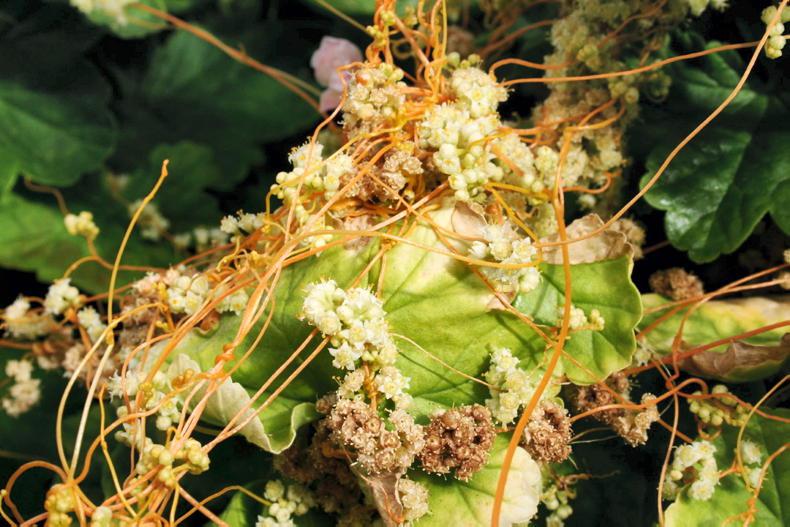
We need to get responses from Ireland to increase to inform the research. There are pictures to help you identify some of these plants.
John explained that some parasitic weeds are being imported into the UK in other seed.
He commented that the problem is they attach to crops here to get their nutrients. For example, parasitic weeds have come into Britain that affect peas and beans.
John added that legumes are hugely important in rotations and as alternative crops so we do not want parasitic weeds to take the option away.
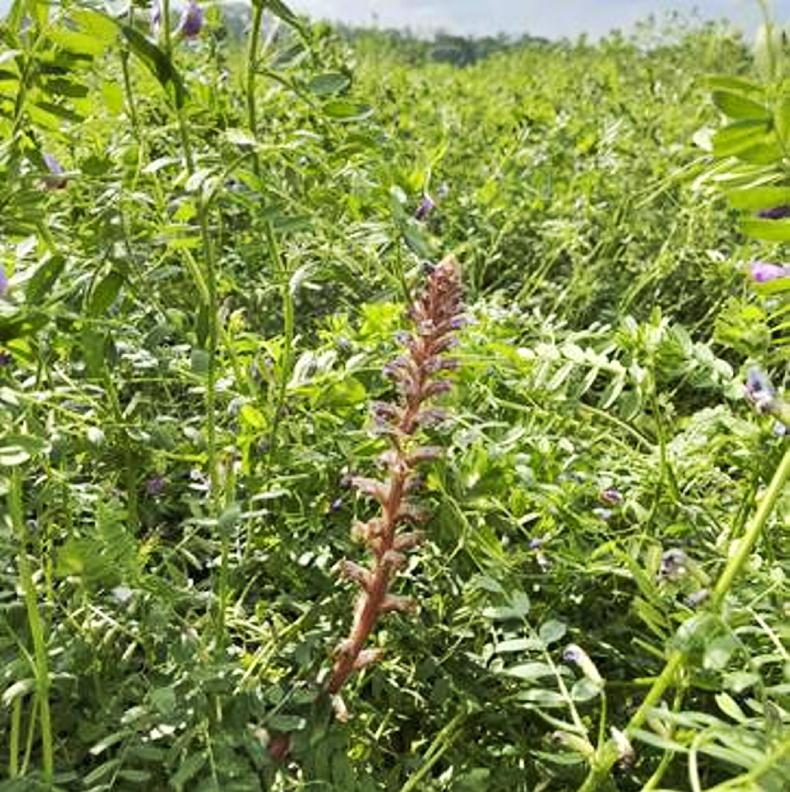
Broomrape in a legume crop.
What are parasitic weeds?
Parasitic weeds are plants that get their nutrients or some of their nutrients from a host plant. The parasitic weed attaches to a host plant at stem or root level. For example, mistletoe is a stem parasite that grows on trees for example.
Some parasitic plants are considered to be weeds and can affect the yield and sustainability of crops, grassland species or small fruits.
The main species of parasitic weeds found in Europe are: different species of dodder and broomrape, as well as yellow rattle.
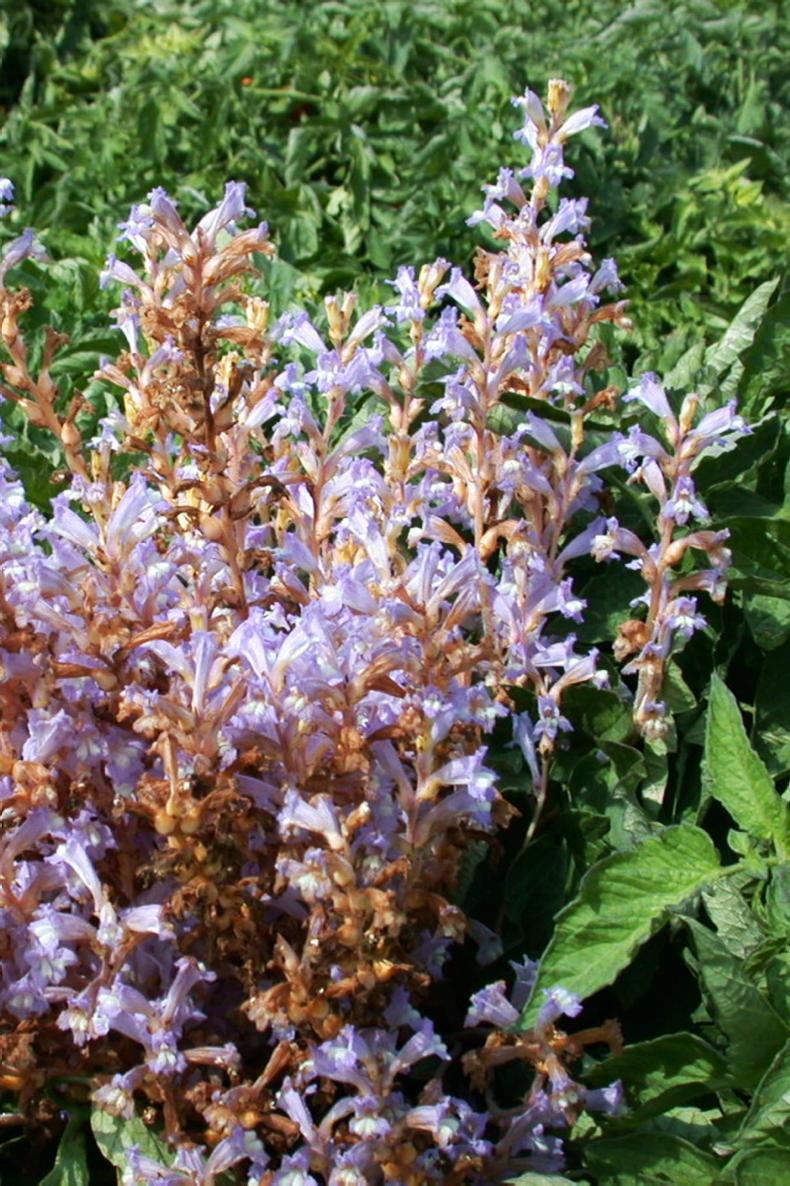
Egyptian broomrape.
Yellow rattle sometimes appears in wildflower mixtures to create space for other plants to grow as it attaches to grass roots and sucks the nutrients away from it to allow other plants to grow.
You can hear John on the Tillage Podcast by clicking this link.
In November last year, the Irish Farmers Journal reported that blackgrass, brome and wild oats had been found in cover crop seed.
This month, John Cussans, a researcher with ADAS in the UK, told the Irish Farmers Journal, that in the UK there has also been a huge uptake in environmental and multi-species seed mixtures.
He said the biosecurity protections are a bit lax on these mixes and that there has been weed contamination of these mixes as well. He said some weeds coming in, in legume mixes in particular, are parasitic weeds.
Have you spotted these weeds?
ADAS, which a research and advisory organisation in the UK, is currently carrying out a survey on parasitic weeds across Europe. You can fill out the survey by clicking this link.
We need to get responses from Ireland to increase to inform the research. There are pictures to help you identify some of these plants.
John explained that some parasitic weeds are being imported into the UK in other seed.
He commented that the problem is they attach to crops here to get their nutrients. For example, parasitic weeds have come into Britain that affect peas and beans.
John added that legumes are hugely important in rotations and as alternative crops so we do not want parasitic weeds to take the option away.
Broomrape in a legume crop.
What are parasitic weeds?
Parasitic weeds are plants that get their nutrients or some of their nutrients from a host plant. The parasitic weed attaches to a host plant at stem or root level. For example, mistletoe is a stem parasite that grows on trees for example.
Some parasitic plants are considered to be weeds and can affect the yield and sustainability of crops, grassland species or small fruits.
The main species of parasitic weeds found in Europe are: different species of dodder and broomrape, as well as yellow rattle.
Egyptian broomrape.
Yellow rattle sometimes appears in wildflower mixtures to create space for other plants to grow as it attaches to grass roots and sucks the nutrients away from it to allow other plants to grow.
You can hear John on the Tillage Podcast by clicking this link.







SHARING OPTIONS