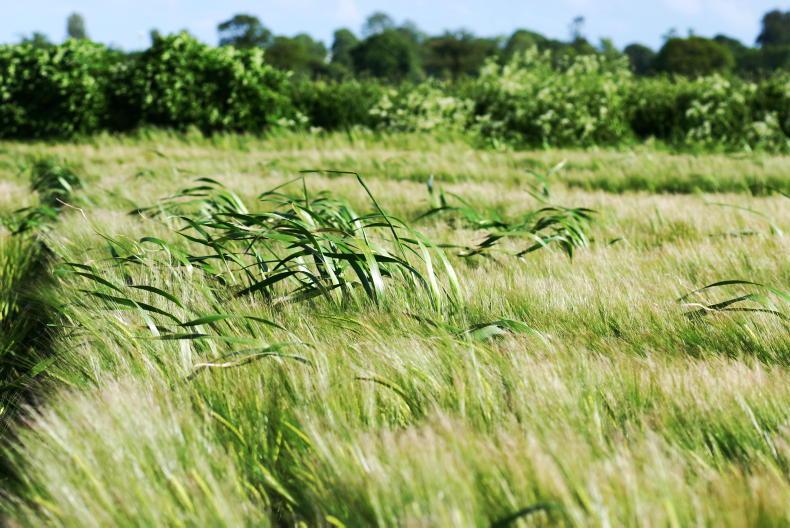
Growing continuous spring barley in the same fields, combined with repeated annual use of Axial Pro, an ACCase herbicide, as well as applying inadequate herbicide rates, has created an escalating problem with spring-germinating wild oats on some farms.
Even more concerning is the autumn use of ACCase graminicides such as Falcon, Claw or Stratos Ultra for volunteer cereal control in cover crops following an application of Axial Pro to the same field in the spring. It should be noted the use of these graminicides on cover crops is not allowed as the products do not have a label for use on cover crops.
This practice will hasten the development of resistance and if the same trend continues, the long-term viability of spring barley production will be seriously threatened.
Reports of herbicide control failures on wild oats have increased across counties Wexford, Carlow and Laois. In 2025, Oak Park Research Centre received 50 suspect wild oat samples for resistance testing, a figure significantly higher than in previous years, highlighting the scale of the problem.
It should be noted the use of these graminicides on cover crops is not allowed as the products do not have a label for use on cover crops
Current resistance levels in wild oats
From 2019 to 2024 Oak Park Research Centre received 123 suspect resistant wild oat samples. Following resistance testing 46% were found to be ACCase-resistant (Table 1).
To date, no resistance has been detected to the ACCase herbicide Centurion Max (used in winter oilseed rape or beet) and the ALS herbicides, including Pacifica Plus and Monolith (used in winter wheat only) or Broadway Star (used in winter wheat, winter rye and spring wheat).
Resistance testing on samples submitted in 2025 are not included in the results but once completed are likely to reveal even more resistant populations.
Biology and management options
Spring wild oats are among the most competitive grass weeds in cereal crops. UK estimates show that even one plant/m² can reduce yields by around 0.6t/ha in spring cereals and up to 1t/ha in winter cereals, demonstrating how competitive wild oats can be.
Wild oats differ from most other grass weeds (e.g. bromes, blackgrass, Italian ryegrass) because they can persist and proliferate across all crop establishment systems due to:
Long seed dormancy (>5 years) and high seed survival in soil.Sporadic germination patterns.Ability to emerge from depths greater than 10cm.High seed production (60-200 seeds per plant).Best practice to limit the potential development of wild oat resistance to the ACCase herbicides include:
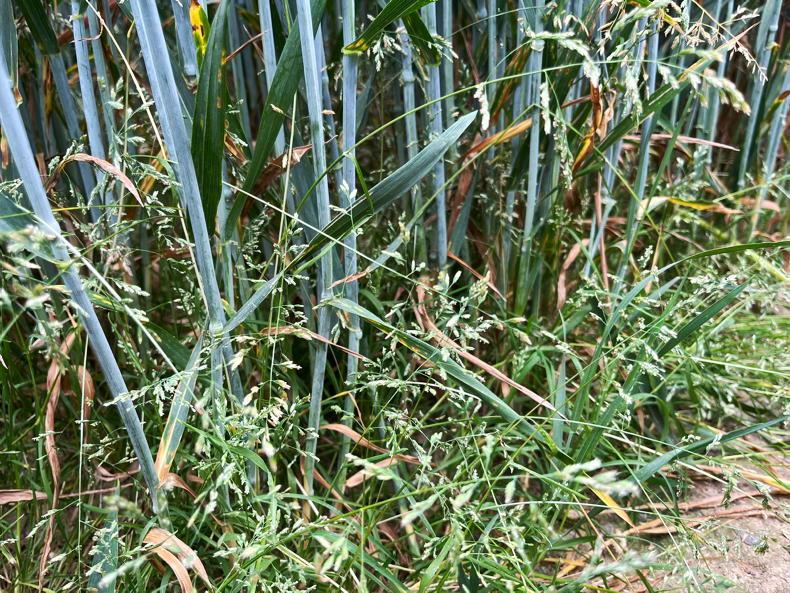
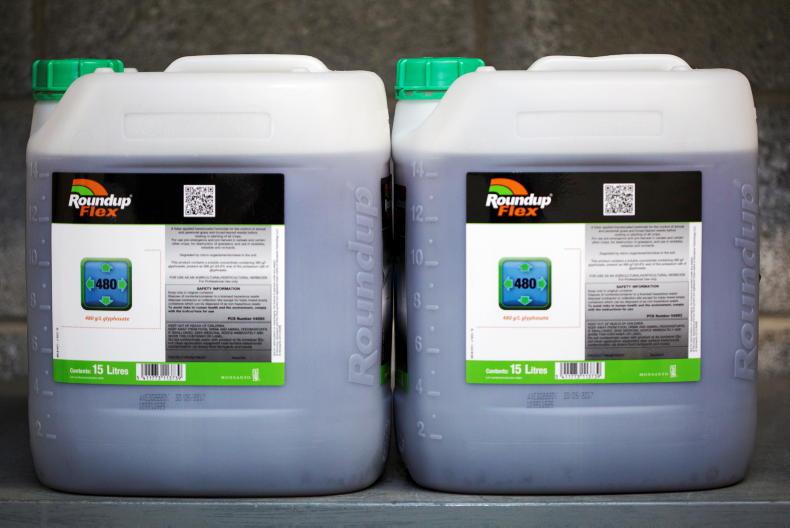
Implement a crop rotation that facilitates the use of various pre- and post-emergence herbicides.Use stale seedbeds to control seedling wild oats with glyphosate.Planting more competitive crops or varieties and using higher seeding rates will reduce the quantity of wild oat seed returned to the soil.Use ACCase and ALS herbicides at the full recommended label rate and at the correct timing.Where canary grass is an additional problem in barley fields, use the maximum recommended label rate of Axial Pro and time the application to control both wild oats and later-emerging canary grass.No resistance has been detected in canary grass to ACCase/ALS herbicides. Maintain machinery hygiene to prevent the spread of wild oats.Hand rogue small infestations or spray patches with glyphosate before seed set to prevent seed return to the soil.If you experience inadequate control of wild oats, conduct resistance testing to determine whether your wild oat population is susceptible or resistant to ACCase herbicides.When dealing with confirmed ACCase-resistant wild oats:
With Axial Pro and/or Falcon-resistant populations, adequate control may be achieved using Stratos Ultra initially.For populations resistant to Axial, Falcon and Stratos Ultra, the ALS herbicides including Pacifica Plus and Broadway Star can provide effective control. Centurion Max may also offer effective control across many resistant populations.Kerb Flo and Astro Kerb will offer effective control.Using robust rates of these products is essential to prevent further resistance build up to products that currently have efficacy.For widespread resistant populations, consider whole cropping, crop destruction or enterprise change to deplete the seed bank.
Wild oats are a noxious weed and farmers have a responsibility to control them.
A farmer’s experience
Simon Neville is an arable farmer based in Blackwater in the southeast of Wexford. Historically, spring and winter barley accounted for 80% of the crops grown on the farm. Although sterile brome, canary grass, and wild oats were all present as problem weeds, wild oats became increasingly difficult to control over time in some fields.
The first step in tackling the wild oat problem on the farm was to assess the weed pressure in individual fields and determine whether the populations were sensitive or resistant to given herbicides. Resistance testing revealed mixed populations, with some wild oat populations resistant to Axial Pro, Falcon and Stratos Ultra but remained susceptible to Centurion Max, Pacifica Plus and Broadway Star. Other field populations were fully sensitive to all the ACCase and ALS herbicides. This information allowed Simon to implement field-specific control measures to tackle the problem.
A significant change Simon implemented was shifting from continuous barley to mixed winter and spring crop rotations to address the unsustainable over-reliance on Axial Pro to control wild oats. In fields with resistant wild oats, a rotation including winter oilseed rape followed by winter wheat and winter rye was introduced. In fields where resistance was not detected, spring beans, winter oilseed rape, winter wheat, and winter rye were included to reduce the reliance on the ACCase herbicides and limit the potential of resistance development in sensitive populations.
Along with using various pre- and post-emergence herbicides within a rotation, Simon used cultural control measures to ensure wild oats were effectively managed and prevented from gaining a foothold within fields.
This included using stale seedbeds, increasing seeding rates, hand-rogueing late-germinating wild oats, cleaning and blowing down combines and balers before entering fields and harvesting fields with resistant populations last to avoid further spread.
In addition, brassica species such as tillage radish have been excluded from cover crop mixes to prevent club root build-up in the soil. This helps to secure the future of oilseed rape production on the farm which is an essential crop in both preventing and controlling grass weed populations.
Take-home message
From Simon Neville’s experience, taking preventative measures to avoid the development of resistant wild oats is more of a necessity than an option.
Once ACCase herbicide resistance occurs, there is no room for complacency, control measures need to be implemented as soon as possible to avoid uncontrollable infestations.
Resistance testing with Teagasc has been invaluable in guiding Simon to implement field-specific measures to deal with the problem.
Both a strict machinery hygiene policy and a diverse crop rotation have proven to be effective tools in managing resistant wild oats and other grass weeds on the farm.
Crops such as winter wheat, winter oilseed rape and winter rye have also proven to be the more profitable crops within given years, further contributing to the overall sustainability of the farming business.
Continuous use of herbicides in the same fields to the same crops can contribute to resistance build up.Effective herbicides need to be protected.A mix of cultural control methods and appropriate herbicide use can slow down and reduce the risk of herbicide resistance.Use resistance testing where fields have weed control difficulties to guide field-specific management.Remember: wild oats, like blackgrass, is a noxious weed – proactive measures are necessary to prevent its spread on infested land and ensure barley production remains viable.
Growing continuous spring barley in the same fields, combined with repeated annual use of Axial Pro, an ACCase herbicide, as well as applying inadequate herbicide rates, has created an escalating problem with spring-germinating wild oats on some farms.
Even more concerning is the autumn use of ACCase graminicides such as Falcon, Claw or Stratos Ultra for volunteer cereal control in cover crops following an application of Axial Pro to the same field in the spring. It should be noted the use of these graminicides on cover crops is not allowed as the products do not have a label for use on cover crops.
This practice will hasten the development of resistance and if the same trend continues, the long-term viability of spring barley production will be seriously threatened.
Reports of herbicide control failures on wild oats have increased across counties Wexford, Carlow and Laois. In 2025, Oak Park Research Centre received 50 suspect wild oat samples for resistance testing, a figure significantly higher than in previous years, highlighting the scale of the problem.
It should be noted the use of these graminicides on cover crops is not allowed as the products do not have a label for use on cover crops
Current resistance levels in wild oats
From 2019 to 2024 Oak Park Research Centre received 123 suspect resistant wild oat samples. Following resistance testing 46% were found to be ACCase-resistant (Table 1).
To date, no resistance has been detected to the ACCase herbicide Centurion Max (used in winter oilseed rape or beet) and the ALS herbicides, including Pacifica Plus and Monolith (used in winter wheat only) or Broadway Star (used in winter wheat, winter rye and spring wheat).
Resistance testing on samples submitted in 2025 are not included in the results but once completed are likely to reveal even more resistant populations.
Biology and management options
Spring wild oats are among the most competitive grass weeds in cereal crops. UK estimates show that even one plant/m² can reduce yields by around 0.6t/ha in spring cereals and up to 1t/ha in winter cereals, demonstrating how competitive wild oats can be.
Wild oats differ from most other grass weeds (e.g. bromes, blackgrass, Italian ryegrass) because they can persist and proliferate across all crop establishment systems due to:
Long seed dormancy (>5 years) and high seed survival in soil.Sporadic germination patterns.Ability to emerge from depths greater than 10cm.High seed production (60-200 seeds per plant).Best practice to limit the potential development of wild oat resistance to the ACCase herbicides include:
Implement a crop rotation that facilitates the use of various pre- and post-emergence herbicides.Use stale seedbeds to control seedling wild oats with glyphosate.Planting more competitive crops or varieties and using higher seeding rates will reduce the quantity of wild oat seed returned to the soil.Use ACCase and ALS herbicides at the full recommended label rate and at the correct timing.Where canary grass is an additional problem in barley fields, use the maximum recommended label rate of Axial Pro and time the application to control both wild oats and later-emerging canary grass.No resistance has been detected in canary grass to ACCase/ALS herbicides. Maintain machinery hygiene to prevent the spread of wild oats.Hand rogue small infestations or spray patches with glyphosate before seed set to prevent seed return to the soil.If you experience inadequate control of wild oats, conduct resistance testing to determine whether your wild oat population is susceptible or resistant to ACCase herbicides.When dealing with confirmed ACCase-resistant wild oats:
With Axial Pro and/or Falcon-resistant populations, adequate control may be achieved using Stratos Ultra initially.For populations resistant to Axial, Falcon and Stratos Ultra, the ALS herbicides including Pacifica Plus and Broadway Star can provide effective control. Centurion Max may also offer effective control across many resistant populations.Kerb Flo and Astro Kerb will offer effective control.Using robust rates of these products is essential to prevent further resistance build up to products that currently have efficacy.For widespread resistant populations, consider whole cropping, crop destruction or enterprise change to deplete the seed bank.
Wild oats are a noxious weed and farmers have a responsibility to control them.
A farmer’s experience
Simon Neville is an arable farmer based in Blackwater in the southeast of Wexford. Historically, spring and winter barley accounted for 80% of the crops grown on the farm. Although sterile brome, canary grass, and wild oats were all present as problem weeds, wild oats became increasingly difficult to control over time in some fields.
The first step in tackling the wild oat problem on the farm was to assess the weed pressure in individual fields and determine whether the populations were sensitive or resistant to given herbicides. Resistance testing revealed mixed populations, with some wild oat populations resistant to Axial Pro, Falcon and Stratos Ultra but remained susceptible to Centurion Max, Pacifica Plus and Broadway Star. Other field populations were fully sensitive to all the ACCase and ALS herbicides. This information allowed Simon to implement field-specific control measures to tackle the problem.
A significant change Simon implemented was shifting from continuous barley to mixed winter and spring crop rotations to address the unsustainable over-reliance on Axial Pro to control wild oats. In fields with resistant wild oats, a rotation including winter oilseed rape followed by winter wheat and winter rye was introduced. In fields where resistance was not detected, spring beans, winter oilseed rape, winter wheat, and winter rye were included to reduce the reliance on the ACCase herbicides and limit the potential of resistance development in sensitive populations.
Along with using various pre- and post-emergence herbicides within a rotation, Simon used cultural control measures to ensure wild oats were effectively managed and prevented from gaining a foothold within fields.
This included using stale seedbeds, increasing seeding rates, hand-rogueing late-germinating wild oats, cleaning and blowing down combines and balers before entering fields and harvesting fields with resistant populations last to avoid further spread.
In addition, brassica species such as tillage radish have been excluded from cover crop mixes to prevent club root build-up in the soil. This helps to secure the future of oilseed rape production on the farm which is an essential crop in both preventing and controlling grass weed populations.
Take-home message
From Simon Neville’s experience, taking preventative measures to avoid the development of resistant wild oats is more of a necessity than an option.
Once ACCase herbicide resistance occurs, there is no room for complacency, control measures need to be implemented as soon as possible to avoid uncontrollable infestations.
Resistance testing with Teagasc has been invaluable in guiding Simon to implement field-specific measures to deal with the problem.
Both a strict machinery hygiene policy and a diverse crop rotation have proven to be effective tools in managing resistant wild oats and other grass weeds on the farm.
Crops such as winter wheat, winter oilseed rape and winter rye have also proven to be the more profitable crops within given years, further contributing to the overall sustainability of the farming business.
Continuous use of herbicides in the same fields to the same crops can contribute to resistance build up.Effective herbicides need to be protected.A mix of cultural control methods and appropriate herbicide use can slow down and reduce the risk of herbicide resistance.Use resistance testing where fields have weed control difficulties to guide field-specific management.Remember: wild oats, like blackgrass, is a noxious weed – proactive measures are necessary to prevent its spread on infested land and ensure barley production remains viable. 





SHARING OPTIONS