


The old cliché of “up horn, down corn” certainly applied in 2025. Just before Christmas I received my Irish Cattle Breeding Federation (ICBF) herd plus summary of my beef enterprise, for the year ended 11 December 2025.
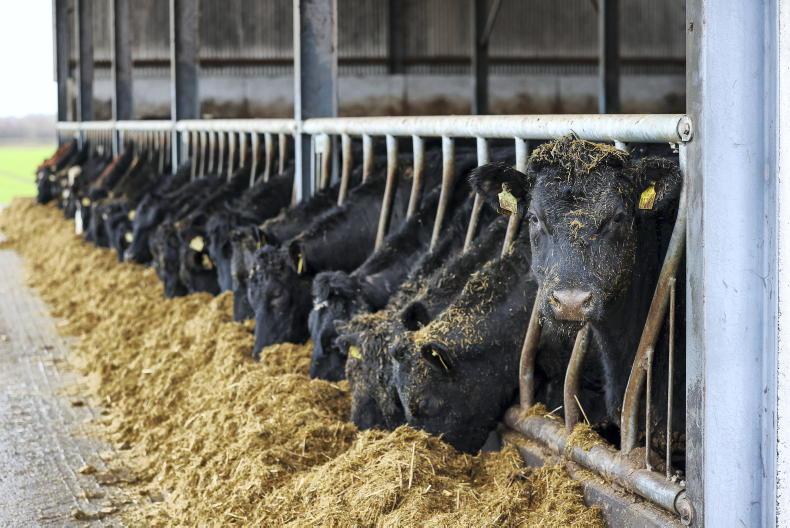
It’s a remarkable summary, spelling out what is predominantly a dairy-beef finishing unit on the place, with almost everything kept for about a year.
The aim is to get maximum weight gain from grass and everything finished below the 30-month cut off date for the maximum quality assurance payment.
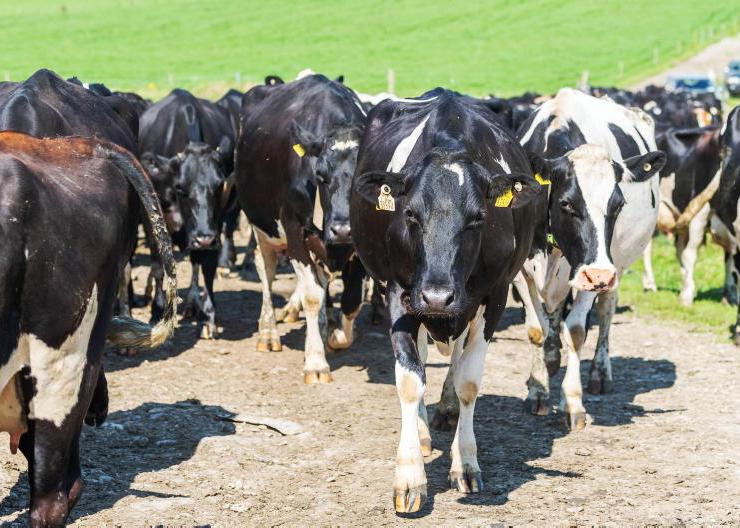
There were a few which had come from a suckler herd, but the vast bulk were Friesian/Holstein Angus-crosses with just short of 60% having a Commercial Beef Value (CBV).
My average CBV was almost exactly the same at €149 as the national average of €150.
But that’s where the normal expected measurements ended. As could be expected, the higher CBV animals finished at a younger age, but because it was such an extraordinary year – with pretty well continuously rising prices – the bottom third were the slowest to finish, but got the highest price per kilogramme at the factory and the lifetime gain in euro cents per day was practically the same regardless of the CBV of the animals.
However, in a time of static prices, there is no doubt the higher CBV animals would have returned the highest price while being slaughtered at a younger age.
The sum we have to do now is to compare the buying in price of the various categories and how long they were on the expensive full feed while being finished and work out the actual profit per animal.
I had hoped and expected to finish the year with zero mortality, but one morning we went out to find a bullock dead at the back of the shed.
This is, thank goodness, a rarity with the dairy-beef crosses. When we finished young bulls we inevitably had a mortality rate of 4% to 5%, which I found incredibly demoralising.
Our single mortality this year was collected by the knackery operated and owned by the local hunt.
So even from that point of view, I was glad that the anti-hunting bill was defeated so decisively in the Dáil.
The preliminary diagnosis for the dead animal was put down as a likely burst ulcer, which can happen at any stage.
That particular bullock was a write-off. But hopefully also a one-off. But the Christmas period wasn’t just about the cattle.
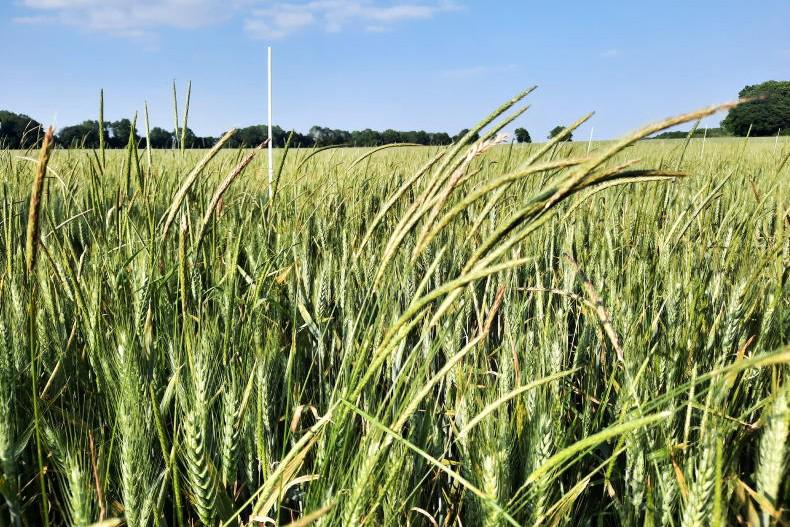
The run of continuous dry days came as a blessing. Suddenly, the winter barley fields were firm enough to take a tractor and sprayer, with practically not a mark, except in a very odd wet spot.
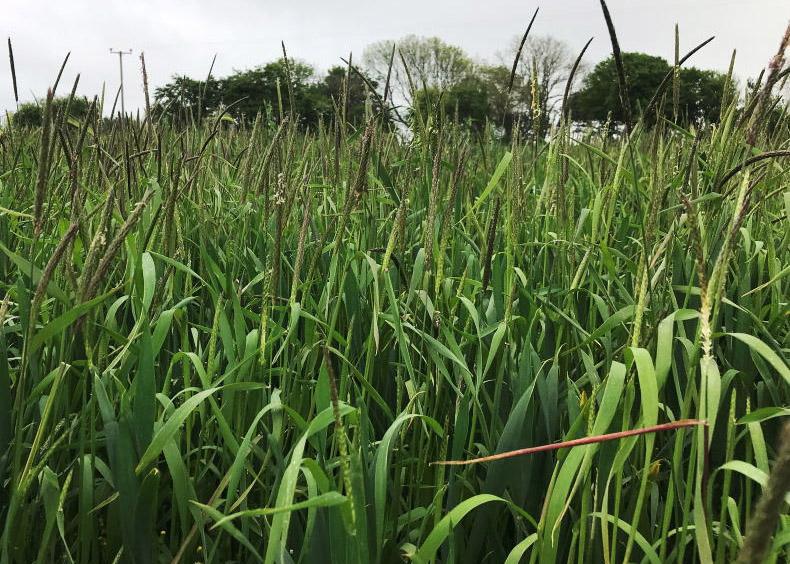
With very few options to control grass weeds in winter barley, it was a job I was delighted to get finished.
We also got out on the oilseed rape and we were just about to start on the wheat, which from a timing point of view is much more flexible, but suddenly, and for no reason we could fathom, the sprayer stopped working.
We had got it fully serviced in the autumn after the harvest and had replaced whatever we were advised needed replacing.
Not surprisingly, we had to wait until after the new year period to get it looked at properly; but then we ran into the problem of the residual water in the sprayer, as it had frozen enough to block any proper examination of the pipes and valves.
I’m pretty confident it shouldn’t be anything serious, but I’ll know more in a day or two. In the meantime, preparations for slurry spreading are beginning.



SHARING OPTIONS