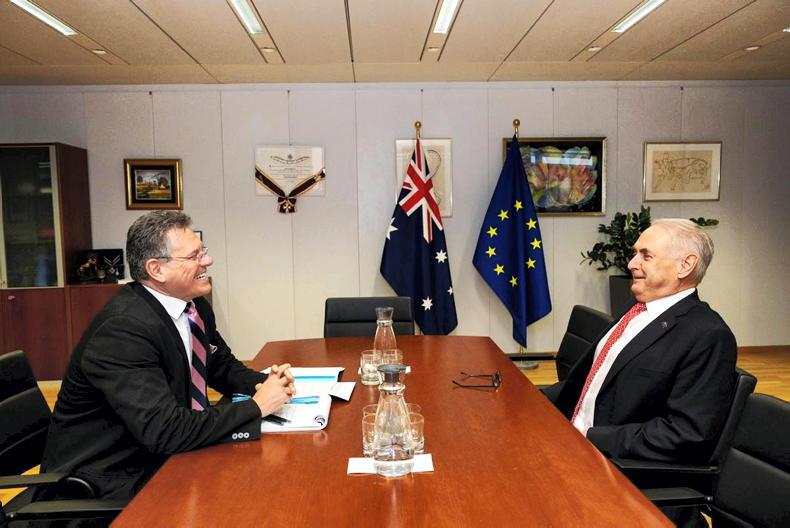
In the week that Australia concluded a trade agreement with the EU, Meat & Livestock Australia (MLA) published its industry projections for beef and sheepmeat this year.
As Australia is now one of Ireland’s main competitors in the UK market for beef imports and about to increase its access to the EU for both beef and sheepmeat, what happens in Australia matters for Irish beef producers and processors.
The outlook for the year ahead is positive according to MLA, with total slaughter forecast at 9.45 million head, 170,000 more than last year, which had been the highest annual total since 1978.
MLA is forecasting that this will be the high point in the current cycle, as factory cattle have a high proportion of females which is boosting the current kill, but reduces breeding capacity. Drought in some regions of the country is also a factor.
In the following two years, MLA is predicting that factory throughput will drop back to 8.856 million head in 2027 and to just over eight million head in 2028 as a greater proportion of heifers are kept for breeding.
Beef exports are forecast to increase to 2.3m tonnes carcase weight equivalent in 2026, another record.
Opportunities and threats for Australia
With an EU trade agreement added to the UK agreement, Australian beef exports will have more options in 2026 and the years ahead.
The other positive is that US demand for beef imports is expected to continue due to its herd being at its lowest point in 75 years.
Australia has unlimited access to the US market, with zero tariff, and it will continue to be its main export market for beef.
It has a low 5.6% tariff for South Korea and a reducing tariff for Japan, which will be 20% in 2026 and zero tariff for beef exports to China for a 205,000t quota. Its UK quota for 2026 at zero tariff is 60,000t.
All of this means that Australia enjoys favourable trading terms with its main export markets for beef and, against this background, its industry is unimpressed with the 30,600t agreed in the EU trade deal.
The other negative issue for Australia in 2026 is that China will charge a 55% tariff on all Australian beef imported above the 205,000t quota. This could be an issue later in the year, as, in 2025, Australia exported 273,000t of beef to China.
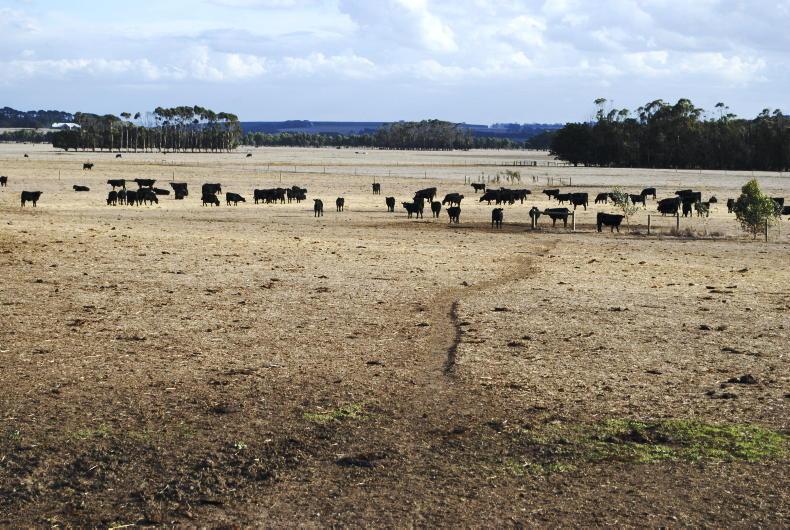
The risk of widespread drought is the biggest potential factor in Australian beef output and while the problem has been localised, it has existed in parts of the country in recent times.
The latest MLA forecast suggests that the national herd has reached its peak and numbers will reduce after this year.
Market conditions have been ideal, with huge demand from the US and increased opportunities in China since the US has been effectively excluded from that market since March last year.
Demand in other Asian countries has remained robust and the UK market has been growing, with more potential in the EU following the trade deal.
The only issue is the quota limitation in China, which could negatively affect its exports later in the year if the quota is close to being filled. Otherwise, it is a positive outlook for the Australian beef industry in the year ahead.
Read more
EU and Australia sign long-awaited trade deal
Editorial: trade deals finalised
Australia gets access for 30,600t of beef to EU under new trade deal
In the week that Australia concluded a trade agreement with the EU, Meat & Livestock Australia (MLA) published its industry projections for beef and sheepmeat this year.
As Australia is now one of Ireland’s main competitors in the UK market for beef imports and about to increase its access to the EU for both beef and sheepmeat, what happens in Australia matters for Irish beef producers and processors.
The outlook for the year ahead is positive according to MLA, with total slaughter forecast at 9.45 million head, 170,000 more than last year, which had been the highest annual total since 1978.
MLA is forecasting that this will be the high point in the current cycle, as factory cattle have a high proportion of females which is boosting the current kill, but reduces breeding capacity. Drought in some regions of the country is also a factor.
In the following two years, MLA is predicting that factory throughput will drop back to 8.856 million head in 2027 and to just over eight million head in 2028 as a greater proportion of heifers are kept for breeding.
Beef exports are forecast to increase to 2.3m tonnes carcase weight equivalent in 2026, another record.
Opportunities and threats for Australia
With an EU trade agreement added to the UK agreement, Australian beef exports will have more options in 2026 and the years ahead.
The other positive is that US demand for beef imports is expected to continue due to its herd being at its lowest point in 75 years.
Australia has unlimited access to the US market, with zero tariff, and it will continue to be its main export market for beef.
It has a low 5.6% tariff for South Korea and a reducing tariff for Japan, which will be 20% in 2026 and zero tariff for beef exports to China for a 205,000t quota. Its UK quota for 2026 at zero tariff is 60,000t.
All of this means that Australia enjoys favourable trading terms with its main export markets for beef and, against this background, its industry is unimpressed with the 30,600t agreed in the EU trade deal.
The other negative issue for Australia in 2026 is that China will charge a 55% tariff on all Australian beef imported above the 205,000t quota. This could be an issue later in the year, as, in 2025, Australia exported 273,000t of beef to China.
The risk of widespread drought is the biggest potential factor in Australian beef output and while the problem has been localised, it has existed in parts of the country in recent times.
The latest MLA forecast suggests that the national herd has reached its peak and numbers will reduce after this year.
Market conditions have been ideal, with huge demand from the US and increased opportunities in China since the US has been effectively excluded from that market since March last year.
Demand in other Asian countries has remained robust and the UK market has been growing, with more potential in the EU following the trade deal.
The only issue is the quota limitation in China, which could negatively affect its exports later in the year if the quota is close to being filled. Otherwise, it is a positive outlook for the Australian beef industry in the year ahead.
Read more
EU and Australia sign long-awaited trade deal
Editorial: trade deals finalised
Australia gets access for 30,600t of beef to EU under new trade deal





SHARING OPTIONS