


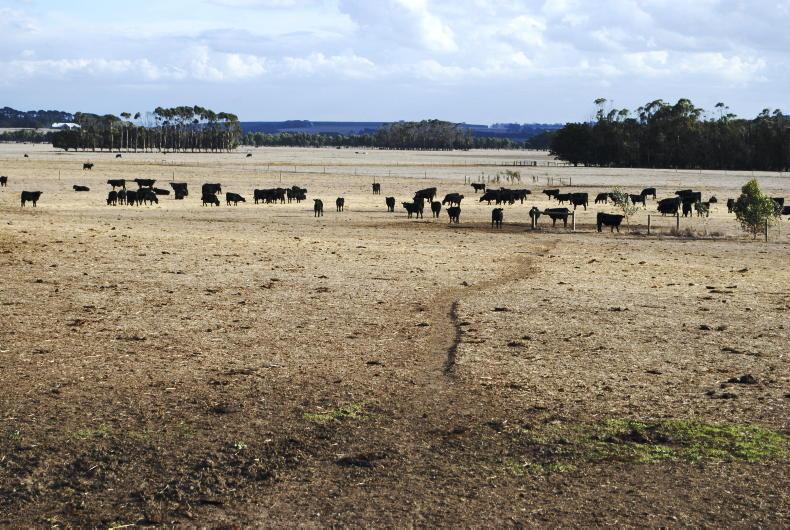
Meat and Livestock Australia (MLA) has published the top 10 trends for its meat industry in 2025.
Some of the issues will be recognised by Irish farmers and are indeed global, but others are very much specific to Australia.
The first issue highlighted is that US protein deficit is shaping global trade.
On one level, this is of little relevance for Irish beef producers, as we export such a negligible amount of beef to that market, while it is Australia’s main beef and sheepmeat export market.
On another level, the fact that there is such strong demand in the US and Asian markets means that Australia is less focused on developing the UK market than it might otherwise be.
Cattle supply and trade
The slaughter weight of Australian cattle is also on an upward curve, with the expected record beef production of 20.79m tonnes this year being delivered from just over nine million head of cattle.
This is 300,000 fewer than in 2014, when the previous highest production figure was recorded, meaning that carcase weights have increased.
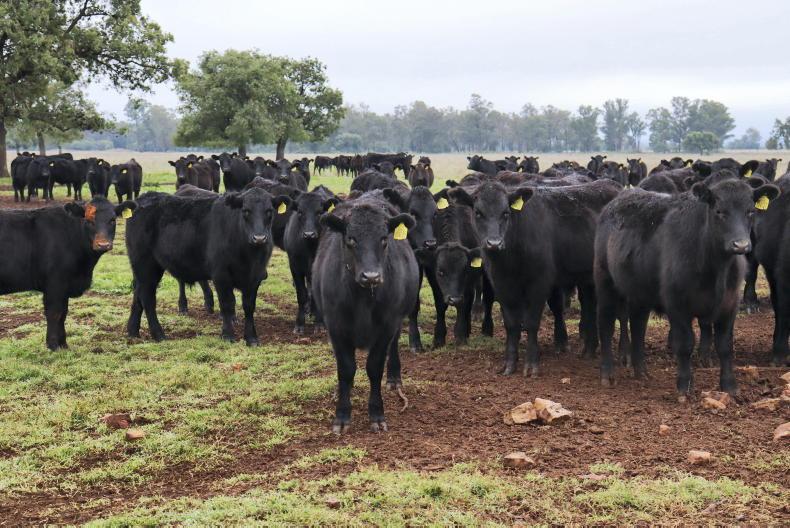
Australia’s feedlots have also been expanding in 2025 with a record 1.58 million cattle on feed at 30 June this year.
Feedlot capacity has also reached a record high of 1.71 million head with 93% utilisation. MLA says that this reflects sustained investment and robust demand for grain-fed beef.
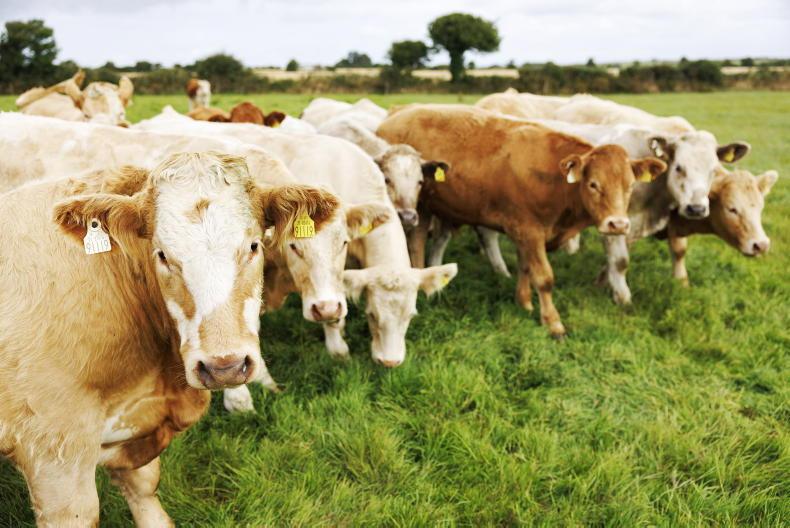
Ireland remains very much a grass-based system, but a greater number of cattle are being supplied from specialist beef finishers.
Irish beef output will be down this year with, cattle numbers expected to be over 200,000 fewer in 2025 than they were last year.
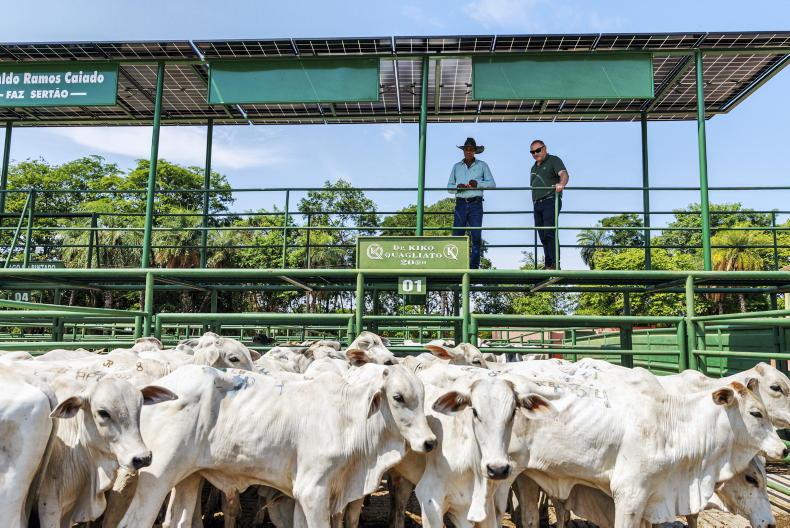
Live exports are an important part of the Australian cattle industry, as is also the case in Ireland.
In 2025, Australia is expected to export 800,000 head of finished cattle, mainly to Indonesia, but increasingly to Middle East and North African countries as well.
Ireland, on the other hand, exports mainly calves and weanlings. Calves tend to go to mainland European countries, while Northern Ireland is an important market for store cattle.
Overall, Ireland has exported 346,344 head so far in 2025, down 4.3% on the same period last year, according to Bord Bia data.
Sheep
Australia’s sheep farmers enjoyed record lamb prices in 2025, peaking at AUS$10.21/kg (€5.83/kg) deadweight in August before falling back to $7.45/kg (€4.26/kg) in November.
Production is expected to be 3% lower this year - at 610,000 tonnes - than the 2024 record, but it is still slightly higher than it was in 2023.
There is a much sharper decline in Irish sheepmeat production in 2025 and, up to the end of November, it was at 1.9 million head through the factories, a 18% decline on the corresponding period last year.
Irish lamb prices peaked at €9.05/kg in April and have fallen back to €7.53/kg at the end of November.
Staying with lamb, Australia has been developing a premium lamb market and has rolled out the Meat Standards Australia eating quality measurement system for lamb. There isn’t a comparable system for Irish lamb or EU lamb and this could provide Australian lamb exports with a point of differentiation.
Australian sheep breeds have also been changing, with a move to more meat-focused breeds, as wool values have been in prolonged decline.
Irish sheep have always tended to be meat-focused, with this a mainstay in lowland production systems while hill systems balance meat production and maintaining breed hardiness.
Wool has always been of secondary importance, though there has been growing interest in wool-free breeds, reflecting the cost of shearing what has become a low-value product.
International trade
US tariff policy affected Australian beef and sheepmeat exports for a period during the year, but later reversed.
Despite this, beef exports to the US have increased by 28% to 424,459 tonnes at the end of November, compared with the same period last year - though lamb volumes are down 5% to 70,303 tonnes, according to USDA import data.
Ireland has negligible beef exports to the US at present, but Irish lamb was launched in that market during the year and Bord Bia has expectations that it will grow to be a significant market.
Other issues
Australia will have a record year for goat meat production and exports in 2025, but this is a meat category where Ireland doesn’t have a commercial presence.
The other topic highlighted by MLA for this year was weather and this is a topic that affects farmers around the world.
In Australia, drought is often the issue and this year there was a north-south divide, with northern Australia getting plenty of rain, whereas the southern part was much drier.
Irish farmers, particularly in the northern half of the country, will recall the weather of 2025 fondly, though at times, in some parts of the southeast, there were prolonged dry periods.




SHARING OPTIONS