Teagasc is currently holding a series of events in Donegal around animal health and management during the winter months. The first in the series took place in Donegal Livestock mart last Wednesday night.
A number of speakers gave presentations on the night including local vet Nick Garvey. Nick and a Teagasc advisor used a number of livers and lungs to highlight the importance of good animal health management as we enter into the winter months.
“Every autumn we see cases of pneumonia. The underlying issue is on many occasions a lung worm problem. If you are hearing calves coughing you are probably too late but that’s a trigger that you should be going in to dose them,” Nick Garvey said.
When asked about what the best product, he said in the case where calves were already coughing, a levamisole drench was the best to use and it gives a gentle kill of worms as opposed to a severe kill which can happen with some of the avermectin type products. He also highlighted some issues in getting levamisole drenches this year.
“It’s a no-brainer to make sure you are on top of things when it comes to dosing, especially when weanlings are worth so much this year,” he said.
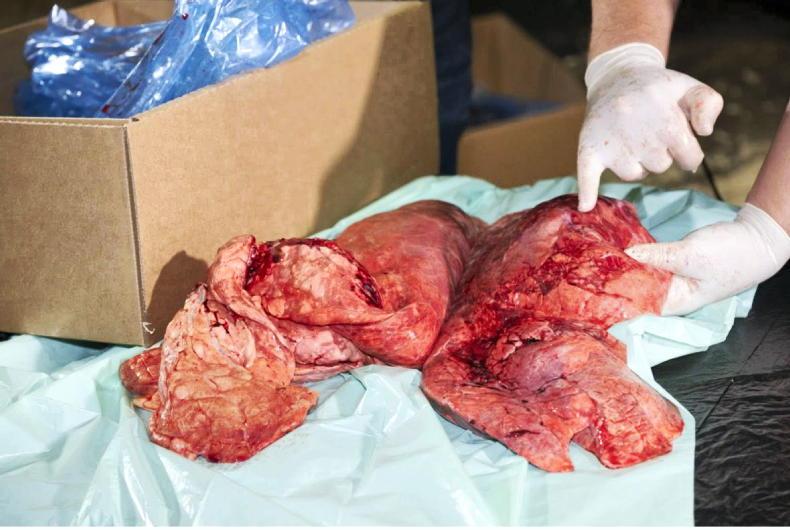
Local vet Nick Garvey points out so e lung damage due to pneumonia ot farmers on the night. /Clive Wasson
“The dose is probably going to cost less than 50-60 cent/head and it’s not just avoiding sickness, it’s also making sure your calves are thriving and making money for you. Lungworm is a low lying fruit and shouldn’t really be an issue on farms.”
Gut worms are easier to identify through weanlings scouring, Garvey said. Dosing for gut worms should take place in October at the latest.
Nick pointed out that lice need be dealt with on the way into the shed as opposed to dealing with it when you see it.
“You’ll get a longer period of treatment from your product if you treat early before lice becomes a problem.”
He also added that he was a fan of clipping backs, not for making the product work better but rather for exposing the lice on the back to light which should help reduce their life cycle.
Nick was also quizzed on fluke and whether the dry year would change dosing protocols. His answer was simple.
“I have never seen a dry enough year where you wouldn’t dose for fluke in Donegal. Rumen fluke was also mentioned with the local factory seeing more rumen fluke in recent months.”
Teagasc beef specialist David Argue presented the Teagasc beef budgets highlighting the different beef prices required to break even on different beef systems buying cattle in 2025 and bringing to finish.
Assuming current weanling and store cattle prices most of the systems will require a beef price of well north of €8/kg to break even in 2026.
David also highlighted a number of areas that farmers can control within their farm gate that could have an impact on the profitability of a finishing system with weight gain being one of the biggest.
“Margins are tight and poor weight gain will erode any chance you have of making a margin so it’s important that diets, health and housing conditions are correct to maximise weight gain on farms,” he said.
Commenting on weanling health Donegal Farmers Mart manager Eimear McGuinness said: “We have to take the exporter comments on board around weanling health and it’s not just about exporters buying weanlings, it’s also about farmers buying weanlings.

The crowd look on as local vet Nick Garvey explains how rumen fluke affects amimals. /Clive Wasson
“Everybody wants to sell stock that go on and do well and suckler farmers should be doing everything in their power to ensure that weanlings are healthy at sale. It’s not nice taking that call from a farmer that animals have gotten sick or worse still, died.
“At the end of the day we need all the customers we can get around the ring.”
Closing off the night Teagasc advisor Tommy Dohery said: “It’s great to see the positivity around suckling again but we have lost 8,000 cows out of Co Donegal in the last 10 years with suckler cow numbers now back at 31,000.
“It’s sometimes easy to sell everything when the trade is good but I would urge farmers to think about your replacements and don’t sell all the good ones. We can all see the price that good stock is making so think about where that good stock will come from in the future.”
Teagasc is currently holding a series of events in Donegal around animal health and management during the winter months. The first in the series took place in Donegal Livestock mart last Wednesday night.
A number of speakers gave presentations on the night including local vet Nick Garvey. Nick and a Teagasc advisor used a number of livers and lungs to highlight the importance of good animal health management as we enter into the winter months.
“Every autumn we see cases of pneumonia. The underlying issue is on many occasions a lung worm problem. If you are hearing calves coughing you are probably too late but that’s a trigger that you should be going in to dose them,” Nick Garvey said.
When asked about what the best product, he said in the case where calves were already coughing, a levamisole drench was the best to use and it gives a gentle kill of worms as opposed to a severe kill which can happen with some of the avermectin type products. He also highlighted some issues in getting levamisole drenches this year.
“It’s a no-brainer to make sure you are on top of things when it comes to dosing, especially when weanlings are worth so much this year,” he said.
Local vet Nick Garvey points out so e lung damage due to pneumonia ot farmers on the night. /Clive Wasson
“The dose is probably going to cost less than 50-60 cent/head and it’s not just avoiding sickness, it’s also making sure your calves are thriving and making money for you. Lungworm is a low lying fruit and shouldn’t really be an issue on farms.”
Gut worms are easier to identify through weanlings scouring, Garvey said. Dosing for gut worms should take place in October at the latest.
Nick pointed out that lice need be dealt with on the way into the shed as opposed to dealing with it when you see it.
“You’ll get a longer period of treatment from your product if you treat early before lice becomes a problem.”
He also added that he was a fan of clipping backs, not for making the product work better but rather for exposing the lice on the back to light which should help reduce their life cycle.
Nick was also quizzed on fluke and whether the dry year would change dosing protocols. His answer was simple.
“I have never seen a dry enough year where you wouldn’t dose for fluke in Donegal. Rumen fluke was also mentioned with the local factory seeing more rumen fluke in recent months.”
Teagasc beef specialist David Argue presented the Teagasc beef budgets highlighting the different beef prices required to break even on different beef systems buying cattle in 2025 and bringing to finish.
Assuming current weanling and store cattle prices most of the systems will require a beef price of well north of €8/kg to break even in 2026.
David also highlighted a number of areas that farmers can control within their farm gate that could have an impact on the profitability of a finishing system with weight gain being one of the biggest.
“Margins are tight and poor weight gain will erode any chance you have of making a margin so it’s important that diets, health and housing conditions are correct to maximise weight gain on farms,” he said.
Commenting on weanling health Donegal Farmers Mart manager Eimear McGuinness said: “We have to take the exporter comments on board around weanling health and it’s not just about exporters buying weanlings, it’s also about farmers buying weanlings.
The crowd look on as local vet Nick Garvey explains how rumen fluke affects amimals. /Clive Wasson
“Everybody wants to sell stock that go on and do well and suckler farmers should be doing everything in their power to ensure that weanlings are healthy at sale. It’s not nice taking that call from a farmer that animals have gotten sick or worse still, died.
“At the end of the day we need all the customers we can get around the ring.”
Closing off the night Teagasc advisor Tommy Dohery said: “It’s great to see the positivity around suckling again but we have lost 8,000 cows out of Co Donegal in the last 10 years with suckler cow numbers now back at 31,000.
“It’s sometimes easy to sell everything when the trade is good but I would urge farmers to think about your replacements and don’t sell all the good ones. We can all see the price that good stock is making so think about where that good stock will come from in the future.”





SHARING OPTIONS