Nicholas Ryan
Clonmel, Co Tipperary
Nicholas farms with his father Jimmy in Tipperary and they share a combine and seed drill with Nicholas’s uncle Michael too. As the two farms differ in soil type, this usually works well with the fields being planted and ripening in at different times. The farm totals 300ac, with about 200ac dedicated to tillage and the remainder in grass for a beef enterprise.
This year, Nicholas has a fairly even split among the crops he grows, with winter oilseed rape, winter rye, wheat and oats already in the ground. He plans to plant spring malting barley for Dairygold in ground where there is currently a cover crop.
Nicholas runs a plough-based establishment system on his loam to clay loam soils. The plough is usually followed by a disc harrow and then a one-pass with a power harrow. His locality received 881mm of rainfall in 2025.
Nicholas also runs Golden Vale Research on the farm. This is a private independent agricultural research company Nicholas founded. He currently has trials investigating alternative fertilisers, agricultural technologies, and soil remediation.
Donald Logue
Muff, Co Donegal
Donald returns for a second year on From the Tramlines. Donald is a small-scale organic farmer who grows potatoes, spinach, lettuce, tomatoes, Brussels sprouts, cabbage, spring onions and a mixed crop of cereals and legumes.
Donald has two polytunnels in which he grows the tomatoes. The crops and vegetables are sold directly from the farm, whether that be to the consumer or to other organic farmers.
He has also planted winter oats for the first time this year to try to control weeds.
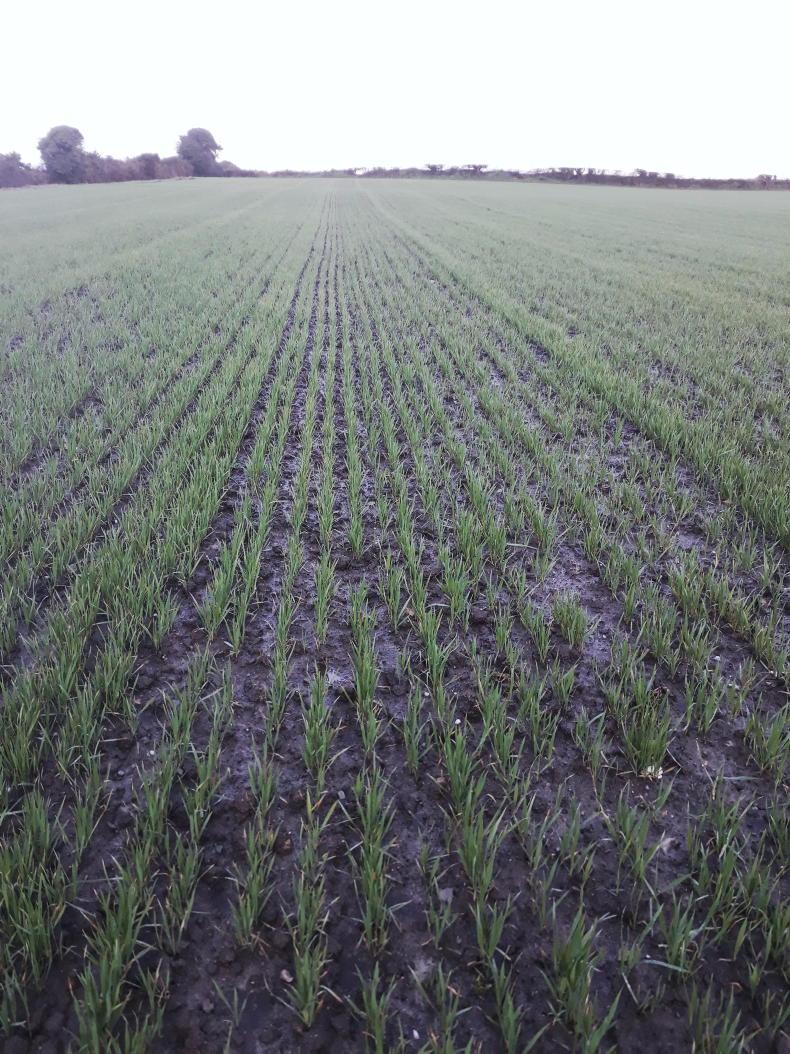
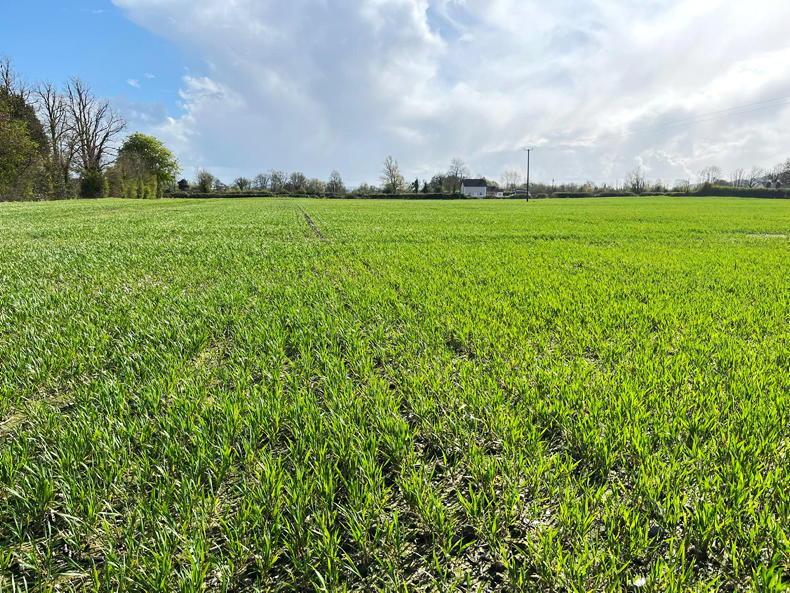
Donald's organic winter oats have came through the winter very well.
He says the oats look a picture and have had a great establishment. They were planted in October in dry conditions on his medium soils.
The headlands are not doing quite as well as the weather turned and he couldn’t get them planted until a week later.
When the ground dries out a bit, he will apply chicken manure pellets to the crop to drive it on.
Christopher Gill
Caledon Estate,
Co Tyrone
Christopher is the farm manager of Caledon Estate in Tyrone, an estate of 2,500ac, of which 1,000ac is in forestry. They have a large arable and grassland operation to supply an anaerobic digestor and are now moving towards offering a slurry separation service to farmers to supply the digestor.
There is also a herd of red deer and an orchard on the farm.
This year, there is winter oilseed rape, wheat and barley destined for grain on the farm, while triticale, rye and wheat have been planted for wholecropping. A plough and one-pass system is used for establishment, but there have been times when Christopher has used non-inversion establishment systems too on what he describes as good hardy soils.
The farm is alongside the River Blackwater and has experienced some damage to winter crops from persistent flooding recently, especially in the hollows in fields.
However, Christopher says this is normal for them in a wet winter, and considering how much rain there has been, the crops have come through it quite well with decent canopies.
Brian Crowley
Ballycotton, Co Cork
Brian is back for another year of From the Tramlines. Brian farms with his brother Paul on 510ac in Cork, a mixture of owned and leased land. They also fatten some cattle alongside the tillage enterprise.
They have winter barley, wheat and oilseed rape already in the ground, while beans, barley, wheat and beet will be planted in the coming weeks.
This year is the first time that Brian planted all of his winter crops through minimum tillage due to the dry weather during the autumn. He says the crops came through the winter well and there was an excellent establishment with no slug damage. They have all received a herbicide and an aphicide where required.
Brian still uses the plough when required and he also has a strip-till drill which is typically used for oilseed rape and beans.
The farm’s soils are generally free-draining with a sandy-loam texture.
Hugh McDonnell
Bagenalstown,
Co Carlow
Hugh farms with his nephew Shane near Bagenalstown in Co Carlow. The farm is a mix of a sandy home farm and a very heavy outfarm. Hugh has winter oilseed rape, winter wheat and winter oats this year. Hugh says he has never seen anything like the oats to grow this winter. The wheat is OK but there is one part struggling where it was rolled after sowing when it shouldn’t have been.
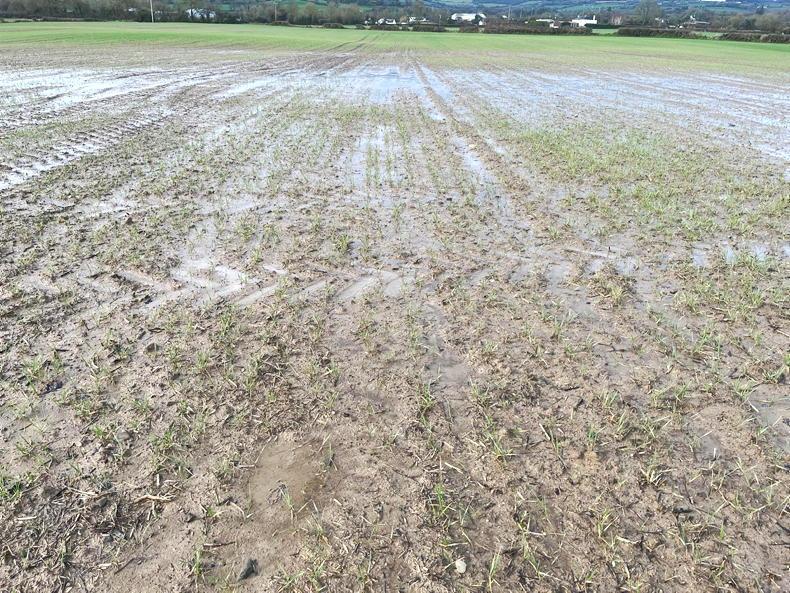
While most of his crops look well, some of Hugh's wheat in Carlow is struggling, especially where the crop was rolled after sowing.
He would usually have winter barley, but the field it was planned for has a bit of a brome problem. Therefore, it has gone into wheat instead so that there is a wider range of herbicides available to control the brome.
Hugh began using non-inversion tillage on the farm in earnest in 2003, and while he still uses the plough when required, it does not happen too often. There was 1,010mm of rainfall on the farm last year, much higher than the average of 850mm, but much of this fell in the autumn.
Shaun Diver
Tullamore Farm
The Irish Farmers Journal’s Tullamore Farm will feature on From the Tramlines again this year, with farm manager Shaun Diver keeping us up to date on the budding tillage enterprise. Last year was the first time Shaun had a combine on the farm since he took the reins, and he is eager to see it return this year.
This will be his second year of growing spring barley and his third year growing a combi-crop of barley, oats, and peas. The inclusion of tillage on the farm has been a success so far. These benefits have included the availability of straw, a helpful inclusion in the reseeding plan to control weeds, and a reduction in the meal bill and the amount of imported feed used on the farm. Shaun also planted two cover crops last year, forage rape and forage rye. These have provided vital winter grazing, even if utilisation has been a challenge this year.
Gary Gillespie
UCD Lyons Farm, Celbridge, Co Kildare
Gary is back for a second year to keep us up to date with what is happening at UCD Lyons Farm. Gary is an assistant professor in crop science, focusing on emerging crops and agtech solutions.
He is planting a demonstration and teaching area once again, which will be used to teach UCD undergraduate students.
This will include all the main Irish tillage crops in addition to some more exotic and unusual crops that are not usually planted in Ireland.
Winter oilseed rape, beans, peas, barley, oats, wheat, rye and spelt have already been planted, as well as plots of spring barley, wheat and oats to demonstrate the issues with planting these crops in the autumn.
Many of the experimental trials will roll over for another year, but there are also a couple of new additions.
One of these is examining intercropping for both grain and wholecropping purposes, while another is looking at rooting and high-tech sensors under different establishment methods.
Stephen Wallace
Mountrath, Co Laois
Stephen is another of our returning farmers for 2026. He farms with his brother Derrick in Laois on 100ac of owned land – and they also run Wallace Fencing.
This year, winter oilseed rape, rye, wheat, and hybrid barley have been planted. Stephen says he is not sure if the oilseed rape will make it as it was planted very late and the GAI is less than 0.5. The winter cereals have had an excellent establishment, which Stephen says has been improved by the purchase of a new disc coulter drill to replace one with Suffolk coulters.
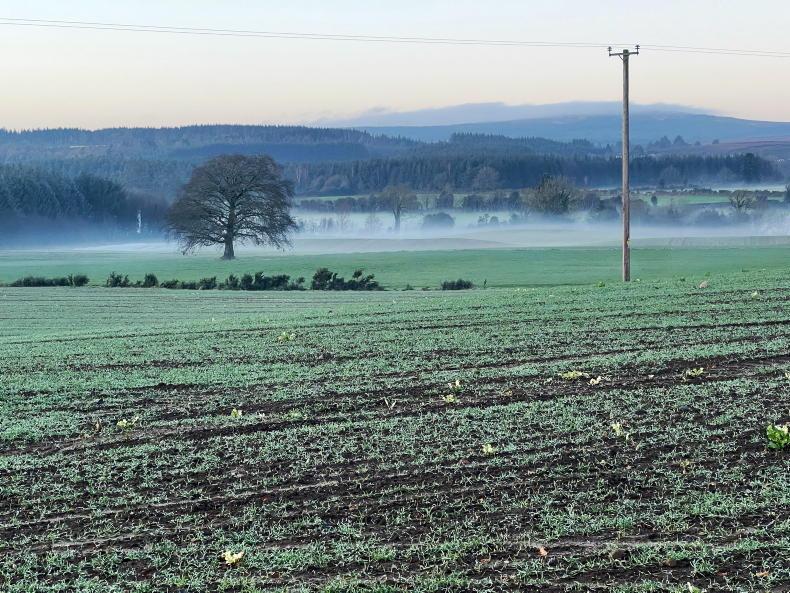
Stephen's winter crops have come through the winter in good condition in Laois.
If the land dries out soon, spring beans will be planted, but Stephen will turn to barley or oats if it is not planted by April.
He is hoping to try liquid nitrogen on the farm for the first time this year while also trying to build his own RTK base station and autosteer system with AgOpenGPS.
Stephen says he cannot justify paying the price for an off-the-shelf system for a small-scale operation, so he is trying to go about it by building it himself instead.
Patrick Daly
Ballinasloe,
Co Galway
Patrick runs a tillage farm in Galway that is also home to some sheep and provides B&B for cattle over the winter months too. The farm consists of mostly leased land and has heavy and stony soils, but Patrick says there is still some very good land in it. The leasing of land is becoming a huge issue for tillage farmers due to market pressures and soaring costs.
Patrick carries out 90% of the work himself on the farm and likes to keep his head down and get through the work, but it is getting harder to do this now with shorter weather windows.
He has winter oilseed rape, wheat, barley and oats planted on the farm, and will be looking to get barley and beans in the ground in the coming weeks. The winter crops look healthy enough despite the punishment they’ve received over the winter months. Patrick got out with manganese and sulphur on 1 January which he says has been a massive help.
Martin Ennis
Naul, Co Dublin
Martin runs a 1,100ac farm with his cousin Paul and Paul’s son Sam. The farm is a mixture of owned and leased land.
In total, 800ac is in tillage, with winter oilseed rape, wheat, barley, and oats in the ground and beans and barley hopefully being planted in the coming weeks.
The remaining 300ac on the farm is in grass and a lot of this is cut for hay and sold to customers. There are also a few cattle that graze the marginal land on the farm.
All the tillage land is ploughed each year, and while the soil is very good, Martin says they can be thrown out of fields very quickly in the back-end.
The crops are a mixed bag so far this year. The winter oilseed rape looks very promising, but the barley is only okay, with yellow patches beginning to emerge where there has been waterlogging.
Some winter wheat is very good but 40ac has been written off with the rain.
Martin’s farm has seen a huge volume of rain over the past six weeks which is very unusual for the area.
Conor Callan
Ardee,
Co Louth
Conor farms alongside his father Michael and brothers Seán and Barry between Ardee and Dunleer in Co Louth. They run a mixed farm, with a large dairy herd but also a tillage enterprise.
The farm has winter wheat, winter barley and forage rye planted. The rye will be mowed, swarthed and picked up with a silage harvester in late April or early May before maize is planted in its place. The farm has a mixture of light and heavy soils, and ploughing is used across all crops.
The winter wheat looks pretty good at present and is a lot nicer than the barley which is under pressure with the rain and is going yellow.
Some of the wheat got a pre-emergence herbicide in the autumn but nothing else has been applied to the wheat or barley. Conor is hoping for a fine spell so he can get in with the first of the fertiliser soon.
Michael Martin
Rathnure,
Co Wexford
Michael farms a mixed tillage and beef farm in Wexford with his father Michael Sr, brother Stephen, and Keith Wilson.
The farm currently has winter oilseed rape, barley, oats and wheat planted. The plan for the coming weeks is to get feed and malting barley, oats, beans, beet and maize into the ground.
Both minimum tillage and plough-based systems are used on the farm, with the plough dominating in the springtime in recent years due to the wet springs we have experienced. The farm mostly has brown earth soils, but there is some sandy, shingly soils and clay soils too.
The crops are hungry for nitrogen at the moment and some compound fertiliser has been spread on the barley this week.
Michael is in his fourth year of hosting farm walks on his farm for secondary school ag science students from around the southeast.
This helps to provide some practical experience for students to complement learning in the classroom.
This is an extremely tough year for tillage farmers, financially and weather wise. We really appreciate these 12 farmers giving us an insight into their farms and the highs and lows they are experiencing in their businesses at present.
Nicholas Ryan
Clonmel, Co Tipperary
Nicholas farms with his father Jimmy in Tipperary and they share a combine and seed drill with Nicholas’s uncle Michael too. As the two farms differ in soil type, this usually works well with the fields being planted and ripening in at different times. The farm totals 300ac, with about 200ac dedicated to tillage and the remainder in grass for a beef enterprise.
This year, Nicholas has a fairly even split among the crops he grows, with winter oilseed rape, winter rye, wheat and oats already in the ground. He plans to plant spring malting barley for Dairygold in ground where there is currently a cover crop.
Nicholas runs a plough-based establishment system on his loam to clay loam soils. The plough is usually followed by a disc harrow and then a one-pass with a power harrow. His locality received 881mm of rainfall in 2025.
Nicholas also runs Golden Vale Research on the farm. This is a private independent agricultural research company Nicholas founded. He currently has trials investigating alternative fertilisers, agricultural technologies, and soil remediation.
Donald Logue
Muff, Co Donegal
Donald returns for a second year on From the Tramlines. Donald is a small-scale organic farmer who grows potatoes, spinach, lettuce, tomatoes, Brussels sprouts, cabbage, spring onions and a mixed crop of cereals and legumes.
Donald has two polytunnels in which he grows the tomatoes. The crops and vegetables are sold directly from the farm, whether that be to the consumer or to other organic farmers.
He has also planted winter oats for the first time this year to try to control weeds.
Donald's organic winter oats have came through the winter very well.
He says the oats look a picture and have had a great establishment. They were planted in October in dry conditions on his medium soils.
The headlands are not doing quite as well as the weather turned and he couldn’t get them planted until a week later.
When the ground dries out a bit, he will apply chicken manure pellets to the crop to drive it on.
Christopher Gill
Caledon Estate,
Co Tyrone
Christopher is the farm manager of Caledon Estate in Tyrone, an estate of 2,500ac, of which 1,000ac is in forestry. They have a large arable and grassland operation to supply an anaerobic digestor and are now moving towards offering a slurry separation service to farmers to supply the digestor.
There is also a herd of red deer and an orchard on the farm.
This year, there is winter oilseed rape, wheat and barley destined for grain on the farm, while triticale, rye and wheat have been planted for wholecropping. A plough and one-pass system is used for establishment, but there have been times when Christopher has used non-inversion establishment systems too on what he describes as good hardy soils.
The farm is alongside the River Blackwater and has experienced some damage to winter crops from persistent flooding recently, especially in the hollows in fields.
However, Christopher says this is normal for them in a wet winter, and considering how much rain there has been, the crops have come through it quite well with decent canopies.
Brian Crowley
Ballycotton, Co Cork
Brian is back for another year of From the Tramlines. Brian farms with his brother Paul on 510ac in Cork, a mixture of owned and leased land. They also fatten some cattle alongside the tillage enterprise.
They have winter barley, wheat and oilseed rape already in the ground, while beans, barley, wheat and beet will be planted in the coming weeks.
This year is the first time that Brian planted all of his winter crops through minimum tillage due to the dry weather during the autumn. He says the crops came through the winter well and there was an excellent establishment with no slug damage. They have all received a herbicide and an aphicide where required.
Brian still uses the plough when required and he also has a strip-till drill which is typically used for oilseed rape and beans.
The farm’s soils are generally free-draining with a sandy-loam texture.
Hugh McDonnell
Bagenalstown,
Co Carlow
Hugh farms with his nephew Shane near Bagenalstown in Co Carlow. The farm is a mix of a sandy home farm and a very heavy outfarm. Hugh has winter oilseed rape, winter wheat and winter oats this year. Hugh says he has never seen anything like the oats to grow this winter. The wheat is OK but there is one part struggling where it was rolled after sowing when it shouldn’t have been.
While most of his crops look well, some of Hugh's wheat in Carlow is struggling, especially where the crop was rolled after sowing.
He would usually have winter barley, but the field it was planned for has a bit of a brome problem. Therefore, it has gone into wheat instead so that there is a wider range of herbicides available to control the brome.
Hugh began using non-inversion tillage on the farm in earnest in 2003, and while he still uses the plough when required, it does not happen too often. There was 1,010mm of rainfall on the farm last year, much higher than the average of 850mm, but much of this fell in the autumn.
Shaun Diver
Tullamore Farm
The Irish Farmers Journal’s Tullamore Farm will feature on From the Tramlines again this year, with farm manager Shaun Diver keeping us up to date on the budding tillage enterprise. Last year was the first time Shaun had a combine on the farm since he took the reins, and he is eager to see it return this year.
This will be his second year of growing spring barley and his third year growing a combi-crop of barley, oats, and peas. The inclusion of tillage on the farm has been a success so far. These benefits have included the availability of straw, a helpful inclusion in the reseeding plan to control weeds, and a reduction in the meal bill and the amount of imported feed used on the farm. Shaun also planted two cover crops last year, forage rape and forage rye. These have provided vital winter grazing, even if utilisation has been a challenge this year.
Gary Gillespie
UCD Lyons Farm, Celbridge, Co Kildare
Gary is back for a second year to keep us up to date with what is happening at UCD Lyons Farm. Gary is an assistant professor in crop science, focusing on emerging crops and agtech solutions.
He is planting a demonstration and teaching area once again, which will be used to teach UCD undergraduate students.
This will include all the main Irish tillage crops in addition to some more exotic and unusual crops that are not usually planted in Ireland.
Winter oilseed rape, beans, peas, barley, oats, wheat, rye and spelt have already been planted, as well as plots of spring barley, wheat and oats to demonstrate the issues with planting these crops in the autumn.
Many of the experimental trials will roll over for another year, but there are also a couple of new additions.
One of these is examining intercropping for both grain and wholecropping purposes, while another is looking at rooting and high-tech sensors under different establishment methods.
Stephen Wallace
Mountrath, Co Laois
Stephen is another of our returning farmers for 2026. He farms with his brother Derrick in Laois on 100ac of owned land – and they also run Wallace Fencing.
This year, winter oilseed rape, rye, wheat, and hybrid barley have been planted. Stephen says he is not sure if the oilseed rape will make it as it was planted very late and the GAI is less than 0.5. The winter cereals have had an excellent establishment, which Stephen says has been improved by the purchase of a new disc coulter drill to replace one with Suffolk coulters.
Stephen's winter crops have come through the winter in good condition in Laois.
If the land dries out soon, spring beans will be planted, but Stephen will turn to barley or oats if it is not planted by April.
He is hoping to try liquid nitrogen on the farm for the first time this year while also trying to build his own RTK base station and autosteer system with AgOpenGPS.
Stephen says he cannot justify paying the price for an off-the-shelf system for a small-scale operation, so he is trying to go about it by building it himself instead.
Patrick Daly
Ballinasloe,
Co Galway
Patrick runs a tillage farm in Galway that is also home to some sheep and provides B&B for cattle over the winter months too. The farm consists of mostly leased land and has heavy and stony soils, but Patrick says there is still some very good land in it. The leasing of land is becoming a huge issue for tillage farmers due to market pressures and soaring costs.
Patrick carries out 90% of the work himself on the farm and likes to keep his head down and get through the work, but it is getting harder to do this now with shorter weather windows.
He has winter oilseed rape, wheat, barley and oats planted on the farm, and will be looking to get barley and beans in the ground in the coming weeks. The winter crops look healthy enough despite the punishment they’ve received over the winter months. Patrick got out with manganese and sulphur on 1 January which he says has been a massive help.
Martin Ennis
Naul, Co Dublin
Martin runs a 1,100ac farm with his cousin Paul and Paul’s son Sam. The farm is a mixture of owned and leased land.
In total, 800ac is in tillage, with winter oilseed rape, wheat, barley, and oats in the ground and beans and barley hopefully being planted in the coming weeks.
The remaining 300ac on the farm is in grass and a lot of this is cut for hay and sold to customers. There are also a few cattle that graze the marginal land on the farm.
All the tillage land is ploughed each year, and while the soil is very good, Martin says they can be thrown out of fields very quickly in the back-end.
The crops are a mixed bag so far this year. The winter oilseed rape looks very promising, but the barley is only okay, with yellow patches beginning to emerge where there has been waterlogging.
Some winter wheat is very good but 40ac has been written off with the rain.
Martin’s farm has seen a huge volume of rain over the past six weeks which is very unusual for the area.
Conor Callan
Ardee,
Co Louth
Conor farms alongside his father Michael and brothers Seán and Barry between Ardee and Dunleer in Co Louth. They run a mixed farm, with a large dairy herd but also a tillage enterprise.
The farm has winter wheat, winter barley and forage rye planted. The rye will be mowed, swarthed and picked up with a silage harvester in late April or early May before maize is planted in its place. The farm has a mixture of light and heavy soils, and ploughing is used across all crops.
The winter wheat looks pretty good at present and is a lot nicer than the barley which is under pressure with the rain and is going yellow.
Some of the wheat got a pre-emergence herbicide in the autumn but nothing else has been applied to the wheat or barley. Conor is hoping for a fine spell so he can get in with the first of the fertiliser soon.
Michael Martin
Rathnure,
Co Wexford
Michael farms a mixed tillage and beef farm in Wexford with his father Michael Sr, brother Stephen, and Keith Wilson.
The farm currently has winter oilseed rape, barley, oats and wheat planted. The plan for the coming weeks is to get feed and malting barley, oats, beans, beet and maize into the ground.
Both minimum tillage and plough-based systems are used on the farm, with the plough dominating in the springtime in recent years due to the wet springs we have experienced. The farm mostly has brown earth soils, but there is some sandy, shingly soils and clay soils too.
The crops are hungry for nitrogen at the moment and some compound fertiliser has been spread on the barley this week.
Michael is in his fourth year of hosting farm walks on his farm for secondary school ag science students from around the southeast.
This helps to provide some practical experience for students to complement learning in the classroom.
This is an extremely tough year for tillage farmers, financially and weather wise. We really appreciate these 12 farmers giving us an insight into their farms and the highs and lows they are experiencing in their businesses at present.





SHARING OPTIONS