


It seems no time since we were turning out ewes with newborn lambs in what can be only described as ‘textbook’ conditions last spring here on Tullamore Farm.
The year has ticked away nicely and once again we are getting ready for breeding, with ewes set to be joined with rams on 15 October.
Lamb drafting progressed steady throughout the summer, with just 40 lambs left on farm at the moment.
These are 16 ram lambs which are being offered 300g/head/day of an 18% lamb finishing pellet and 24 ewe lambs that are still on grass only.
Preparation for breeding in our ewe flock would essentially have begun in mid-July after weaning.
The opportunity was taken to give ewes an overall health and soundness for breeding check with udders, teeth, feet and body condition being assessed at this point and culling decisions made based on observations made.
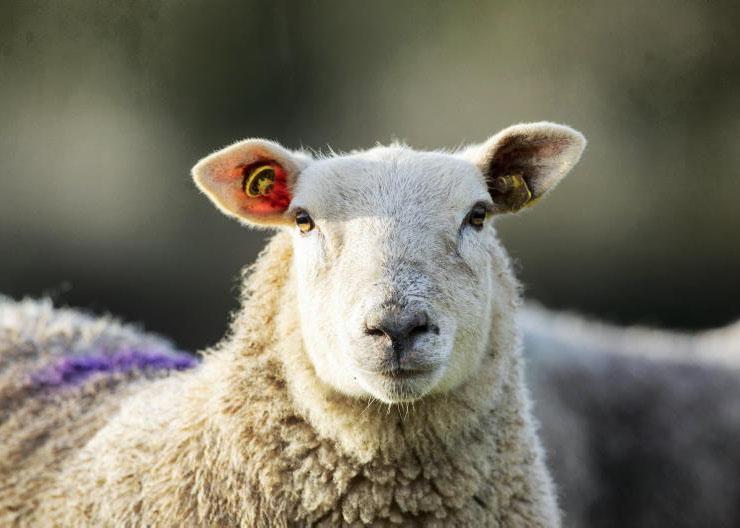
Tullamore Farm has also adopted a policy of placing a red tag in the ear of problem ewes in the run-up to and during lambing. Although a simple means of recording, this is something that’s often forgotten about on farms.
Issues such as prolapse, poor milk yield and poor mothering are recorded on farm through the Sheep Ireland database, but the red tag makes for a quick reminder when selecting breeding ewes where issues were identified in the past with these ewes. We have adopted a zero-tolerance policy to ewes carrying red tags, although perhaps presenting sound for breeding from an udder, teeth and feet point of view.
Behaviour or issues that warranted a red tag in spring will most likely occur again.
We also check these ewes’ tag numbers and ensure no ewe lambs have been selected for breeding from these sheep.
Scoring
Ewes weaned in super condition this year, with any ewes scoring under a BCS of 2.5 being pulled aside after the dry-off period and put to good grass to rebuild condition.
First lambers lamb down as yearling hoggets on the farm and are well fed and grazed post-lambing. Despite this, these hogget ewes generally wean in a condition score of 2 to 2.5 and will require good grass after weaning.
It takes 10 to 12 weeks to build one condition score on a ewe and any thin ewes identified along with suckled hoggets are generally in a condition of 2.7 and 3.2 at this point and should continue to build over the next month, as grass supplies are currently good in the run-up to breeding, with the current farm cover sitting at 960kg DM/ha.
All breeding sheep have been given a mineral drench this week to ensure they are not lacking in any minerals and trace elements pre-breeding and will be offered mineral buckets at grass from here on.
This year, 208 mature ewes will be bred on the farm, alongside 65 ewe lambs, which will join with rams 10 days after mature ewes and will only be bred for three weeks.
Breeding rams are being offered 0.5kg of a high-energy ration in the run-up to breeding to ensure they are in tip-top form when breeding begins.
Feeding rams pre-breeding also helps to keep rams quiet and can be advantageous when raddle colours need to be changed, enticing the ram to eat from a bucket leaving him easily caught or held with minimal upset to breeding groups.
There are four Texel, one Suffolk, two Charollais and one Easycare ram on the panel for breeding this year.
Excessive use of our working dogs Niko and Penny will be avoided over the breeding season to ensure ewes are not stressed.
Stressing ewes at this time can have adverse effects on conception rates.
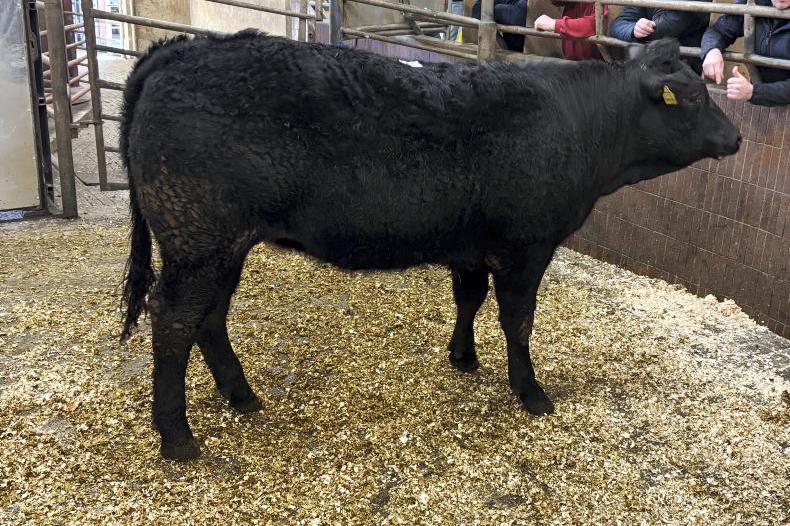
Weaning has commenced on the cattle side of the house, with all bull calves being weaned this week.
Anti-suckle paddles were placed in calves’ noses last week, breaking the bond and cows will be removed this weekend.
Given the current weather conditions, we will most likely house bull calves early next week on a straw bed and allow them to graze grass by day and silage at night for four or five days to ensure a smooth transition in the diet.
They received their third shot against pneumonia, an IBR booster and a lungworm dose last week.
We aim to sell these bull weanlings within the next month.
They are currently being offered ad-lib meal in a creep feeder and are consuming on average 3kg/head.
Post-weaning, they will be fed 3kg/day split in two feeds. Paddles will be transferred over to female calves this weekend to start the weaning process in this group.
Paddles will be washed in water and disinfectant before being transferred over to heifer calves to avoid cross-contamination of any underlying respiratory disease that may be in the herd. They will also receive booster vaccines and a dose this week. We aim to have 15 in-calf heifers and a selection of maiden heifers available for sale this year.
The heifers are SCEP-eligible, fully vaccinated against BVD, lepto, IBR and clostridial disease.
They will be calving at two years old to easy-calving AI limousin bulls. The sale will take place in Roscrea Mart on 29 October at 8pm. Bidding can be made online and heifers can be viewed on farm before the sale.


SHARING OPTIONS