


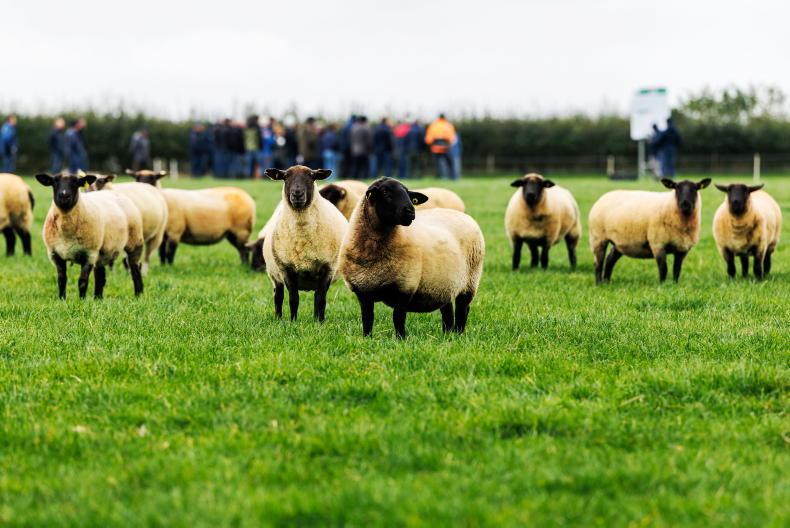
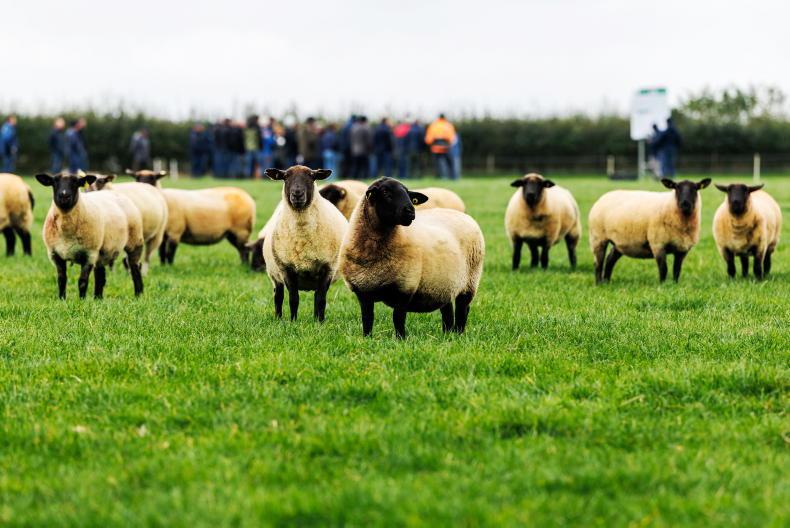
Paperwork checks: this week’s focus places a spotlight on ensuring compliance with animal identification. In the case of a sheep inspection, an inspector will need to count and see all sheep on the holding and read a percentage of tags to cross-check that these sheep have been correctly recorded in your flock register.
A check will also be completed to ensure that two ear tags/a bolus are in place. Where tags are being replaced then the most common option is applying two new tags and correlating the tag change in your flock register.
The flock register will be assessed to check on such tagging practices and to ensure movements have been recorded.
With regards compliance with sheep scheme reference/payable numbers, there are differences between the National Sheep Welfare Scheme (SWS) and the Sheep Improvement Scheme (SIS). In the SIS the reference figure of ewes must be maintained across the calendar year.
In the SWS, the payable number of sheep must be present to complete the action and can be reduced outside of this window. Be careful to note that this is just for the SWS and not the SIS.
For example, if the payable number is 80 breeding sheep and 80 head were shorn and vaccinated, then numbers could have been lower outside of these actions being completed.
The terms and conditions are comparable, however, in the penalties that apply where the number of eligible breeding sheep found during an administrative and/or inspection review is lower than the reference figure/payable number.
If this occurs then a double the difference penalty will be imposed. For example, if the declared scheme payable number is 80 and the actions have only been completed on 60 ewes or only 60 ewes are present in an SIS inspection, then the penalty imposed will be the loss of payment on 40 head (shortfall of 20 head doubled).
Notifications of a reduction in numbers can be sent via email to sheepscheme@agriculture.gov.ie or in hardcopy form to Sheep Improvement Scheme, Department of Agriculture, Food and the Marine, Government Buildings, Old Abbeyleix Road, Portlaoise, Co Laois, R32 RPA6. Remember it must be stated which schemes that numbers are being reduced for.
Monitoring condition: at a meeting of Dawn Meats Future Flocks young sheep farmers on Tuesday night Seamus Fagan, Athlone Regional Veterinary Laboratory said that massive gains can be made on farms by simply monitoring and addressing ewe condition.
He told farmers that even where body condition scoring is not carried out to an exact science there is huge advantages in simply assessing condition regularly and segregating thin ewes for preferential treatment.
This can be as simple as batching thin single-bearing ewes with twin bearing ewes or batching twin-bearing ewes with triplet ewes or making a small group for priority feeding.
Pneumonia issues: reports indicate that the fluctuation in temperatures and at times higher than normal temperatures in sheds could be contributing to health issues including pneumonia in lambs being housed for finishing.
It is important to ensure that ventilation is adequate and that pens are stocked appropriately. Lambs should be closely monitored to pick up any signs of ill health quickly, while vaccination protocols should be planned ahead of high risk challenges.



SHARING OPTIONS