


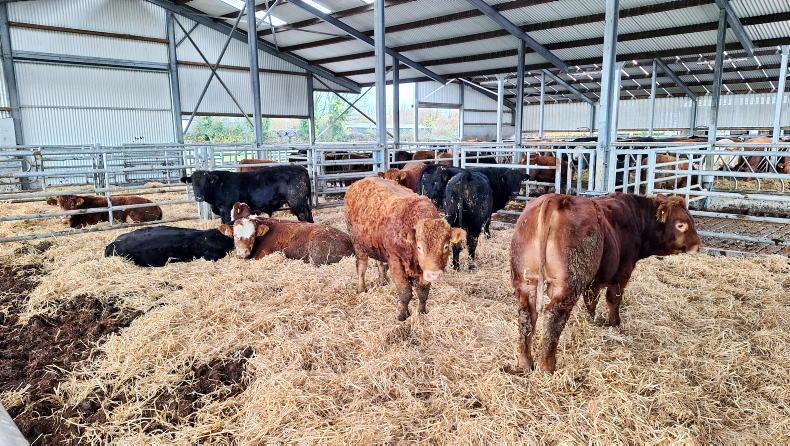
All cattle are now housed on the farm with the past week being a busy one - sorting, dosing, weighing and turning in cattle from grass. The rapid end to the grazing season due to heavy rainfall in the past ten days has meant a rapid introduction to winter feeding and finding routine for the coming months. Conditions have been far from ideal for housing cattle in terms of getting them in dry, but likewise conditions at grass have been worse and waiting for a dry spell to house weanlings seemed out of the picture.
Bull weanlings have been housed four weeks now and they have settled well; the decision to house them soon after weaning even though weather conditions were reasonably dry at the time has proved to be the right move. These bulls were housed dry, settled into a diet, backs and tails clipped, dosed against lung and stomach worms and given a mineral injection within the first two weeks after housing. Grass supplies were plentiful at the time but the decision to house has left more grass for our ewe flock and extended the grazing season for our weanling heifers until this week. It also means that the bull weanlings are now settled into a diet and are ready to thrive when it matters most.
Conditions have been far from ideal for housing cattle in terms of getting them in dry, but likewise conditions at grass have been worse and waiting for a dry spell to house weanlings seemed out of the picture
Heifer weanlings were grazing heavy covers of 1,800-2,000kg DM/ha up until last weekend when heavy rainfall and poor utilisation of grass forced them to the shed. These heifers were on creep feed for four weeks pre-weaning and two weeks post weaning to reduce stress and also to satisfy requirements for the National Beef Welfare Scheme. The original plan was to continue with 1.5kg of meal/day at grass until housing; however, this proved challenging as the weanlings were inclined to waste grass by spending time waiting for meal rather than grazing grass. The decision was made to remove concentrates from the diet and this proved effective at increasing utilisation of heavy grass covers; however, heavy rainfall meant grass dry matter was decreasing. With the fears of this affecting thrive, it was either reintroduce meal at grass and suffer poor utilisation or turn the heifers indoors, reintroduce meal and settle them into a winter diet sooner rather than later. The decision was made to house last Friday and the weanlings have since been dosed and clipped.
Weanling weights
All weanlings were turned out to the handling yard this week to be weighed. Weighing now will give a clear indication of thrive since birth to weaning and a starting point for more weights to be taken in mid-winter and spring to assess performance. This year will go down as a textbook year in terms of grass growth and animal performance on most farms and is reflected in how weanlings are looking and weighing coming into the winter months.
Bull weanlings are currently averaging 356kg on the farm, gaining 1.2kg/day since their last weighing in July and 1.3kg/day since birth. Performance has been good in this bunch especially when we consider between weighing dates, there has been a period of dietary change and upset as bull weanlings transition from milk, grass and meal to a silage and meal diet in an indoor setting. However, there is quite a variance in weight between the heaviest and lightest bulls in the bunch, with the heaviest bull weighing 426kg and the lightest 280kg. Thankfully, the lightest bull was a March-born twin calf and would be expected to be lighter. There are 20 of the 28 bulls on farm weighing from 350kg upwards, with a group average of 370kg. The eight lightest bulls have been penned together and are averaging 300kg. The decision will be made in the coming week whether to sell the heaviest weanlings now or feed for a longer period or through to beef.
Heifer weanling performance
Heifer weanling performance has been satisfactory also, with the 45 heifer weanlings on farm averaging 325kg. This group has achieved an average daily gain of 1.02kg since the last weight and 1.18kg/day since birth. Like the bulls, there is a range in weight within this bunch also, with the lightest heifer weighing 220kg and the heaviest heifer coming in at an impressive 402kg. The lightest heifer in the bunch has been an ill-thriving calf all summer, having had issues with navel ill in the first month after birth; this may help to explain the poorer than average performance.
The lightest heifer in the bunch has been an ill-thriving calf all summer, having had issues with naval ill in the first month after birth
There are 22 heifers in the bunch weighing from 330 kg upwards, averaging 360kg as a group. Given target bulling weight for heifers next spring is 390kg plus, these 22 are well on target to surpass this weight. Fifteen of the heaviest heifers have been identified to return back to a crop of forage rape in the coming weeks which should see them through to late January.
Lighter heifers
The lightest 23 heifers are currently averaging 285kg. Performance in this bunch for winter is being benchmarked at 0.7kg/day. Given that we are now 150 days out from breeding these heifers, heifers must weigh 285kg today and gain a minimum 0.7kg/day to reach breeding weight next spring. With only seven heifers falling under 285 kg at this point and with the likelihood that poorer performers will not be selected for breeding, we are in a good position to reach breeding targets next spring all going well.
Sheep
Breeding is progressing well in our ewe flock with ewes coming near the end of their second cycle. Ewe lambs are now with the rams 10 days and activity seems to be increasing day by day. Raddles will be changed this week and will see an end to single-sire mating. Ninety-five ewes are currently grazing a crop of forage rye. Considering the farm has received 120mm (5 inches) of rain in the past 14 days, conditions are proving challenging to achieve good utilisation. The remainder of ewes remain on grass swards and are working through covers quite well despite rainfall. Twenty-three ewe lambs remain on farm and a draft will be sold this week with the remainder housed for intensive finishing before Christmas.


SHARING OPTIONS