


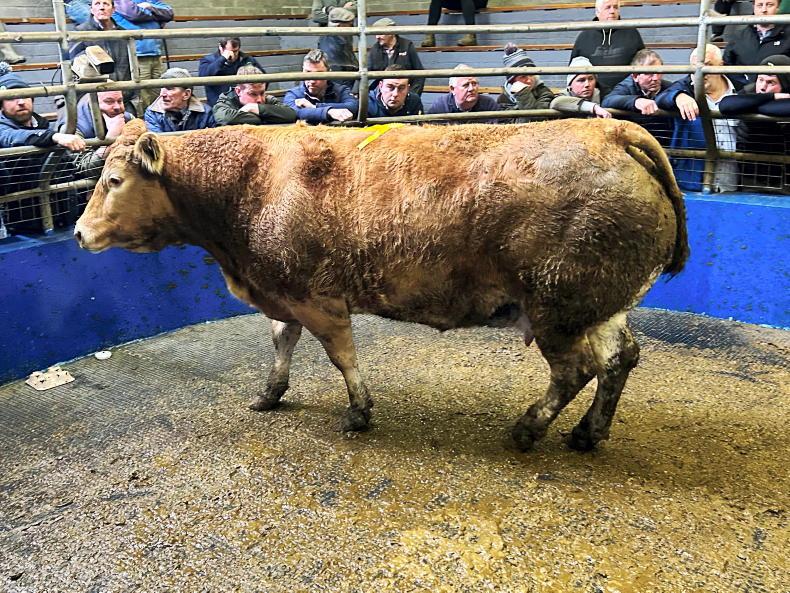
I’ve never been to a warm mart in the winter months, so I can imagine that the Christmas break over the last few weeks was welcomed by anyone in attendance on a weekly or daily basis at marts throughout the country; auctioneers, yard staff, cattle dealers and factory agents alike.
Some marts take more time off than others, with some shutting their doors for up to three weeks, while others hosted some special sales over the Christmas period.
It is really only this week that we are seeing all marts kick off their sales for 2026 again, with the big question on everyone’s mind being if prices in 2026 can be matched.
People who purchased cattle in late 2024 when prices started to rise were seen as maniacal to pay over €4/kg live for weanlings – 12 months later and we were seeing some of these weanlings hitting €6/kg.
2025 just saw a near-constant weekly increase in prices in marts up until September or so, when plainer cattle started to fall back, eventually being followed by better-type stock.
Where will it go for 2026? It’s hard to know, but if prices in marts and factories can stay steady or increase slightly, I can’t see too many grumblings.
Just over 6,600 cattle passed through the 30 marts using the MartBids system last week, showing just how low numbers are these days – in peak times we could see one larger mart hold up to 2,000 cattle in a single week.
Low numbers
These low numbers are very much scuppering the weekly increases or decreases in the table, with some stock classes (for example weanling heifers weighing 450kg-plus) not having had any comparables sold the week before.
Surprisingly – or unsurprisingly – cull cow numbers are still extremely high when compared with all other stock types, with 1,091 cows passing through the ring.
Top-end cull cows are hitting €3.59/kg, with average price paid in the last week being €2.95/kg, while the bottom third price-wise are still hitting €2.34/kg.
In the bullock ring, a fairer assessment is to look at where we were price-wise the last time we had a Martbids table on 20 December.
Bullocks in the top third are back around 50c/kg on this price, which floated between €4.42/kg and €4.80/kg.
Taking a top-end 430kg bullock on the December week at a price of €4.80/kg, he would have realised a price of €2,064.
The same bullock now, having grown to 460kg, is coming in at €1,913.60.
Saying this, just under 1,000 bullocks were sold last week, meaning averages can very much be swayed by larger volumes of poorer-quality cattle. Next week should tell us more with a more data available.
Heifers are in a healthier position and are relatively on par with the pre-Christmas trade, which had bullocks nicely ahead of heifers on price.
Again, low numbers of heifers (900) make it hard to call definitively.
Both bull and heifer weanlings are extremely tight in numbers, with many mart managers reporting more dairy-beef stock also hitting the ground at the minute as well, which has had a slightly negative impact on average.



SHARING OPTIONS