


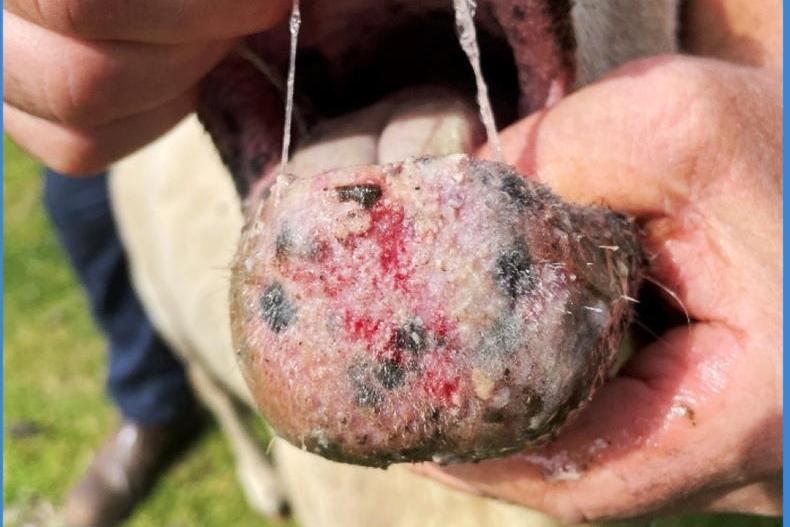
Vaccination against bluetongue will be included as an option for farmers participating in the National Beef Welfare Scheme and National Sheep Welfare Scheme this year.
Vaccination can reduce the impact and severity of bluetongue virus (BTV) on livestock and thus mitigate both animal health and welfare issues and the production losses which an infection may cause, the Department of Agriculture said.
“I am aware that bluetongue has been a concern for many farmers since the first case was detected in this country in January,” Minister for Agriculture Martin Heydon said.
“In Budget 2026, I secured €50m for the continuation of the highly successful beef and sheep welfare schemes operated by my Department in 2025.
"As protecting animal health is always a paramount consideration, I have decided that farmers participating in this year’s welfare schemes should have the option to vaccinate against bluetongue virus, as well as clostridial diseases and calf pneumonia which were also funded under last year’s schemes”.
Applications
It is expected that the 2026 National Sheep Welfare Scheme will open for applications in the first half of April, with the 2026 National Beef Welfare Scheme due to open in August, as it did in previous years.
Full details of the structure and format of these schemes will be announced nearer to relevant launch dates, but they will replicate the practical measures contained in the schemes implemented in 2025, the Department of Agriculture said.
In 2026, the sheep welfare scheme will include an option to vaccinate and participants may choose to vaccinate against either BTV or clostridial diseases.
The beef scheme will include an option to vaccinate and participants may choose to vaccinate against either bluetongue virus, clostridial diseases or calf pneumonia.
“I am publicising this new option now so that farmers thinking of vaccinating animals in advance of the 2026 schemes being rolled out can do so confident that vaccinating for bluetongue will be subsidised at existing payment rates.
“Spring is the optimum time for vaccinating for bluetongue, which should take place before the higher risk period during the warmer summer months.”
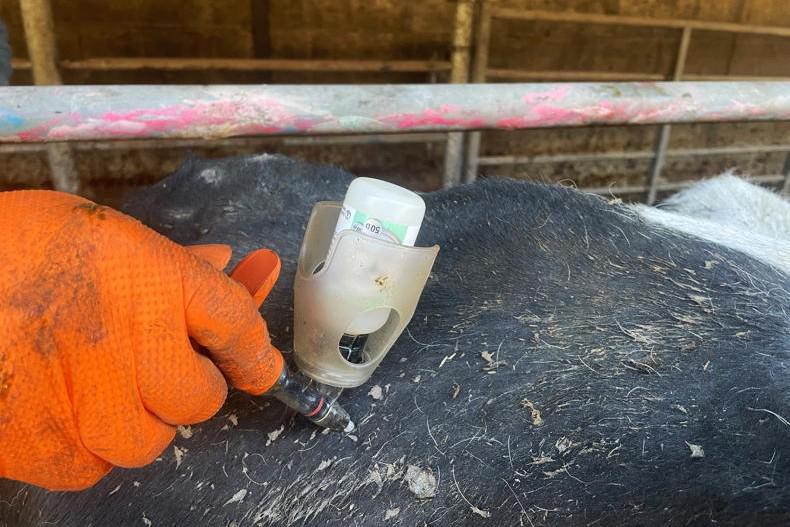
Farmers may obtain bluetongue vaccines from their veterinary practitioner, under licence from the Department. Farmers interested in obtaining these vaccines should discuss this with their vet.




SHARING OPTIONS