Weather: after a horrific week of rainfall across most of the country, but particularly in the east, the situation on farms regarding slurry is getting more and more serious.
It’s all relative, and for a farmer with their yard flooded, just not being able to spread slurry is a problem they would probably like to have. Where slurry has to be spread, umbilical systems do less damage than slurry tanks, but are really only suited for big jobs where there is a lot of area to cover.
Wide tyres and low ground pressure on tractor and tanker tyres will help reduce compaction. As mentioned last week, other options include exporting slurry to farmers in the locality with spare capacity. In some good news, it looks like next week is to be much drier, but with a return to colder weather.
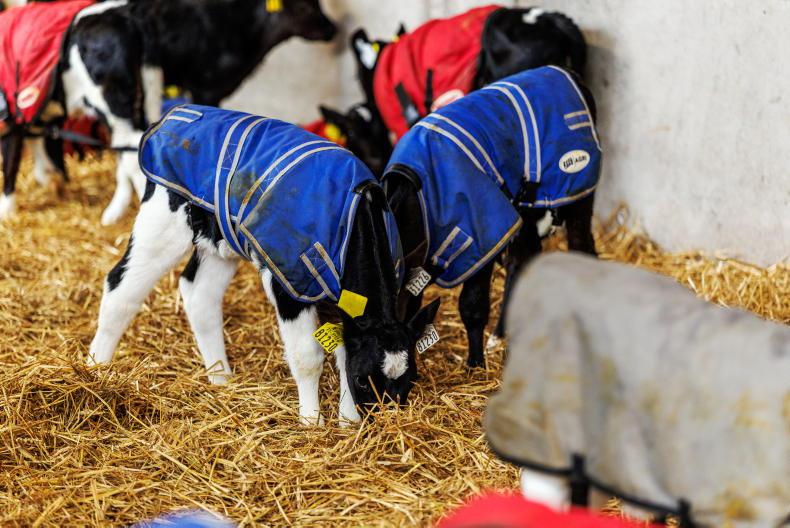
Calving: most dairy farms in the southern half of the country are on the cusp of or have already started calving. There are often problems with the first couple of calvings, whether that’s through abortions or other issues.
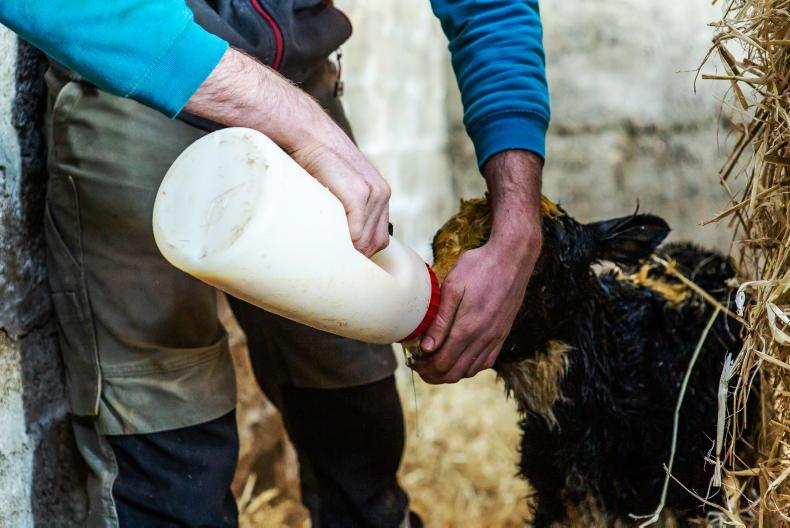
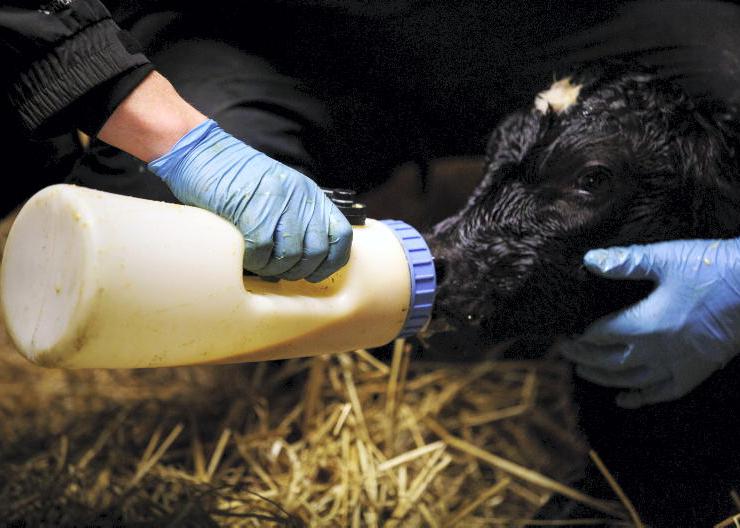
Get into good habits from the start, particularly around biestings or colostrum. Newborn calves require at least 3l of high-quality colostrum within two hours of birth. Not all colostrum is high quality and the experts advise that all colostrum should be tested with a refractometer to check the quality of it before it is stored for use. The target is to have a reading of 22% or more on the Brix refractometer, which indicates that the colostrum has an immunoglobulin level of 50g/l.
An important point is that bacterial contamination reduces the quality of the colostrum. So a cow could have very good colostrum, but if she’s milked into a dirty dump bucket, or if the colostrum is left in a bucket in the calf shed for a few days, then it will get contaminated.
Best practice is to only keep high-quality colostrum for the first feed and store it in a clean container in the fridge. Some farmers place it into high-quality freezer bags (I’m told IKEA bags are the best), while others use empty 3l milk cartons. It can successfully be stored in the fridge for up to two days, but should not be used as the first feed beyond this point.
The good thing about using freezer bags or milk cartons is that they will warm up quickly, which is useful if they are being defrosted. The maximum temperature to thaw colostrum is 50ºC.
New podcast: The Irish Farmers Journal has launched a new podcast. Inside Dairy will be released each Wednesday afternoon and is hosted by myself and Daire Cregg. Inside Dairy is a weekly deep dive into all the latest news, views, market insight and farmers stories from the dairy sector in Ireland and beyond.
Covering everything from milk prices, grassland management, animal nutrition, genetics, new technology, farm finances, costs of production and market insight into the global dairy trade.
In this week’s show we hear from Cork farmer Tom Condon as he prepares for the busy weeks ahead, and we also hear about the mood in the dairy halls at Gulfood in Dubai from Ornua’s Barry Newman. It’s a subscriber-only podcast, available on Spotify and Apple, and available to all existing premium subscribers.
Weather: after a horrific week of rainfall across most of the country, but particularly in the east, the situation on farms regarding slurry is getting more and more serious.
It’s all relative, and for a farmer with their yard flooded, just not being able to spread slurry is a problem they would probably like to have. Where slurry has to be spread, umbilical systems do less damage than slurry tanks, but are really only suited for big jobs where there is a lot of area to cover.
Wide tyres and low ground pressure on tractor and tanker tyres will help reduce compaction. As mentioned last week, other options include exporting slurry to farmers in the locality with spare capacity. In some good news, it looks like next week is to be much drier, but with a return to colder weather.
Calving: most dairy farms in the southern half of the country are on the cusp of or have already started calving. There are often problems with the first couple of calvings, whether that’s through abortions or other issues.
Get into good habits from the start, particularly around biestings or colostrum. Newborn calves require at least 3l of high-quality colostrum within two hours of birth. Not all colostrum is high quality and the experts advise that all colostrum should be tested with a refractometer to check the quality of it before it is stored for use. The target is to have a reading of 22% or more on the Brix refractometer, which indicates that the colostrum has an immunoglobulin level of 50g/l.
An important point is that bacterial contamination reduces the quality of the colostrum. So a cow could have very good colostrum, but if she’s milked into a dirty dump bucket, or if the colostrum is left in a bucket in the calf shed for a few days, then it will get contaminated.
Best practice is to only keep high-quality colostrum for the first feed and store it in a clean container in the fridge. Some farmers place it into high-quality freezer bags (I’m told IKEA bags are the best), while others use empty 3l milk cartons. It can successfully be stored in the fridge for up to two days, but should not be used as the first feed beyond this point.
The good thing about using freezer bags or milk cartons is that they will warm up quickly, which is useful if they are being defrosted. The maximum temperature to thaw colostrum is 50ºC.
New podcast: The Irish Farmers Journal has launched a new podcast. Inside Dairy will be released each Wednesday afternoon and is hosted by myself and Daire Cregg. Inside Dairy is a weekly deep dive into all the latest news, views, market insight and farmers stories from the dairy sector in Ireland and beyond.
Covering everything from milk prices, grassland management, animal nutrition, genetics, new technology, farm finances, costs of production and market insight into the global dairy trade.
In this week’s show we hear from Cork farmer Tom Condon as he prepares for the busy weeks ahead, and we also hear about the mood in the dairy halls at Gulfood in Dubai from Ornua’s Barry Newman. It’s a subscriber-only podcast, available on Spotify and Apple, and available to all existing premium subscribers.






SHARING OPTIONS