Mountrath,
Co Laois
Spring crops are not yet in the ground in Laois, with Stephen starting to plough this week in the hope of getting Hurler spring barley and Husky spring oats sowed in the next 10 days.
The late-sown winter oilseed rape is greening up well. It is behind most other crops in the country and Stephen expects it to start flowering in mid-April, which he says might not be a bad thing. He does not expect a great yield but it will certainly be better than replanting the field with barley.

The components Stephen will be using to build his own RTK base station.
The winter wheat, rye and barley have responded well to the liquid nitrogen and look pretty good. Some of the nitrogen was delayed as a pressure sensor failed on the sprayer and it took a good while to get the part.
While it did delay nitrogen applications, Stephen says ground conditions were marginal for travelling at the time so maybe the delay was not the worst thing in the world. He is still waiting for 3ac of land to soak that has not received any fertiliser yet. Despite this, the cereal crops are thickening up nicely and Stephen is happy.
He was hoping to apply Calibre Max and Medax Max in the past couple of days once temperatures had improved. Digestate is also being piped onto the cereal crops at present.
Organic manure will be applied to the winter oilseed rape ground next autumn as it cannot be done at present. The ground is very marginal and while Stephen has improved the pH from 4.7 a couple of years ago to 6.5 now, the field is still Index 1 for P and K.
Stephen is starting to work on building his own RTK base station at the moment. He has unlocked his Trimble system so that it will accept a non-Trimble base station and once this is completed, he will start building his own autosteer system over the rest of the growing season.
Rathnure, Co Wexford
After what has been a particularly stop–start spring, Michael says that the last 10 days have offered “very small windows of opportunity”.
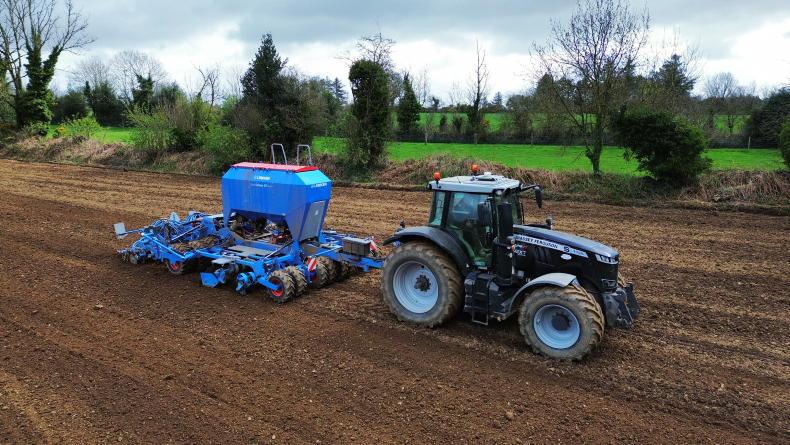
Some brighter spells allowed the farm to push ahead with cereal sowing and also marked the first real outing of a new Lemken 4-metre seed and fertiliser drill.
“Like any new machine, it took a bit of persuasion and a few hours of fine tuning to get it right,” he said. “But once it settled in, you could see exactly what it’s capable of. It’ll cover plenty of ground over the next few weeks.”
This season, the farm is operating two Lemken sowers, both capable of placing seed and fertiliser in a single pass, a major advantage in what he describes as a “tight and tricky spring.”
“The one-pass system is a serious tool,” he noted. “It allows us to go straight into ploughed ground without any further cultivation. The 4-metre drill, on the other hand, prefers a more prepared seedbed, but between the two machines, we’ve good flexibility which is everything in conditions like these.”
With ground conditions far from ideal, the focus has been on making the most of lighter, drier soils where possible.
So far, Florence spring barley has been sown for malting and seed at a rate of 175kg/ha. Fertiliser is being applied alongside the seed in the form of 10-10-20 at 375kg/ha. “By Friday, we should have close to 300ac sown between barley and beans,” he added.
Post-sowing management is being approached with care. “We’re leaving most seedbeds sit for a few days before rolling,” he said. “It’s about getting that soil-to-seed contact right without causing compaction. There’s no point rushing it and undoing all the good work.”
The winter barley has received its first spray. Modem (0.7l/ha), Province (0.5l/ha), Medax Max (0.3kg/ha), Axial Pro (0.6l/ha) and Mantrac (0.75l/ha) were applied.
Muff, Co Donegal
The dry spell was welcome in Donegal but a lack of wind meant that not a lot of drying came with it. Donald did get most of his ploughing done and only 4ac remains to be completed.
One field where drainage works were carried out was still a bit wet when it was ploughed but Donald says it would never have dried and it needed to be turned over to loosen up the soil and let the air dry it out.
The potatoes will be the first crop to be planted before attention turns to the mixed crop of barley, oats and peas. Donald says he will have to see how the next few weeks go as he is considering planting less vegetables and more of his mixed crop.
He says that selling the vegetables is getting more difficult.
He adds that it is much easier for supermarkets and consumers to get their vegetables off the back of a lorry that can guarantee year-round supply at a cheap price.
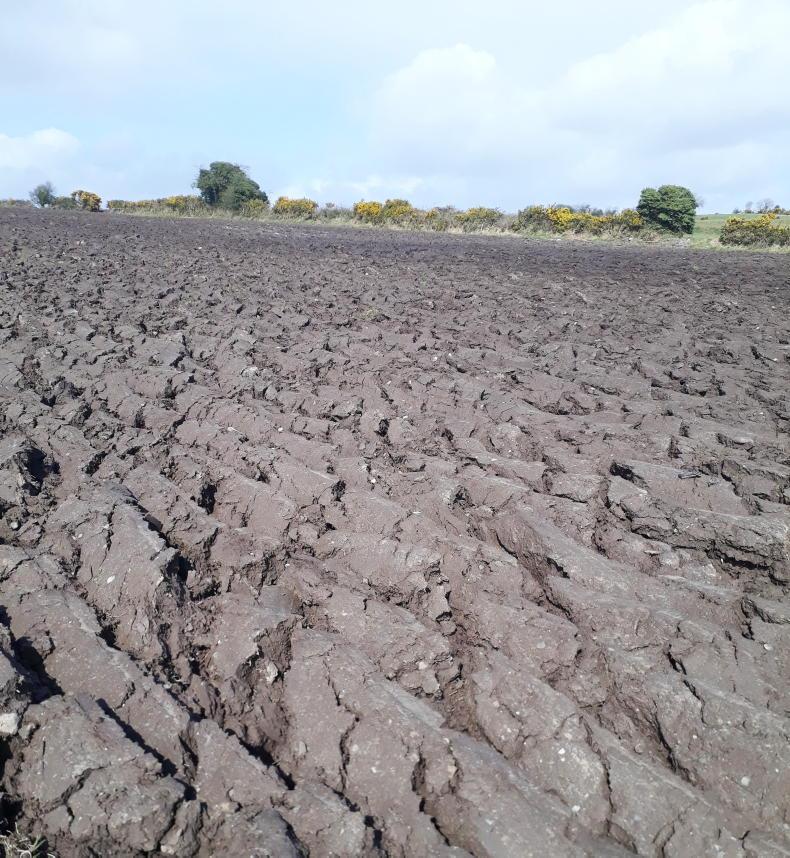
Donald has got a lot of his ploughing done but the soil still needs to dry further before he can start sowing.
With the higher diesel costs and an increase in the minimum wage, Donald says vegetable growers cannot compete with imported vegetables. He comments that it’s not nice seeing some vegetable growers going out of business and most growers are in the same boat this year.
Donald is very pleased with the winter oats at present as the crop enters stem extension. The crop was planted thick, at 265kg/ha. This has helped to keep the ground free of weeds so far. Donald has decided not to spread chicken manure pellets on the crop as the ground is still very wet and the high cost of the pellets does not make the potential damage to the soil and crop worthwhile.
The crop is still green for now and it should be helped by residual nitrogen left behind by the mixed crop last year. Donald plans to sow more winter crops next autumn if the weather allows.
Mountrath,
Co Laois
Spring crops are not yet in the ground in Laois, with Stephen starting to plough this week in the hope of getting Hurler spring barley and Husky spring oats sowed in the next 10 days.
The late-sown winter oilseed rape is greening up well. It is behind most other crops in the country and Stephen expects it to start flowering in mid-April, which he says might not be a bad thing. He does not expect a great yield but it will certainly be better than replanting the field with barley.
The components Stephen will be using to build his own RTK base station.
The winter wheat, rye and barley have responded well to the liquid nitrogen and look pretty good. Some of the nitrogen was delayed as a pressure sensor failed on the sprayer and it took a good while to get the part.
While it did delay nitrogen applications, Stephen says ground conditions were marginal for travelling at the time so maybe the delay was not the worst thing in the world. He is still waiting for 3ac of land to soak that has not received any fertiliser yet. Despite this, the cereal crops are thickening up nicely and Stephen is happy.
He was hoping to apply Calibre Max and Medax Max in the past couple of days once temperatures had improved. Digestate is also being piped onto the cereal crops at present.
Organic manure will be applied to the winter oilseed rape ground next autumn as it cannot be done at present. The ground is very marginal and while Stephen has improved the pH from 4.7 a couple of years ago to 6.5 now, the field is still Index 1 for P and K.
Stephen is starting to work on building his own RTK base station at the moment. He has unlocked his Trimble system so that it will accept a non-Trimble base station and once this is completed, he will start building his own autosteer system over the rest of the growing season.
Rathnure, Co Wexford
After what has been a particularly stop–start spring, Michael says that the last 10 days have offered “very small windows of opportunity”.
Some brighter spells allowed the farm to push ahead with cereal sowing and also marked the first real outing of a new Lemken 4-metre seed and fertiliser drill.
“Like any new machine, it took a bit of persuasion and a few hours of fine tuning to get it right,” he said. “But once it settled in, you could see exactly what it’s capable of. It’ll cover plenty of ground over the next few weeks.”
This season, the farm is operating two Lemken sowers, both capable of placing seed and fertiliser in a single pass, a major advantage in what he describes as a “tight and tricky spring.”
“The one-pass system is a serious tool,” he noted. “It allows us to go straight into ploughed ground without any further cultivation. The 4-metre drill, on the other hand, prefers a more prepared seedbed, but between the two machines, we’ve good flexibility which is everything in conditions like these.”
With ground conditions far from ideal, the focus has been on making the most of lighter, drier soils where possible.
So far, Florence spring barley has been sown for malting and seed at a rate of 175kg/ha. Fertiliser is being applied alongside the seed in the form of 10-10-20 at 375kg/ha. “By Friday, we should have close to 300ac sown between barley and beans,” he added.
Post-sowing management is being approached with care. “We’re leaving most seedbeds sit for a few days before rolling,” he said. “It’s about getting that soil-to-seed contact right without causing compaction. There’s no point rushing it and undoing all the good work.”
The winter barley has received its first spray. Modem (0.7l/ha), Province (0.5l/ha), Medax Max (0.3kg/ha), Axial Pro (0.6l/ha) and Mantrac (0.75l/ha) were applied.
Muff, Co Donegal
The dry spell was welcome in Donegal but a lack of wind meant that not a lot of drying came with it. Donald did get most of his ploughing done and only 4ac remains to be completed.
One field where drainage works were carried out was still a bit wet when it was ploughed but Donald says it would never have dried and it needed to be turned over to loosen up the soil and let the air dry it out.
The potatoes will be the first crop to be planted before attention turns to the mixed crop of barley, oats and peas. Donald says he will have to see how the next few weeks go as he is considering planting less vegetables and more of his mixed crop.
He says that selling the vegetables is getting more difficult.
He adds that it is much easier for supermarkets and consumers to get their vegetables off the back of a lorry that can guarantee year-round supply at a cheap price.
Donald has got a lot of his ploughing done but the soil still needs to dry further before he can start sowing.
With the higher diesel costs and an increase in the minimum wage, Donald says vegetable growers cannot compete with imported vegetables. He comments that it’s not nice seeing some vegetable growers going out of business and most growers are in the same boat this year.
Donald is very pleased with the winter oats at present as the crop enters stem extension. The crop was planted thick, at 265kg/ha. This has helped to keep the ground free of weeds so far. Donald has decided not to spread chicken manure pellets on the crop as the ground is still very wet and the high cost of the pellets does not make the potential damage to the soil and crop worthwhile.
The crop is still green for now and it should be helped by residual nitrogen left behind by the mixed crop last year. Donald plans to sow more winter crops next autumn if the weather allows.





SHARING OPTIONS