The fight against food waste is well and truly underway in Ireland. The momentum at which it is developing means it is quickly becoming more of a full-scale assault. And rightly so; the statistics are shocking. Globally, more than one-quarter of food produced is wasted annually and in Ireland, we produce around one million tonnes of food waste annually, of which 250,000t is generated by households.
With the recent announcements of price hikes by domestic bin collection companies, it is a costly business to waste anything and have it recycled or disposed of correctly. Brown bins for compost are supposed to be provided to all towns with a population of over 500 people. In this case, your bin collection company is obliged to provide you with one for food and organic waste. Most companies have offered this service free of charge to help encourage composting, however, bin providers recently announced that for the first time a charge will apply which, depending on the provider, could cost up to or over an additional €100 per year (consumers are encouraged to check with their bin provider to find out which exact charges will apply to their annual bills).
While prevention and reduction are key in the fight against food waste – writing shopping lists, meal planning, using up leftovers and learning to store food correctly – we are often left with the third cog in the wheel, which is recycling and/or waste. Using a brown bin, if available and affordable is, of course, of massive benefit and if you have land to house a compost heap, that is ideal; though a lot of maintenance is required. There is, however, a more effective renewable solution – at-home biodigesters.
What is a biodigester?
Simply, a biodigester is a vessel that biologically breaks down or “digests” organic waste. Microbes and bacteria break down the waste inside the machine using heat to make the process quicker. The biodigester can work in two ways: anaerobically, without oxygen, or aerobically, with oxygen. The output of this process can be a biogas – a renewable fuel source – and/or a compost material that can be used as a fertiliser.
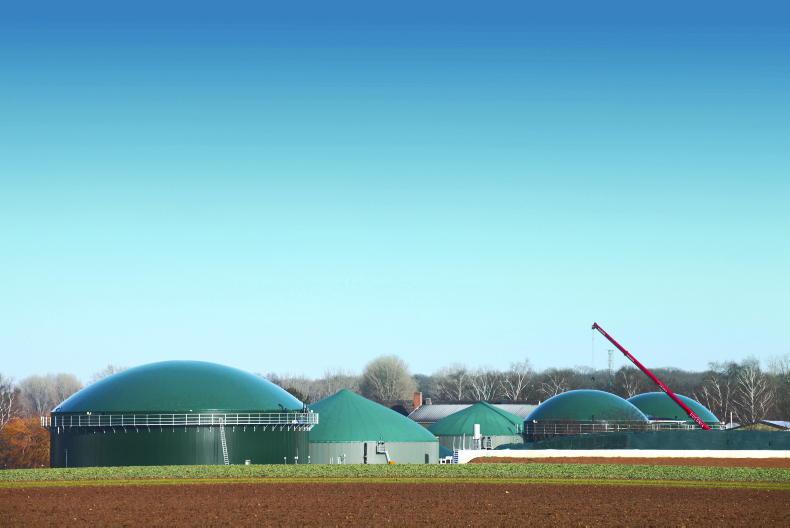
A biodigester is not a new product, they have been adopted and used in large-scale businesses and farms for years now. You can get different sizes for small-scale farm use or large centralised biodigesters that you bring your waste to. Manure and other biomass feedstock can be turned into biogas, which can be used to generate heat or electricity or a compost, which can be in-turn used back on the farm.
Turning food waste into a biogas that would generate electricity could be a vital factor towards fuel security in Ireland, once harnessed effectively. On a much smaller scale, at-home biodigesters can empower Irish households to take control of their own food waste and eliminate food bin charges completely.
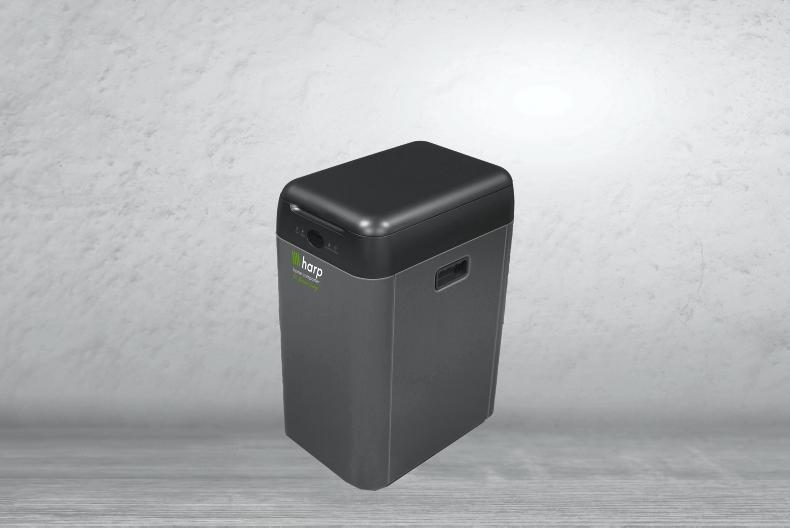
A neat-and-tidy at-home bio digester that can be kept in a shed our outhouse. Photo: Harp Renewables
Supplier focus
Speaking to Irish Country Living, Joe Cawley of Harp Renewables in Co Westmeath, one of Ireland’s leading suppliers in biodigesters, says more home owners “want to do the right thing and are looking for other solutions to their food waste issues.”
“The main thing people say to us is that they are already composting themselves but it throws up conundrums, challenges that they face and barriers with some food waste. The advantages with our biodigester is that your food waste is enclosed and therefore not attracting flies and rodents and this ticks a lot of boxes for them,” Joe explains.
“We’ve come about a different technology based on the large-scale biodigesters we have; we simplified it for the residential market. It’s a small neat-and-tidy unit, about half-a-metre high [no bigger than a standard-size bin] that you would put in a garden shed or perhaps a porch or balcony. The food waste you put in today, will be compost/fertiliser tomorrow.
“Our unique selling point is that we specially developed our enzyme that breaks down the waste faster. Our end material is a fertiliser that you can use in your garden or on your fields. You don’t have to move along the waste once it’s in the machine and there’s no other bi-product that you have to deal with. Even if you live in an apartment or small home and you don’t have a garden or farm to use the fertiliser on, our solution is that we send you a box to send us back the end material. You don’t have to have a use for the material, we do. We’re bucketing and bagging our own material and selling it as soil enhancer. You’re playing into a circular economy with that.”
There are a range of companies offering at-home biodigesters to the Irish market and prices range from €600 upwards. If food waste bin charges continue to increase, this could be an effective solution for households and farmhouses; especially if grants someday become available to subsidise the cost, similar to that available for solar panels.
The other major point to consider is that biodigesters are a source of renewable energy. Installing a biodigester that has an output of biogas means you could fuel the electricity for your home or farm from it. Some biodigesters also have a liquid feed output, which similarly to the fertiliser end material, can be used as a soil enhancer.
Founded by Kieran Coffey and Fiona Kelleher in Co Cork, MyGug is another Irish biodigester company that has gained significant traction in the market. MyGug is an egg-shaped anaerobic digester aimed at small food businesses, restaurants, home kitchens and schools that produces both biogas and liquid feed. The Micro MyGug costs €3,599 and the mini, costing €8,900, is suitable for schools or small farms.
Read more
National food waste recycling week encourages anaerobic digestion
Farm-produced gas powers latest tractor technology
The fight against food waste is well and truly underway in Ireland. The momentum at which it is developing means it is quickly becoming more of a full-scale assault. And rightly so; the statistics are shocking. Globally, more than one-quarter of food produced is wasted annually and in Ireland, we produce around one million tonnes of food waste annually, of which 250,000t is generated by households.
With the recent announcements of price hikes by domestic bin collection companies, it is a costly business to waste anything and have it recycled or disposed of correctly. Brown bins for compost are supposed to be provided to all towns with a population of over 500 people. In this case, your bin collection company is obliged to provide you with one for food and organic waste. Most companies have offered this service free of charge to help encourage composting, however, bin providers recently announced that for the first time a charge will apply which, depending on the provider, could cost up to or over an additional €100 per year (consumers are encouraged to check with their bin provider to find out which exact charges will apply to their annual bills).
While prevention and reduction are key in the fight against food waste – writing shopping lists, meal planning, using up leftovers and learning to store food correctly – we are often left with the third cog in the wheel, which is recycling and/or waste. Using a brown bin, if available and affordable is, of course, of massive benefit and if you have land to house a compost heap, that is ideal; though a lot of maintenance is required. There is, however, a more effective renewable solution – at-home biodigesters.
What is a biodigester?
Simply, a biodigester is a vessel that biologically breaks down or “digests” organic waste. Microbes and bacteria break down the waste inside the machine using heat to make the process quicker. The biodigester can work in two ways: anaerobically, without oxygen, or aerobically, with oxygen. The output of this process can be a biogas – a renewable fuel source – and/or a compost material that can be used as a fertiliser.
A biodigester is not a new product, they have been adopted and used in large-scale businesses and farms for years now. You can get different sizes for small-scale farm use or large centralised biodigesters that you bring your waste to. Manure and other biomass feedstock can be turned into biogas, which can be used to generate heat or electricity or a compost, which can be in-turn used back on the farm.
Turning food waste into a biogas that would generate electricity could be a vital factor towards fuel security in Ireland, once harnessed effectively. On a much smaller scale, at-home biodigesters can empower Irish households to take control of their own food waste and eliminate food bin charges completely.
A neat-and-tidy at-home bio digester that can be kept in a shed our outhouse. Photo: Harp Renewables
Supplier focus
Speaking to Irish Country Living, Joe Cawley of Harp Renewables in Co Westmeath, one of Ireland’s leading suppliers in biodigesters, says more home owners “want to do the right thing and are looking for other solutions to their food waste issues.”
“The main thing people say to us is that they are already composting themselves but it throws up conundrums, challenges that they face and barriers with some food waste. The advantages with our biodigester is that your food waste is enclosed and therefore not attracting flies and rodents and this ticks a lot of boxes for them,” Joe explains.
“We’ve come about a different technology based on the large-scale biodigesters we have; we simplified it for the residential market. It’s a small neat-and-tidy unit, about half-a-metre high [no bigger than a standard-size bin] that you would put in a garden shed or perhaps a porch or balcony. The food waste you put in today, will be compost/fertiliser tomorrow.
“Our unique selling point is that we specially developed our enzyme that breaks down the waste faster. Our end material is a fertiliser that you can use in your garden or on your fields. You don’t have to move along the waste once it’s in the machine and there’s no other bi-product that you have to deal with. Even if you live in an apartment or small home and you don’t have a garden or farm to use the fertiliser on, our solution is that we send you a box to send us back the end material. You don’t have to have a use for the material, we do. We’re bucketing and bagging our own material and selling it as soil enhancer. You’re playing into a circular economy with that.”
There are a range of companies offering at-home biodigesters to the Irish market and prices range from €600 upwards. If food waste bin charges continue to increase, this could be an effective solution for households and farmhouses; especially if grants someday become available to subsidise the cost, similar to that available for solar panels.
The other major point to consider is that biodigesters are a source of renewable energy. Installing a biodigester that has an output of biogas means you could fuel the electricity for your home or farm from it. Some biodigesters also have a liquid feed output, which similarly to the fertiliser end material, can be used as a soil enhancer.
Founded by Kieran Coffey and Fiona Kelleher in Co Cork, MyGug is another Irish biodigester company that has gained significant traction in the market. MyGug is an egg-shaped anaerobic digester aimed at small food businesses, restaurants, home kitchens and schools that produces both biogas and liquid feed. The Micro MyGug costs €3,599 and the mini, costing €8,900, is suitable for schools or small farms.
Read more
National food waste recycling week encourages anaerobic digestion
Farm-produced gas powers latest tractor technology






SHARING OPTIONS