Gender pay gap reporting forces organisations to measure, publish and address the difference between average hourly earnings of men and women. The information gained through reporting assists organisations in better understanding their own strengths and weaknesses in terms of diversity, equity and inclusion strategies.
Required reporting
From June 2022, the Gender Pay Gap Information Act 2021 has required organisations to report on their hourly gender pay gap across a range of metrics.
The gender pay gap is the difference in the average hourly wage of men and women across a workforce. It compares the pay of all working men and women, including basic pay, allowances, overtime, and performance-related bonuses, regardless of role or level in the organisation.
In 2025, Irish gender pay gap reporting applied to organisations with 50 or more employees. The Department of Children, Disability and Equality has developed an online centralised reporting database. This year, the Gender Pay Gap Portal was launched. Smaller companies across the sector are now required to publish their gender pay gap for the first time on the portal.
Sector overview
The pay gap in the agri food sector reflects broader structural patterns across farming, food production, research, and agribusiness supply chains. It is not simply a reflection of individual career choices or positions. Instead, women are disproportionately concentrated in lower-paid positions, meaning they are less represented in the higher quartile paid positions.
The ‘Her-self’ study, led by researchers at Maynooth University and funded by the Department of Agriculture, provided an in-depth profile of female farmers in Ireland. It highlighted that just 13.4% of farm holders are female, with few increases since 1991. Along with that, farm incomes for female farmers are consistently lower than for male farmers, and they receive lower direct farm payments.
Representative data from major agricultural co-operatives further illustrates the gender balance at board level across the industry, showing that men continue to hold the majority of senior leadership and decision-making positions.
Across these seven co-operatives (105 board members in total), five positions are held by women and 100 by men.
Positive sign
Across Ireland’s agri food sector, larger companies have reported a decrease in their gender pay gap figures for 2025, compared to 2024, which is a positive sign.
Women are still being underrepresented significantly at senior management level, meaning the majority of leadership roles are held by men.
Although companies are making strides to reduce the gap and promote more women into senior roles, the movement has been slow. The average gender pay gap in the European Union for 2025 was around 12% to 13% for gross hourly earnings. The majority of agri food companies have reported a gender pay gap above the EU average.
Tirlán
At Tirlán, the mean gender pay gap was 4.5% in 2025. This is a 4% reduction in its gender pay gap since the last reporting period in 2024.
This reduction is also reflected in its median pay gap, which, at -0.4%, demonstrates a 6.7% reduction from last year’s figure, which is deemed as a positive. However there is still work to be done – in the pay quartiles we can see 73% of men are in the highest pay versus 27% females.
Speaking on the report, Michael O’Leary, chief people design and DEI officer, said: “We are heartened to see positive progress year on year. Our focused, systemic approach has led to a consistent and significant reduction in our mean and median gender pay gap since reporting began in 2022.
“However, we continue our work to improve female representation at all levels, particularly in traditionally male-dominated professions and leadership roles.”
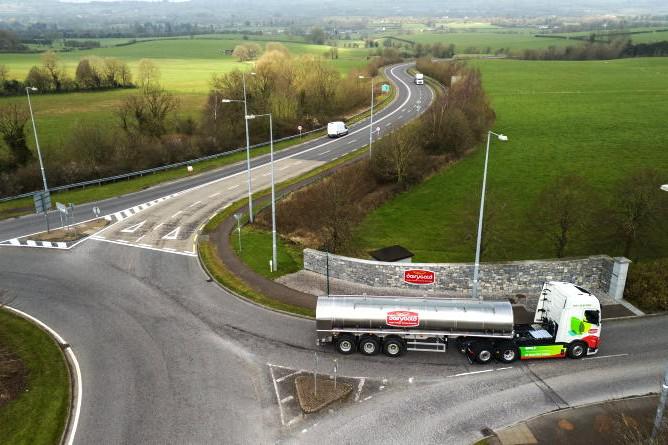
Dairygold
Dairygold has also decreased its gender pay gap, with a mean gap of 9.4% and a median gap of 9.7% compared to 11.7% and 15.9%, respectively, in 2024. From the pay quartile we can see a lower number of women are in the highest pay quartile compared to 74.5% males.
Speaking about the report, Michael Harte, chief executive at Dairygold, said: “I am pleased to say that our 2025 GPG Report confirms a decrease in the gender pay gap.
“We recognise that our success is intrinsically linked to our ability to create an inclusive environment, where every individual feels valued and empowered. By fostering a diverse and inclusive workplace, we will deliver enhanced performance and employee engagement, ensuring sustainable growth for the future.”
Teagasc
Teagasc has decreased its gender pay gap by 2% to 12% for 2025; its median also decreased from 15% to 14%. It also has a fair split in its lowest quartile pay, but a large split between male and female in the highest pay quartile with 73% of males receiving the highest pay.
Speaking about the report, Valerie Farrell, head of human resources, said: “Teagasc continues to recruit many women into professional roles and see them advance their careers through our staff development structures.
“Getting our gender pay gap into single digits over the next couple of years remains our ambition and this will be a clear marker in our new DE&I and people strategies.
“Our new statement of strategy highlights the important role women have to play in leading agriculture, which is the reason we have committed to increasing our role in driving initiatives to ensure that women are empowered as farm workers, managers and leaders in our sector.”
Ornua
Ornua has decreased its gender pay gap by 1% to 36% for 2025, and its median has stayed the same. The higher and lower quartiles are the same with 64% of females in the lowest quartile.
A total of 67% of the highest pay quartile are men, with 33% women.
Although Ornua is one of the companies with the largest pay gaps across the sector, it has a unique structure with the majority of revenue and employees being outside Ireland.
Speaking about the report, a spokesperson for the company said: “While our 2025 Gender Pay Gap results for Ornua Co-Operative show we still have significant progress to make in enhancing female representation at leadership levels within our group headquarters, they also show we are steadily moving in the right direction.
“We have a 2030 gender balance target of reaching 50:50 male and female representation across our Top 100 Leader roles.”
Definition of key terms
What is the mean gender pay gap? The difference between the average pay for men and women is calculated by adding all hourly pay rates for women and then dividing by the total number of women. This is repeated for men and subsequently compared to the average for women.
What is the median gender pay gap? The median gender pay gap is the difference between the middle points in hourly pay for men and women.
What are the quartile pay bands?Quartile bands in gender pay gap reporting divide a workforce into four equal-sized groups based on hourly pay, ranging from lowest to highest. These show the gender distribution at different seniority levels.
They highlight the percentage of men and women in the lower, lower middle, upper middle, and upper quartiles.
What do the figures mean?A gender pay gap report uses gross salaries to compare the average hourly earnings of men and women across a workforce. Because the analysis compares the pay of all working men and women in an organisation and not just those in similar roles, it is an assessment of a gender representation gap within an organisation.
A positive percentage indicates that men are paid more on average, while a negative percentage indicates that women are paid more on average.
Gender pay gap reporting forces organisations to measure, publish and address the difference between average hourly earnings of men and women. The information gained through reporting assists organisations in better understanding their own strengths and weaknesses in terms of diversity, equity and inclusion strategies.
Required reporting
From June 2022, the Gender Pay Gap Information Act 2021 has required organisations to report on their hourly gender pay gap across a range of metrics.
The gender pay gap is the difference in the average hourly wage of men and women across a workforce. It compares the pay of all working men and women, including basic pay, allowances, overtime, and performance-related bonuses, regardless of role or level in the organisation.
In 2025, Irish gender pay gap reporting applied to organisations with 50 or more employees. The Department of Children, Disability and Equality has developed an online centralised reporting database. This year, the Gender Pay Gap Portal was launched. Smaller companies across the sector are now required to publish their gender pay gap for the first time on the portal.
Sector overview
The pay gap in the agri food sector reflects broader structural patterns across farming, food production, research, and agribusiness supply chains. It is not simply a reflection of individual career choices or positions. Instead, women are disproportionately concentrated in lower-paid positions, meaning they are less represented in the higher quartile paid positions.
The ‘Her-self’ study, led by researchers at Maynooth University and funded by the Department of Agriculture, provided an in-depth profile of female farmers in Ireland. It highlighted that just 13.4% of farm holders are female, with few increases since 1991. Along with that, farm incomes for female farmers are consistently lower than for male farmers, and they receive lower direct farm payments.
Representative data from major agricultural co-operatives further illustrates the gender balance at board level across the industry, showing that men continue to hold the majority of senior leadership and decision-making positions.
Across these seven co-operatives (105 board members in total), five positions are held by women and 100 by men.
Positive sign
Across Ireland’s agri food sector, larger companies have reported a decrease in their gender pay gap figures for 2025, compared to 2024, which is a positive sign.
Women are still being underrepresented significantly at senior management level, meaning the majority of leadership roles are held by men.
Although companies are making strides to reduce the gap and promote more women into senior roles, the movement has been slow. The average gender pay gap in the European Union for 2025 was around 12% to 13% for gross hourly earnings. The majority of agri food companies have reported a gender pay gap above the EU average.
Tirlán
At Tirlán, the mean gender pay gap was 4.5% in 2025. This is a 4% reduction in its gender pay gap since the last reporting period in 2024.
This reduction is also reflected in its median pay gap, which, at -0.4%, demonstrates a 6.7% reduction from last year’s figure, which is deemed as a positive. However there is still work to be done – in the pay quartiles we can see 73% of men are in the highest pay versus 27% females.
Speaking on the report, Michael O’Leary, chief people design and DEI officer, said: “We are heartened to see positive progress year on year. Our focused, systemic approach has led to a consistent and significant reduction in our mean and median gender pay gap since reporting began in 2022.
“However, we continue our work to improve female representation at all levels, particularly in traditionally male-dominated professions and leadership roles.”
Dairygold
Dairygold has also decreased its gender pay gap, with a mean gap of 9.4% and a median gap of 9.7% compared to 11.7% and 15.9%, respectively, in 2024. From the pay quartile we can see a lower number of women are in the highest pay quartile compared to 74.5% males.
Speaking about the report, Michael Harte, chief executive at Dairygold, said: “I am pleased to say that our 2025 GPG Report confirms a decrease in the gender pay gap.
“We recognise that our success is intrinsically linked to our ability to create an inclusive environment, where every individual feels valued and empowered. By fostering a diverse and inclusive workplace, we will deliver enhanced performance and employee engagement, ensuring sustainable growth for the future.”
Teagasc
Teagasc has decreased its gender pay gap by 2% to 12% for 2025; its median also decreased from 15% to 14%. It also has a fair split in its lowest quartile pay, but a large split between male and female in the highest pay quartile with 73% of males receiving the highest pay.
Speaking about the report, Valerie Farrell, head of human resources, said: “Teagasc continues to recruit many women into professional roles and see them advance their careers through our staff development structures.
“Getting our gender pay gap into single digits over the next couple of years remains our ambition and this will be a clear marker in our new DE&I and people strategies.
“Our new statement of strategy highlights the important role women have to play in leading agriculture, which is the reason we have committed to increasing our role in driving initiatives to ensure that women are empowered as farm workers, managers and leaders in our sector.”
Ornua
Ornua has decreased its gender pay gap by 1% to 36% for 2025, and its median has stayed the same. The higher and lower quartiles are the same with 64% of females in the lowest quartile.
A total of 67% of the highest pay quartile are men, with 33% women.
Although Ornua is one of the companies with the largest pay gaps across the sector, it has a unique structure with the majority of revenue and employees being outside Ireland.
Speaking about the report, a spokesperson for the company said: “While our 2025 Gender Pay Gap results for Ornua Co-Operative show we still have significant progress to make in enhancing female representation at leadership levels within our group headquarters, they also show we are steadily moving in the right direction.
“We have a 2030 gender balance target of reaching 50:50 male and female representation across our Top 100 Leader roles.”
Definition of key terms
What is the mean gender pay gap? The difference between the average pay for men and women is calculated by adding all hourly pay rates for women and then dividing by the total number of women. This is repeated for men and subsequently compared to the average for women.
What is the median gender pay gap? The median gender pay gap is the difference between the middle points in hourly pay for men and women.
What are the quartile pay bands?Quartile bands in gender pay gap reporting divide a workforce into four equal-sized groups based on hourly pay, ranging from lowest to highest. These show the gender distribution at different seniority levels.
They highlight the percentage of men and women in the lower, lower middle, upper middle, and upper quartiles.
What do the figures mean?A gender pay gap report uses gross salaries to compare the average hourly earnings of men and women across a workforce. Because the analysis compares the pay of all working men and women in an organisation and not just those in similar roles, it is an assessment of a gender representation gap within an organisation.
A positive percentage indicates that men are paid more on average, while a negative percentage indicates that women are paid more on average.






SHARING OPTIONS