Improving farm sustainability can be a profitable exercise when it’s done correctly. A well-performing farm producing high milk solids from fewer inputs usually equates to a more sustainable farm.
In this article we’re looking at five ways to achieve this.
The five tips are chosen for their practicality and their potential to improve herd performance, grass production and overall profitability.
Applying lime
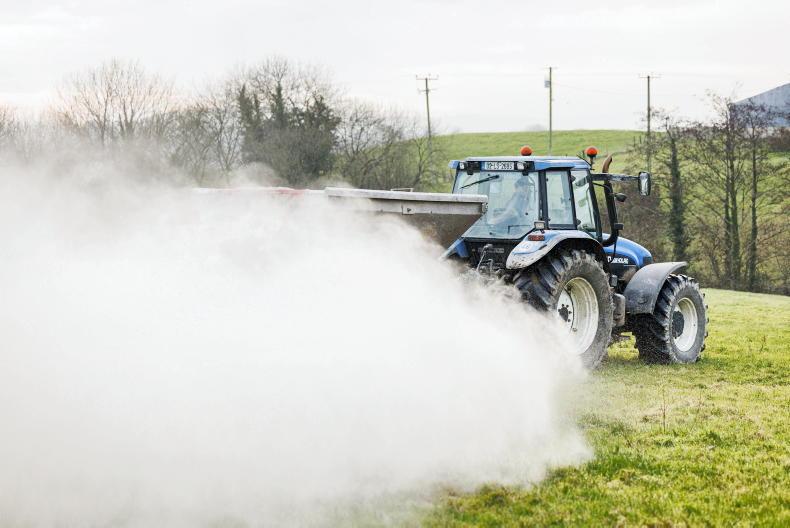
Lime is the cornerstone of good soil fertility. It functions by increasing the pH of an acidic soil. Soil with a suboptimal pH can have a huge impact on its potential to grow grass. When the pH is low, plants will struggle to take up the other nutrients in the soil, for example N, P and K. These nutrients cannot be used to their full potential and as a result are leached into the soil or lost to the atmosphere, instead of going towards plant growth. The pH target for soils in Ireland is pH 6.3 or greater. In peaty soils, the target is pH 5.5 or greater. The most effective way to increase pH is through lime spreading. A soil at the target pH will grow 1.5t/ha more grass dry matter than a suboptimal soil. This equates to about €200/ha in increased production. Spreading 5t/ha of lime will cost approximately €150. Five tonnes will cover a hectare of ground for roughly five years, depending on the pH. That’s a cost of €30/ha/year, with a return of €180/ha/year.
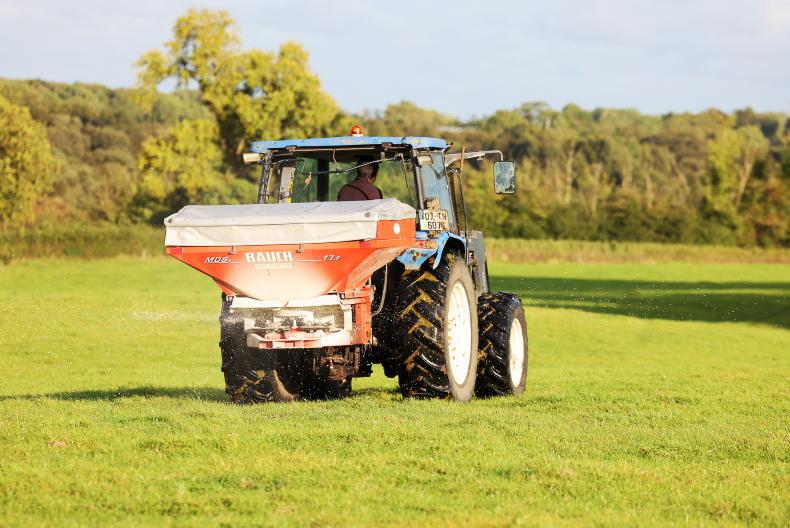
Improving soil fertility is the first step to making a farm business more sustainable.
Build up P and K
Liming is the first step to developing better soil fertility. The next step is achieving the optimum levels of P and K for the soil. Soil test the farm and see what’s required in each paddock as a starting point. The target is index three for both P and K. Once you know what’s needed, a nutrient management plan can be developed.
Using compound fertilisers like 18-6-12 instead of just straight nitrogen throughout the year will help improve the indexes gradually.
Similarly to pH, an improvement in P and K levels to index three can boost grass dry matter production by 25%.
While this is not as quick fix, it’s another option with significant return on investment.
Apply protected urea
Applying protected urea in preference to CAN is a simple step all farmers can take without much effort or investment. Protected urea results in greater plant uptake of nitrogen and less nitrous oxide or ammonia lost to the atmosphere. In terms of efficiency, recent studies by Teagasc are showing that the production levels of swards are slightly higher when using protected urea over CAN. Another added benefit is the cost. Based on current fertiliser prices, protected urea is 30c/kg cheaper, costing €1.20/kg/N in comparison to CAN, at €1.50/kg/N.
Incorporate clover
There’s no hiding away from the fact that clover is difficult to establish and manage. Soil fertility needs to be excellent for clover to really work.
If the soil test results are good in certain paddocks, it would make sense to reseed those paddocks with clover first.
Where clover is being sown, reseeding is the most effective way to get it established. Over-sowing can work, but excellent management is required and results are often mixed.
If the conditions are right and clover works, there’s no doubt it will reduce the chemical nitrogen requirement of a sward.
Teagasc says the demand for chemical nitrogen can be reduced by 100kg of N/ha, when clover is doing well.
That’s a saving of €120/ha at the current fertiliser prices.
Clover really comes into effect from July on, with most farmers able to stop spreading chemical nitrogen completely on good clover paddocks from then on.
Up to this point though, there are typically close to normal levels of nitrogen required, as clover will not be fixing enough nitrogen.
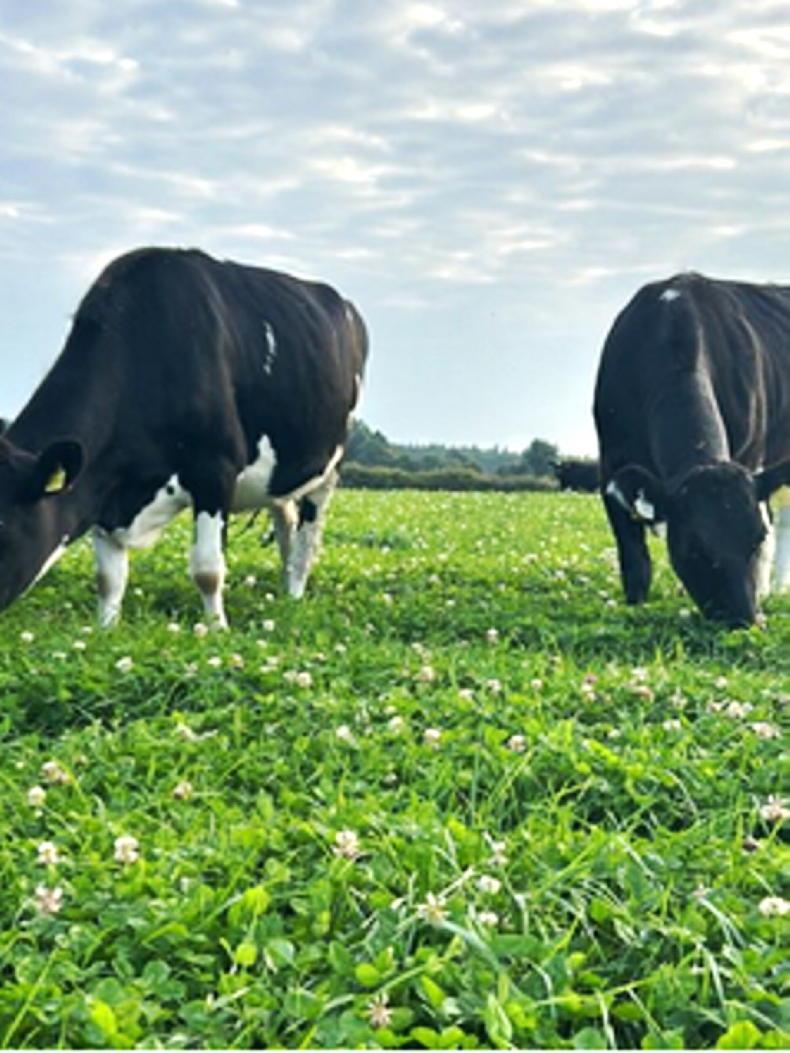
Incorporating clover is one of the main ways of reducing a farms emissions.
Increase herd EBI
Improving the genetics of a herd is a longer-term approach to improving sustainability. The best way to improve genetics is by increasing the average EBI of the herd. Higher EBI animals produce fewer emissions and higher profitability. This has been proven again and again by Teagasc and at farm level. The target should be to increase the average herd EBI by >€10/year. The most effective way to achieve this is to select replacement heifers with the highest EBI values and mate them with high-EBI bulls from the active bull list.
Improving farm sustainability can be a profitable exercise when it’s done correctly. A well-performing farm producing high milk solids from fewer inputs usually equates to a more sustainable farm.
In this article we’re looking at five ways to achieve this.
The five tips are chosen for their practicality and their potential to improve herd performance, grass production and overall profitability.
Applying lime
Lime is the cornerstone of good soil fertility. It functions by increasing the pH of an acidic soil. Soil with a suboptimal pH can have a huge impact on its potential to grow grass. When the pH is low, plants will struggle to take up the other nutrients in the soil, for example N, P and K. These nutrients cannot be used to their full potential and as a result are leached into the soil or lost to the atmosphere, instead of going towards plant growth. The pH target for soils in Ireland is pH 6.3 or greater. In peaty soils, the target is pH 5.5 or greater. The most effective way to increase pH is through lime spreading. A soil at the target pH will grow 1.5t/ha more grass dry matter than a suboptimal soil. This equates to about €200/ha in increased production. Spreading 5t/ha of lime will cost approximately €150. Five tonnes will cover a hectare of ground for roughly five years, depending on the pH. That’s a cost of €30/ha/year, with a return of €180/ha/year.
Improving soil fertility is the first step to making a farm business more sustainable.
Build up P and K
Liming is the first step to developing better soil fertility. The next step is achieving the optimum levels of P and K for the soil. Soil test the farm and see what’s required in each paddock as a starting point. The target is index three for both P and K. Once you know what’s needed, a nutrient management plan can be developed.
Using compound fertilisers like 18-6-12 instead of just straight nitrogen throughout the year will help improve the indexes gradually.
Similarly to pH, an improvement in P and K levels to index three can boost grass dry matter production by 25%.
While this is not as quick fix, it’s another option with significant return on investment.
Apply protected urea
Applying protected urea in preference to CAN is a simple step all farmers can take without much effort or investment. Protected urea results in greater plant uptake of nitrogen and less nitrous oxide or ammonia lost to the atmosphere. In terms of efficiency, recent studies by Teagasc are showing that the production levels of swards are slightly higher when using protected urea over CAN. Another added benefit is the cost. Based on current fertiliser prices, protected urea is 30c/kg cheaper, costing €1.20/kg/N in comparison to CAN, at €1.50/kg/N.
Incorporate clover
There’s no hiding away from the fact that clover is difficult to establish and manage. Soil fertility needs to be excellent for clover to really work.
If the soil test results are good in certain paddocks, it would make sense to reseed those paddocks with clover first.
Where clover is being sown, reseeding is the most effective way to get it established. Over-sowing can work, but excellent management is required and results are often mixed.
If the conditions are right and clover works, there’s no doubt it will reduce the chemical nitrogen requirement of a sward.
Teagasc says the demand for chemical nitrogen can be reduced by 100kg of N/ha, when clover is doing well.
That’s a saving of €120/ha at the current fertiliser prices.
Clover really comes into effect from July on, with most farmers able to stop spreading chemical nitrogen completely on good clover paddocks from then on.
Up to this point though, there are typically close to normal levels of nitrogen required, as clover will not be fixing enough nitrogen.
Incorporating clover is one of the main ways of reducing a farms emissions.
Increase herd EBI
Improving the genetics of a herd is a longer-term approach to improving sustainability. The best way to improve genetics is by increasing the average EBI of the herd. Higher EBI animals produce fewer emissions and higher profitability. This has been proven again and again by Teagasc and at farm level. The target should be to increase the average herd EBI by >€10/year. The most effective way to achieve this is to select replacement heifers with the highest EBI values and mate them with high-EBI bulls from the active bull list.







SHARING OPTIONS