My dairy farmer husband and I face a real dilemma each year. By late-November, our cows are dried off and bedded down for the winter. If you farm, you know how difficult it is to get away for even a short holiday. At this time, it becomes much more doable. The problem is, where do you go for a short break to escape the damp, cold winter weather?
Leaving the country is important. You need to get your farmer far enough away to ensure they relax and recharge. Farming is a 24-hour-a-day, 365-day-per-year profession – but also, a bit of context (and farm relief) is sometimes needed. Farmers deserve holidays, too.
So, back to the problem: where do you go for a long weekend where it is sunny, relatively warm, within a three-hour plane ride and interesting enough to hold the attention of the farmer in question? Because, in my experience, they will quickly start missing the farm.
I’ll tell you: it’s Seville, in southwestern Spain.
Seville is the capital of Spain’s Andalusia region. This ancient city is awash with historic buildings and palaces, exotic sights and smells and some of the best tapas you will find on the Iberian peninsula. Interestingly, Seville is also a key city for Spain’s matador (bullfighting) community. There are mounted bull heads almost everywhere you go. It’s truly a farmer’s paradise.
Bulls aside, this city is a beautiful meld of cultures. Its Moorish past means the architecture, art and food carry a hint of Arabic flavour. You’ll find medina-esque courtyards, fragrant orange trees and, on menus, chickpeas stewed with cumin alongside Iberico ham. Its sunny, arid clime means warm temperatures throughout the year. In early December, when we visited, it was a pleasant 20°C during the day.
Practical information
Seville is located on the River Guadalquivir. The historic Santa Cruz neighbourhood is located on the east side of the river and here you will find many hotels, bars and restaurants in addition to many of the main tourist attractions.
Seville is served by the San Pablo Airport, which is 10km from the city centre. Both Aer Lingus and Ryanair operate flights to Seville from Dublin Airport, while Ryanair also operates flights to Seville from Cork. Flights take just 2.5 hours.
Seville is a walkable city, requiring little need of taxis once you arrive at your accommodation. Wear comfortable shoes: most of the main sights are located within a 10-minute walk of the old town. Another nice way to see the city is by horse-drawn carriage – you will find these located in the Parque de María Luisa (we paid around €40 for a one-hour tour).
Many hotels in Seville offer old-world charm and feature Mudéjar architecture; speaking to the Islamic influences of the city’s past. What some of these hotels lack in modern amenities, they make up for in heritage – think opulent furnishings, classic wine and cocktail bars and stunning rooftop vistas.
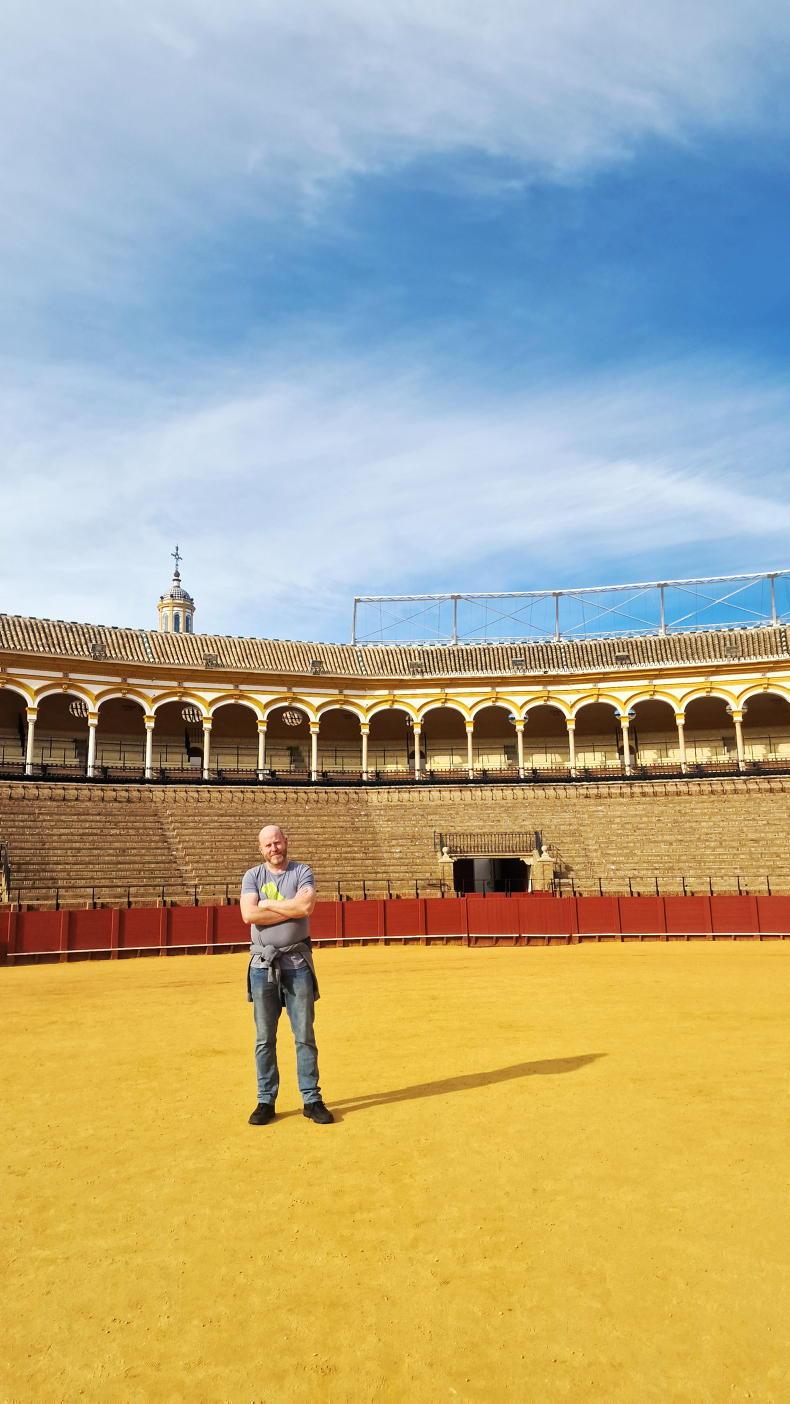
Janine's husband, Pat, is in his matador element in the bull ring at the Plaza de Toro. \ Janine Kennedy
Hotel las Casas de la Juderia
This isn’t a hotel – it’s an entire neighbourhood set deep within the heart of Santa Cruz. Once you check in, the door man will walk you to your room – this is necessary, because otherwise you will most definitely get lost. You enter underground tunnels, cross back streets and multiple courtyards before finally arriving in one of the over 130 traditionally furnished rooms. Though slightly dated, this hotel is as much an adventure as it is a getaway. It features a rooftop pool which, we can confirm, is absolutely freezing in early December, but the perfect spot to soak up the winter sun and take in the views of the city. Price per night starts around €175.
See lascasasdelajuderia.com
Hotel América Sevilla
If old-school charm isn’t your thing, Hotel América Sevilla is also located within walking distance to all attractions and comes in at around €150 per night. It is a more modern hotel experience (with no underground tunnels, as far as we can tell) and is located in the Plaza del Duque, close to the pedestrian shoppingdistrict.
See hotelamericasevilla.com
Where to eat
Seville features tapas bars at every corner; offering an array of shareable dishes and most with outdoor seating – perfect for people watching while you sip your tinto de verano (Seville’s refreshing drink of choice; made with red wine and similar to sangria).
Abantal Restaurant
If you plan to splurge on a fancy meal during your stay, make it Michelin Starred Abantal. Choose between their nine or 12-course tasting menu. Then, prepare to be impressed by chef Julio Fernández Quintero’s interpretation of modern Andalusian cuisine.
On our visit, we savoured a true celebration of the region, featuring plenty of fresh seafood, beef and pork. As an aperitif, sample the local vino de naranja (a sweet, orange flavoured wine) on ice before indulging in a bottle of Rioja.
Nine courses start at €100 per person. Booking required.
See abantalrestaurante.es
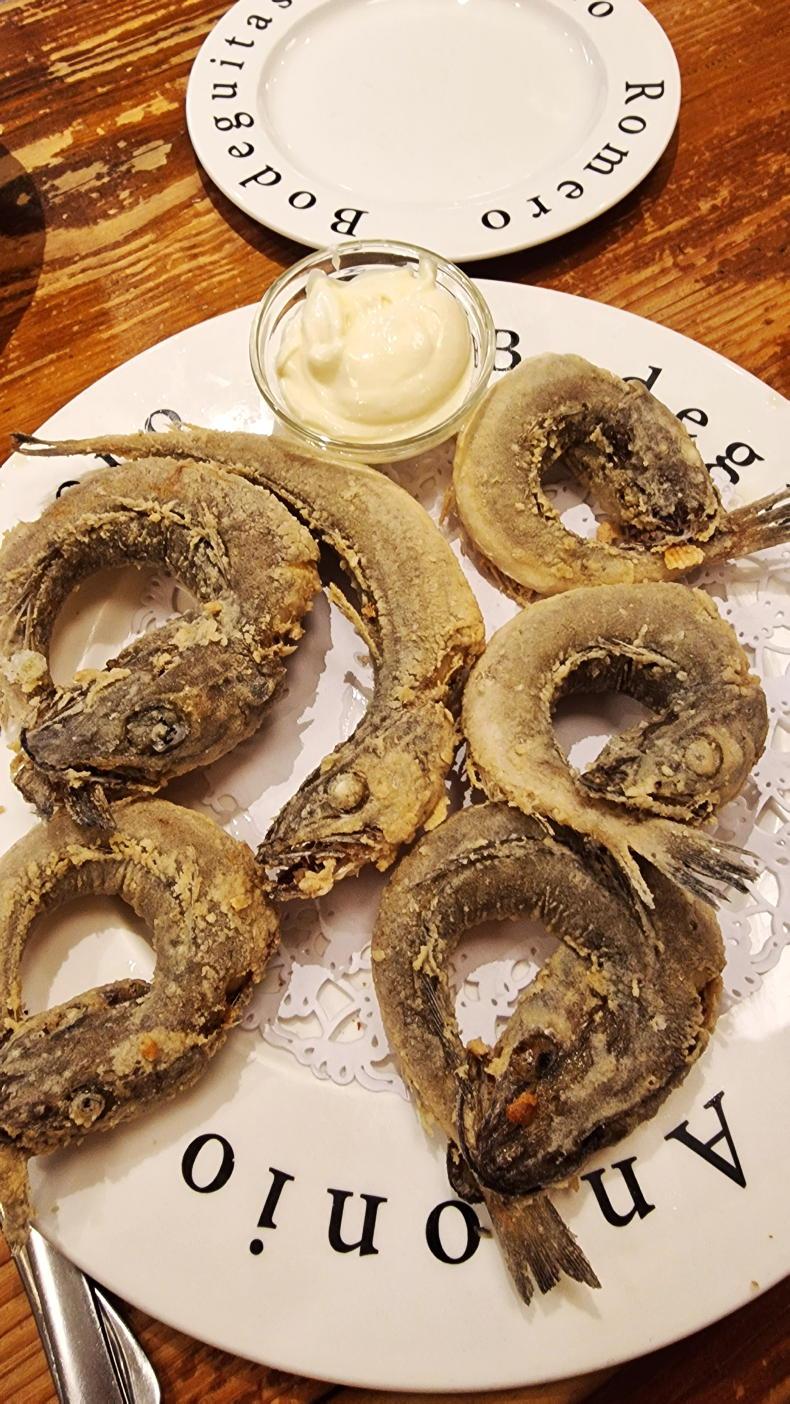
Some freshly fried "baby hake" at Bodeguitas Antonio Romero. \ Janine Kennedy
Bodeguita Antonio Romero
Before our trip, a friend of a friend reached out with several recommendations. “Go to this bar for lunch,” she wrote, “and just ask for whatever is on special.” We did just that, and luckily, we were among the first in line before it opened at 12pm. Soon after, seated at the bar (also recommended), we noticed the queue was out the door.
Located across from the famous Plaza de Toro, this family-owned spot is just the kind of place to settle into for a long, lingering lunch. Starting with cheesy Piripi – a toasted sandwich this bar is well known for. And we were also presented with an array of freshly fried fish. Thanks to the quality of the food and the very kind gentleman behind the bar, this wasn’t just a meal – it was an experience we’ll never forget. Lunch for two with drinks came to €50.
Bar El Comercio
You can’t visit Seville without indulging in some churros con chocolat. In fact, Andalusia is the birthplace of the traditional Spanish churro and you will find them on every street in the city. It’s difficult to find a bad churro, but it is generally agreed among those “in the know” that you will find the best ones at Bar El Comercio.
You’ll find this bar in Seville’s Casco Antiguo neighbourhood. Once you nab a table, you can watch the batches of churros being freshly fried. They are served with a rich hot chocolate which isn’t too sweet and is perfect for dipping. One serving is usually enough for two, making this snack as economical as it is delicious.
Our churros con chocolate cost less then €10. Bar El Comercio also serves other foods and takes reservations.
See barelcomercio.shop
What to do
Appreciate the art of flamenco
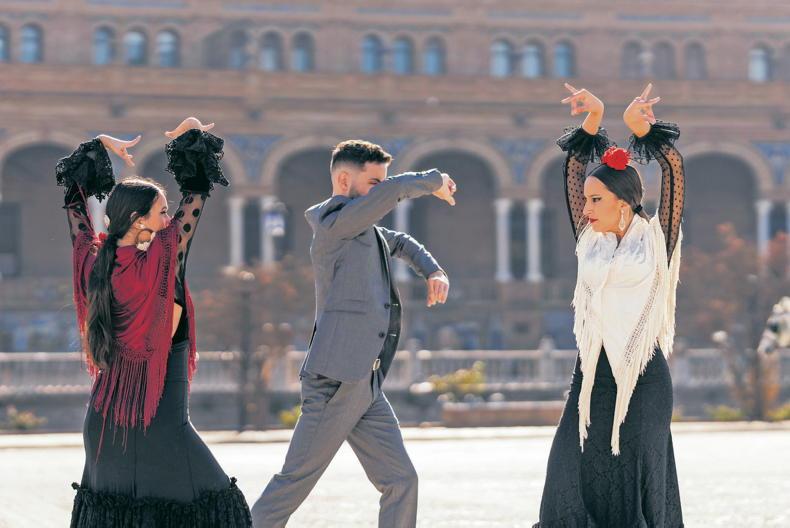
We have all seen images of flamenco dancers in beautiful dresses, but an actual flamenco performance is so much more than a dance. In Seville, there are several theatres which put on daily flamenco performances and – honestly, this is well worth the €20 ticket price with soulful singing, impressive guitar playing and beautiful dances which each tell a story of their own.
See museodelbaileflamenco.com
Walk the Metropol Parasol
The Metropol Parasol – also known as the Setas de Sevilla – should feel completely out of place in such an old city, but it somehow fits. This feat of modern architecture encircles the Plaza de la Encarnación and is the largest wooden structure in the world. To walk it at night is a wonderful experience – you feel as though you’re walking on air among a thousand different colours, and the city is laid out before you. The Parasol also houses a Roman-era archaeological dig site. Tickets are €16 per adult.
See setasdesevilla.com
Pretend you’re a matador
My husband enjoyed visiting the Plaza de Toros (Seville’s bull fighting arena) way more than any grown man probably should, but you can’t blame him. It is such an integral piece of the region’s history and tradition. Tickets to the Plaza include access to the inside of the ring, so you can imagine just how a matador might feel prior to taking on an angry bull. The Plaza also includes a small museum of artefacts highlighting the history of bullfighting in the city, going back centuries. Tickets start at €7 for a self-guided tour.
See visitaplazadetorosdesevilla.com
Take in the tiles
If you’re anything like me, you love a good tile, and Seville has some of the finest tile work I have ever seen. Take in the opulent rooms and perfectly designed gardens at the Real Alcazar de Sevilla (Seville’s royal palace).
Wander the impressive Plaza de España and view the tiled mosaic created for each of Spain’s 50 provinces. The buildings all offer impressive history, but for me, the tiles alone made them worth the visit.
Visits to the Plaza are free of charge, while tickets for the Real Alcazar (€35) pre-booked online.
See realalcazarsevilla-tickets.org
Read more
The ultimate Christmas baking project: make a gingerbread farm
Leave these classic Christmas cookies out for Santa
My dairy farmer husband and I face a real dilemma each year. By late-November, our cows are dried off and bedded down for the winter. If you farm, you know how difficult it is to get away for even a short holiday. At this time, it becomes much more doable. The problem is, where do you go for a short break to escape the damp, cold winter weather?
Leaving the country is important. You need to get your farmer far enough away to ensure they relax and recharge. Farming is a 24-hour-a-day, 365-day-per-year profession – but also, a bit of context (and farm relief) is sometimes needed. Farmers deserve holidays, too.
So, back to the problem: where do you go for a long weekend where it is sunny, relatively warm, within a three-hour plane ride and interesting enough to hold the attention of the farmer in question? Because, in my experience, they will quickly start missing the farm.
I’ll tell you: it’s Seville, in southwestern Spain.
Seville is the capital of Spain’s Andalusia region. This ancient city is awash with historic buildings and palaces, exotic sights and smells and some of the best tapas you will find on the Iberian peninsula. Interestingly, Seville is also a key city for Spain’s matador (bullfighting) community. There are mounted bull heads almost everywhere you go. It’s truly a farmer’s paradise.
Bulls aside, this city is a beautiful meld of cultures. Its Moorish past means the architecture, art and food carry a hint of Arabic flavour. You’ll find medina-esque courtyards, fragrant orange trees and, on menus, chickpeas stewed with cumin alongside Iberico ham. Its sunny, arid clime means warm temperatures throughout the year. In early December, when we visited, it was a pleasant 20°C during the day.
Practical information
Seville is located on the River Guadalquivir. The historic Santa Cruz neighbourhood is located on the east side of the river and here you will find many hotels, bars and restaurants in addition to many of the main tourist attractions.
Seville is served by the San Pablo Airport, which is 10km from the city centre. Both Aer Lingus and Ryanair operate flights to Seville from Dublin Airport, while Ryanair also operates flights to Seville from Cork. Flights take just 2.5 hours.
Seville is a walkable city, requiring little need of taxis once you arrive at your accommodation. Wear comfortable shoes: most of the main sights are located within a 10-minute walk of the old town. Another nice way to see the city is by horse-drawn carriage – you will find these located in the Parque de María Luisa (we paid around €40 for a one-hour tour).
Many hotels in Seville offer old-world charm and feature Mudéjar architecture; speaking to the Islamic influences of the city’s past. What some of these hotels lack in modern amenities, they make up for in heritage – think opulent furnishings, classic wine and cocktail bars and stunning rooftop vistas.
Janine's husband, Pat, is in his matador element in the bull ring at the Plaza de Toro. \ Janine Kennedy
Hotel las Casas de la Juderia
This isn’t a hotel – it’s an entire neighbourhood set deep within the heart of Santa Cruz. Once you check in, the door man will walk you to your room – this is necessary, because otherwise you will most definitely get lost. You enter underground tunnels, cross back streets and multiple courtyards before finally arriving in one of the over 130 traditionally furnished rooms. Though slightly dated, this hotel is as much an adventure as it is a getaway. It features a rooftop pool which, we can confirm, is absolutely freezing in early December, but the perfect spot to soak up the winter sun and take in the views of the city. Price per night starts around €175.
See lascasasdelajuderia.com
Hotel América Sevilla
If old-school charm isn’t your thing, Hotel América Sevilla is also located within walking distance to all attractions and comes in at around €150 per night. It is a more modern hotel experience (with no underground tunnels, as far as we can tell) and is located in the Plaza del Duque, close to the pedestrian shoppingdistrict.
See hotelamericasevilla.com
Where to eat
Seville features tapas bars at every corner; offering an array of shareable dishes and most with outdoor seating – perfect for people watching while you sip your tinto de verano (Seville’s refreshing drink of choice; made with red wine and similar to sangria).
Abantal Restaurant
If you plan to splurge on a fancy meal during your stay, make it Michelin Starred Abantal. Choose between their nine or 12-course tasting menu. Then, prepare to be impressed by chef Julio Fernández Quintero’s interpretation of modern Andalusian cuisine.
On our visit, we savoured a true celebration of the region, featuring plenty of fresh seafood, beef and pork. As an aperitif, sample the local vino de naranja (a sweet, orange flavoured wine) on ice before indulging in a bottle of Rioja.
Nine courses start at €100 per person. Booking required.
See abantalrestaurante.es
Some freshly fried "baby hake" at Bodeguitas Antonio Romero. \ Janine Kennedy
Bodeguita Antonio Romero
Before our trip, a friend of a friend reached out with several recommendations. “Go to this bar for lunch,” she wrote, “and just ask for whatever is on special.” We did just that, and luckily, we were among the first in line before it opened at 12pm. Soon after, seated at the bar (also recommended), we noticed the queue was out the door.
Located across from the famous Plaza de Toro, this family-owned spot is just the kind of place to settle into for a long, lingering lunch. Starting with cheesy Piripi – a toasted sandwich this bar is well known for. And we were also presented with an array of freshly fried fish. Thanks to the quality of the food and the very kind gentleman behind the bar, this wasn’t just a meal – it was an experience we’ll never forget. Lunch for two with drinks came to €50.
Bar El Comercio
You can’t visit Seville without indulging in some churros con chocolat. In fact, Andalusia is the birthplace of the traditional Spanish churro and you will find them on every street in the city. It’s difficult to find a bad churro, but it is generally agreed among those “in the know” that you will find the best ones at Bar El Comercio.
You’ll find this bar in Seville’s Casco Antiguo neighbourhood. Once you nab a table, you can watch the batches of churros being freshly fried. They are served with a rich hot chocolate which isn’t too sweet and is perfect for dipping. One serving is usually enough for two, making this snack as economical as it is delicious.
Our churros con chocolate cost less then €10. Bar El Comercio also serves other foods and takes reservations.
See barelcomercio.shop
What to do
Appreciate the art of flamenco
We have all seen images of flamenco dancers in beautiful dresses, but an actual flamenco performance is so much more than a dance. In Seville, there are several theatres which put on daily flamenco performances and – honestly, this is well worth the €20 ticket price with soulful singing, impressive guitar playing and beautiful dances which each tell a story of their own.
See museodelbaileflamenco.com
Walk the Metropol Parasol
The Metropol Parasol – also known as the Setas de Sevilla – should feel completely out of place in such an old city, but it somehow fits. This feat of modern architecture encircles the Plaza de la Encarnación and is the largest wooden structure in the world. To walk it at night is a wonderful experience – you feel as though you’re walking on air among a thousand different colours, and the city is laid out before you. The Parasol also houses a Roman-era archaeological dig site. Tickets are €16 per adult.
See setasdesevilla.com
Pretend you’re a matador
My husband enjoyed visiting the Plaza de Toros (Seville’s bull fighting arena) way more than any grown man probably should, but you can’t blame him. It is such an integral piece of the region’s history and tradition. Tickets to the Plaza include access to the inside of the ring, so you can imagine just how a matador might feel prior to taking on an angry bull. The Plaza also includes a small museum of artefacts highlighting the history of bullfighting in the city, going back centuries. Tickets start at €7 for a self-guided tour.
See visitaplazadetorosdesevilla.com
Take in the tiles
If you’re anything like me, you love a good tile, and Seville has some of the finest tile work I have ever seen. Take in the opulent rooms and perfectly designed gardens at the Real Alcazar de Sevilla (Seville’s royal palace).
Wander the impressive Plaza de España and view the tiled mosaic created for each of Spain’s 50 provinces. The buildings all offer impressive history, but for me, the tiles alone made them worth the visit.
Visits to the Plaza are free of charge, while tickets for the Real Alcazar (€35) pre-booked online.
See realalcazarsevilla-tickets.org
Read more
The ultimate Christmas baking project: make a gingerbread farm
Leave these classic Christmas cookies out for Santa






SHARING OPTIONS