


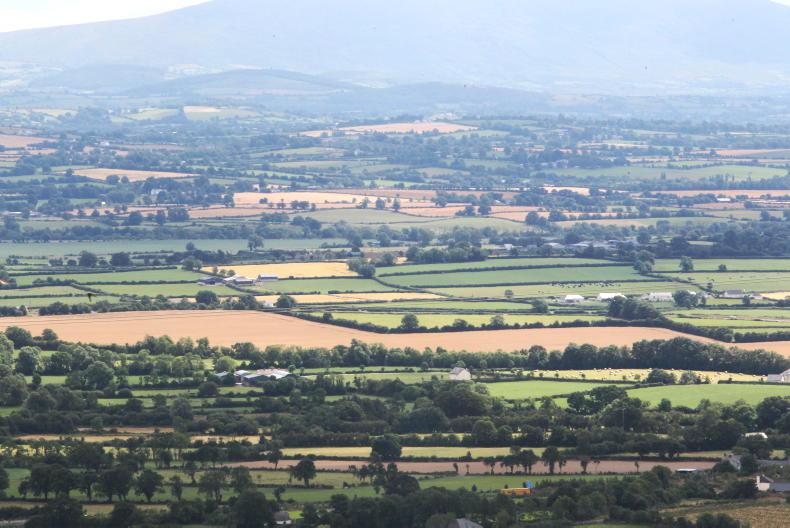
Sometimes, you hear someone articulate an idea so clearly that you have to change your way of thinking about a subject. That happened me recently, and the subject concerned was land – and how land transfer is dealt with by the tax code in this country.
Farmland is a significant asset. The old saying that they aren’t making any more of it is entirely true. Not only that, but with increased targets for tillage, forestry, feed crops for anaerobic digestion plants, solar and windfarms, land use pressures are increasing by the year. And that’s before we factor in perhaps the most important non-farming use – space for nature.
Then there’s housing – last year alone saw building of over 16,000 houses in estates, over 5,500 one-off houses, and 8,700 apartments. None of these were built on water, or on air – they took land out of production forever.
There is also land lost to industrial buildings and retail outlets. It might only be an acre or two at a time, but they all add up to thousands of hectares every single year. In a decade, that’s tens of thousands of acres, and on an island of 20 million acres, that is of significance.
For that reason, whenever land comes up for sale, there is plenty of interest. And going back to basic economics, where demand outstrips supply, prices will always be strong. All the more as land doesn’t come up for sale very often. Only 1% of Irish land is offered annually. That means on average, that land is sold only once every three generations. The majority of Irish land is transferred from one generation to another.
Whenever wealth is being transferred, the Government and Revenue are inevitably interested. However, there is an acknowledgement that the value of land does not correlate to its earning potential. Farming is not the most lucrative of careers. The value of land resides in the fact that not only is it finite, it also endures. Land doesn’t age, crack or rust.
As a result of these widely accepted truths, land is treated quite benevolently by our tax code.
One can inherit up to €4m of agricultural property without paying tax, thanks to Agricultural Relief. This allows a 90% reduction of asset valuation. That multiplies the €400,000 threshold that pertains for children and those gaining favoured nephew/niece status tenfold before Capital Acquisitions Tax (CAT) kicks in.
This means a farm can be worth €4m before the beneficiary has to pay tax. And if someone has five children, each can benefit from this threshold. The reliefs from Capital Gains Tax on lifetime transfers are no less generous.
The downside
What is wrong with that, I hear you ask. Some people would have an objection politically or philosophically, believing that tax should be paid on assets of such value. However, most people close to agriculture understand that you would wreck the fabric of family farms if you imposed high transfer taxes on working farms.
We already have enough structural problems. For starters, most farms can no longer support two generations at the same time, so young people have to work off farm until their parents are ready to retire. Secondly, most farmers have little or no private pension provision, so unless their spouse has a pension, the farm will have to help support them along with their State pension. So it’s vital that Agricultural Relief stays.
But those connected to farming also know that more and more people with non-farming interests are competing for farmland at auction – and frequently winning, because they have deeper pockets. The question many people are asking is: are the transfer tax reliefs attracting non-farmers towards land purchase, as a safe means of wealth protection and wealth transfer across generations?
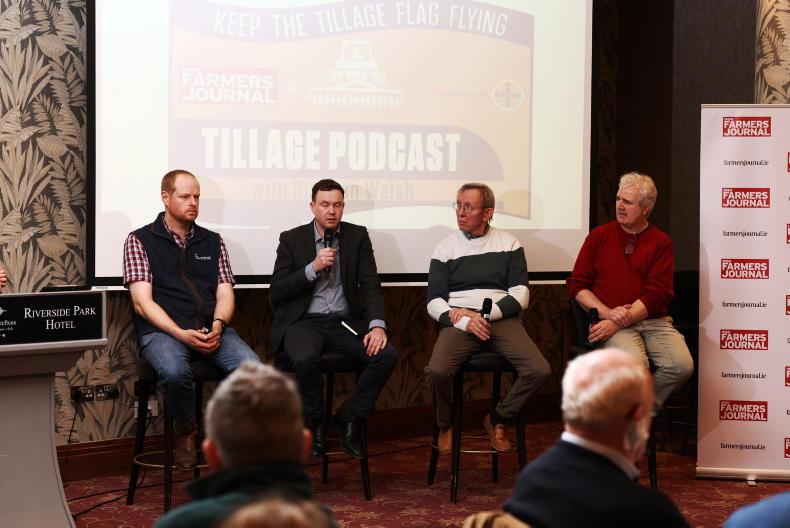
This issue was crystallised for me by a comment made by a farmer at the Fine Gael agriculture conference last November. There was an excellent session on generational renewal, and this man made his intervention from the floor.
He had attended a graduation ceremony in Kildalton Agricultural College, he said. There were a number of different groups, including a large cohort of fresh-faced graduates from the Level 5 and 6 Certificate in Agriculture course that the college offers. There were smaller groups from the horticulture and equine course, again mostly young and outdoorsy.
But the final cohort were those who had completed the part-time and distance Green Cert courses. The distance students, he said, were older, many thirtysomethings, some middle-aged. Most looked like professionals, urban and well-heeled.
He contended that these people had undertaken this agricultural education purely to qualify for Agricultural Relief. And these people would never farm, certainly not in the sense of getting muck on their clothes or dirt under their fingernails.
“Generational renewal is about bringing young people into farming in their own right,” he said. “But our taxation system is catering for, and allowing, wealth transfer through the change in ownership of farmland and other agricultural assets. And these are two completely different things”.
Nail on the head
That man, whose name I didn’t manage to get on the day, was correct. He wasn’t saying that we shouldn’t have no transfer taxes, but he was saying that the bar for obtaining Agricultural Relief may need examination. Resources, in the form of tax revenue foregone, are being lost to farming because people are taking advantage of the system that is in place.
Of course, these people are not doing anything underhand or wrong, to imply otherwise would be misleading and unfair. But farming is facing a demographic crisis – the average Irish farmer is touching 60 years of age, a stage of life in which many people opt to retire. Two out of five Irish farmers are 65 or over.
The Commission on Generational Renewal has issued their recommendations. The first action taken on foot of that report was to renew existing land transfer tax reliefs to the end of the decade. So nothing is going to change overnight. In any event, it’s hard to prove if someone is farming or not.
I am a tillage farmer when I’m not scribbling for this paper. We do almost all our own work – we get someone in to harvest our crops – but we do all our own tilling, sowing, fertiliser spreading and spraying. But I would be no less of a tillage farmer in the eyes of the Department of Agriculture if I engaged an agricultural contractor to do every bit of that work. I could have a private agronomist to instruct that contractor, my only requirement would be to pay them both.
So creating a system that excludes ‘armchair farmers’ won’t be easy. Casting a net to catch all such people would probably see genuine young and aspiring farmers caught up too. But I think it might be worth trying, because we need to find a way for tens of thousands of young people currently without land to pursue a career in farming, whether though inheritance, lease or purchase.
Business relief
If Agricultural Relief were refined to exclude people who will never farm in their own right, there are still other reliefs to be considered. Many farmers might not realise that there are parallel reliefs for business assets. One big difference between Agricultural Relief and Business Relief is that the dwelling house is disallowed from the latter. That provision in Agricultural Relief is a recognition that the farmhouse is an intrinsic part of the farm.
The love of the land is deep in Irish people, and it is about far more than wealth transfer, so even if the reliefs changed in the morning, I don’t see the demand for land collapsing. The price would surely drop though.
Some would say that might help the smaller and emerging farmer. It isn’t simple, is it?



SHARING OPTIONS