A social initiative for older farmers, developed and implemented by Irish researchers, is lying idle despite a successful introduction in an east Galway Mart, due to a lack of funding.
The Farmer’s Yards project, which was piloted in Mountbellew Mart in 2023, remains dormant despite the initiative being adopted by an American non-profit organisation supporting farmers in Pennsylvania.
Developed by Dr Shane Conway and Dr Maura Farrell at University of Galway’s Rural Studies Centre, the Farmer’s Yards model builds on existing social networks for older farmers, allowing them to meet up to socialise and exchange ideas and information in an informal setting.
Succession conversation
Speaking to Irish Country Living, Shane says the success of Farmer’s Yards in Mountbellew has shown the benefits it can have for farmers all over the country.
“There’s all this talk about succession but it’s focused on land transfer and the legal and financial side of things. The human dynamics at play for farmers in older life is rarely discussed,” he says.
“One of the main criteria of the Farm Retirement Scheme when it was introduced in 2007 was that farmers had to finish farming forever, but farming is not a job, it’s a way of life.
“Almost 20 years on and the Department of Agriculture is still asking how we can address succession. but in terms of the human element of encouraging farmers to have the conversation around land transfer, we have this [Farmer’s Yard] model yet it isn’t being delivered.
“So much money is being pumped into succession planning and the mental health concerns of the farming community, when we have an initiative here to addresses both.
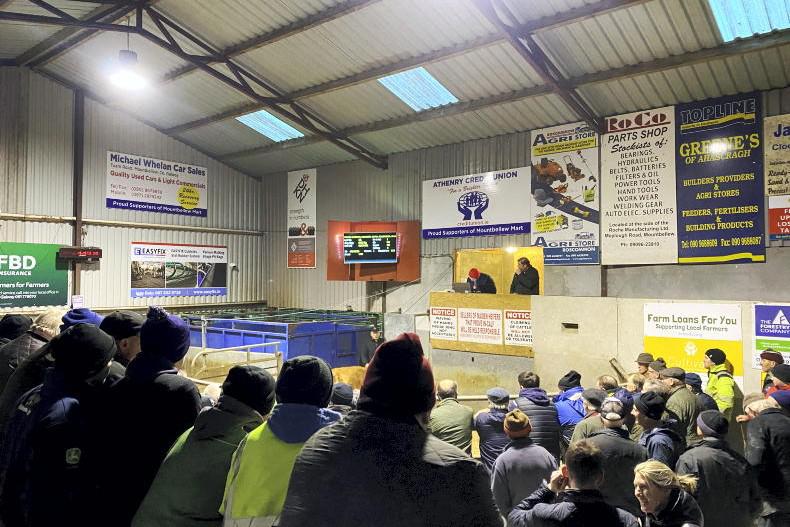
“Farmer’s Yards essentially involve bringing older farmers, who are already at the mart, together to talk about the issues that matter to them, in an informal setting. In Mountbellew we had screens in the canteen feeding the mart sales in to them so they didn’t feel they were missing out on any of the business of the day. At the same time, we had presentations on a range of farming issues where we brought the information to them with speakers from a number of different agencies.”
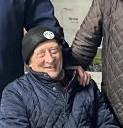
Farmer, Patsy Ruane attended Farmer’s Yards.
One farmer who attended Farmer’s Yards over the six-week pilot says he would like to see it return. Patsy Ruane has cattle, sheep and horses across two holdings in Castleblakeney and Menlough.
“I thought the Farmer’s Yards was great as it brought older farmers together in a way that meant we could discuss all sorts of issues,” he explains.
“I’m 77 now and stepping back a bit from the farm but I am lucky because both my son and daughter help me out at the weekends. I had the chance at the Farmer’s Yards to talk about all sorts of things from the mart to the weather and what the future of farming is going to look like.
“We talked about dosing, soil, land, grass and the best way of going about things. There are a lot of knowledgeable farmers out there and you’re always learning. There were a lot of people at the Farmer’s Yards in a similar situation to myself so it was good to be able to chat and share information, as well as reflect on the past.”
Shane says that the lack of funding to roll out Farmer’s Yards is only one of the challenges facing the initiative.
“This was developed and rolled out with a very small funding pot, which came from seed funding within University of Galway, with some additional support from the local credit union in Mountbellew. We’re not talking huge money,” he adds.
“But it needs an established body to take it on, to scale it up to a level where every mart in the country can offer it. The fact it takes place in a forum which farmers know and trust, you’re not asking them to do something new. It would also be hugely beneficial to marts, many of which are struggling financially, to provide a social space alongside their main transactional purpose.
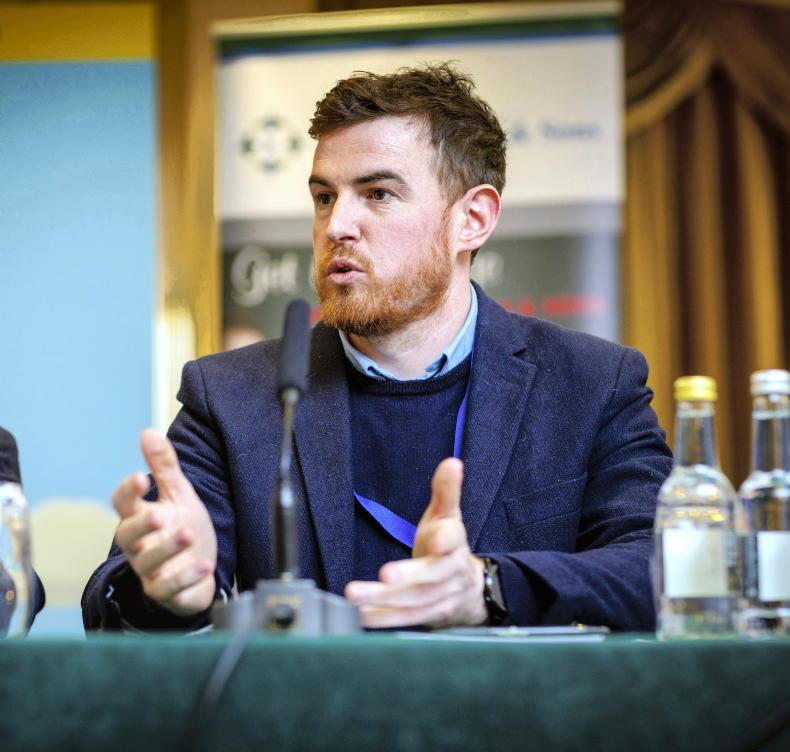
Dr Shane Conway, Farmer's Yards.
“You’re not going to solve every issue facing farmers but you could stimulate a greater willingness to engage in the succession conversation.
“Younger farmers have Macra, but there’s nothing there for older farmers. The Farmer’s Yards model is there, with branding and a website. It’s such a shame that something that makes so much sense is not being adopted,” says Shane who is now Research Coordinator at Atlantic Technological University.
Peer-to-peer
Independent Ireland’s Roscommon Galway TD Michael Fitzmaurice, who sits on the Oireachtas Committee on Agriculture and Food says he would like to know more about the Farmer’s Yards initiative.
“We’re great for talking about mental health in farming but when it comes down to it there aren’t many supports that reach the farmer on the ground,” he says.
“The Farmer’s Yards model sounds like it ticks a lot of boxes for older farmers, who need a lot of support on so many levels. In the case of succession, there is no incentive to let land go, or any help in what a farmer is to do with their life if they do give up farming.
“Handing over a farm is the biggest decision a farmer will make in his or her life and there’s this notion that a farmer can just switch off like a tap. When people in other industries or professions lose their jobs, their mental health suffers and we’re able to direct them to support. We need to have as many supports in place for farmers to help them feel they’re not being left behind. I would like Dr Conway to come before the Agricultural Committee to share his information on Farmer’s Yards.”
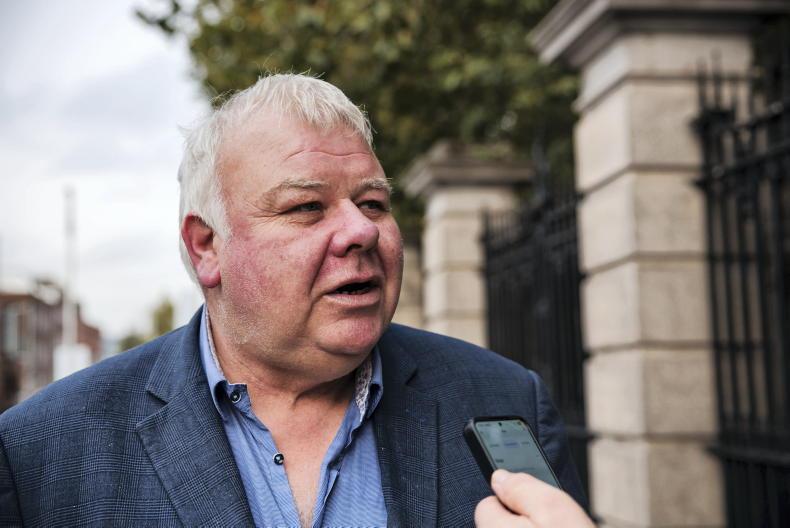
Michael Fitzmaurice, Independent Ireland TD who wants further information on Famers Yards to be presented at an Agriculture and Food Committee meeting. \ Claire Nash
Shane says the success of the pilot project in Mountbellew was built on 10 years of his research, and adds that he has been asked many times since it concluded if it’s coming back.
“I’m often asked by farmers who attended the Farmer’s Yards when it’s coming back,” he adds.
“We tried to implement the programme gently in that it built up to become a peer-to-peer session that stimulated an open conversation among farmers at a similar stage in life.”
The proof of the model’s success is evident in its adoption by Pennsylvania Farm Link, which has secured funding from the US Department of Agriculture’s National Institute of Food and Agriculture.
Darlene Livingston, executive director of Pennsylvania Farm Link worked with Shane in developing the model for US farmers.
“Farmer’s Yards in Pennsylvania is designed for our farming community’s particular interests, requirements and values, in accordance with the model developed at University of Galway,” Darlene explains.
“The important role that the initiative plays in ensuring active social participation and inclusion for farmers as they age was evident with so many farmers in their 70s and 80s taking part. Such engagement will help prevent them from being isolated and feeling excluded from society in later life.”
Shane’s research on the Farmer’s Yards has been published in the Journal of Agromedicine, where along with his co-authors, Dr Maura Farrell, Professor John McDonagh and Niamh Nolan, he argues for the formation of a national Farmer’s Yards social initiative for older farmers, funded through the European Innovation Partnership for Agricultural Productivity and Sustainability (EIP-AGRI) initiative across the country’s 60 co-operative marts.
The EIP-AGRI initiative connects research and practice through the formation of ‘organisational groups’ within innovation and agriculture including farmers, advisors, researchers, businesses and non-governmental organisations (NGOs).
“A multi-actor Farmer’s Yards EIP-AGRI project bringing together research institutes, health promotion specialists, livestock marts and the farming community to collaboratively achieve tangible, mutual and viable solutions oriented towards creating an age-friendly environment in the farming community has the potential to facilitate the roll out of this social initiative on a national scale,” writes Shane.
“Increasing evidence on the benefits and importance of such social activities and interventions on the lives of older people, particularly in relation to combatting social isolation and loneliness in later years reaffirms the significance and timeliness of building on the initial pilot phase of the Farmer’s Yards social initiative in such a manner.”
A social initiative for older farmers, developed and implemented by Irish researchers, is lying idle despite a successful introduction in an east Galway Mart, due to a lack of funding.
The Farmer’s Yards project, which was piloted in Mountbellew Mart in 2023, remains dormant despite the initiative being adopted by an American non-profit organisation supporting farmers in Pennsylvania.
Developed by Dr Shane Conway and Dr Maura Farrell at University of Galway’s Rural Studies Centre, the Farmer’s Yards model builds on existing social networks for older farmers, allowing them to meet up to socialise and exchange ideas and information in an informal setting.
Succession conversation
Speaking to Irish Country Living, Shane says the success of Farmer’s Yards in Mountbellew has shown the benefits it can have for farmers all over the country.
“There’s all this talk about succession but it’s focused on land transfer and the legal and financial side of things. The human dynamics at play for farmers in older life is rarely discussed,” he says.
“One of the main criteria of the Farm Retirement Scheme when it was introduced in 2007 was that farmers had to finish farming forever, but farming is not a job, it’s a way of life.
“Almost 20 years on and the Department of Agriculture is still asking how we can address succession. but in terms of the human element of encouraging farmers to have the conversation around land transfer, we have this [Farmer’s Yard] model yet it isn’t being delivered.
“So much money is being pumped into succession planning and the mental health concerns of the farming community, when we have an initiative here to addresses both.
“Farmer’s Yards essentially involve bringing older farmers, who are already at the mart, together to talk about the issues that matter to them, in an informal setting. In Mountbellew we had screens in the canteen feeding the mart sales in to them so they didn’t feel they were missing out on any of the business of the day. At the same time, we had presentations on a range of farming issues where we brought the information to them with speakers from a number of different agencies.”
Farmer, Patsy Ruane attended Farmer’s Yards.
One farmer who attended Farmer’s Yards over the six-week pilot says he would like to see it return. Patsy Ruane has cattle, sheep and horses across two holdings in Castleblakeney and Menlough.
“I thought the Farmer’s Yards was great as it brought older farmers together in a way that meant we could discuss all sorts of issues,” he explains.
“I’m 77 now and stepping back a bit from the farm but I am lucky because both my son and daughter help me out at the weekends. I had the chance at the Farmer’s Yards to talk about all sorts of things from the mart to the weather and what the future of farming is going to look like.
“We talked about dosing, soil, land, grass and the best way of going about things. There are a lot of knowledgeable farmers out there and you’re always learning. There were a lot of people at the Farmer’s Yards in a similar situation to myself so it was good to be able to chat and share information, as well as reflect on the past.”
Shane says that the lack of funding to roll out Farmer’s Yards is only one of the challenges facing the initiative.
“This was developed and rolled out with a very small funding pot, which came from seed funding within University of Galway, with some additional support from the local credit union in Mountbellew. We’re not talking huge money,” he adds.
“But it needs an established body to take it on, to scale it up to a level where every mart in the country can offer it. The fact it takes place in a forum which farmers know and trust, you’re not asking them to do something new. It would also be hugely beneficial to marts, many of which are struggling financially, to provide a social space alongside their main transactional purpose.
Dr Shane Conway, Farmer's Yards.
“You’re not going to solve every issue facing farmers but you could stimulate a greater willingness to engage in the succession conversation.
“Younger farmers have Macra, but there’s nothing there for older farmers. The Farmer’s Yards model is there, with branding and a website. It’s such a shame that something that makes so much sense is not being adopted,” says Shane who is now Research Coordinator at Atlantic Technological University.
Peer-to-peer
Independent Ireland’s Roscommon Galway TD Michael Fitzmaurice, who sits on the Oireachtas Committee on Agriculture and Food says he would like to know more about the Farmer’s Yards initiative.
“We’re great for talking about mental health in farming but when it comes down to it there aren’t many supports that reach the farmer on the ground,” he says.
“The Farmer’s Yards model sounds like it ticks a lot of boxes for older farmers, who need a lot of support on so many levels. In the case of succession, there is no incentive to let land go, or any help in what a farmer is to do with their life if they do give up farming.
“Handing over a farm is the biggest decision a farmer will make in his or her life and there’s this notion that a farmer can just switch off like a tap. When people in other industries or professions lose their jobs, their mental health suffers and we’re able to direct them to support. We need to have as many supports in place for farmers to help them feel they’re not being left behind. I would like Dr Conway to come before the Agricultural Committee to share his information on Farmer’s Yards.”
Michael Fitzmaurice, Independent Ireland TD who wants further information on Famers Yards to be presented at an Agriculture and Food Committee meeting. \ Claire Nash
Shane says the success of the pilot project in Mountbellew was built on 10 years of his research, and adds that he has been asked many times since it concluded if it’s coming back.
“I’m often asked by farmers who attended the Farmer’s Yards when it’s coming back,” he adds.
“We tried to implement the programme gently in that it built up to become a peer-to-peer session that stimulated an open conversation among farmers at a similar stage in life.”
The proof of the model’s success is evident in its adoption by Pennsylvania Farm Link, which has secured funding from the US Department of Agriculture’s National Institute of Food and Agriculture.
Darlene Livingston, executive director of Pennsylvania Farm Link worked with Shane in developing the model for US farmers.
“Farmer’s Yards in Pennsylvania is designed for our farming community’s particular interests, requirements and values, in accordance with the model developed at University of Galway,” Darlene explains.
“The important role that the initiative plays in ensuring active social participation and inclusion for farmers as they age was evident with so many farmers in their 70s and 80s taking part. Such engagement will help prevent them from being isolated and feeling excluded from society in later life.”
Shane’s research on the Farmer’s Yards has been published in the Journal of Agromedicine, where along with his co-authors, Dr Maura Farrell, Professor John McDonagh and Niamh Nolan, he argues for the formation of a national Farmer’s Yards social initiative for older farmers, funded through the European Innovation Partnership for Agricultural Productivity and Sustainability (EIP-AGRI) initiative across the country’s 60 co-operative marts.
The EIP-AGRI initiative connects research and practice through the formation of ‘organisational groups’ within innovation and agriculture including farmers, advisors, researchers, businesses and non-governmental organisations (NGOs).
“A multi-actor Farmer’s Yards EIP-AGRI project bringing together research institutes, health promotion specialists, livestock marts and the farming community to collaboratively achieve tangible, mutual and viable solutions oriented towards creating an age-friendly environment in the farming community has the potential to facilitate the roll out of this social initiative on a national scale,” writes Shane.
“Increasing evidence on the benefits and importance of such social activities and interventions on the lives of older people, particularly in relation to combatting social isolation and loneliness in later years reaffirms the significance and timeliness of building on the initial pilot phase of the Farmer’s Yards social initiative in such a manner.”







SHARING OPTIONS