Our summer garden’s bounty of colour is now fading slowly into autumn and some gardeners may feel their interest is also fading. We must dispel that notion. While some gardens may be designed to be a summer showpiece, all should have something to carry our interest through the winter and into spring.
Planning is the key and when thinking of the plants we enjoy for high summer display, we should also look towards creating winter interest too, something to get you up from your chair and into the garden to admire the spectacle. The planting palette is vast from evergreen to variegated shrubs, flowering with scent to draw your interest.
I always suggest that gardeners’ plant these within viewing distance of your living space, which keeps the garden alive and encourages you outdoors.
Mahonia x media ‘Charity’ is a large impressive evergreen shrub that also has a place in the summer garden because of its architectural foliage. However, it is in late autumn and into winter it shines bright with spikes of yellow flowers said to have a scent reminiscent of lily of the valley. It is a bulky shrub growing to over 3m so space is required.
Osmanthus heterophyllus is another large evergreen shrub that given time can be trained as a small tree, growing to 5m. Again, it flowers in late autumn into winter with small white scented flowers which are followed by small black berries.
Elaeagnus x ebbingii is a shrub I have always valued, it has a beautiful presence throughout the year.
One of its attractions is the foliage which is rich green on the surface with a light grey underside. This is highlighted in windy weather as the leaves turn over in the breeze. It flowers through autumn with small creamy white, highly scented flowers hidden in the axils of the leaves. It is a large shrub, growing to over 3m.
Viburnum x bodnantense ‘Dawn’ is a deciduous shrub growing to 2.5m with a very upright habit, so it is good in small spaces where height is required. It starts flowering in autumn on the bare stems with clusters of pale pink flowers which are sweetly scented. The flowering period persists well into winter.
Honeysuckle
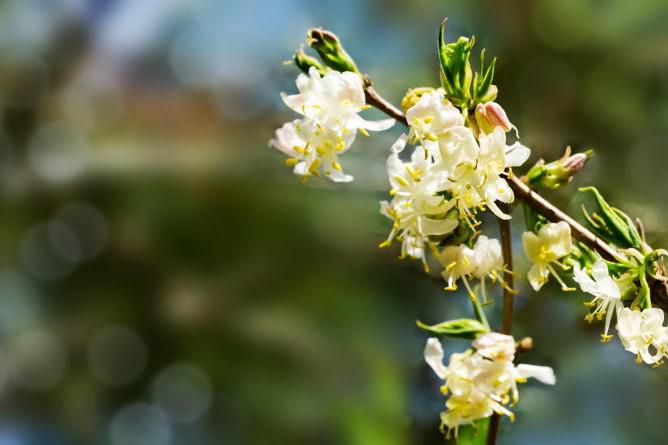
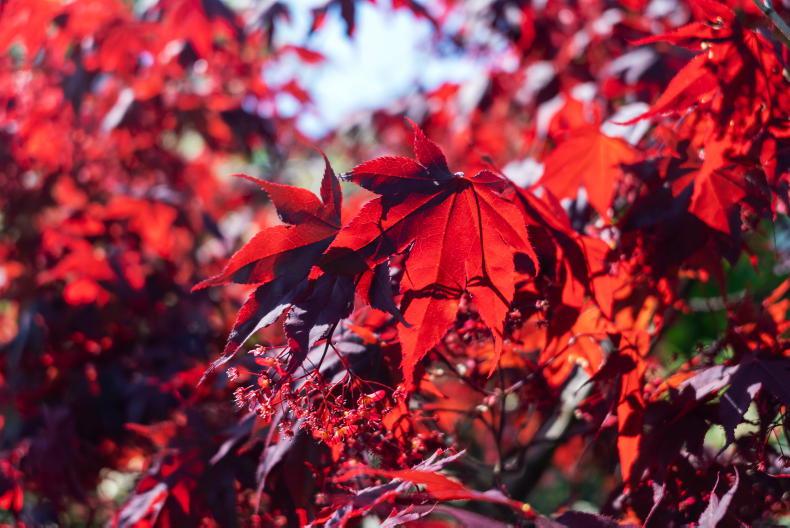
We all know honeysuckle as it grows in the hedgerows of Ireland, but Lonicera fragrantissima commonly known as winter honeysuckle is a shrubby plant that grows to 2m high. It is semi-evergreen which sets the background for a display of small creamy white honeysuckle flowers through winter into spring. Hamamelis mollis and its many cultivars is certainly the plant that signifies deep winter. H. intermedia ‘Jelena’ is my favourite. It is a large deciduous shrub that can attain 4m in height and similarly as wide. It produces two displays each year, firstly the green foliage turns bright red and yellow in autumn, followed by its flowering period in late winter into spring.
The typical Hamamelis has yellow flowers, however this has coppery orange flowers on the bare stems.
Include Corylopsis himalayana in your gardens, it is the most wonderful large shrub for all-year round interest. Its foliage is perfectly formed through the summer season turning butter yellow before falling. Its flowering season is from the end of January for several weeks. The pale primrose yellow pendent flowers drip from bare stems and are lightly scented.
Ilex x altaclerensis ‘Golden King’ is a quandary insofar as you would assume that it is a male plant. However, it produces the berries and so this makes it female. It is brightly variegated with yellow splashes on dark green leaves and is impressive in the summer garden also. It will need a male plant in close proximity to produce berries.
In smaller gardens, you will need smaller growing plants to get the same experience from the winter garden. Sarcococca confusa has featured in every garden we have lived in. For us it is synonymous with Christmas, its fragrance filling the cool air. It forms an evergreen shrub a little over a metre high and as wide with quality foliage. The flowers are somewhat insignificant being hidden in the dense foliage.
Over winter it produces clusters of white heavily scented flowers. It is a male plant however and while it will flower for you it will not produce the wonderful berries that the female plant will.
Many of these shrubs will have to be sought out so become familiar with your local garden centres and their staff – it is the key to sourcing what you require.
Q&A: Can I save my wisteria?

Wisteria blossoming near a brick wall. \ iStock
My wisteria climber has been ripped from the wall in the latest bout of windy weather, can it be saved as it was beautiful in flower? – Roger, Galway city.
Yes, it can but you need to carefully assess the situation as it is now. Firstly, are all fixing and wiring still intact on the wall? Is there any loose masonry or electrical cables entangled in it? If there are you will need appropriate tradespeople to sort this for you safely. If the wiring and fixings are still in place this is a good start, if not you will need to repair or replace these. Remove all light growth from the plant to the point where you can lift it upright once again, without doubt this is not a one-person operation. Tie back in securely and all should be good given time.
Hedges: We have been avoiding taking out the hedge trimmers all summer, but before the onset of winter now is the time to do some trimming.
Spring bulbs: There are a huge amount of spring bulbs in garden centres now so don’t put off stocking up.
Fruit and vegetables: Pick autumn fruiting raspberries, and freeze any surplus. Pick on a dry day. Eat them fresh, freeze them, or make into preserves. Raspberries are really popular fruits and are very easy to grow.
Do you have a gardening question? Please send to icl@farmersjournal.ie or post to Irish Country Living, Irish Farm Centre, Bluebell, Dublin 12.
Our summer garden’s bounty of colour is now fading slowly into autumn and some gardeners may feel their interest is also fading. We must dispel that notion. While some gardens may be designed to be a summer showpiece, all should have something to carry our interest through the winter and into spring.
Planning is the key and when thinking of the plants we enjoy for high summer display, we should also look towards creating winter interest too, something to get you up from your chair and into the garden to admire the spectacle. The planting palette is vast from evergreen to variegated shrubs, flowering with scent to draw your interest.
I always suggest that gardeners’ plant these within viewing distance of your living space, which keeps the garden alive and encourages you outdoors.
Mahonia x media ‘Charity’ is a large impressive evergreen shrub that also has a place in the summer garden because of its architectural foliage. However, it is in late autumn and into winter it shines bright with spikes of yellow flowers said to have a scent reminiscent of lily of the valley. It is a bulky shrub growing to over 3m so space is required.
Osmanthus heterophyllus is another large evergreen shrub that given time can be trained as a small tree, growing to 5m. Again, it flowers in late autumn into winter with small white scented flowers which are followed by small black berries.
Elaeagnus x ebbingii is a shrub I have always valued, it has a beautiful presence throughout the year.
One of its attractions is the foliage which is rich green on the surface with a light grey underside. This is highlighted in windy weather as the leaves turn over in the breeze. It flowers through autumn with small creamy white, highly scented flowers hidden in the axils of the leaves. It is a large shrub, growing to over 3m.
Viburnum x bodnantense ‘Dawn’ is a deciduous shrub growing to 2.5m with a very upright habit, so it is good in small spaces where height is required. It starts flowering in autumn on the bare stems with clusters of pale pink flowers which are sweetly scented. The flowering period persists well into winter.
Honeysuckle
We all know honeysuckle as it grows in the hedgerows of Ireland, but Lonicera fragrantissima commonly known as winter honeysuckle is a shrubby plant that grows to 2m high. It is semi-evergreen which sets the background for a display of small creamy white honeysuckle flowers through winter into spring. Hamamelis mollis and its many cultivars is certainly the plant that signifies deep winter. H. intermedia ‘Jelena’ is my favourite. It is a large deciduous shrub that can attain 4m in height and similarly as wide. It produces two displays each year, firstly the green foliage turns bright red and yellow in autumn, followed by its flowering period in late winter into spring.
The typical Hamamelis has yellow flowers, however this has coppery orange flowers on the bare stems.
Include Corylopsis himalayana in your gardens, it is the most wonderful large shrub for all-year round interest. Its foliage is perfectly formed through the summer season turning butter yellow before falling. Its flowering season is from the end of January for several weeks. The pale primrose yellow pendent flowers drip from bare stems and are lightly scented.
Ilex x altaclerensis ‘Golden King’ is a quandary insofar as you would assume that it is a male plant. However, it produces the berries and so this makes it female. It is brightly variegated with yellow splashes on dark green leaves and is impressive in the summer garden also. It will need a male plant in close proximity to produce berries.
In smaller gardens, you will need smaller growing plants to get the same experience from the winter garden. Sarcococca confusa has featured in every garden we have lived in. For us it is synonymous with Christmas, its fragrance filling the cool air. It forms an evergreen shrub a little over a metre high and as wide with quality foliage. The flowers are somewhat insignificant being hidden in the dense foliage.
Over winter it produces clusters of white heavily scented flowers. It is a male plant however and while it will flower for you it will not produce the wonderful berries that the female plant will.
Many of these shrubs will have to be sought out so become familiar with your local garden centres and their staff – it is the key to sourcing what you require.
Q&A: Can I save my wisteria?
Wisteria blossoming near a brick wall. \ iStock
My wisteria climber has been ripped from the wall in the latest bout of windy weather, can it be saved as it was beautiful in flower? – Roger, Galway city.
Yes, it can but you need to carefully assess the situation as it is now. Firstly, are all fixing and wiring still intact on the wall? Is there any loose masonry or electrical cables entangled in it? If there are you will need appropriate tradespeople to sort this for you safely. If the wiring and fixings are still in place this is a good start, if not you will need to repair or replace these. Remove all light growth from the plant to the point where you can lift it upright once again, without doubt this is not a one-person operation. Tie back in securely and all should be good given time.
Hedges: We have been avoiding taking out the hedge trimmers all summer, but before the onset of winter now is the time to do some trimming.
Spring bulbs: There are a huge amount of spring bulbs in garden centres now so don’t put off stocking up.
Fruit and vegetables: Pick autumn fruiting raspberries, and freeze any surplus. Pick on a dry day. Eat them fresh, freeze them, or make into preserves. Raspberries are really popular fruits and are very easy to grow.
Do you have a gardening question? Please send to icl@farmersjournal.ie or post to Irish Country Living, Irish Farm Centre, Bluebell, Dublin 12.






SHARING OPTIONS