If you are anything like me, you are looking at the wonderful autumn colours displayed in many of our gardens and roadside trees at the moment. It’s making me long to plant more to achieve this end of season spectacle and there are many trees, small and large that will do that.
Autumn colour is a natural process that is initiated by a drop in temperature and low light levels. Trees sense this and stop producing chlorophyll as they cannot utilise it.
This allows other pigments like carotenes producing yellow and orange coloured foliage and anthocyanins which produce red or purple foliage. After a short while trees form a corky layer at the base of the leaf stalk and leaves drop. Its work for the year is done.
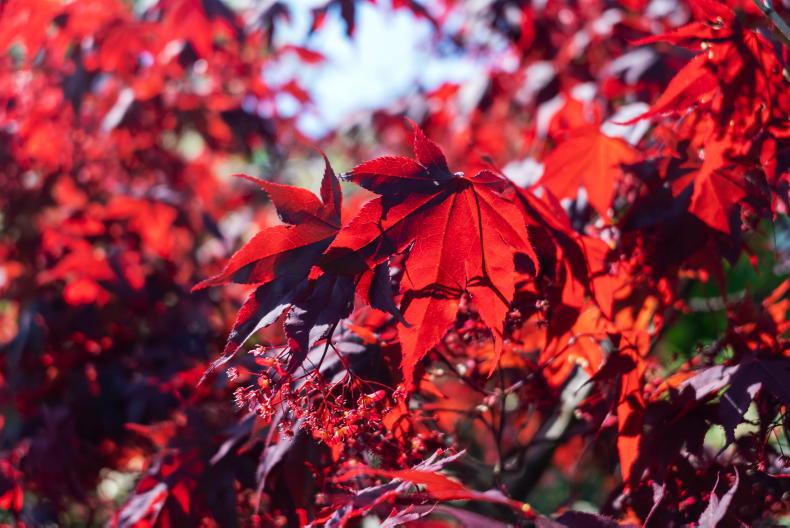
Acer palmatum ‘Bloodgood’ is a dwarf Japanese Maple growing to a height of 5m. It is a wonderful small tree with special appeal all year with fine purple foliage which is a lovely sight through summer.
In October, the foliage becomes a rich scarlet colour which glows in the daylight and is spectacular when sunset highlights it. The period after it sheds its leaves and decorates the ground adds a new dimension to it, like a princess dropping her gown to the floor when the party is over.
Amelanchier canadensis ‘Glenn Form’ is a columnar small tree or large shrub that is striking all year round. It produces beautiful white flowers in spring in advance of the foliage. It is followed by small black fruits, which birds devour. It is perfectly formed with light green leaves turning brilliant shades of red to dark bronze in autumn.
Rhus typhina is worth a place in all medium to large gardens. It is a large shrub with very tropical looking foliage. It also flowers, however, it is the autumn colour that is worth waiting on, featuring bright red and orange almost like a burning bush. Cercis canadensis ‘Forest Pansy’ is a joy throughout the year. It is a small tree that produces heart-shaped leaves in spring, which are purple in colour. It also flowers with small bright pink pea shaped flowers. In autumn it displays foliage in orange, red and purple, which is truly spectacular.
Sorbus ‘Autumn Spire’ is a beautiful specimen tree. It has many great qualities like its very upright habit, growing to about 6m in height but never more than 2m wide. It has beautiful pinnate leaves that turn yellow, red and purple in autumn.
They highlight the rich yellow-orange berries, it is something to look forward to in autumn. The plant arose in Flannery’s Nursery in Co Kildare, and is said to be a clone of Sorbus ‘Joseph Rock’.
Everything about Cercidiphyllum japonica, commonly known as the Katsura tree, is a joy in the garden, it grows to a height of 10m with a perfectly formed upright habit.
As the foliage emerges in spring, the heart-shaped leaves have a bronze tinge to them, that soon fades to green. The autumn colour is presented in shades of orange and yellow. As the leaves start to fall it has a scent of candyfloss. Nyssa sylvatica ‘Worpleston’ is taller getting to 10-15m in height, however it is slow growing tree.
I recommend this as a specimen tree, planted as a focal point in a large lawn area where it commands attention. The rich green maple-like leaves can easily be confused with maple. In autumn the foliage changes to rich red and purple, it is a showpiece.
Each of these trees need their space to show off their autumn display so plant them where they are not overcrowded. Equally, they can be planted as specimen trees and used as a focal point, this way they seem to perform much better.
Needless to say, take time in preparing the planting hole and always stake for support.
I always advise spending money on quality treated stakes and tree ties. Now is the perfect time to visit your garden centre or nursery and plant for autumn colour into the future.
Q&A: What comes after summer pots?
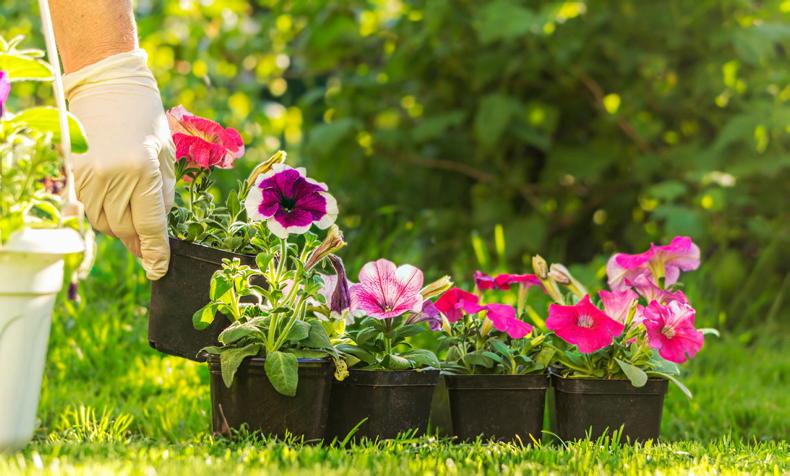
Summer plant pots. \iStock
We had many pots of beautiful and colourful flowers over the summer, but what can we do for winter? – Tom, Co Cork.
The onset of winter does not mean our gardens should not continue to give us pleasure. Firstly, you need to clear out your summer display plants and compost them. It is worth taking a note of what you really enjoyed so you can replicate them. Clear out old compost and refill with new. Your garden centre is full of winter flowering plants at the moment. Look for daffodil and tulip bulbs and see what you like and add in pansy, myosotis and dwarf wallflower. Always have some pots with dwarf shrubs like Buxus sempervirens or Ilex crenata, these give you permeance and a foundation to work with.
Lawns: Cold weather has not arrived yet so observe grass growth and lightly trim accordingly.
Bulbs: Continue with bulb planting, carefully marking and labelling planted areas.
Trees and shrubs: Check all staking and ties before winter weather starts. Replace old or broken ones.
Check ties on climbing plants securing any that are coming away from the wall.
Perennials and roses: All of these are coming to the end of their summer performance, so keep deadheading. Perennials can now be divided and moved to other areas where needed.
Do you have a gardening question? Email
icl@farmersjournal.ie or post to Irish Country Living, Irish Farm Centre, Bluebell, Dublin 12.
If you are anything like me, you are looking at the wonderful autumn colours displayed in many of our gardens and roadside trees at the moment. It’s making me long to plant more to achieve this end of season spectacle and there are many trees, small and large that will do that.
Autumn colour is a natural process that is initiated by a drop in temperature and low light levels. Trees sense this and stop producing chlorophyll as they cannot utilise it.
This allows other pigments like carotenes producing yellow and orange coloured foliage and anthocyanins which produce red or purple foliage. After a short while trees form a corky layer at the base of the leaf stalk and leaves drop. Its work for the year is done.
Acer palmatum ‘Bloodgood’ is a dwarf Japanese Maple growing to a height of 5m. It is a wonderful small tree with special appeal all year with fine purple foliage which is a lovely sight through summer.
In October, the foliage becomes a rich scarlet colour which glows in the daylight and is spectacular when sunset highlights it. The period after it sheds its leaves and decorates the ground adds a new dimension to it, like a princess dropping her gown to the floor when the party is over.
Amelanchier canadensis ‘Glenn Form’ is a columnar small tree or large shrub that is striking all year round. It produces beautiful white flowers in spring in advance of the foliage. It is followed by small black fruits, which birds devour. It is perfectly formed with light green leaves turning brilliant shades of red to dark bronze in autumn.
Rhus typhina is worth a place in all medium to large gardens. It is a large shrub with very tropical looking foliage. It also flowers, however, it is the autumn colour that is worth waiting on, featuring bright red and orange almost like a burning bush. Cercis canadensis ‘Forest Pansy’ is a joy throughout the year. It is a small tree that produces heart-shaped leaves in spring, which are purple in colour. It also flowers with small bright pink pea shaped flowers. In autumn it displays foliage in orange, red and purple, which is truly spectacular.
Sorbus ‘Autumn Spire’ is a beautiful specimen tree. It has many great qualities like its very upright habit, growing to about 6m in height but never more than 2m wide. It has beautiful pinnate leaves that turn yellow, red and purple in autumn.
They highlight the rich yellow-orange berries, it is something to look forward to in autumn. The plant arose in Flannery’s Nursery in Co Kildare, and is said to be a clone of Sorbus ‘Joseph Rock’.
Everything about Cercidiphyllum japonica, commonly known as the Katsura tree, is a joy in the garden, it grows to a height of 10m with a perfectly formed upright habit.
As the foliage emerges in spring, the heart-shaped leaves have a bronze tinge to them, that soon fades to green. The autumn colour is presented in shades of orange and yellow. As the leaves start to fall it has a scent of candyfloss. Nyssa sylvatica ‘Worpleston’ is taller getting to 10-15m in height, however it is slow growing tree.
I recommend this as a specimen tree, planted as a focal point in a large lawn area where it commands attention. The rich green maple-like leaves can easily be confused with maple. In autumn the foliage changes to rich red and purple, it is a showpiece.
Each of these trees need their space to show off their autumn display so plant them where they are not overcrowded. Equally, they can be planted as specimen trees and used as a focal point, this way they seem to perform much better.
Needless to say, take time in preparing the planting hole and always stake for support.
I always advise spending money on quality treated stakes and tree ties. Now is the perfect time to visit your garden centre or nursery and plant for autumn colour into the future.
Q&A: What comes after summer pots?
Summer plant pots. \iStock
We had many pots of beautiful and colourful flowers over the summer, but what can we do for winter? – Tom, Co Cork.
The onset of winter does not mean our gardens should not continue to give us pleasure. Firstly, you need to clear out your summer display plants and compost them. It is worth taking a note of what you really enjoyed so you can replicate them. Clear out old compost and refill with new. Your garden centre is full of winter flowering plants at the moment. Look for daffodil and tulip bulbs and see what you like and add in pansy, myosotis and dwarf wallflower. Always have some pots with dwarf shrubs like Buxus sempervirens or Ilex crenata, these give you permeance and a foundation to work with.
Lawns: Cold weather has not arrived yet so observe grass growth and lightly trim accordingly.
Bulbs: Continue with bulb planting, carefully marking and labelling planted areas.
Trees and shrubs: Check all staking and ties before winter weather starts. Replace old or broken ones.
Check ties on climbing plants securing any that are coming away from the wall.
Perennials and roses: All of these are coming to the end of their summer performance, so keep deadheading. Perennials can now be divided and moved to other areas where needed.
Do you have a gardening question? Email
icl@farmersjournal.ie or post to Irish Country Living, Irish Farm Centre, Bluebell, Dublin 12.






SHARING OPTIONS