Cerio Ensilados is a second-generation, family-run agricultural contracting business situated in Estella, northern Spain, about 40 minutes from the city of Pamplona, world renowned for its iconic bull run.
The business was established in 1986 after José Ignacio Cerio, who was pig farming at the time, witnessed the concept of ensiling grass across the border in France.
He felt there was an opportunity to offer livestock farmers back home an alternative to hay. From here he purchased a FOX self-propelled forage harvester and started up the business.
As Spanish farming systems changed over the years, a demand for ensiled forage increased.
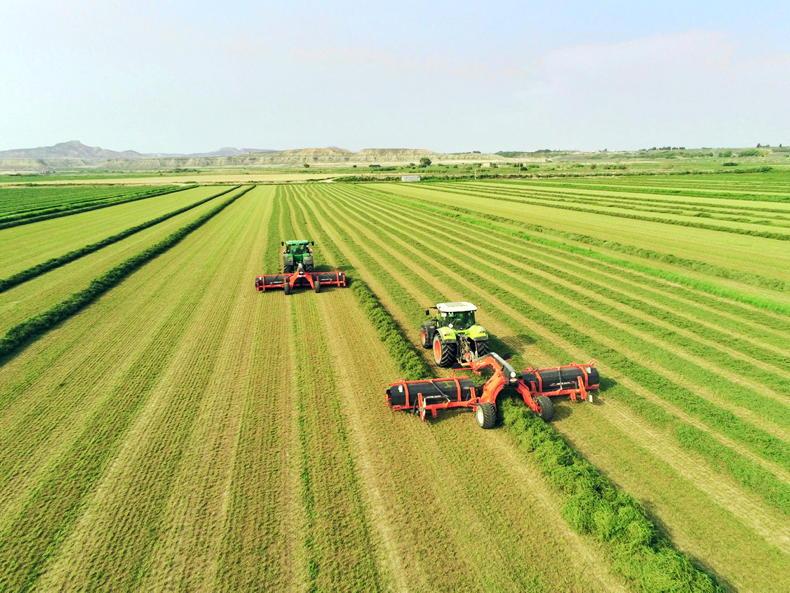
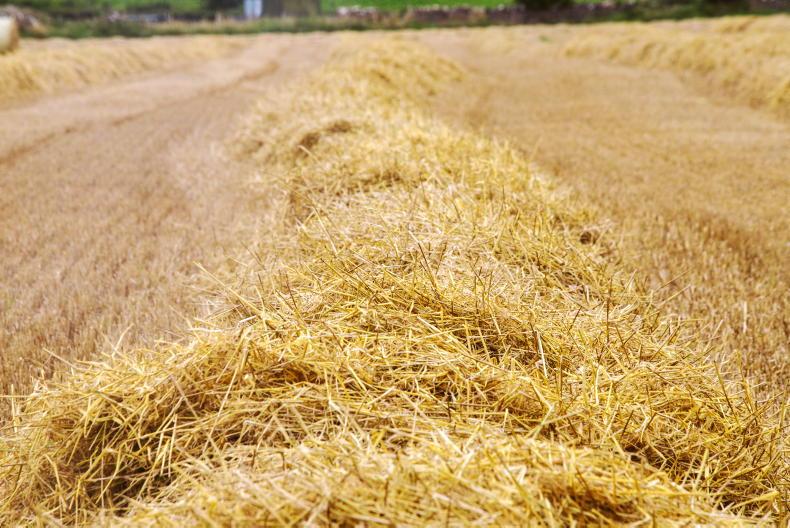
Mergers are used instead of rakes due to the stony lands.
This transition provided the Cerio family with the platform needed to grow the business to the scale it’s at today, harvesting 11 out of the 12 months, and covering over 22,000 acres annually with four forage harvesters.
Since 2011, José Ignacio’s son, Iñaki is at the helm, having joined the business after completing a mechanical engineering degree. Iñaki’s wife also plays a key role in the family business, taking care of accounts and all technology related issues.
Farming in north Spain
Today, the majority of land designated to livestock farming is irrigated. Iñaki outlines that the trends in Spain mirror that seen across Europe – the smaller farms are disappearing and larger farms are becoming larger.
When many of us in Ireland think of Spanish agriculture and the Spanish climate, we don’t straight away think of large-scale dairy farming. However, Iñaki and his team have farmer clients milking up to 7,800 cows, with an average daily milk production of 260,000l.
Based on the climate, high production indoor herds are the norm in north Spain. Among his dairy clients, 500 cow herds seem to be the average. That said, there are smaller dairy farms too.
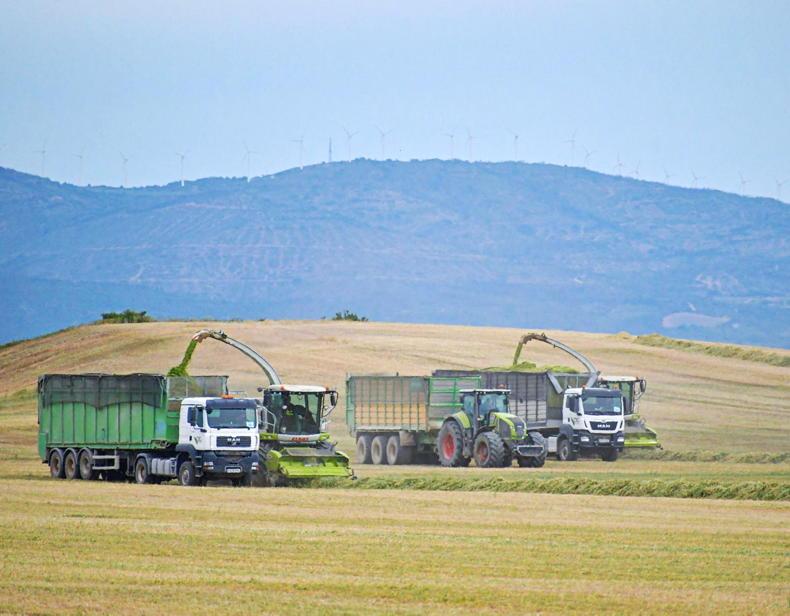
The business run a mix of tractors and trailers alongside trucks and trailers.
Different to almost all Irish contracting businesses which more often than not are one stop shops undertaking all major services, Cerio Ensilados has only ever focused on forage harvesting and right now there are no plans to change.
This, Iñaki explains is down to the long growing season, thanks to irrigation. Grass harvesting tends to start in late January and runs to the end of June. Maize harvesting then gets under way in mid-August and runs until mid-October before returning to grass, which typically runs on until December.
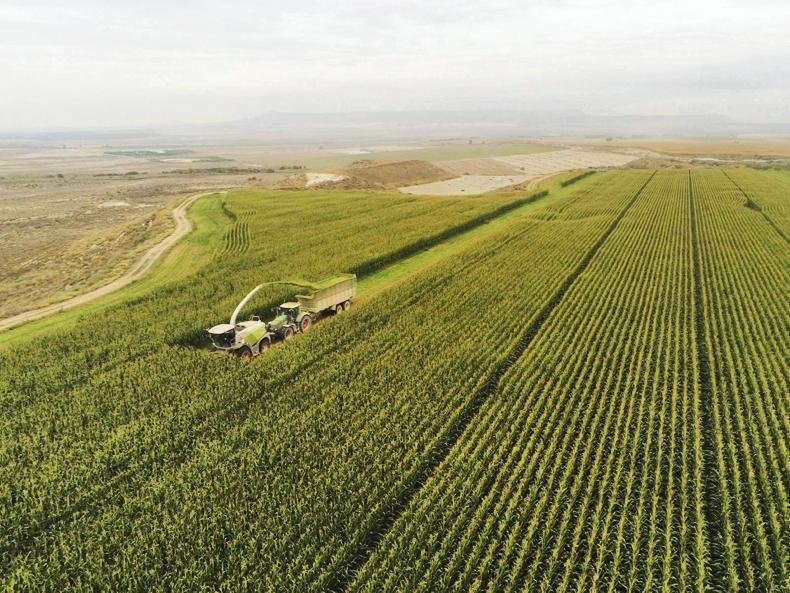
When we spoke to Iñaki last week, the team had just shy of 2,000 acres lifted so far this season. Similar to Ireland, Spain experienced a wetter than usual start to 2026, delaying the start of the grass harvesting season, which didn’t get underway until February.
Machines
The Cerio family has worked hard over the years to expand their business. Today, it comprises of four Claas forager harvesters; three Jaguar 980s and one Jaguar 990, each averaging somewhere in the region of 1,000 hours annually. The current tractor fleet is made up of nine tractors in total and includes five Fendt Vario 936 models, two Fendt Vario 726 models, one Fendt Vario 724 and a Claas Arion 640. Two Krone Big M 450s and a set of Claas butterfly mowers take care of all mowing duties.
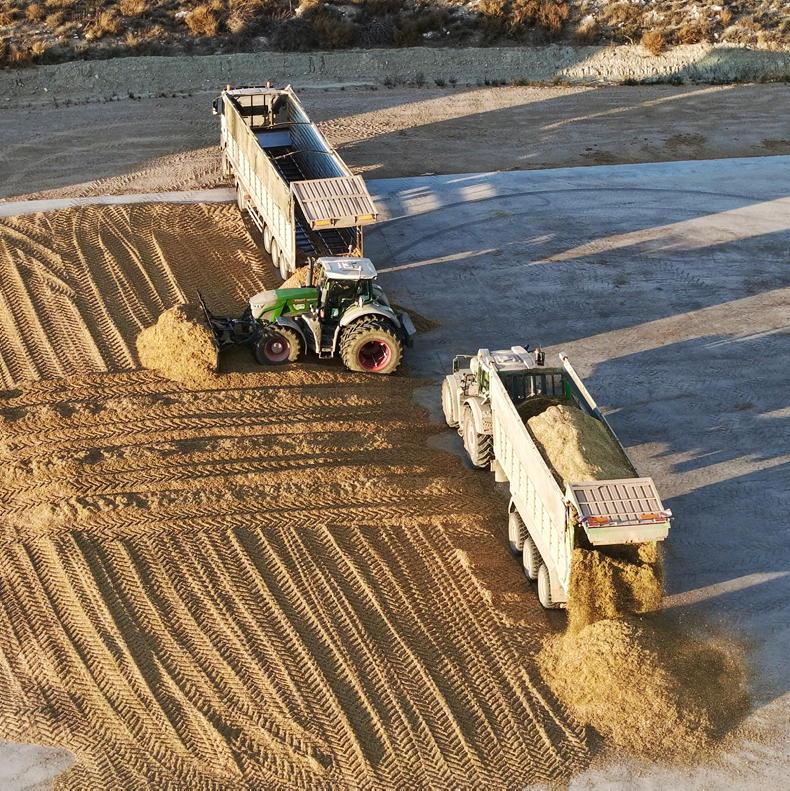
Tractors and large blades are preferred for pit work.
The stony lands of northern Spain make for unfavourable raking conditions. Therefore, three Kuhn MergeMaxx 950 centre delivery belt mergers are used. Having tried certain other brands, Iñaki feels that the Kuhn merger is the best in terms of performance and reliability.
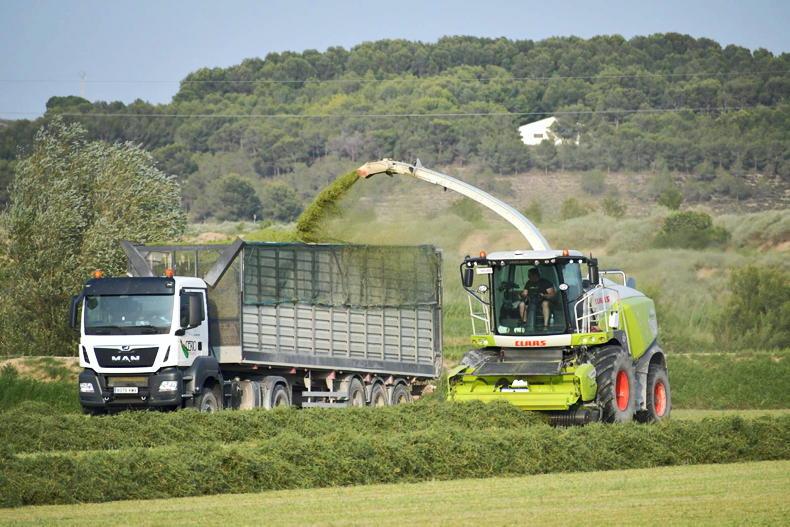
Fragmented farms are a thing in Spain too, and as result the business runs five artic MAN trucks and trailers to help deal with long draws which can range up to 40km each way.
Having put his engineering degree to use, Iñaki built his own truck trailers for transporting forage. No different to Ireland, he believes that running trucks comes with its own issues such as licencing, fuel etc.
Naturally, conditions need to be perfect when working trucks on land, which tends to be the case most of the time in Spain, but there are times when it’s not. Liking the concept, Iñaki previously tried a Mercedes Unimog, but prices leave them unjustified in comparison to a standard truck.
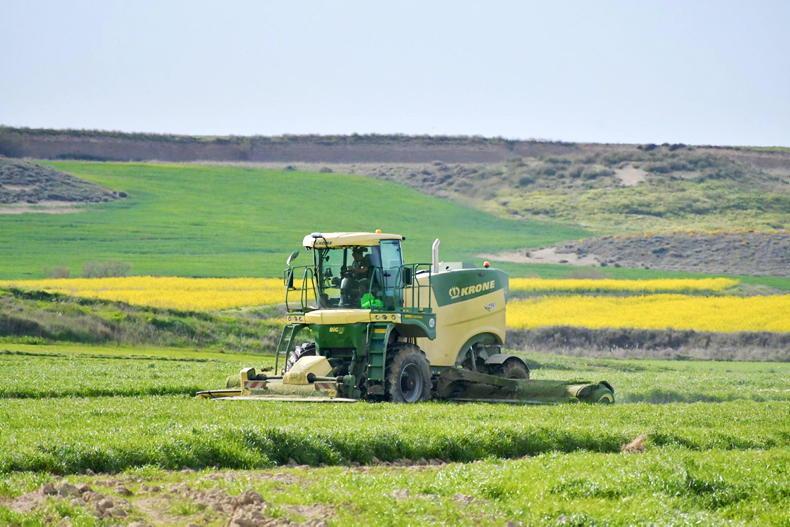
Two Krone Big M 450's take care of the majority of mowing.
Iñaki, says that he is not so much tied to certain brands when it comes to machinery, he instead chooses a machine based on dealer backup, performance and residual values. In the past 12 months, the business has replaced two foragers and purchased six Fendt tractors to replace a mix of fresh John Deere 6R, 7R and 8R tractors.
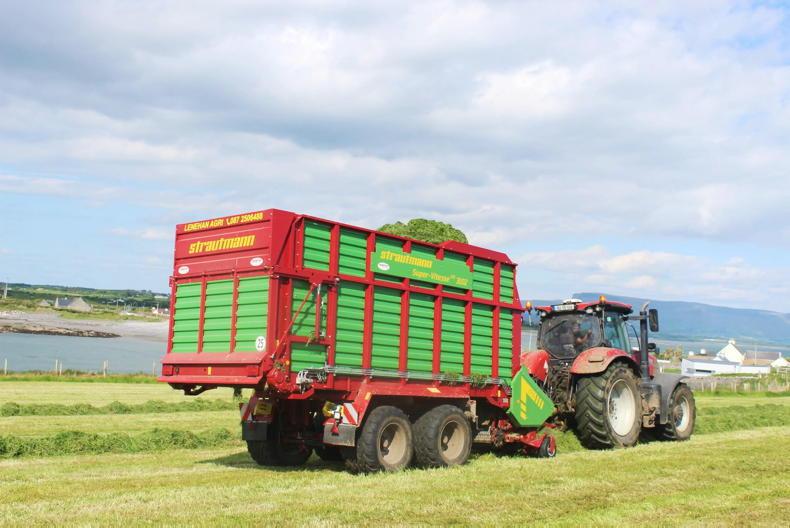
Five 65m3 tri-axle Joskin trailers were also added to the arsenal for the coming season. Over the years, all types of trailer concepts have been tested, including hydraulic tipping, ejector, walking floor and chain and slats, the latter proving the best all-round from a safety and speed point of view.
Fully loaded, the Fendt 900 series tractors and Joskin trailers can weigh up to 62t, with the trailers capable of carrying 34t of maize – this, Iñaki says, is the reason for running 360hp tractors.
Claas has been the chosen forager brand of choice since 1995. Aside from having a dealer in close proximity, the Claas Jaguar proves to be the most cost-effective machine per hour to operate, with strong residual values on the second-hand market when the time comes to upgrade.
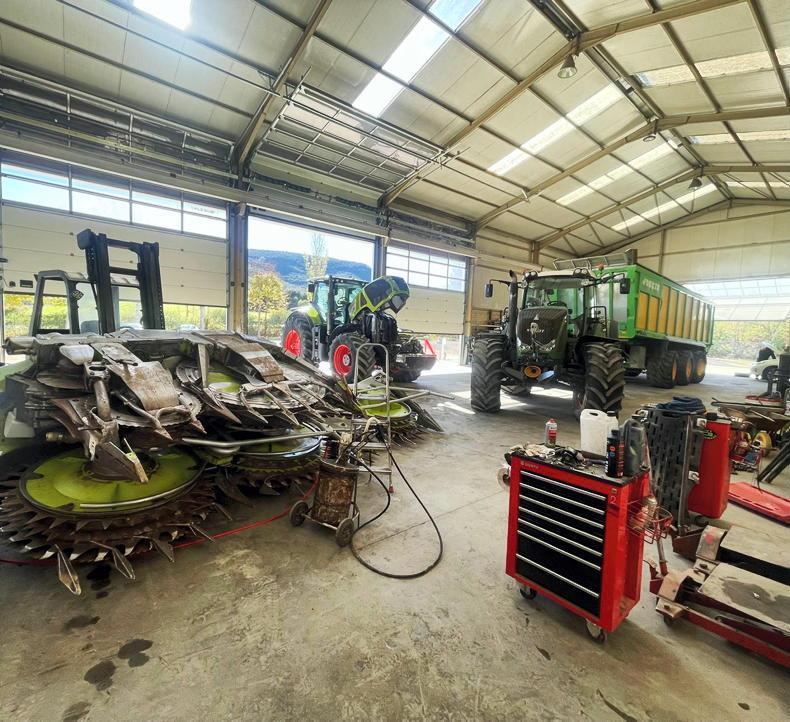
The majority of service and maintenance is taken care of in-house.
The foragers are equipped with 28-knife drums, chopping between 10-18mm depending on customer requirements. Krone Big M mowers have been a part of the business all the way back to 2000 with the MK1 machines. Having owned all generations since, Iñaki believes that they are a machine the business wouldn’t be without.
Cerio Ensilados has a hands-on approach when it comes to maintenance, taking care of all pre-season prep, servicing and the majority of repairs in-house. Warranty work and electrical issues are taken care off by the dealer.
Silage making
Given the Spanish climate, there are naturally differences when it comes to harvesting grass in Spain versus Ireland. Firstly, the length of the season is a major difference, made possible with irrigation. As a result, it is standard to take two cuts of grass and still grow a maize crop in the one field. Alongside rye grass, which is most popular, lucerne and alfalfa are also grown for forage.
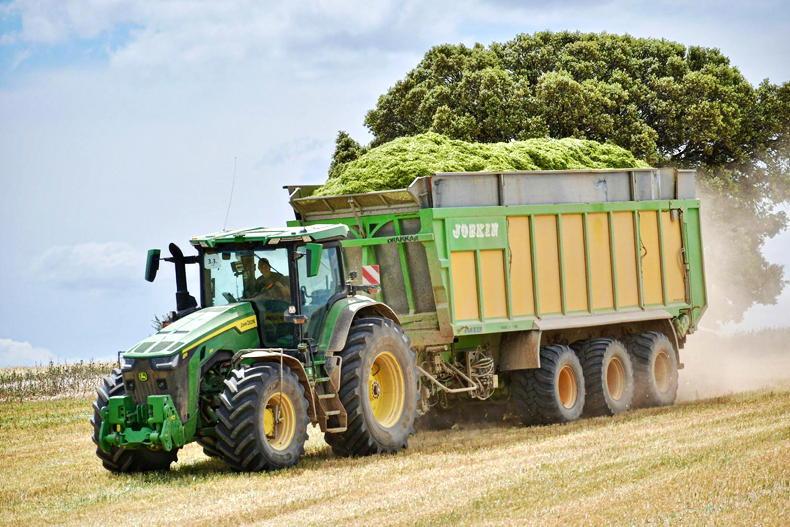
The tri-axle Joskin trailers can carry 34t of maize.
Iñaki explained that a typical grass crop will have an average fresh weight yield between 12-15t/ha (4.8t-6t/ac) and a dry matter ranging between 35-40%, compared to the 22-24t/ha (9-10t/ac) crops we can grow in Ireland.
Spanish maize crops tend to yield between 50-55t/ha (20-22t/ac). These lighter crops allow a greater area to be covered daily, with Cerio Ensilados averaging 70-80ha (173-197ac) daily, with up to 100ha (247ac) possible in lighter yielding crops.
The growing, processing and marketing of dehydrated forages (hay) for cattle and equine feed is big business in Spain, with several high-value export markets including Saudi Arbia, China and Japan. Cerio Ensilados harvests some of these crops, a process which generally involves tedding the grass twice before being harvested at a dry matter of 70%. It is then mechanically dried to a dry matter of 88% and baled using an industrial baler.
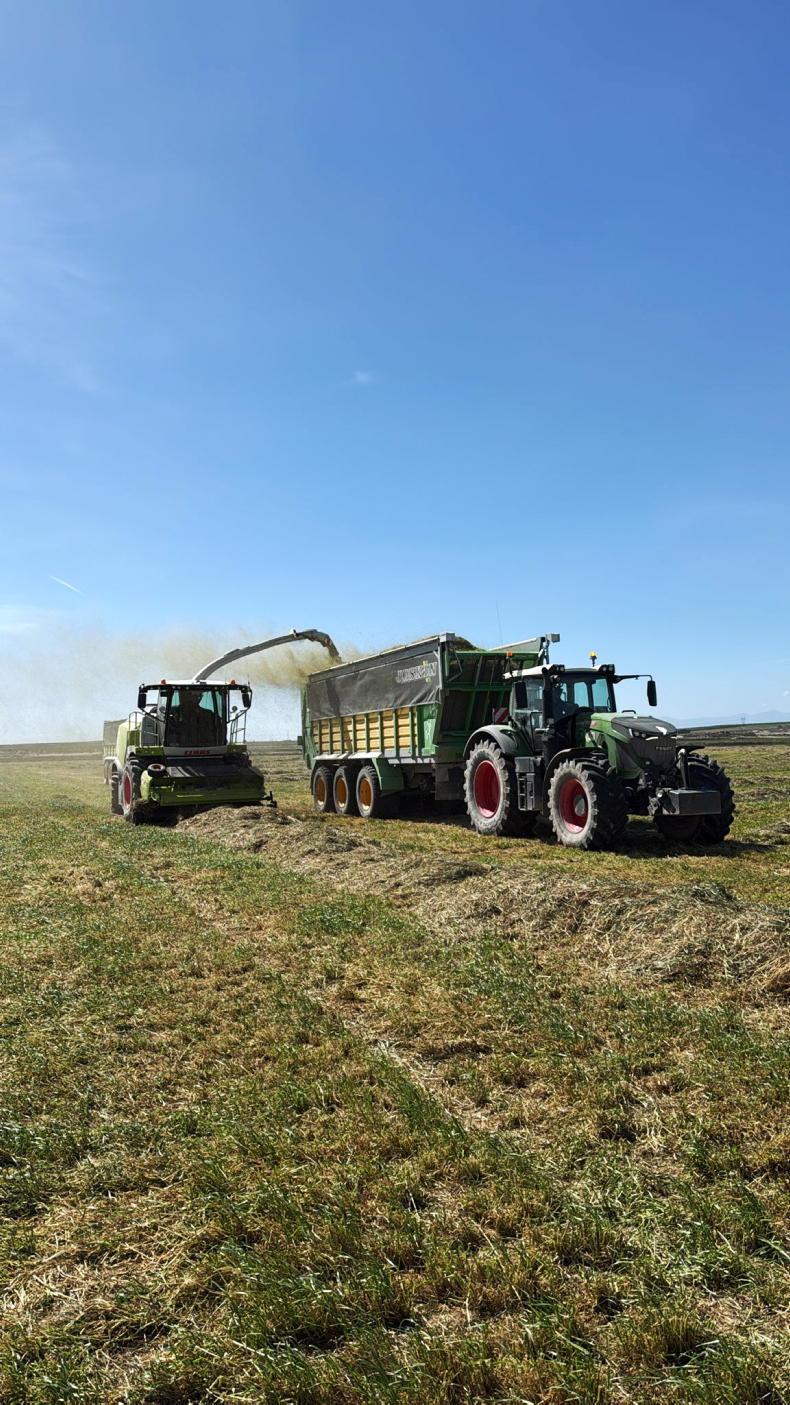
Crops tend to be a lot lighter than what we are used to in Ireland meaning larger areas can be covered daily.
Given the warmer and drier climate, after April grass is mowed and grouped just hours before harvesting to retain moisture. In dry conditions, water is injected into the forager’s blower box via the additive applicator.
Interestingly, Iñaki explained that Spanish law prohibits the use of machines in fields when temperatures exceed 32 degrees and wind speeds of over 32km/h in order to minimise the risk of fire.
Other differences
The Spanish foraging business is similar in may ways to New Zealand when it comes to the way in which jobs are priced – on a price per tonne basis.
In Ireland, forage harvesting tends to be charged per acre regardless of yield, a system many contractors feel is obsolete and needs review. In Spain, forage contractors work off a price per tonne, which Iñaki feels is most fair for everyone. All his clients have a weigh bridge in their yard, therefore every load is weighed as it passes through. The following day, the farmer receives an invoice which has a breakdown of the total tonnage delivered load by load and the price.
Iñaki like most contractors was slow to disclose pricing and job rates, but the price per tonne tends to include mowing, merging and the harvesting of the grass crop and haulage up to 5km. For distances over and above, a surcharge is agreed with the farmer.
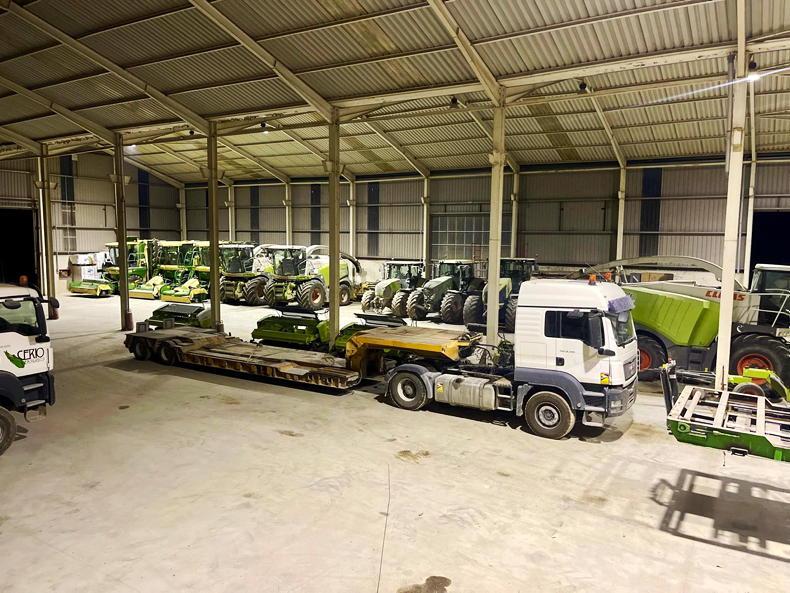
Foragers are transported via low-loaders for the jobs long distances away.
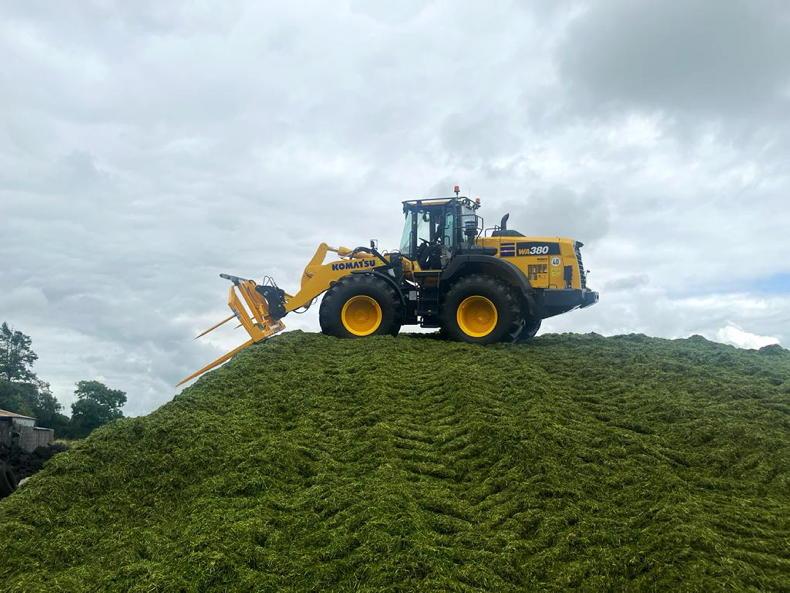
At the pit, a large tractor and blade is preferred over the large wheel loader and silage fork we are accustomed to. The business runs one or two Fendt 936 Varios fitted with 4.5m front blades alongside each harvesting crew to help keep the 65m3 loads dealt with and compacted.
With a handful of the business’s larger clients situated up to 220km from base, we asked if the staff stay away each night or return home when working far away. Iñaki explained that typically, hotel accommodation is factored into the price of these jobs, which can often see the crew away for up to one week at times.
Given the long season and more predictable weather for making silage, the business operates consistent working hours as much as possible. This generally involves a 7:30am start and 9:30pm finish daily.
The business uses a road haulage appbased solution called Sateliun for tracking machines and organising jobs, a much cheaper solution Iñaki says compared to what the tractor manufacturers offers.
Different country, similar challenges
While crops and conditions may differ to Ireland, the fundamentals of contracting are very much similar, so too are the challenges. Although lucky to have a great team of skilled staff, Iñaki outlined that it is getting considerably harder to find good staff.
The challenges of rising machinery costs, labour and spare parts are also shared. Another is the recent surge in fuel costs as result of the ongoing war in Iran.
Similar to the UK, tractors and agricultural machinery run on red diesel, which up until a month ago was steady at 85c/l but has now risen to €1.34/l, which left the business with no option but to increase rates by 15% in order to cover the additional costs.
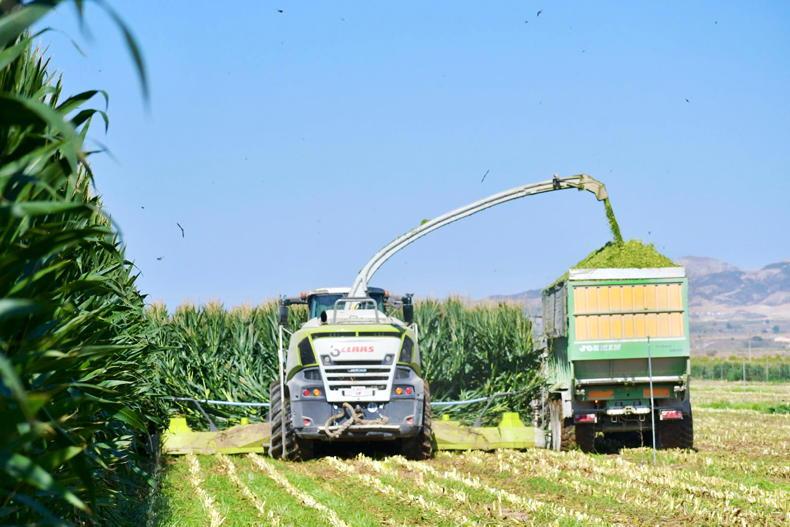
Maize crops tend to yield in the region of 50-55t/ha (20-22t/ac).
Iñaki said that last year’s fuel bill totalled somewhere in the region of €600,000, and is expected to be closer to the €1 million-mark this year.
Business profile
Business name: Cerio Ensilados
Location: Estella, northern Spain
Number of employees: 15 full-time, 7 seasonal
Services: grass/maize harvesting
Area cut: 22,000 acres
Distance travelled: up to 220km
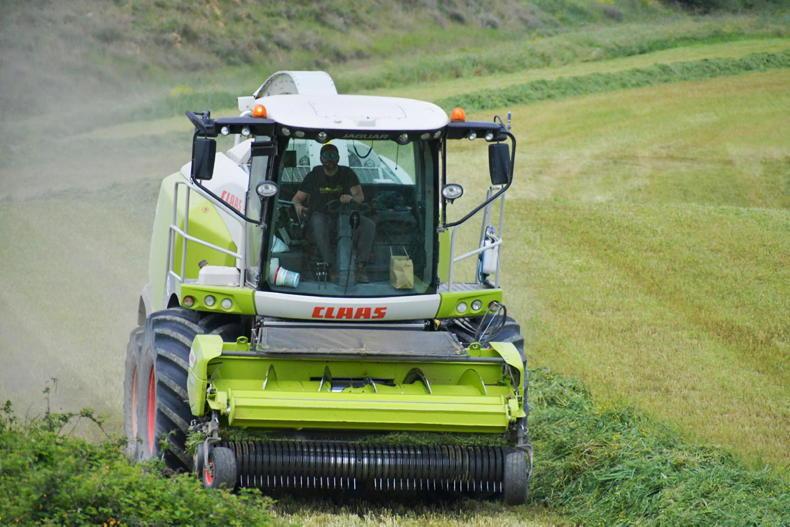
Claas foragers have been used consistently since 1995.
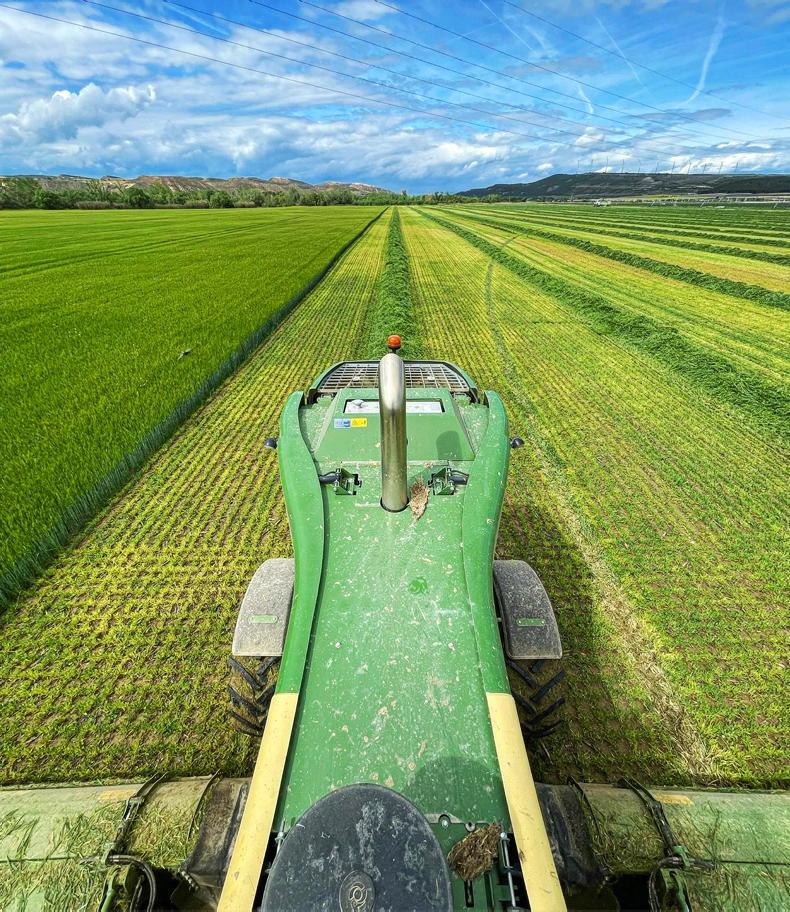
In warmer summer months, grass is swathed using the Big M to preserve moisture.
Cerio Ensilados is a second-generation, family-run agricultural contracting business situated in Estella, northern Spain, about 40 minutes from the city of Pamplona, world renowned for its iconic bull run.
The business was established in 1986 after José Ignacio Cerio, who was pig farming at the time, witnessed the concept of ensiling grass across the border in France.
He felt there was an opportunity to offer livestock farmers back home an alternative to hay. From here he purchased a FOX self-propelled forage harvester and started up the business.
As Spanish farming systems changed over the years, a demand for ensiled forage increased.
Mergers are used instead of rakes due to the stony lands.
This transition provided the Cerio family with the platform needed to grow the business to the scale it’s at today, harvesting 11 out of the 12 months, and covering over 22,000 acres annually with four forage harvesters.
Since 2011, José Ignacio’s son, Iñaki is at the helm, having joined the business after completing a mechanical engineering degree. Iñaki’s wife also plays a key role in the family business, taking care of accounts and all technology related issues.
Farming in north Spain
Today, the majority of land designated to livestock farming is irrigated. Iñaki outlines that the trends in Spain mirror that seen across Europe – the smaller farms are disappearing and larger farms are becoming larger.
When many of us in Ireland think of Spanish agriculture and the Spanish climate, we don’t straight away think of large-scale dairy farming. However, Iñaki and his team have farmer clients milking up to 7,800 cows, with an average daily milk production of 260,000l.
Based on the climate, high production indoor herds are the norm in north Spain. Among his dairy clients, 500 cow herds seem to be the average. That said, there are smaller dairy farms too.
The business run a mix of tractors and trailers alongside trucks and trailers.
Different to almost all Irish contracting businesses which more often than not are one stop shops undertaking all major services, Cerio Ensilados has only ever focused on forage harvesting and right now there are no plans to change.
This, Iñaki explains is down to the long growing season, thanks to irrigation. Grass harvesting tends to start in late January and runs to the end of June. Maize harvesting then gets under way in mid-August and runs until mid-October before returning to grass, which typically runs on until December.
When we spoke to Iñaki last week, the team had just shy of 2,000 acres lifted so far this season. Similar to Ireland, Spain experienced a wetter than usual start to 2026, delaying the start of the grass harvesting season, which didn’t get underway until February.
Machines
The Cerio family has worked hard over the years to expand their business. Today, it comprises of four Claas forager harvesters; three Jaguar 980s and one Jaguar 990, each averaging somewhere in the region of 1,000 hours annually. The current tractor fleet is made up of nine tractors in total and includes five Fendt Vario 936 models, two Fendt Vario 726 models, one Fendt Vario 724 and a Claas Arion 640. Two Krone Big M 450s and a set of Claas butterfly mowers take care of all mowing duties.
Tractors and large blades are preferred for pit work.
The stony lands of northern Spain make for unfavourable raking conditions. Therefore, three Kuhn MergeMaxx 950 centre delivery belt mergers are used. Having tried certain other brands, Iñaki feels that the Kuhn merger is the best in terms of performance and reliability.
Fragmented farms are a thing in Spain too, and as result the business runs five artic MAN trucks and trailers to help deal with long draws which can range up to 40km each way.
Having put his engineering degree to use, Iñaki built his own truck trailers for transporting forage. No different to Ireland, he believes that running trucks comes with its own issues such as licencing, fuel etc.
Naturally, conditions need to be perfect when working trucks on land, which tends to be the case most of the time in Spain, but there are times when it’s not. Liking the concept, Iñaki previously tried a Mercedes Unimog, but prices leave them unjustified in comparison to a standard truck.
Two Krone Big M 450's take care of the majority of mowing.
Iñaki, says that he is not so much tied to certain brands when it comes to machinery, he instead chooses a machine based on dealer backup, performance and residual values. In the past 12 months, the business has replaced two foragers and purchased six Fendt tractors to replace a mix of fresh John Deere 6R, 7R and 8R tractors.
Five 65m3 tri-axle Joskin trailers were also added to the arsenal for the coming season. Over the years, all types of trailer concepts have been tested, including hydraulic tipping, ejector, walking floor and chain and slats, the latter proving the best all-round from a safety and speed point of view.
Fully loaded, the Fendt 900 series tractors and Joskin trailers can weigh up to 62t, with the trailers capable of carrying 34t of maize – this, Iñaki says, is the reason for running 360hp tractors.
Claas has been the chosen forager brand of choice since 1995. Aside from having a dealer in close proximity, the Claas Jaguar proves to be the most cost-effective machine per hour to operate, with strong residual values on the second-hand market when the time comes to upgrade.
The majority of service and maintenance is taken care of in-house.
The foragers are equipped with 28-knife drums, chopping between 10-18mm depending on customer requirements. Krone Big M mowers have been a part of the business all the way back to 2000 with the MK1 machines. Having owned all generations since, Iñaki believes that they are a machine the business wouldn’t be without.
Cerio Ensilados has a hands-on approach when it comes to maintenance, taking care of all pre-season prep, servicing and the majority of repairs in-house. Warranty work and electrical issues are taken care off by the dealer.
Silage making
Given the Spanish climate, there are naturally differences when it comes to harvesting grass in Spain versus Ireland. Firstly, the length of the season is a major difference, made possible with irrigation. As a result, it is standard to take two cuts of grass and still grow a maize crop in the one field. Alongside rye grass, which is most popular, lucerne and alfalfa are also grown for forage.
The tri-axle Joskin trailers can carry 34t of maize.
Iñaki explained that a typical grass crop will have an average fresh weight yield between 12-15t/ha (4.8t-6t/ac) and a dry matter ranging between 35-40%, compared to the 22-24t/ha (9-10t/ac) crops we can grow in Ireland.
Spanish maize crops tend to yield between 50-55t/ha (20-22t/ac). These lighter crops allow a greater area to be covered daily, with Cerio Ensilados averaging 70-80ha (173-197ac) daily, with up to 100ha (247ac) possible in lighter yielding crops.
The growing, processing and marketing of dehydrated forages (hay) for cattle and equine feed is big business in Spain, with several high-value export markets including Saudi Arbia, China and Japan. Cerio Ensilados harvests some of these crops, a process which generally involves tedding the grass twice before being harvested at a dry matter of 70%. It is then mechanically dried to a dry matter of 88% and baled using an industrial baler.
Crops tend to be a lot lighter than what we are used to in Ireland meaning larger areas can be covered daily.
Given the warmer and drier climate, after April grass is mowed and grouped just hours before harvesting to retain moisture. In dry conditions, water is injected into the forager’s blower box via the additive applicator.
Interestingly, Iñaki explained that Spanish law prohibits the use of machines in fields when temperatures exceed 32 degrees and wind speeds of over 32km/h in order to minimise the risk of fire.
Other differences
The Spanish foraging business is similar in may ways to New Zealand when it comes to the way in which jobs are priced – on a price per tonne basis.
In Ireland, forage harvesting tends to be charged per acre regardless of yield, a system many contractors feel is obsolete and needs review. In Spain, forage contractors work off a price per tonne, which Iñaki feels is most fair for everyone. All his clients have a weigh bridge in their yard, therefore every load is weighed as it passes through. The following day, the farmer receives an invoice which has a breakdown of the total tonnage delivered load by load and the price.
Iñaki like most contractors was slow to disclose pricing and job rates, but the price per tonne tends to include mowing, merging and the harvesting of the grass crop and haulage up to 5km. For distances over and above, a surcharge is agreed with the farmer.
Foragers are transported via low-loaders for the jobs long distances away.
At the pit, a large tractor and blade is preferred over the large wheel loader and silage fork we are accustomed to. The business runs one or two Fendt 936 Varios fitted with 4.5m front blades alongside each harvesting crew to help keep the 65m3 loads dealt with and compacted.
With a handful of the business’s larger clients situated up to 220km from base, we asked if the staff stay away each night or return home when working far away. Iñaki explained that typically, hotel accommodation is factored into the price of these jobs, which can often see the crew away for up to one week at times.
Given the long season and more predictable weather for making silage, the business operates consistent working hours as much as possible. This generally involves a 7:30am start and 9:30pm finish daily.
The business uses a road haulage appbased solution called Sateliun for tracking machines and organising jobs, a much cheaper solution Iñaki says compared to what the tractor manufacturers offers.
Different country, similar challenges
While crops and conditions may differ to Ireland, the fundamentals of contracting are very much similar, so too are the challenges. Although lucky to have a great team of skilled staff, Iñaki outlined that it is getting considerably harder to find good staff.
The challenges of rising machinery costs, labour and spare parts are also shared. Another is the recent surge in fuel costs as result of the ongoing war in Iran.
Similar to the UK, tractors and agricultural machinery run on red diesel, which up until a month ago was steady at 85c/l but has now risen to €1.34/l, which left the business with no option but to increase rates by 15% in order to cover the additional costs.
Maize crops tend to yield in the region of 50-55t/ha (20-22t/ac).
Iñaki said that last year’s fuel bill totalled somewhere in the region of €600,000, and is expected to be closer to the €1 million-mark this year.
Business profile
Business name: Cerio Ensilados
Location: Estella, northern Spain
Number of employees: 15 full-time, 7 seasonal
Services: grass/maize harvesting
Area cut: 22,000 acres
Distance travelled: up to 220km
Claas foragers have been used consistently since 1995.
In warmer summer months, grass is swathed using the Big M to preserve moisture.






SHARING OPTIONS