Whether it’s milk or beef production, achieving the best possible animal performance during the winter housed period is key.
A simple, yet overlooked aspect of winter feeding is keeping forage pushed in to the feed barrier.
It has been proven that frequent feed pushing will encourage animals to visit the feed barrier, and increase feed intakes, thus driving performance.
It also helps to prevents selective eating and ensures adequate feed availability at all times, especially important if feeding space is tight.
While many tend to use a shear grab or a loader bucket to push in feed, investing in a low-cost pusher will not only do a better job in less time, but also reduce wear on a cutting edge or tines.
There are a number of solutions available on the market, depending on what best suits your needs and budget. Below we look at the more popular options out there.
Single tyre design
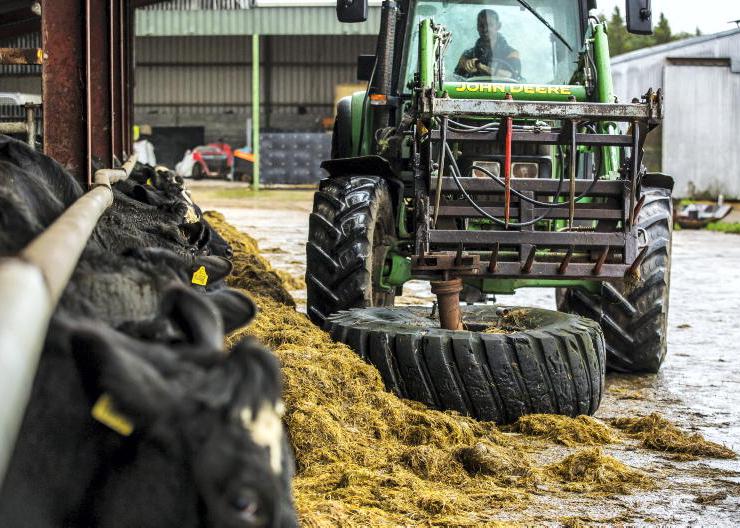
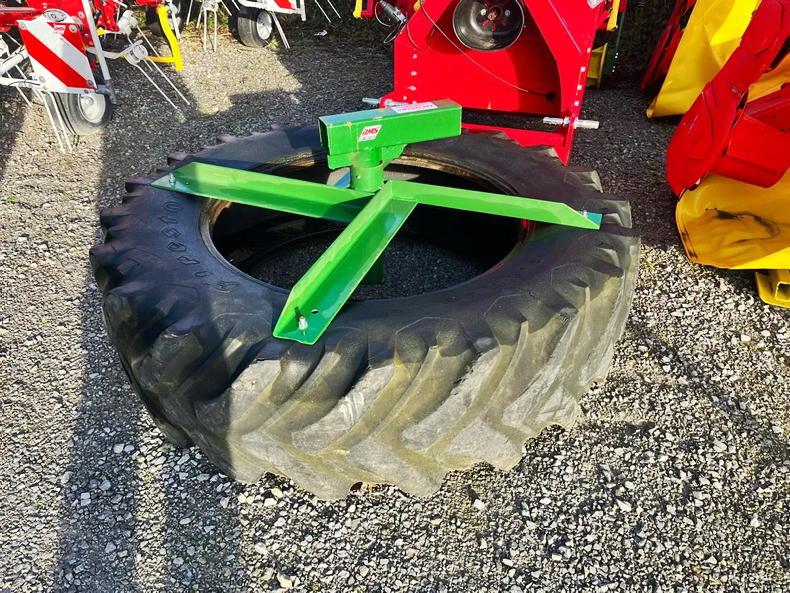
The single tyre feed pusher is probably the most common solution out there.
Although each manufacturer’s design will vary, most tend to use a reasonably large diameter used tyre.
These designs tend to use a greaseable bushing or bearing which allows the tyre to rotate freely. This type of pusher also tends to incorporate an easy-to-use bracket which slides over a pallet toe or shear grab tine. Again, depending on design, prices typically range from €300 to €400 plus VAT.
Pros: The single tyre pusher is one of the cheaper options and is designed with an easy-to-use bracket, meaning that it can be used with a sheargrab tine or pallet toe, meaning that implements do not need to be removed from the loader.
Cons: Depending on the tyre used, there is a potential risk of wire within the tyre becoming exposed as it wears. Wire fragments can cause serious harm if ingested by cows. However, by checking/replacing the tyre regularly, this can be avoided.
Dual tyre design
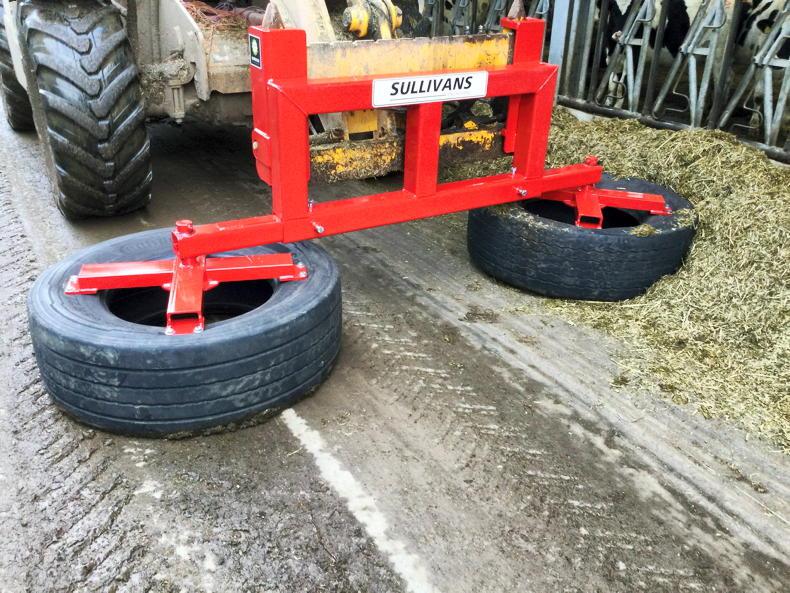
A double wheel silage pusher.
The dual tyre silage pusher features a similar working concept to the single tyre type.
The main difference is that there is a tyre on both sides meaning it can be used to push silage on left and right sides simultaneously, depending on passage width and the pusher’s width.
These types more often than not are supplied with brackets specific to the loader they are intended for use with, ie Manitou, JCB, Euro etc. However, we have seen tine/pallet fork designs out there. Again, depending on the manufacturer, prices tend to range from €800 to €1,000 plus VAT.
Pros: More secure mounting system using the loader headstock. Depending on passage width, there is potential to push feed on both sides at the one time.
Cons: Again, with the tyre side wall being subject to wear, there is potential for wire fragments to become exposed and break off.
Wedge type
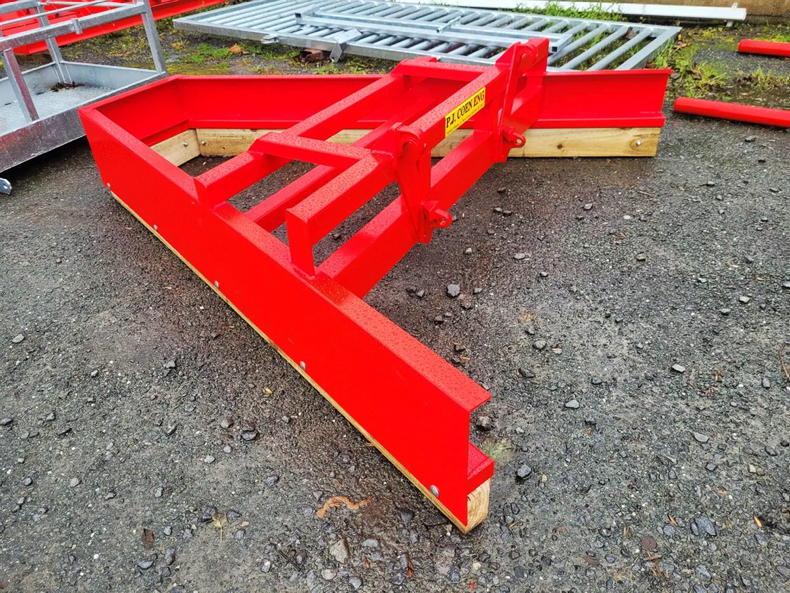
A wedge type silage pusher.
Often referred to as the wedge or snow plough type silage pusher, this design uses a fixed ‘V’ shape design. These pushers tend to have a specific headstock for secure mounting.
Depending on the manufacturer, the wedge can have a replaceable rubber or timber strip along the lower contact area for wear purposes. These types tend to range in price from €1,500 to €2,000 plus VAT depending on deisgn and mounting brackets.
Pros: No moving parts and offer more strength than the single tyre design for pushing bales or dense feeds.
Cons: Not as convenient as the single tyre and ideally need to be at least the width of the loader, which can leave them long.
Robotic feed pushers
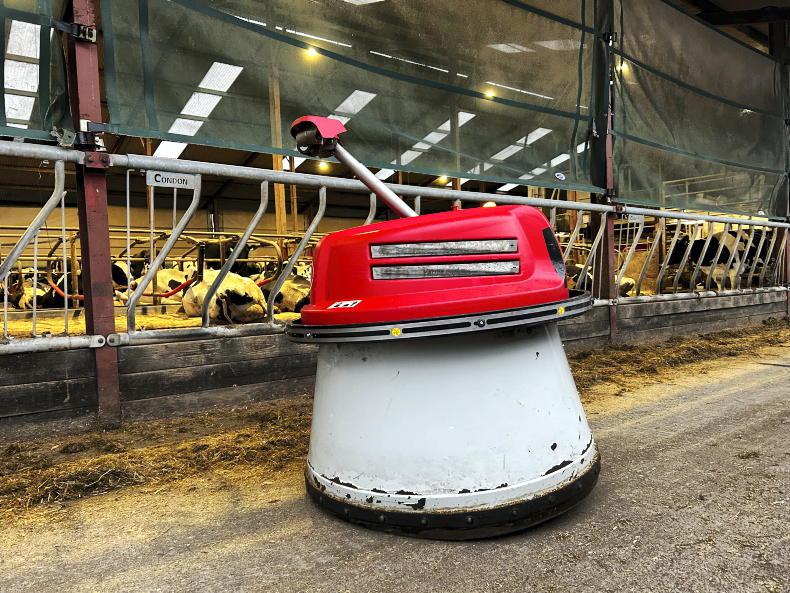
An automatic feed pusher offers the benefit of being able to set multiple scheduled push times day or night.
Automatic feed pushers are becoming increasingly common on farms where there is existing automation, ie milking robots or automatic slat scrapers, and within high yielding dairy herds.
There are two main designs: a flying saucer type and an auger type. These autonomous pushers are electrically propelled and work off ultrasound sensors.
The beauty of this solution is that they can be scheduled to work multiple times per day and night, without any human involvement.
These pushers tend to be monitored and controlled via an app. An automatic feed pusher is naturally a much larger farm investment with prices ranging from €15,000 to €20,000 plus VAT. However, the majority of farmers with automatic feed pushers quote considerable increases in feed intake and milk yield.
Pros: Feed pushing can be routinely scheduled to occur multiple times during a 24-hour period.
Cons: Sizeable initial investment and permanent install required.
Our comment
Regardless of the type chosen, frequent pushing in of feed is proven to increase feed intakes, and animal performance.
While there are also hydraulically adjustable versions of the above, our advice would be to invest in the type that best suits your sheds and one you know will be used.
For convenience, maybe it’s the simple slip-on single tyre? Or maybe budget isn’t so much an issue and you want feed pushed multiple times throughout the day without any involvement; if so, an autonomous pusher is the answer.
Pushing in feed with a bucket or shear grab will cause increased tine or bucket cutting edge wear if dragged across the surface for prolonged periods. Finally, a purpose-built pusher will save time and leave a tidier feed passage.
Aside from a robotic pusher, these are relatively inexpensive farm investments offered by most machinery dealers. For those fairly hands-on, with some degree of fabrication skills, a basic pusher is something that could be manufactured in a short space of time in any workshop.
Whether it’s milk or beef production, achieving the best possible animal performance during the winter housed period is key.
A simple, yet overlooked aspect of winter feeding is keeping forage pushed in to the feed barrier.
It has been proven that frequent feed pushing will encourage animals to visit the feed barrier, and increase feed intakes, thus driving performance.
It also helps to prevents selective eating and ensures adequate feed availability at all times, especially important if feeding space is tight.
While many tend to use a shear grab or a loader bucket to push in feed, investing in a low-cost pusher will not only do a better job in less time, but also reduce wear on a cutting edge or tines.
There are a number of solutions available on the market, depending on what best suits your needs and budget. Below we look at the more popular options out there.
Single tyre design
The single tyre feed pusher is probably the most common solution out there.
Although each manufacturer’s design will vary, most tend to use a reasonably large diameter used tyre.
These designs tend to use a greaseable bushing or bearing which allows the tyre to rotate freely. This type of pusher also tends to incorporate an easy-to-use bracket which slides over a pallet toe or shear grab tine. Again, depending on design, prices typically range from €300 to €400 plus VAT.
Pros: The single tyre pusher is one of the cheaper options and is designed with an easy-to-use bracket, meaning that it can be used with a sheargrab tine or pallet toe, meaning that implements do not need to be removed from the loader.
Cons: Depending on the tyre used, there is a potential risk of wire within the tyre becoming exposed as it wears. Wire fragments can cause serious harm if ingested by cows. However, by checking/replacing the tyre regularly, this can be avoided.
Dual tyre design
A double wheel silage pusher.
The dual tyre silage pusher features a similar working concept to the single tyre type.
The main difference is that there is a tyre on both sides meaning it can be used to push silage on left and right sides simultaneously, depending on passage width and the pusher’s width.
These types more often than not are supplied with brackets specific to the loader they are intended for use with, ie Manitou, JCB, Euro etc. However, we have seen tine/pallet fork designs out there. Again, depending on the manufacturer, prices tend to range from €800 to €1,000 plus VAT.
Pros: More secure mounting system using the loader headstock. Depending on passage width, there is potential to push feed on both sides at the one time.
Cons: Again, with the tyre side wall being subject to wear, there is potential for wire fragments to become exposed and break off.
Wedge type
A wedge type silage pusher.
Often referred to as the wedge or snow plough type silage pusher, this design uses a fixed ‘V’ shape design. These pushers tend to have a specific headstock for secure mounting.
Depending on the manufacturer, the wedge can have a replaceable rubber or timber strip along the lower contact area for wear purposes. These types tend to range in price from €1,500 to €2,000 plus VAT depending on deisgn and mounting brackets.
Pros: No moving parts and offer more strength than the single tyre design for pushing bales or dense feeds.
Cons: Not as convenient as the single tyre and ideally need to be at least the width of the loader, which can leave them long.
Robotic feed pushers
An automatic feed pusher offers the benefit of being able to set multiple scheduled push times day or night.
Automatic feed pushers are becoming increasingly common on farms where there is existing automation, ie milking robots or automatic slat scrapers, and within high yielding dairy herds.
There are two main designs: a flying saucer type and an auger type. These autonomous pushers are electrically propelled and work off ultrasound sensors.
The beauty of this solution is that they can be scheduled to work multiple times per day and night, without any human involvement.
These pushers tend to be monitored and controlled via an app. An automatic feed pusher is naturally a much larger farm investment with prices ranging from €15,000 to €20,000 plus VAT. However, the majority of farmers with automatic feed pushers quote considerable increases in feed intake and milk yield.
Pros: Feed pushing can be routinely scheduled to occur multiple times during a 24-hour period.
Cons: Sizeable initial investment and permanent install required.
Our comment
Regardless of the type chosen, frequent pushing in of feed is proven to increase feed intakes, and animal performance.
While there are also hydraulically adjustable versions of the above, our advice would be to invest in the type that best suits your sheds and one you know will be used.
For convenience, maybe it’s the simple slip-on single tyre? Or maybe budget isn’t so much an issue and you want feed pushed multiple times throughout the day without any involvement; if so, an autonomous pusher is the answer.
Pushing in feed with a bucket or shear grab will cause increased tine or bucket cutting edge wear if dragged across the surface for prolonged periods. Finally, a purpose-built pusher will save time and leave a tidier feed passage.
Aside from a robotic pusher, these are relatively inexpensive farm investments offered by most machinery dealers. For those fairly hands-on, with some degree of fabrication skills, a basic pusher is something that could be manufactured in a short space of time in any workshop.





SHARING OPTIONS