In 2024, farmers and contractors around the world ordered €11.1 billion worth of agricultural machinery and equipment, which was around 28% less than in 2023, according to a new report from the VDMA.
Based in Germany, VDMA Agricultural Machinery represents the interests of European manufacturers of agricultural machinery, tractors and related software systems.
“These figures represent a painful cut, even if we must of course take into account the high level of sales we are coming from,” said Dr Tobias Ehrhard, managing director of the VDMA Agricultural Machinery Association.
Due to stable milk prices, however, manufacturers of milking, cooling and feeding technology were able to achieve a relatively decent result
In particular, volume segments of the agricultural machinery business such as tractors and harvesting technology suffered significant declines after years of above-average growth.
Due to stable milk prices, however, manufacturers of milking, cooling and feeding technology were able to achieve a relatively decent result.
Economic weakness
The VDMA says that the economic downturn in 2024 was unusually uniform across all markets worldwide.
However, neither weak producer prices nor the realised harvest volumes in agriculture were responsible for this. “It was simply the aftermath of the pandemic. At the time, demand grew to a level that could no longer be met,” said Ehrhard. After the supply situation eased, dealer stocks filled up and have not yet completely melted down.
2025 market
The VDMA has said that European agricultural machinery and tractor manufacturers are currently operating in a difficult market environment. “Although order intake rose noticeably in numerous product segments in the first half of 2025, the sales situation remains unsatisfactory,” Ehrhard said.
The industry-wide business climate index, based on a monthly survey of top managers in European industry, paints a similar picture.
“An upturn has been expected for some time, but it is not really materialising at the moment,” Ehrhard said, explaining the continuing stagnation in the industry.
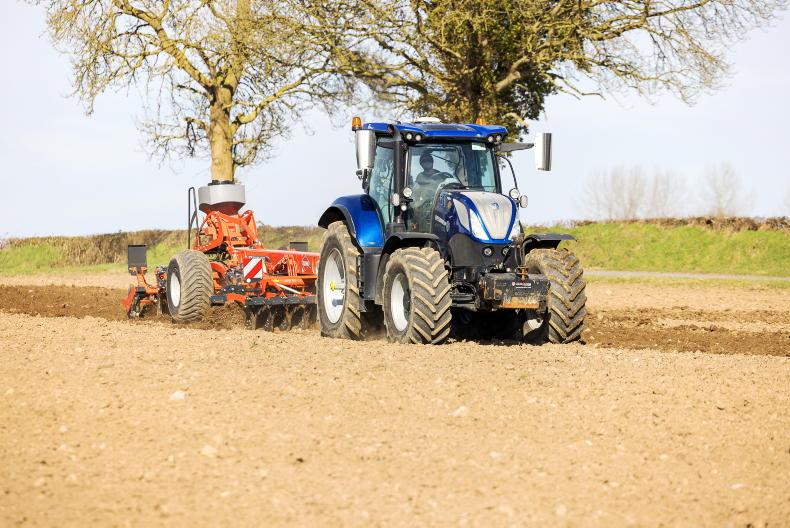
Despite reaching sales of €11.1 billion in 2024, the VDMA has said the machinery industry is down 28% year on year, with the 2025 order book for manufacturers also falling short. \ Odhran Ducie
Looking back on the past six months, the VDMA says the effects of the downturn that began across the board in 2023 are still visible. While manufacturers producing in Germany still recorded a 28% decline in sales in 2024, this decline melted away to around 10% from January to June 2025. Almost all product segments are affected by the market decline.
The situation remains challenging in many places
However, it says that technology used along the milk processing chain is currently performing particularly well, such as milking, cooling, and feeding technology, which recently showed above-average performance on the market.
In most other segments, business continues to stagnate. “The situation remains challenging in many places, but our industry is structurally and financially solid. After all, the industry achieved record growth before the recent downturn. Since the agricultural machinery business traditionally operates in cycles, the industry can also cope with this situation,” said Ehrhard.
In view of ageing machine fleets, agricultural machinery manufacturers expect demand for modern technology to rise again in the medium term.
“We are confident that the agricultural machinery markets will normalise sooner or later,” emphasizes Ehrhard. As soon as the economic engine really gets going again, a solid upturn is likely.
US import tariffs having an effect on machinery market
The VDMA says one particularly unpredictable factor of uncertainty remains: the US government’s tariff policy. “The US government’s import tariffs are a major burden for European agricultural machinery and tractor manufacturers. After all, our industry is one of the top exporters to the US,” Ehrhard explained.
In July, following talks with the European Union, the Trump administration imposed a 15% import tariff on imported goods. It says this situation was further hit by the increased tariff on steel and aluminium products introduced on August 18. Since then, the steel and aluminium content of a machine has been subject to a 50% tariff.
“Now, the steel and aluminium content of all machines must be recorded and customs duties must be paid accordingly. The basis for assessment is the purchase price of the raw material – a huge bureaucratic and cost factor, but above all an unprecedented distortion of competition,” Ehrhard added.
In 2024, farmers and contractors around the world ordered €11.1 billion worth of agricultural machinery and equipment, which was around 28% less than in 2023, according to a new report from the VDMA.
Based in Germany, VDMA Agricultural Machinery represents the interests of European manufacturers of agricultural machinery, tractors and related software systems.
“These figures represent a painful cut, even if we must of course take into account the high level of sales we are coming from,” said Dr Tobias Ehrhard, managing director of the VDMA Agricultural Machinery Association.
Due to stable milk prices, however, manufacturers of milking, cooling and feeding technology were able to achieve a relatively decent result
In particular, volume segments of the agricultural machinery business such as tractors and harvesting technology suffered significant declines after years of above-average growth.
Due to stable milk prices, however, manufacturers of milking, cooling and feeding technology were able to achieve a relatively decent result.
Economic weakness
The VDMA says that the economic downturn in 2024 was unusually uniform across all markets worldwide.
However, neither weak producer prices nor the realised harvest volumes in agriculture were responsible for this. “It was simply the aftermath of the pandemic. At the time, demand grew to a level that could no longer be met,” said Ehrhard. After the supply situation eased, dealer stocks filled up and have not yet completely melted down.
2025 market
The VDMA has said that European agricultural machinery and tractor manufacturers are currently operating in a difficult market environment. “Although order intake rose noticeably in numerous product segments in the first half of 2025, the sales situation remains unsatisfactory,” Ehrhard said.
The industry-wide business climate index, based on a monthly survey of top managers in European industry, paints a similar picture.
“An upturn has been expected for some time, but it is not really materialising at the moment,” Ehrhard said, explaining the continuing stagnation in the industry.
Despite reaching sales of €11.1 billion in 2024, the VDMA has said the machinery industry is down 28% year on year, with the 2025 order book for manufacturers also falling short. \ Odhran Ducie
Looking back on the past six months, the VDMA says the effects of the downturn that began across the board in 2023 are still visible. While manufacturers producing in Germany still recorded a 28% decline in sales in 2024, this decline melted away to around 10% from January to June 2025. Almost all product segments are affected by the market decline.
The situation remains challenging in many places
However, it says that technology used along the milk processing chain is currently performing particularly well, such as milking, cooling, and feeding technology, which recently showed above-average performance on the market.
In most other segments, business continues to stagnate. “The situation remains challenging in many places, but our industry is structurally and financially solid. After all, the industry achieved record growth before the recent downturn. Since the agricultural machinery business traditionally operates in cycles, the industry can also cope with this situation,” said Ehrhard.
In view of ageing machine fleets, agricultural machinery manufacturers expect demand for modern technology to rise again in the medium term.
“We are confident that the agricultural machinery markets will normalise sooner or later,” emphasizes Ehrhard. As soon as the economic engine really gets going again, a solid upturn is likely.
US import tariffs having an effect on machinery market
The VDMA says one particularly unpredictable factor of uncertainty remains: the US government’s tariff policy. “The US government’s import tariffs are a major burden for European agricultural machinery and tractor manufacturers. After all, our industry is one of the top exporters to the US,” Ehrhard explained.
In July, following talks with the European Union, the Trump administration imposed a 15% import tariff on imported goods. It says this situation was further hit by the increased tariff on steel and aluminium products introduced on August 18. Since then, the steel and aluminium content of a machine has been subject to a 50% tariff.
“Now, the steel and aluminium content of all machines must be recorded and customs duties must be paid accordingly. The basis for assessment is the purchase price of the raw material – a huge bureaucratic and cost factor, but above all an unprecedented distortion of competition,” Ehrhard added.






SHARING OPTIONS