Although it is probably one of the most disliked jobs on the farm, the summer clean-out and power-washing of livestock houses not only gives the farm an overall cleaner appearance, but more importantly it will help to prevent the build up of various diseases that may reside in farm buildings, from one housing period to the next.
For suckler and calf housing, scours can rapidly break out in sheds that are under pressure from a high stocking rate in spring, while ecto parasites, such as sheep scab, can remain within walls and barriers, causing outbreaks to occur in housed ewes.
The risk of Bovine Tuberculosis (TB) spreading within a herd can also be reduced through proper cleaning and disinfection. Here are a few steps to start:
Remove all surface manure and bedding
To allow access to the concrete surfaces of slats/flooring, all used bedding and dung should be removed and placed in a dung heap/spread on land. As much dung as possible should be removed to make the power-washing process easier.
Use of detergents
Detergents can be used to loosen the dirt and grime on surfaces within the house. Soaking agents will loosen dried-in dirt, cutting down the time and volume of water used to clean housing.
Alkaline solutions work best for removing faeces and any proteins or fats (in milk residues) from surfaces.
If you do not use a soaking agent, it may be beneficial to thoroughly soak the housing area with water for a number of days before undertaking a full power-washing to loosen dirt.
Power-washing all surfaces
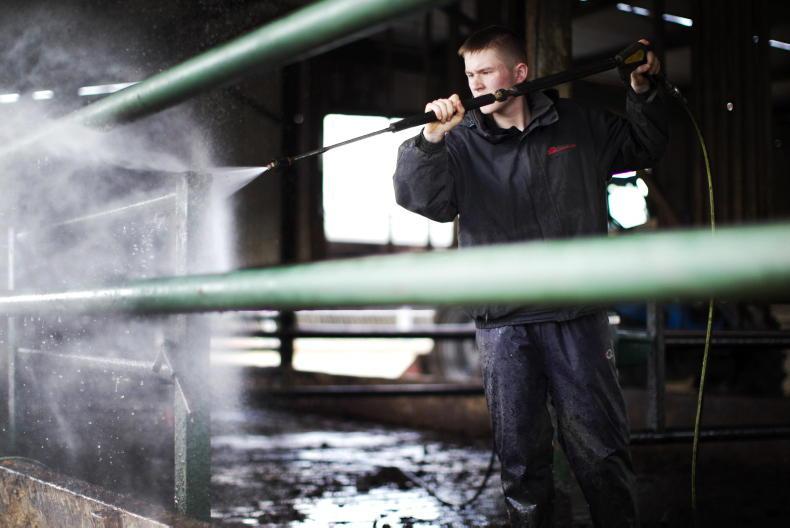
It’s not just the walls and floors of animal houses that should be washed. Gates and barriers, side sheeting, doors and feed passages should all be thoroughly washed too.
Care should be taken that the underside of gates and barriers or hard-to-access areas are thoroughly cleaned. Any adjoining animal handling facilities should also be cleaned at this time.
If there is excessive mould on the side sheeting, roof sheeting or timbers, then appropriate equipment to access and clean these areas should be used. Significant mould growth is an indicator of poor ventilation and should be rectified.
Treating with a disinfectant
The Department of Agriculture has approved several disinfectants for animal housing, which should be available at your local agri chemical merchant shop.
The appropriate dilution rate and safety equipment should be used when applying any disinfectant. It is the Department’s recommendation that all surfaces be soaked thoroughly before disinfectant dries in.
Ample spreading of hydrated lime also works well as a disinfectant for all animal housing. After disinfection has taken place, the doors of the building should be left open to allow surfaces to dry out. Sunlight is a natural disinfectant, so allowing as much light and air into the building will be of added benefit.
Remove all manure and bedding.Make use of detergents to loosen dirt.Power-wash surfaces for a deep clean to get rid of mould growth.Disinfect and air out buildings – not forgetting to make good use of natural sunlight!
Although it is probably one of the most disliked jobs on the farm, the summer clean-out and power-washing of livestock houses not only gives the farm an overall cleaner appearance, but more importantly it will help to prevent the build up of various diseases that may reside in farm buildings, from one housing period to the next.
For suckler and calf housing, scours can rapidly break out in sheds that are under pressure from a high stocking rate in spring, while ecto parasites, such as sheep scab, can remain within walls and barriers, causing outbreaks to occur in housed ewes.
The risk of Bovine Tuberculosis (TB) spreading within a herd can also be reduced through proper cleaning and disinfection. Here are a few steps to start:
Remove all surface manure and bedding
To allow access to the concrete surfaces of slats/flooring, all used bedding and dung should be removed and placed in a dung heap/spread on land. As much dung as possible should be removed to make the power-washing process easier.
Use of detergents
Detergents can be used to loosen the dirt and grime on surfaces within the house. Soaking agents will loosen dried-in dirt, cutting down the time and volume of water used to clean housing.
Alkaline solutions work best for removing faeces and any proteins or fats (in milk residues) from surfaces.
If you do not use a soaking agent, it may be beneficial to thoroughly soak the housing area with water for a number of days before undertaking a full power-washing to loosen dirt.
Power-washing all surfaces
It’s not just the walls and floors of animal houses that should be washed. Gates and barriers, side sheeting, doors and feed passages should all be thoroughly washed too.
Care should be taken that the underside of gates and barriers or hard-to-access areas are thoroughly cleaned. Any adjoining animal handling facilities should also be cleaned at this time.
If there is excessive mould on the side sheeting, roof sheeting or timbers, then appropriate equipment to access and clean these areas should be used. Significant mould growth is an indicator of poor ventilation and should be rectified.
Treating with a disinfectant
The Department of Agriculture has approved several disinfectants for animal housing, which should be available at your local agri chemical merchant shop.
The appropriate dilution rate and safety equipment should be used when applying any disinfectant. It is the Department’s recommendation that all surfaces be soaked thoroughly before disinfectant dries in.
Ample spreading of hydrated lime also works well as a disinfectant for all animal housing. After disinfection has taken place, the doors of the building should be left open to allow surfaces to dry out. Sunlight is a natural disinfectant, so allowing as much light and air into the building will be of added benefit.
Remove all manure and bedding.Make use of detergents to loosen dirt.Power-wash surfaces for a deep clean to get rid of mould growth.Disinfect and air out buildings – not forgetting to make good use of natural sunlight! 






SHARING OPTIONS