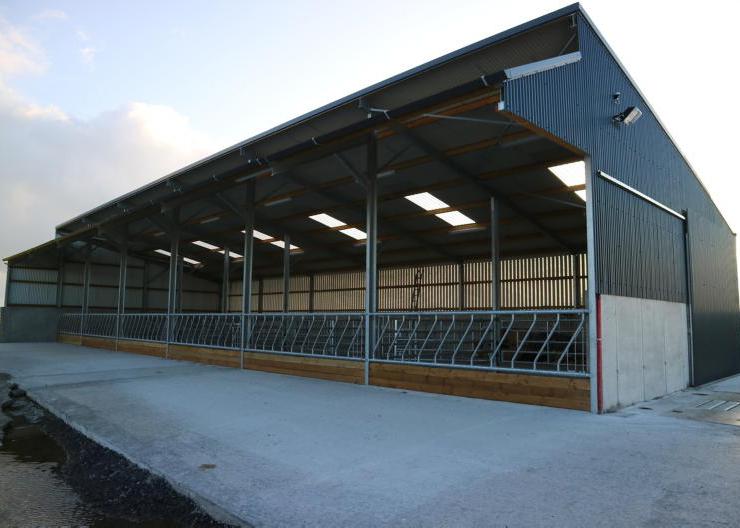
Final finish is what sets apart the ordinary from the extraordinary, and the latter is more apt when discussing the new sheep shed built on the farm of Desmond and Daniel McColgan.
The brothers are lambing down 200 lowland ewes for the first time in their recently completed slatted sheep unit, just outside the town of Malin.
Prior to this, the duo had been lambing in an adjoining dry shed, with an increase in numbers and a desire to ease management for Daniel’s son Ben and his friend Jack McLaughlin who feed the sheep while Desmond and Daniel are away working during the week, prompted the build.
The shed extends across five bays, with a central tank, two feed passages, a handling unit and a storage area. Construction began last year, with the brother digging out the tank themselves.
Indeed, a good portion of the work was completed by them, including the block work of the walls, plastering and the impressive stone work at the front and along the side of the unit, with Daniel who is a block layer by trade, completing this.
A 90ft long tank 26ft wide was shuttered by Bernard Lynch of Inishowen Shuttering. While the storage requirements for sheep do not require a deep tank, a decision was made to pour an 8ft deep tank to allow for the importation of slurry, with the McColgans importing in pig slurry from neighbouring farmers.
Having this additional storage allows them to tanker in and hold slurry and spread at the optimum time, while a deeper tank was minimal additional cost. Over 100,000 gallons of storage is now available on farm.
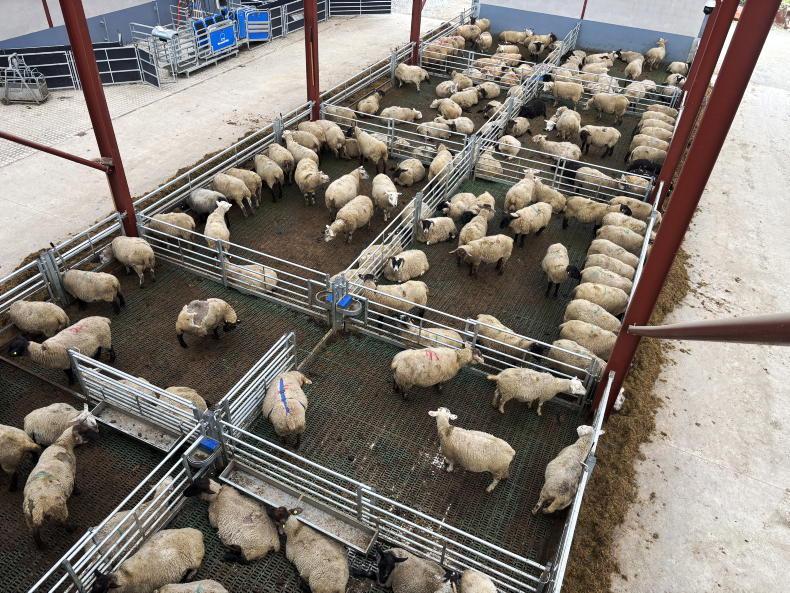
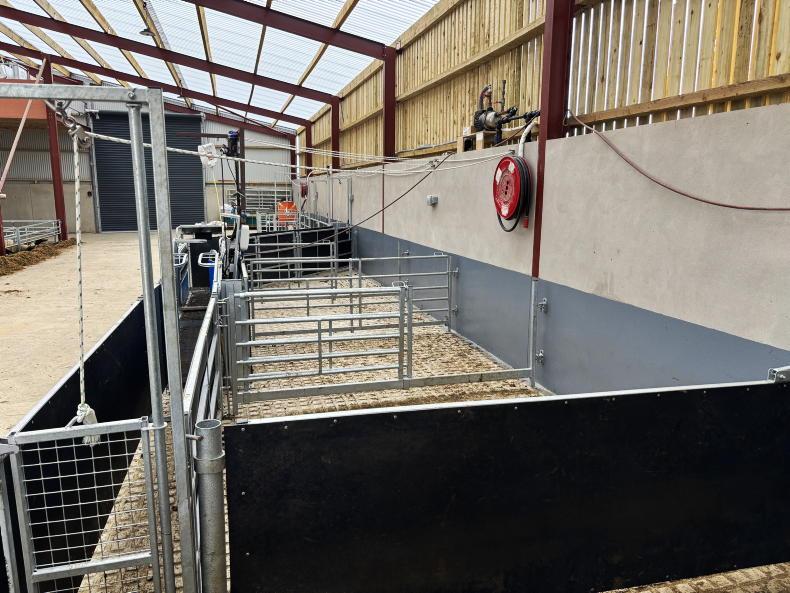
A birds eye view of the slatted sheep pens from the loft area.
The tank has been overlayed by MIK plastic sheep/calf slats, supplied by local merchant Charlie Doherty of Carn Agri. A central spine wall runs through the tank, with agitation points located outside at the front of the shed and in the fifth bay of the shed, which remains dry.
There is a total of 10 pens, with 6 of these being full sized (20ft x 13f) while one bay has been split to incorporate four half sized pens to allow segregation of ewes into smaller batches if required.
Sliding gates between pens allows for pen size to be doubled up if necessary, while also making it easy to draft ewes between pens. All internal gates, barriers and water troughs were also supplied by Carn Agri.
Everything that has been done within the shed has been carefully thought through. 20ft (6m) bays were used for two reasons; firstly, to link up with the dry shed adjoining the new slatted shed and secondly to allow for access with the tractor and diet feeder in the last dry bay of the new shed.
A total of four electric roller doors, supplied and fitted by Steel Roller Doors, Carndonagh, have been installed, two at either end of the shed, though the doors at the furthest end of the shed generally remain closed, with these exposed to prevailing winds.
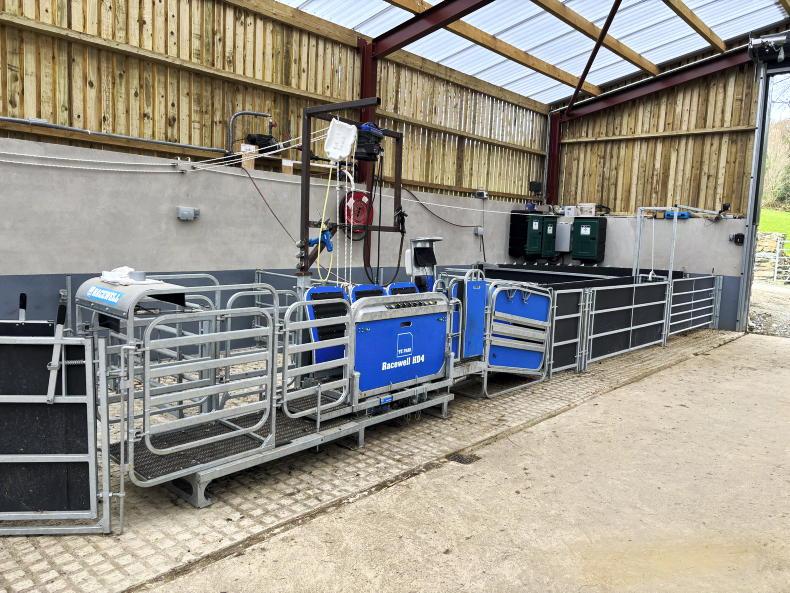
The McColgan's put careful thought and consideration in to their purchasing, before ultimately opting for a Te Pari Racewell unit.
A trusted 2wd David Brown paired with a diet feeder can enter at the front of the shed on the left, feed ewes along this barrier and continue in a U-shape to feed ewes on the other side of the pens without leaving the shed. The feed passages measure 20ft (6m) and 14ft 3’’ (4.35m) in width.
One of the challenges faced by the McColgans was the topography, with the ground rising along the front opening. To counteract this, the passageway on the upper side was left 9’’ (225mm) higher, with the dry bay where the tractor turns gently cambered up to this.
The feeding level of the ewes remains the same, with a drop off of 9’’ from the feed passage to along the front of the barrier created, essentially leaving a feed bunker in place.
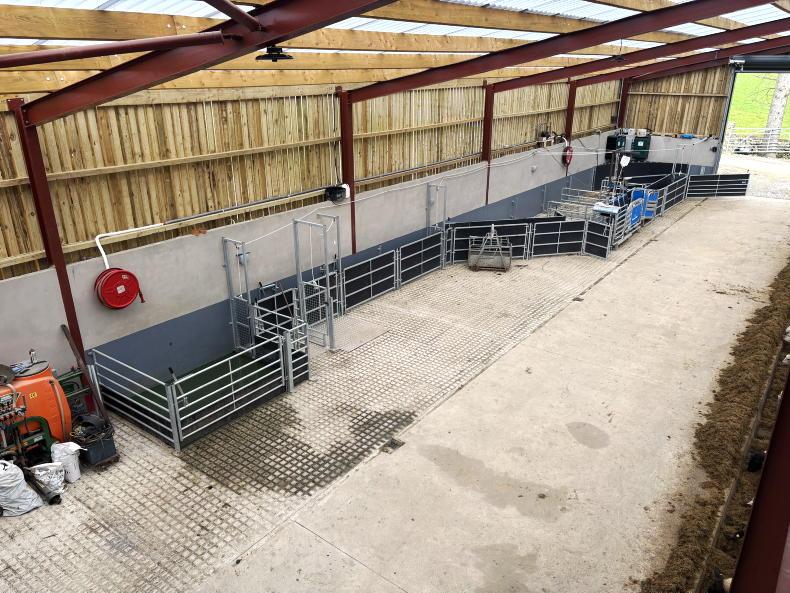
The handling unit as seen here with the foot bath and covered dipping tub at the upper end with holding pens, forcing pens and Te Pari Racewell at the lower end.
Desmond pointed out that when feeding with the diet feeder, silage had to be kept further back from ewes on this higher side, with a silage pusher used when needed to drop the remaining silage into the feed bunker.
The fact that a diet feeder and TMR feed is used allows for a lower feed space per ewe here.
A shepherd’s hut has been located in the loft area in the dry bay, with a clear overview of the pens below, with additional storage also available in the loft.
One of the most striking things that hits you walking into the shed is the Heatguard sheeting that has been used to clad the roof.
Supplied by Fabri Clad, Ballybofey, the shed is pleasantly bright for working in during the day while also thermally regulating the shed inside.
A mixture of 10’’ x 6’’ and 8’’ x 5’’ RSJ’s have been used where appropriate for stanchions and rafters, with the shed frame designed, manufactured and stood by Roy Buchanan of R.B. Structural Steel Ltd.
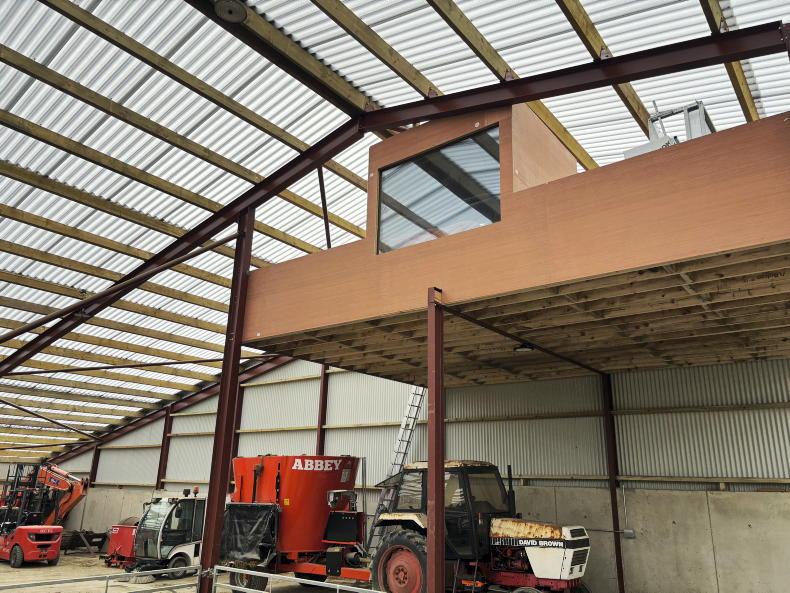
The loft has been kitted out with a shepherds hut, while the David Brown and diet feeder tasked with feeding out ewes accessing underneath it.
Yorkshire boarding runs along the front and side of the shed for air inlet, with a 50mm spacing between the two rows of lats, while steel cladding has been fitted to the end of the shed facing the prevailing wind.
As impressive as the shed is by itself, the addition of a handling unit under the same roof is the cherry on top.
Sheep can easily be drafted from the slatted pens across from it into one of three holding pens.
A quarter turn forcing gate with incremental holding points pushed ewes into the Te Pari sheep handler.
From here, all manner of task can be completed.
An automatic backing bar holds sheep in the lead-up race, before the Racewell unit clamps and holds the sheep, with side tilting also possible for dagging or foot trimming.
The McColgans put time and effort into choosing which handler was for them, with the Revolution dosing gun, which is automatically calibrated to dispense the appropriate volume of dose according to the weight of the sheep in the clamp, a major selling point.
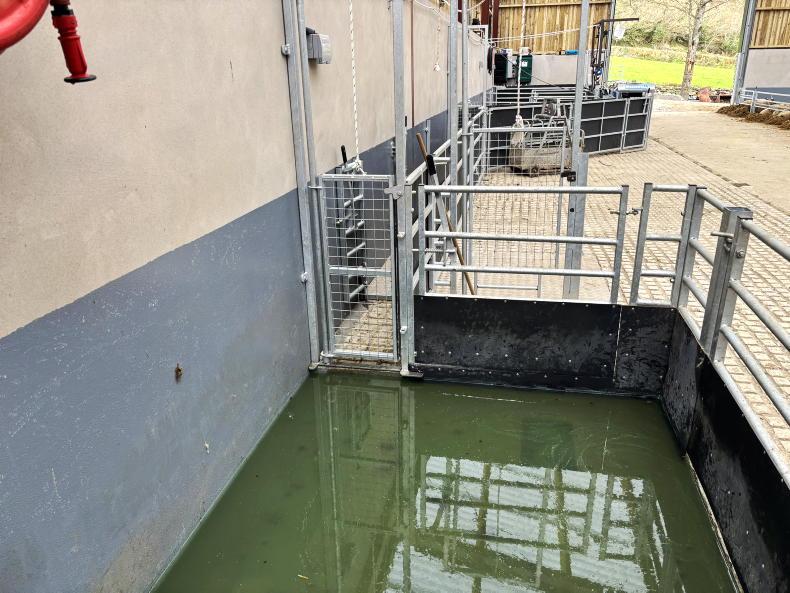
The batch foot bath at the end of the unit, with the guillotine gate capable of being open from the Racewell unit by rope and pulley.
Three-way drafting has been implemented into the unit, with the chute toward the foot bath and dipping tub angled at 45° away from the head of the Racewell, with the brothers highlighting that sheep flow was excellent through the system.
From the Racewell, a series of ropes and pulleys allows any guillotine gates throughout the handling unit to be operated while remaining in situ.
A static shearing stand has also been manufactured and can be incorporated into the Racewell unit, with the brothers completing their own shearing.
At the upper end of the handling unit, a covered dipping tub has been cast in place, with a steel checker plate cover over this when not in use, while a batch footbath has been created at the very top of the yard.
The higher feed passage on this side of the shed has actually worked in their favour, with the dipping tub and footbath easily drained into the slatted tank, with drainage pipes being able to sit just under the top of the tank wall due to the handling unit being higher than the top of the tank.
Opinion: top class craftsmanship
Finish is everything, and the finish on this shed is about as good as it gets. Stone cladding, Heatguard sheeting and a Te Pari Racewll unit just make this shed stand out from the rest. Discussing the shed with Desmond and Daniel, it appears all local Donegal businesses were used and matched with the pair’s own design ideas and work, the results speak for themselves.
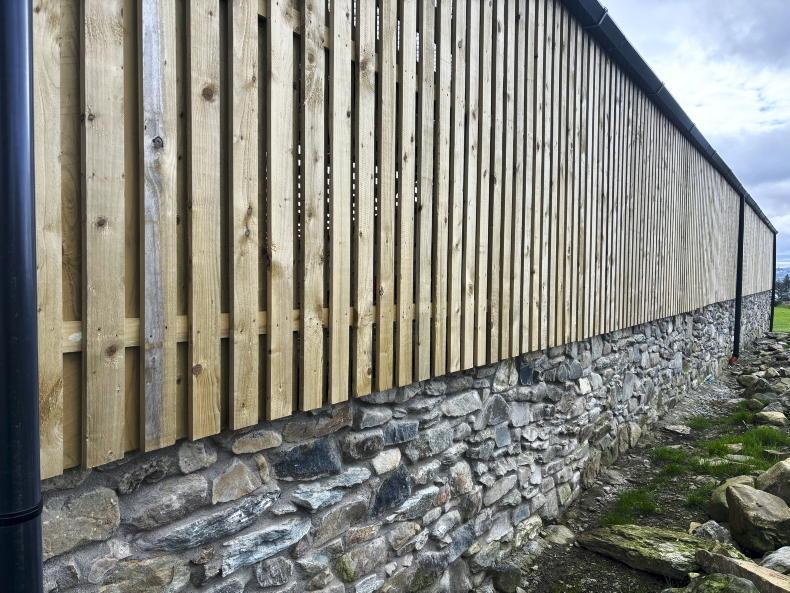
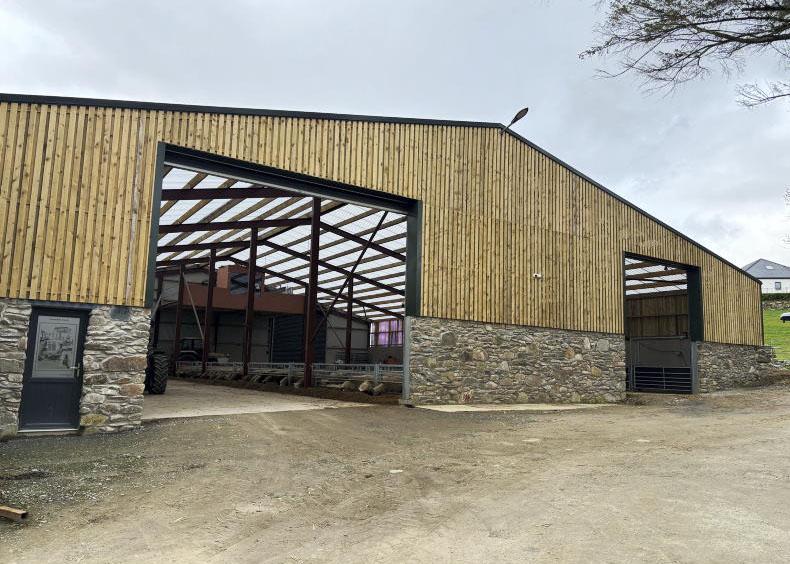
Some more of Daniel's craftsmanship at work with the stone cladding, while Yorkshire boarding runs along the length of the shed.
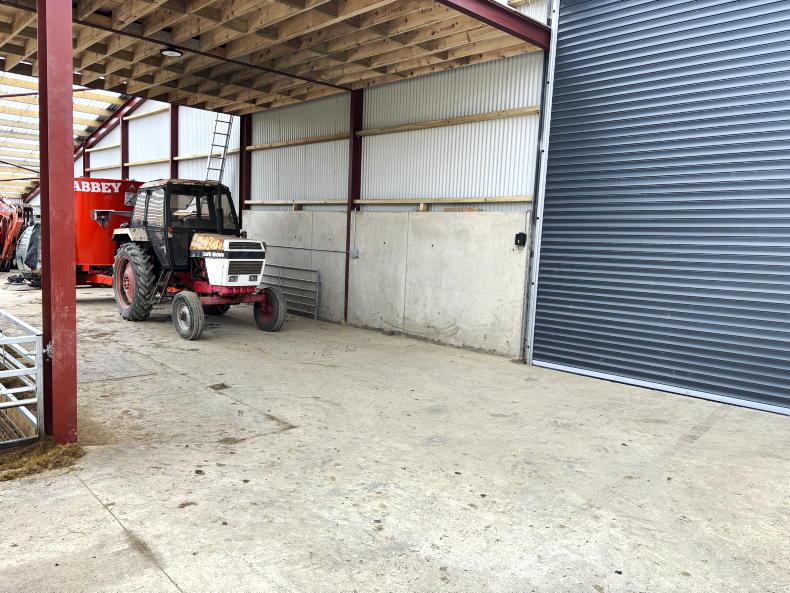
The 20ft wide dry bay at the end of the tank allows for the tractor and diet feeder to travel in a U-shape around the shed.
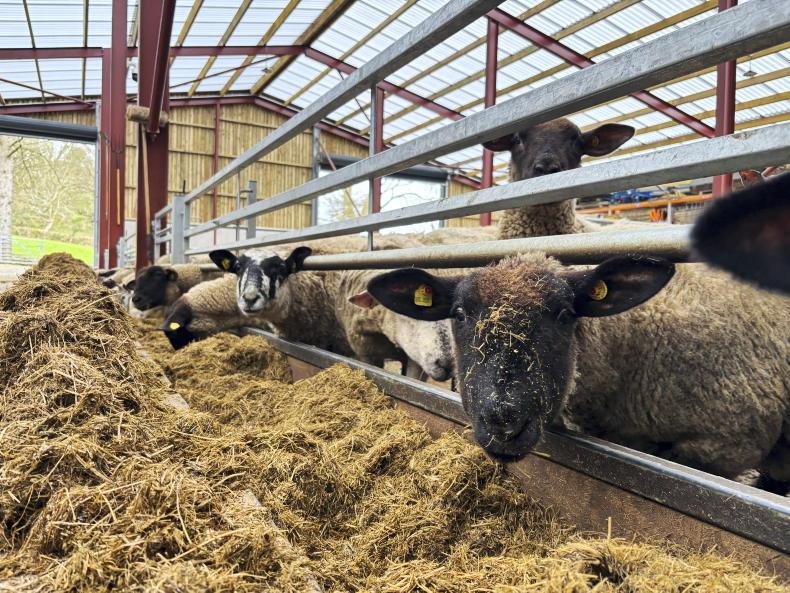
The requirement for different floor levels meant the creation of a feed bunker. The TMR on the left can be pushed down with a silage pusher when the feed in to bunker is ate.
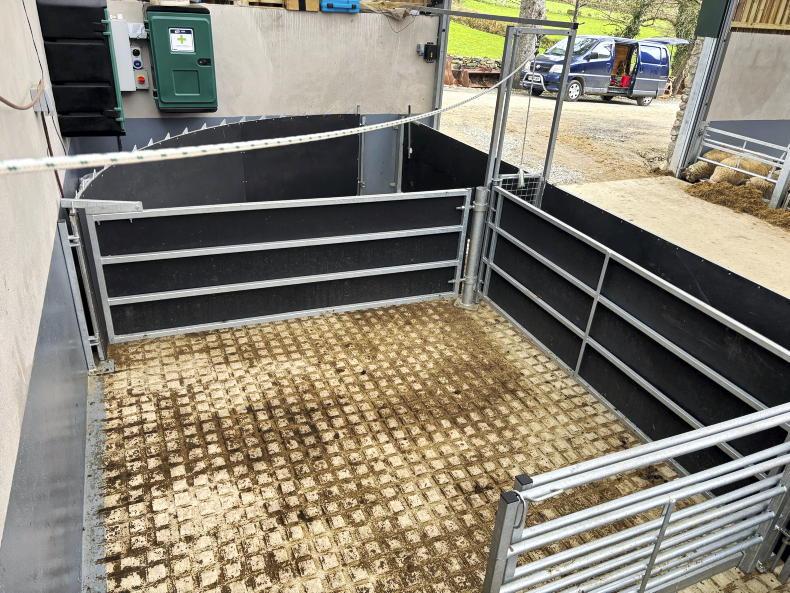
On of the holding pens and quarter turn forcing pens in to the Racewell.
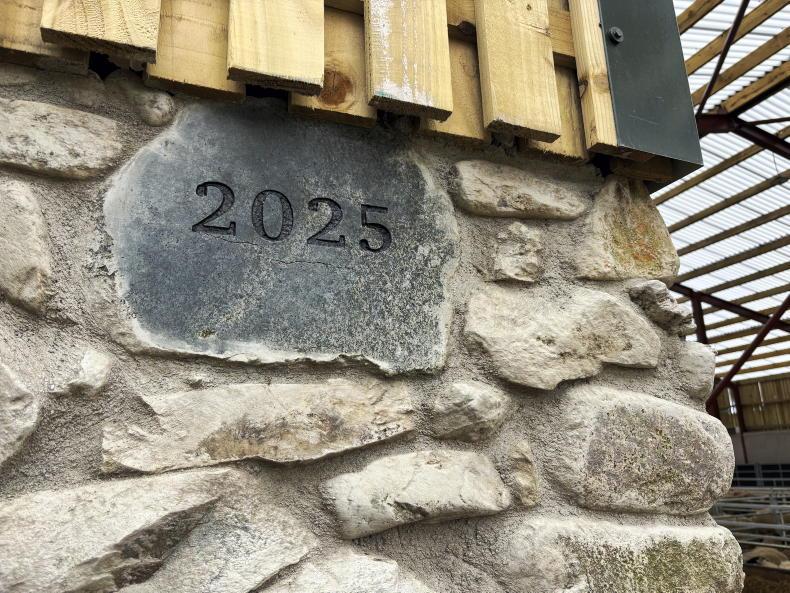
Part of the stone cladding on the front of the McColgan's sheep shed.
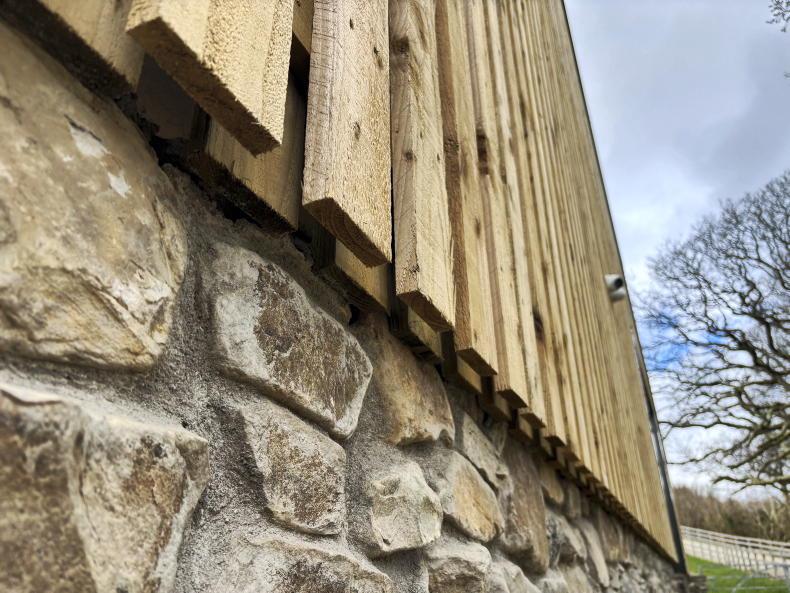
Yorkshire boarding with a 2'' spacing has been used along the front and side of the shed.
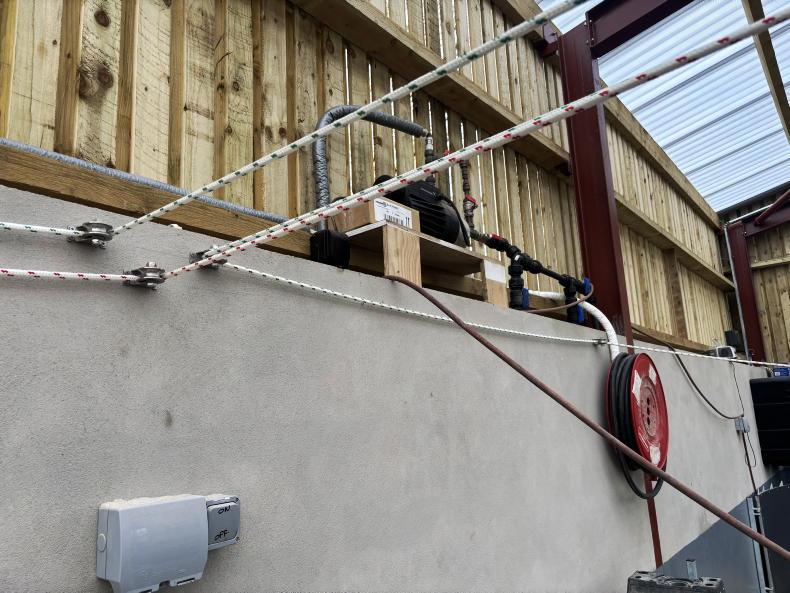
A system of ropes and pulleys allow guillotine gates throughout the handling unit to be operated from the Racewell.
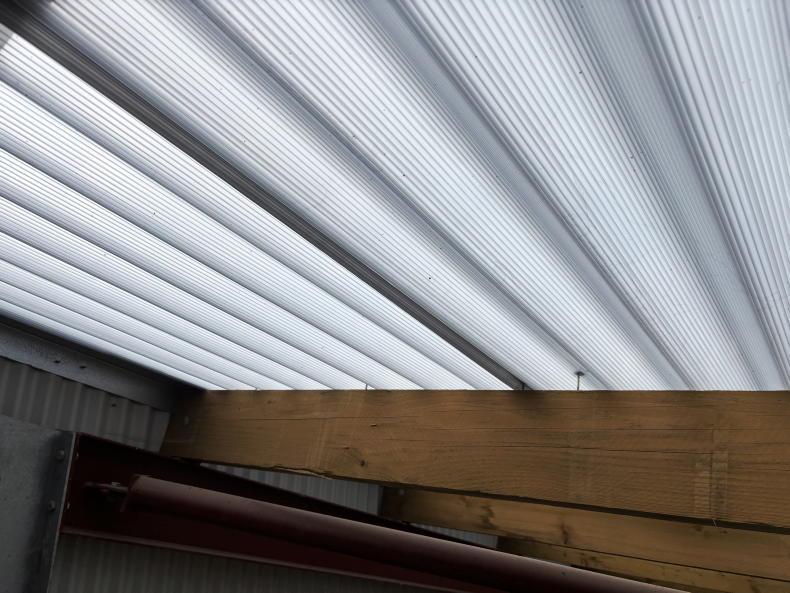
Heatguard sheeting fitted throughout the roof area leaves the shed bright and pleasant to work in, while also thermally regulating it.
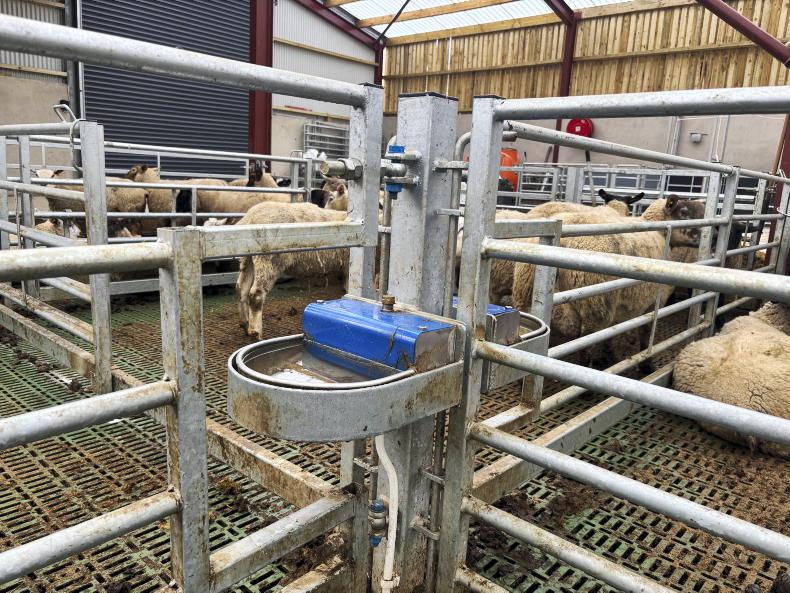
Drinkers are shared between pens, with each pen having access to at least one drinking bowl.
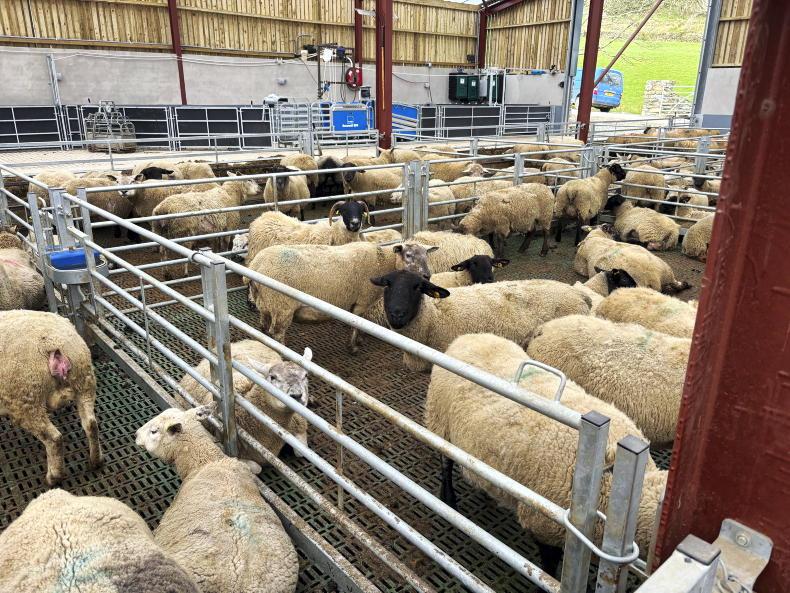
McColgan sheep shed
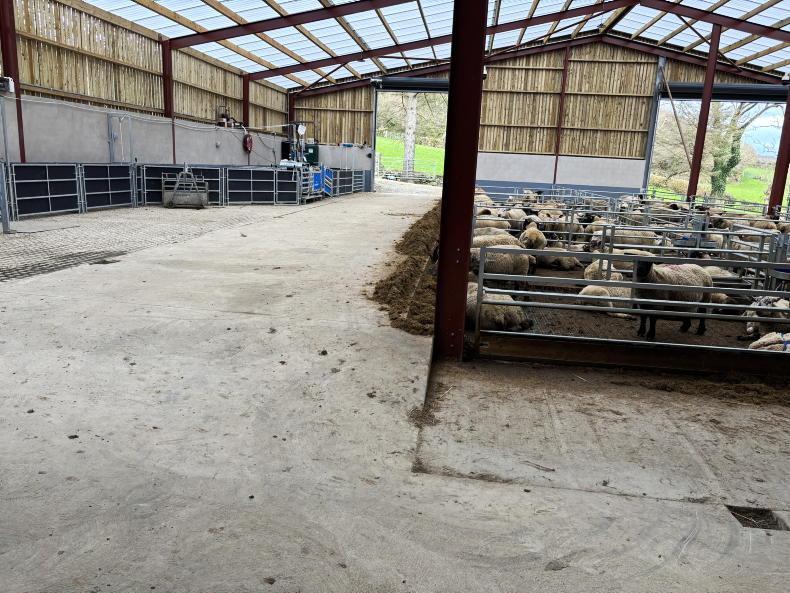
The change in floor level can be seen here, with a 9'' rise between the two feed passages.
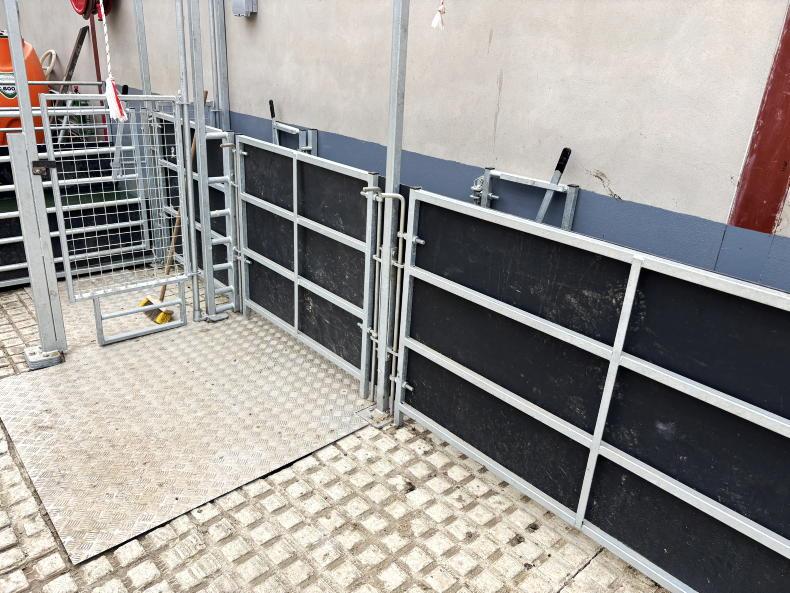
The dipping tub is covered with checker plate when not in use, with the guillotine gate seen here used to allow sheep to exit once dipped.
McColgan sheep shed
Final finish is what sets apart the ordinary from the extraordinary, and the latter is more apt when discussing the new sheep shed built on the farm of Desmond and Daniel McColgan.
The brothers are lambing down 200 lowland ewes for the first time in their recently completed slatted sheep unit, just outside the town of Malin.
Prior to this, the duo had been lambing in an adjoining dry shed, with an increase in numbers and a desire to ease management for Daniel’s son Ben and his friend Jack McLaughlin who feed the sheep while Desmond and Daniel are away working during the week, prompted the build.
The shed extends across five bays, with a central tank, two feed passages, a handling unit and a storage area. Construction began last year, with the brother digging out the tank themselves.
Indeed, a good portion of the work was completed by them, including the block work of the walls, plastering and the impressive stone work at the front and along the side of the unit, with Daniel who is a block layer by trade, completing this.
A 90ft long tank 26ft wide was shuttered by Bernard Lynch of Inishowen Shuttering. While the storage requirements for sheep do not require a deep tank, a decision was made to pour an 8ft deep tank to allow for the importation of slurry, with the McColgans importing in pig slurry from neighbouring farmers.
Having this additional storage allows them to tanker in and hold slurry and spread at the optimum time, while a deeper tank was minimal additional cost. Over 100,000 gallons of storage is now available on farm.
A birds eye view of the slatted sheep pens from the loft area.
The tank has been overlayed by MIK plastic sheep/calf slats, supplied by local merchant Charlie Doherty of Carn Agri. A central spine wall runs through the tank, with agitation points located outside at the front of the shed and in the fifth bay of the shed, which remains dry.
There is a total of 10 pens, with 6 of these being full sized (20ft x 13f) while one bay has been split to incorporate four half sized pens to allow segregation of ewes into smaller batches if required.
Sliding gates between pens allows for pen size to be doubled up if necessary, while also making it easy to draft ewes between pens. All internal gates, barriers and water troughs were also supplied by Carn Agri.
Everything that has been done within the shed has been carefully thought through. 20ft (6m) bays were used for two reasons; firstly, to link up with the dry shed adjoining the new slatted shed and secondly to allow for access with the tractor and diet feeder in the last dry bay of the new shed.
A total of four electric roller doors, supplied and fitted by Steel Roller Doors, Carndonagh, have been installed, two at either end of the shed, though the doors at the furthest end of the shed generally remain closed, with these exposed to prevailing winds.
The McColgan's put careful thought and consideration in to their purchasing, before ultimately opting for a Te Pari Racewell unit.
A trusted 2wd David Brown paired with a diet feeder can enter at the front of the shed on the left, feed ewes along this barrier and continue in a U-shape to feed ewes on the other side of the pens without leaving the shed. The feed passages measure 20ft (6m) and 14ft 3’’ (4.35m) in width.
One of the challenges faced by the McColgans was the topography, with the ground rising along the front opening. To counteract this, the passageway on the upper side was left 9’’ (225mm) higher, with the dry bay where the tractor turns gently cambered up to this.
The feeding level of the ewes remains the same, with a drop off of 9’’ from the feed passage to along the front of the barrier created, essentially leaving a feed bunker in place.
The handling unit as seen here with the foot bath and covered dipping tub at the upper end with holding pens, forcing pens and Te Pari Racewell at the lower end.
Desmond pointed out that when feeding with the diet feeder, silage had to be kept further back from ewes on this higher side, with a silage pusher used when needed to drop the remaining silage into the feed bunker.
The fact that a diet feeder and TMR feed is used allows for a lower feed space per ewe here.
A shepherd’s hut has been located in the loft area in the dry bay, with a clear overview of the pens below, with additional storage also available in the loft.
One of the most striking things that hits you walking into the shed is the Heatguard sheeting that has been used to clad the roof.
Supplied by Fabri Clad, Ballybofey, the shed is pleasantly bright for working in during the day while also thermally regulating the shed inside.
A mixture of 10’’ x 6’’ and 8’’ x 5’’ RSJ’s have been used where appropriate for stanchions and rafters, with the shed frame designed, manufactured and stood by Roy Buchanan of R.B. Structural Steel Ltd.
The loft has been kitted out with a shepherds hut, while the David Brown and diet feeder tasked with feeding out ewes accessing underneath it.
Yorkshire boarding runs along the front and side of the shed for air inlet, with a 50mm spacing between the two rows of lats, while steel cladding has been fitted to the end of the shed facing the prevailing wind.
As impressive as the shed is by itself, the addition of a handling unit under the same roof is the cherry on top.
Sheep can easily be drafted from the slatted pens across from it into one of three holding pens.
A quarter turn forcing gate with incremental holding points pushed ewes into the Te Pari sheep handler.
From here, all manner of task can be completed.
An automatic backing bar holds sheep in the lead-up race, before the Racewell unit clamps and holds the sheep, with side tilting also possible for dagging or foot trimming.
The McColgans put time and effort into choosing which handler was for them, with the Revolution dosing gun, which is automatically calibrated to dispense the appropriate volume of dose according to the weight of the sheep in the clamp, a major selling point.
The batch foot bath at the end of the unit, with the guillotine gate capable of being open from the Racewell unit by rope and pulley.
Three-way drafting has been implemented into the unit, with the chute toward the foot bath and dipping tub angled at 45° away from the head of the Racewell, with the brothers highlighting that sheep flow was excellent through the system.
From the Racewell, a series of ropes and pulleys allows any guillotine gates throughout the handling unit to be operated while remaining in situ.
A static shearing stand has also been manufactured and can be incorporated into the Racewell unit, with the brothers completing their own shearing.
At the upper end of the handling unit, a covered dipping tub has been cast in place, with a steel checker plate cover over this when not in use, while a batch footbath has been created at the very top of the yard.
The higher feed passage on this side of the shed has actually worked in their favour, with the dipping tub and footbath easily drained into the slatted tank, with drainage pipes being able to sit just under the top of the tank wall due to the handling unit being higher than the top of the tank.
Opinion: top class craftsmanship
Finish is everything, and the finish on this shed is about as good as it gets. Stone cladding, Heatguard sheeting and a Te Pari Racewll unit just make this shed stand out from the rest. Discussing the shed with Desmond and Daniel, it appears all local Donegal businesses were used and matched with the pair’s own design ideas and work, the results speak for themselves.
Some more of Daniel's craftsmanship at work with the stone cladding, while Yorkshire boarding runs along the length of the shed.
The 20ft wide dry bay at the end of the tank allows for the tractor and diet feeder to travel in a U-shape around the shed.
The requirement for different floor levels meant the creation of a feed bunker. The TMR on the left can be pushed down with a silage pusher when the feed in to bunker is ate.
On of the holding pens and quarter turn forcing pens in to the Racewell.
Part of the stone cladding on the front of the McColgan's sheep shed.
Yorkshire boarding with a 2'' spacing has been used along the front and side of the shed.
A system of ropes and pulleys allow guillotine gates throughout the handling unit to be operated from the Racewell.
Heatguard sheeting fitted throughout the roof area leaves the shed bright and pleasant to work in, while also thermally regulating it.
Drinkers are shared between pens, with each pen having access to at least one drinking bowl.
McColgan sheep shed
The change in floor level can be seen here, with a 9'' rise between the two feed passages.
The dipping tub is covered with checker plate when not in use, with the guillotine gate seen here used to allow sheep to exit once dipped.
McColgan sheep shed





SHARING OPTIONS