


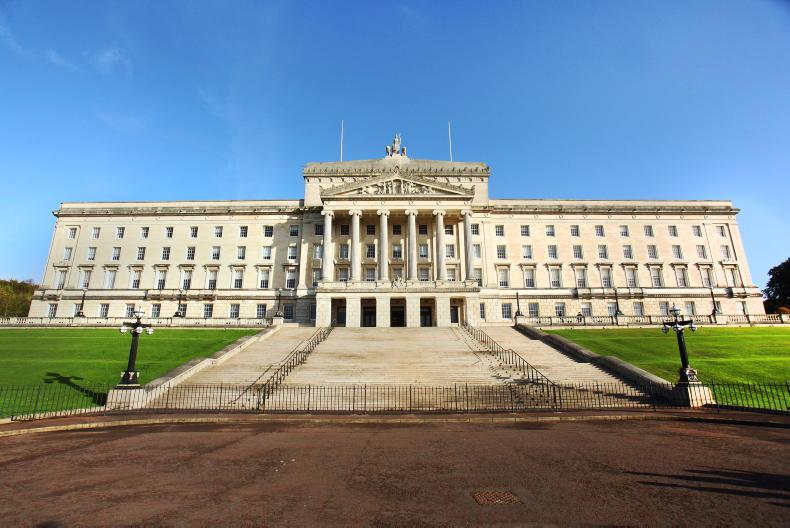
The next Stormont election has to happen on or before 6 May 2027, so we are now moving into a period when politicians will be keen to score points and be seen to stand up for their voter base.
During this period, it is only right that our leaders are challenged on their record. That includes Agriculture Minister Andrew Muir, who has been in post since February 2024.
In reality, a lot of farmers will probably be critical of his time in office, and that will be used against him by his political opponents over the next 15 months.
Some of the criticism is valid, and the disastrous roll-out of proposed changes to the Nutrients Action Programme last May will not be easily forgotten. But some of the criticism is being stirred up by political opponents who have also failed to address major issues impacting farmers.
For example, we have had a number of ministers from various political parties who didn’t put in place a meaningful plan to address bovine TB in wildlife. In the end, the previous Agriculture Minister, Edwin Poots came closest, but it was no great surprise when his plan was blocked in the courts.
There were also a number of different political parties (not just the Alliance) who argued strongly for NI to have a net zero greenhouse gas target by 2050, while we should not forget the messy scenarios created on the back of the decision to leave the EU.
That decision has left the department in a very difficult position, trying to devise new farm schemes and putting appropriate legislation in place, while also satisfying government spending rules.
That has taken us to a place where various new conditions are being attached to future payments, with the long-term direction of travel seeing money diverted into agri-environment schemes.
Those who don’t like having conditions or the new approach have used it as another reason to criticise Minister Muir, but forget the department is simply implementing policies signed off by Minister Poots in 2022.



SHARING OPTIONS