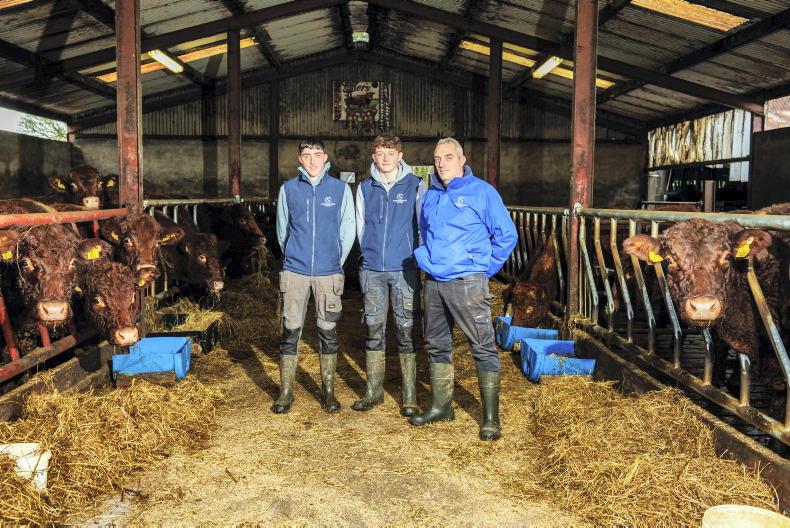
Donald Biggar of Chapelton Farm. They harvested winter barley earlier in the week which yielded over 3t/ac.
ADVERTISEMENT
We farm: “A total of 1,500ac. We keep a herd of 400 pedigree and commercial cows as well as a flock of about 850 ewes. I would be the sixth generation farming here and the seventh generation is coming through. I have two sons and James, the eldest son, is starting to take on more of the management responsibilities of the farm while Duncan, currently studying law, takes an active interest in the business.
This week: “We are just finishing up harvesting about 80ac of winter barley. It looks like a good straw yield this year at about 5-6 round bales/ac, which will be needed. We were pleasantly surprised with the barley too, with yields of over 3t/ac at moisture of 17-18%. We keep all the barley and straw for our own use. The barley is part of the rotation on the farm but it also helps us to insulate against the market prices.
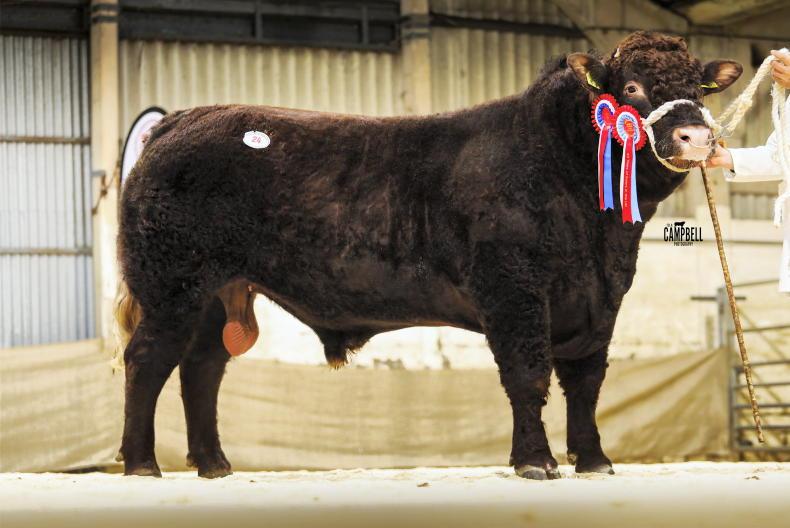
Breeding: “We keep pedigree herds of 75 Shorthorn cows and 75 Aberdeen Angus cows with a further 250 commercial cows which are a mixture of Shorthorn and Angus breeding. A lower-input cow really suits this farm and is viable for us. We try and keep a low-cost production system, producing about 300t of our own grain. Nearly all of the females bred on the farm would go for further breeding. We are Johnes risk level one which helps sales. Pedigree bulls would generally go for breeding at 15 months, sold off the farm with some presented at the principal sales in Stirling. Steers are finished at 19-20 months. The aim is to not house them for a second winter. Cattle are not pushed too hard here with meal with the majority of the diet coming from grass.
ADVERTISEMENT
Grass: “It has been a very unusual year, we are getting very tight on grass but these type of breeds can tolerate these conditions. First-cut silage was good but the second cut is looking meagre but we are going to take it now and go for a third cut to bulk up stocks, which would be very unusual for this farm. The second cut is starting to head out now so we will cut it. It won’t be huge but quality should be high. Ninety cast ewes will also be going this week to take some of the pressure off grass.
Quotable quote: “Cow type has got to be become more low-input to withstand this type of adverse weather. If you are feeding big suckler cows it can become difficult to be profitable.”
Register for free to read this story and our free stories.
This content is available to digital subscribers and loyalty code users only. Sign in to your account, use the code or subscribe to get unlimited access.
The reader loyalty code gives you full access to the site from when you enter it until the following Wednesday at 9pm. Find your unique code on the back page of Irish Country Living every week.
CODE ACCEPTED
You have full access to the site until next Wednesday at 9pm.
CODE NOT VALID
Please try again or contact support.
We farm: “A total of 1,500ac. We keep a herd of 400 pedigree and commercial cows as well as a flock of about 850 ewes. I would be the sixth generation farming here and the seventh generation is coming through. I have two sons and James, the eldest son, is starting to take on more of the management responsibilities of the farm while Duncan, currently studying law, takes an active interest in the business.
This week: “We are just finishing up harvesting about 80ac of winter barley. It looks like a good straw yield this year at about 5-6 round bales/ac, which will be needed. We were pleasantly surprised with the barley too, with yields of over 3t/ac at moisture of 17-18%. We keep all the barley and straw for our own use. The barley is part of the rotation on the farm but it also helps us to insulate against the market prices.
Breeding: “We keep pedigree herds of 75 Shorthorn cows and 75 Aberdeen Angus cows with a further 250 commercial cows which are a mixture of Shorthorn and Angus breeding. A lower-input cow really suits this farm and is viable for us. We try and keep a low-cost production system, producing about 300t of our own grain. Nearly all of the females bred on the farm would go for further breeding. We are Johnes risk level one which helps sales. Pedigree bulls would generally go for breeding at 15 months, sold off the farm with some presented at the principal sales in Stirling. Steers are finished at 19-20 months. The aim is to not house them for a second winter. Cattle are not pushed too hard here with meal with the majority of the diet coming from grass.
Grass: “It has been a very unusual year, we are getting very tight on grass but these type of breeds can tolerate these conditions. First-cut silage was good but the second cut is looking meagre but we are going to take it now and go for a third cut to bulk up stocks, which would be very unusual for this farm. The second cut is starting to head out now so we will cut it. It won’t be huge but quality should be high. Ninety cast ewes will also be going this week to take some of the pressure off grass.
Quotable quote: “Cow type has got to be become more low-input to withstand this type of adverse weather. If you are feeding big suckler cows it can become difficult to be profitable.”
If you would like to speak to a member of our team, please call us on 01-4199525.
Link sent to your email address
We have sent an email to your address. Please click on the link in this email to reset your password. If you can't find it in your inbox, please check your spam folder. If you can't find the email, please call us on 01-4199525.
ENTER YOUR LOYALTY CODE:
The reader loyalty code gives you full access to the site from when you enter it until the following Wednesday at 9pm. Find your unique code on the back page of Irish Country Living every week.





SHARING OPTIONS