New Astra comes with impressive headlamp technology
Opel has confirmed that the new Astra, which will arrive in Ireland this autumn, will feature new LED light technology called IntelliLux LED Matrix Light.
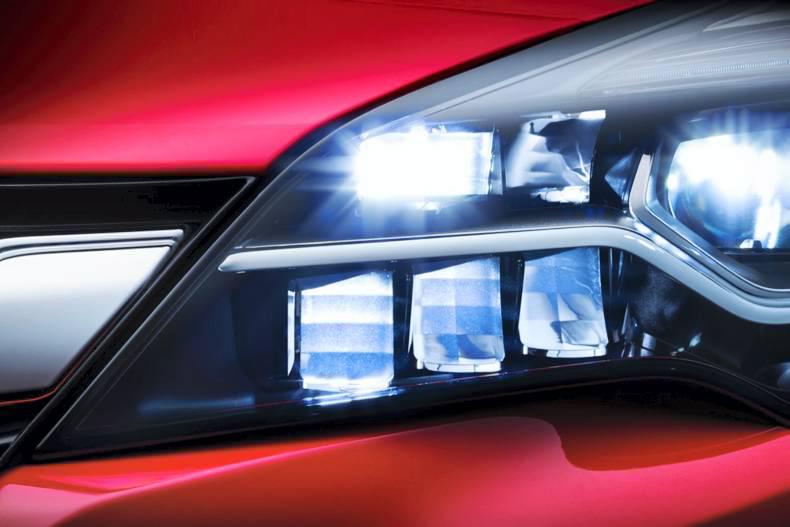
The new Opel Astra, due here in autumn, will be offered with the new Opel IntelliLux LED Matrix light system to give automatic light control.
ADVERTISEMENT
IntelliLux claims to enable driving with glare-free high beam lights by constantly adapting the length and distribution of the light beam in every traffic situation.
This is the first time that this light technology will be available in the compact class (C-segment). The lights consist of 16 LED segments, eight on each side of the vehicle. The IntelliLux system light system is continuously optimised without being linked to the navigation system.
The new LED matrix system claims to automatically and constantly adapt the length and distribution of the light beam. It works in conjunction with the Opel Eye front camera that detects the presence of other vehicles in motion so that the individual LED segments that would dazzle oncoming drivers are automatically switched off and on.
ADVERTISEMENT
As soon as the Astra leaves a street lit urban areas, the high-beam lighting is automatically switched on and it always remains on. Opel claims that this increases driver visibility as well as the safety as the lights do not dazzle other road users.
When the camera detects light sources from oncoming or preceding traffic, individual LEDs in the relevant zone are deactivated, simply “cutting out” the area around the vehicles. The rest of the road and its surroundings remain brightly illuminated, according to Opel.
This is confirmed in a study conducted by the Technical University of Darmstadt and the European LightSightSafety Initiative. The study found that at driving speeds of 80km/h, drivers detect objects at the side of the road around 30 to 40 metres sooner than with conventional halogen or xenon low beam lighting. This gives them around 1.5 seconds more time to react, for instance when animals suddenly cross the road.
Register for free to read this story and our free stories.
This content is available to digital subscribers and loyalty code users only. Sign in to your account, use the code or subscribe to get unlimited access.
However, if you would like to share the information in this article, you may use the headline, summary and link below:
Title: New Astra comes with impressive headlamp technology
Opel has confirmed that the new Astra, which will arrive in Ireland this autumn, will feature new LED light technology called IntelliLux LED Matrix Light.
The reader loyalty code gives you full access to the site from when you enter it until the following Wednesday at 9pm. Find your unique code on the back page of Irish Country Living every week.
CODE ACCEPTED
You have full access to the site until next Wednesday at 9pm.
CODE NOT VALID
Please try again or contact support.
IntelliLux claims to enable driving with glare-free high beam lights by constantly adapting the length and distribution of the light beam in every traffic situation.
This is the first time that this light technology will be available in the compact class (C-segment). The lights consist of 16 LED segments, eight on each side of the vehicle. The IntelliLux system light system is continuously optimised without being linked to the navigation system.
The new LED matrix system claims to automatically and constantly adapt the length and distribution of the light beam. It works in conjunction with the Opel Eye front camera that detects the presence of other vehicles in motion so that the individual LED segments that would dazzle oncoming drivers are automatically switched off and on.
As soon as the Astra leaves a street lit urban areas, the high-beam lighting is automatically switched on and it always remains on. Opel claims that this increases driver visibility as well as the safety as the lights do not dazzle other road users.
When the camera detects light sources from oncoming or preceding traffic, individual LEDs in the relevant zone are deactivated, simply “cutting out” the area around the vehicles. The rest of the road and its surroundings remain brightly illuminated, according to Opel.
This is confirmed in a study conducted by the Technical University of Darmstadt and the European LightSightSafety Initiative. The study found that at driving speeds of 80km/h, drivers detect objects at the side of the road around 30 to 40 metres sooner than with conventional halogen or xenon low beam lighting. This gives them around 1.5 seconds more time to react, for instance when animals suddenly cross the road.
If you would like to speak to a member of our team, please call us on 01-4199525.
Link sent to your email address
We have sent an email to your address. Please click on the link in this email to reset your password. If you can't find it in your inbox, please check your spam folder. If you can't find the email, please call us on 01-4199525.
ENTER YOUR LOYALTY CODE:
The reader loyalty code gives you full access to the site from when you enter it until the following Wednesday at 9pm. Find your unique code on the back page of Irish Country Living every week.





SHARING OPTIONS