


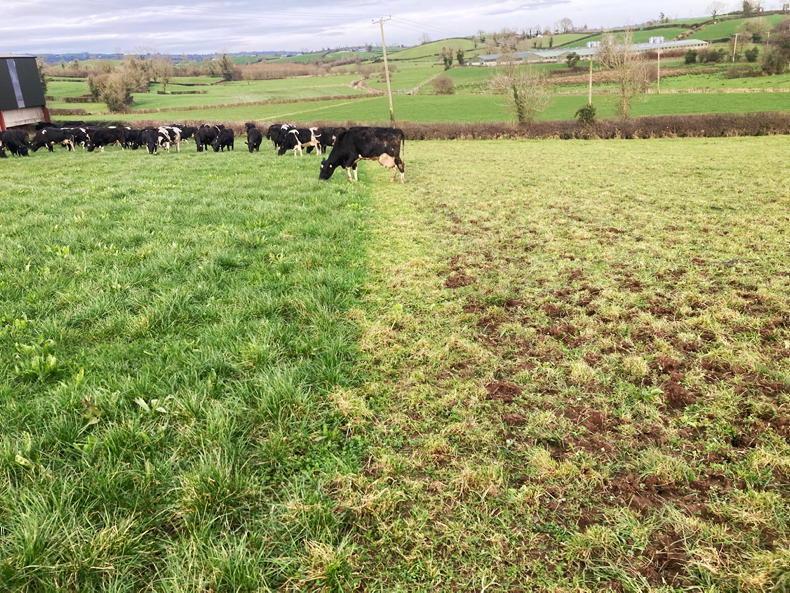
Grazing 2026 started in the usual fashion, with a growing dislike for scraping and bedding cubicles, along with an increasing number of fresh-calved cows needing some high-quality grass in the diet, being the main drivers to get cows out.
There are also a few grazing targets which we strive to meet every year, including to have 30% of the area grazed by early March, meaning there is adequate growth on second round grass for the herd at peak production in mid to late April.
The reason why we calve when we do is to ensure peak demand for grass occurs at a similar time as peak grass growth. Generally, all the parameters never match up fully and the targets this year have been missed, but that’s all part of the challenge.
Some may argue we should start calving a bit later to lower the risk of running out of grass in late April, but we like drying the cows off pre-Christmas and also want cows to have long lactations.
Grazing started on Monday 23 February. Refraining from filling the feed passage with silage, I took a quick walk over the ‘go to’ first paddock on the farm. The first break was set up, making a best estimate to allocate 6kg dry matter per head and the cows were released.
They did the usual dancing about and eventually settled to graze. After three hours I returned to bring them in to the shed again. The break wasn’t perfect, but the cows grazed it out pretty well and didn’t do any damage worth worrying about.
These three-hour spells of grazing continued at any opportunity and also on a few days when I probably should have kept them in the shed. There were also days when it was just too wet and the cows had to remain housed.
But the rain persisted further and so they were fully housed again. This came with the usual undesired drop in protein % and production, but also when the rain was hopping off the roof, reassurance that the right decision had been made.
We started grazing again after about a week in the shed, by day initially, slowly increasing the allocation of grass in the diet while reducing the level of silage at night.
On Sunday 8 March, I lifted the break fence, giving the cows the rest of the paddock to graze that night, while hopping it didn’t lead to any disasters in the morning.
They were only out for three nights, but it all helped to catch up on the area grazed for the second rotation. They were annoyingly fully housed again, then out by day, then out full-time again.
Given the forecast at the start of this week, I image they will be housed at night again. Hopefully we’ll be fit to keep them out at least for a three-hour grazing to keep grass in the diet, while chipping away at the first rotation missed targets.
Effort
At times I do question it, but hopefully the effort will be rewarded in early May with lots of milk solids in the tank from a predominately grazed grass diet.



SHARING OPTIONS