


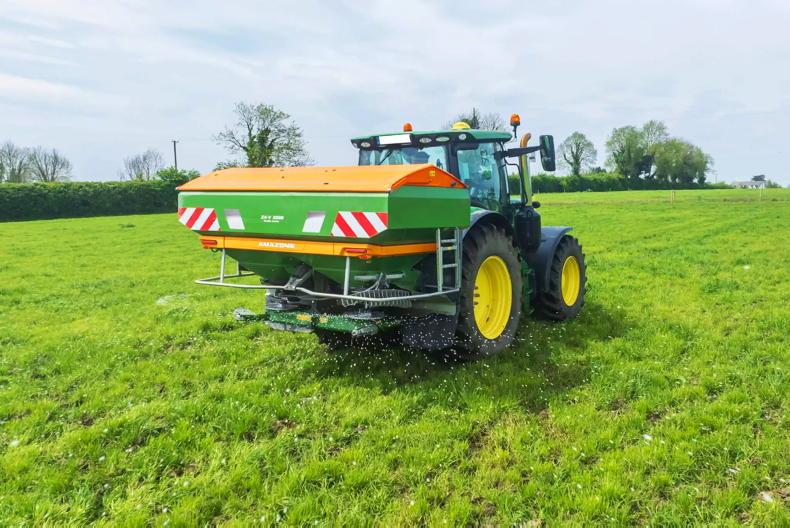
British fertiliser prices have increased by 25% to 36% over the last three months, according to a survey carried out by the Agriculture and Horticulture Development Board (AHDB).
The survey shows that granular urea (46% nitrogen [N]) costs have increased by 36% since January. The farmgate price has risen by £127/t (€146/t), jumping from £491/t (€564/t) to £618/t (€711/t).
The cost of UK-produced ammonium nitrate (34.5% N) has increased by 25% since January. The farmgate price rose from £393/t (€452/t) in January to £504/t (€579/t) last week, an increase of £111/t (€127/t).
The cost of imported ammonium nitrate (34.5% N) has jumped by 29%. The product was priced at £399/t (€459/t) in January, but has increased to £522/t (€600/t) over the last three months. This is an increase of £123/t (€141/t).
Irish costs higher
While the British urea price has increased sharply since Christmas, the cost to farmers is still almost €90/t below that being paid by their Irish counterparts.
This is due in part to the EU carbon border adjustment mechanism (CBAM) not being applicable in Britain.
In fact, the British equivalent to CBAM will not be in place until next year.
However, in its commentary around the price survey, the AHDB pointed out that the introduction of the CBAM had affected the price of fertiliser imports into Britain from the EU.
As with Irish fertiliser costs, the conflict in the Middle East remains the main driver of price increases in Britain.
“Most arable farmers have bought fertiliser for this year’s crops. However, the impacts of the increased prices will be felt as businesses start planning ahead for harvest 2027,” the AHDB maintained.
“In the short term, the increased prices will mostly impact livestock farmers or those who have not already bought enough to meet their full requirements,” it added.



SHARING OPTIONS