Irish farming stands at a turning point. Our sector has never been more visible, more regulated, or more discussed, yet rarely by those who actually work the land.
The public debate about food, the environment, and rural life has become a battleground of perception, where farmers too often find themselves defending their existence rather than defining their future, and that must change.
Across six continents, during my Nuffield scholarship research, one lesson came through again and again: those that lead the conversation shape the road ahead. Those that merely react get written out of the story.
The narrative
For decades, Irish farmers enjoyed deep public trust, but that same trust today must be earned, not inherited.
Environmental expectations, urbanisation, and social media have transformed how people see agriculture.
When Ireland’s Environmental Protection Agency (EPA) suggested online that people should eat less red meat to be “healthier, wealthier and more fabulous”, it wasn’t policy, it was PR. But it showed how far removed the conversation about food has drifted from the realities
of farming.
If farmers don’t challenge these narratives with facts, transparency, and their own voices, those headlines will stick.
Once the story hardens, the policy soon follows.
Irish farming’s influence once commanded respect, even fear, in political circles. Former Minister Ivan Yates recalls that governments were “half afraid of farmers”.
That’s no longer the case.
Multiple organisations now compete to speak for agriculture, often at cross purposes. As former Minister Simon Coveney notes “the more fragmented the representation, the less clarity there is on message.” In Brussels, that lack of unity weakens Ireland’s hand, and at home, it confuses
the public.
It’s not that farmers have nothing to say, it’s that too many are saying it separately. A coherent, farmer-led narrative built around shared purpose and long-term vision would carry far more weight than another round of reactive statements.
Defensiveness has become a default mode, especially online.
But outrage and rebuttal rarely change minds. They serve to feed algorithms, not understanding.
Journalist and farmer Darragh McCullough puts it bluntly: “If your narrative is a bad one, it’ll still stink no matter how nicely you tell everyone it smells.”
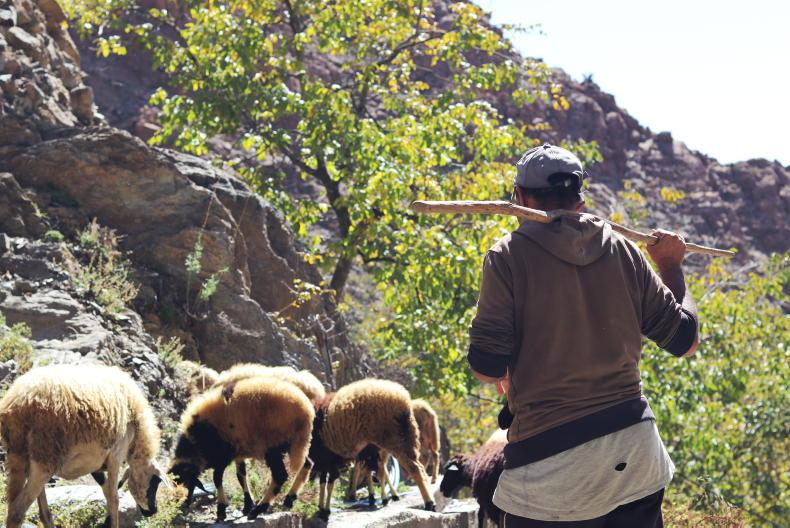
A shepherd herds his flock in the mountains of Morocco.
The credibility farmers need won’t come from polished slogans or crisis PR.
It comes from authenticity, from people speaking openly about what they do, why they do it, and how they’re improving.
That’s the thinking behind Bord Bia’s new Our Food Connects initiative, but its success will depend on farmers being at the centre of it, not on the sidelines.
Consumers trust people, not press releases.
The quickest route to change is reward, not regulation. New Zealand’s Fonterra co-op pays differential milk prices based on environmental performance, a small gap today that’s already shifting behaviour. Irish co-ops have also introduced milk price-based rewards for sustainability actions.
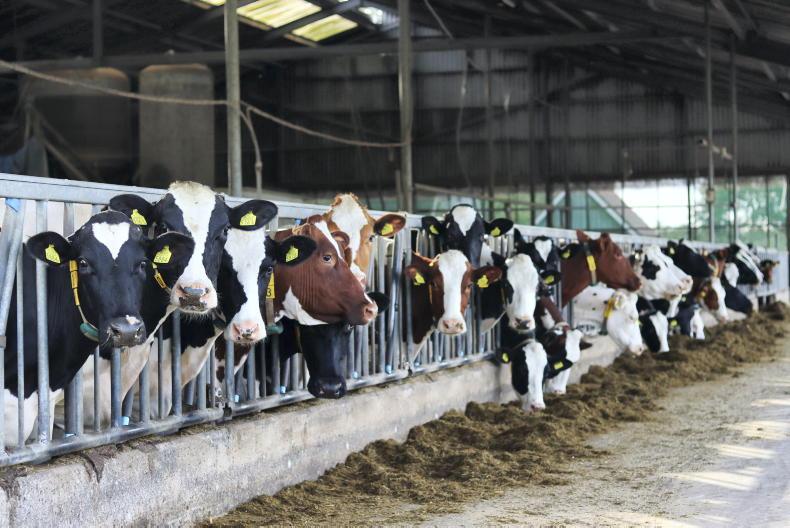
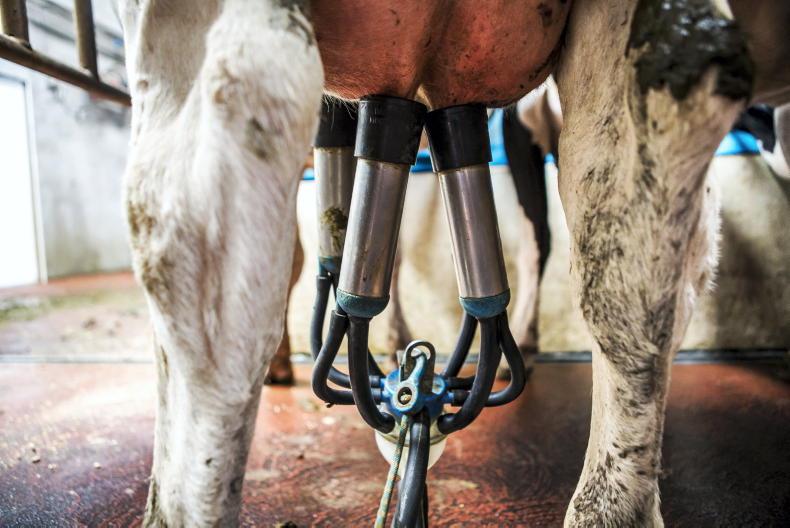
Cows in the Netherlands.
Ireland has begun to adopt that model within the CAP. Farmers who go beyond compliance on water, emissions, or biodiversity should see that effort reflected in their payments. It would show the public that sustainability isn’t just rhetoric, it’s rewarded. At the same time, scrapping the CAP or dismantling supports would be self-defeating. The answer is smarter, fairer, and more targeted funding that values public goods as well as food production.
Reconnecting people with farming starts long before adulthood. Agricultural science should be a core subject in schools, not a niche choice for rural pupils.
In Switzerland, city children regularly visit farms; they see that agriculture is not a problem to solve but a partner in sustainability. Ireland could do the same.
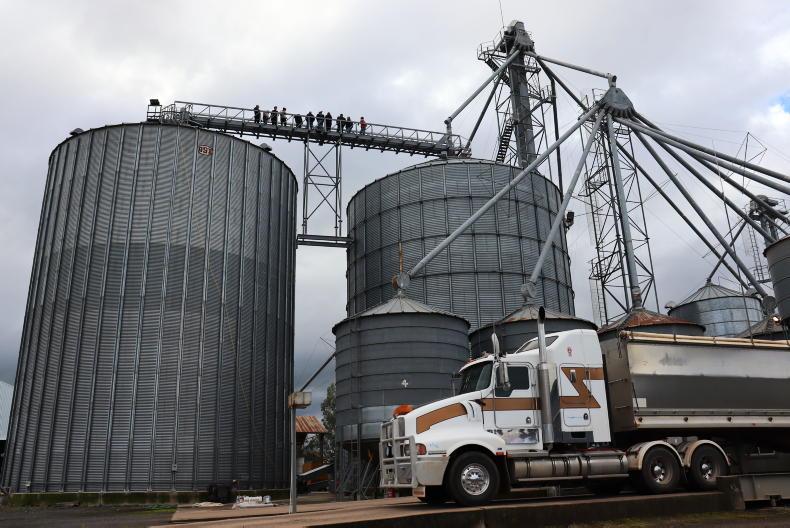
Grain silos on the Gunn and Davidson farm in Australia.
While we talk about sustainability, we must also sustain the people who make it possible.
European Commissioner for Agriculture Christophe Hansen warned that suicide rates among farmers are far higher than the EU average.
Research at DCU found one in four Irish farmers showing signs of burnout.
Bureaucracy, public pressure, and financial strain are taking a toll that no balance sheet records.
The mental health of farmers is part of the story too, one that deserves as much attention as emissions targets.
Ireland’s presidency of the EU Council in 2026 offers a rare platform to redefine agriculture’s image in Europe.
Rather than treating it as a ceremonial duty, the government and farm leaders should use it to showcase how a small island nation can produce world-class food while striving to meet ambitious climate goals.
But to seize that moment, Ireland must first speak with one voice; confident, constructive, and united.
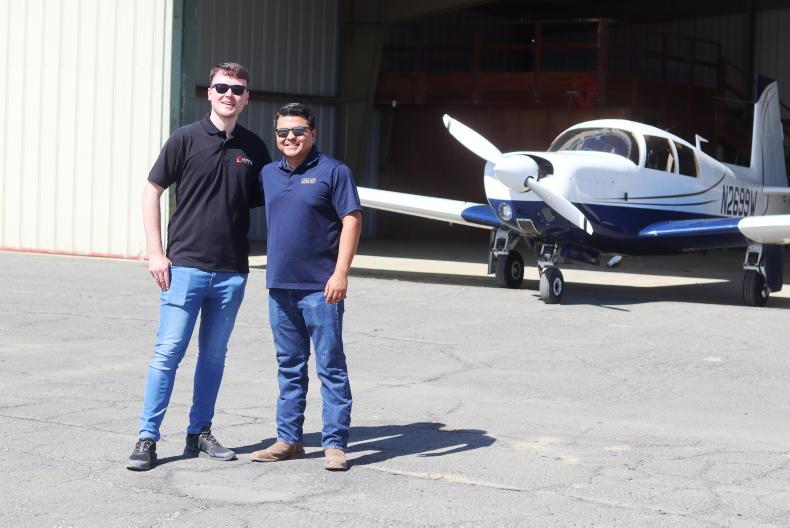
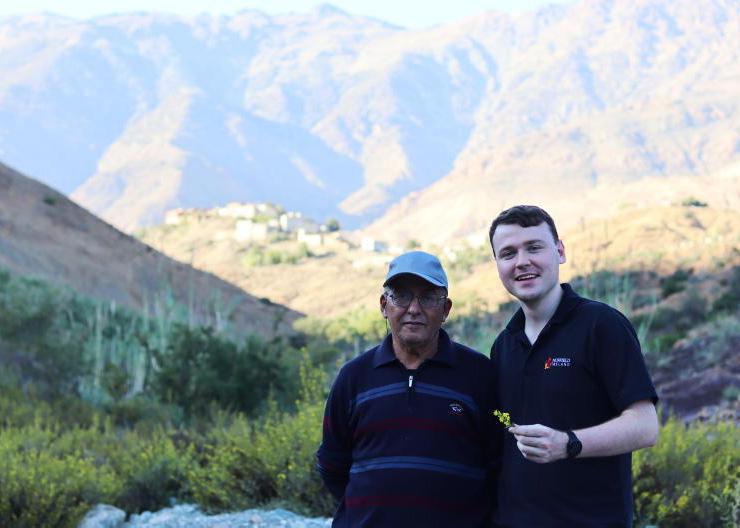
Niall Hurson and Nuffield USA scholar Martin Chavez.
This Nuffield journey taught me that farming’s future will not be secured by policy alone, but by perception, by how farmers are seen, heard, and believed.
The world is watching agriculture more closely than ever.
If we let others frame the story, we’ll spend the next decade defending ourselves.
But if we define it, with honesty, courage, and a clear sense of purpose, we can shape a future that works for farmers, consumers, and the planet alike.
Because the future of farming truly does belong to those who can define it, not those who defend it.
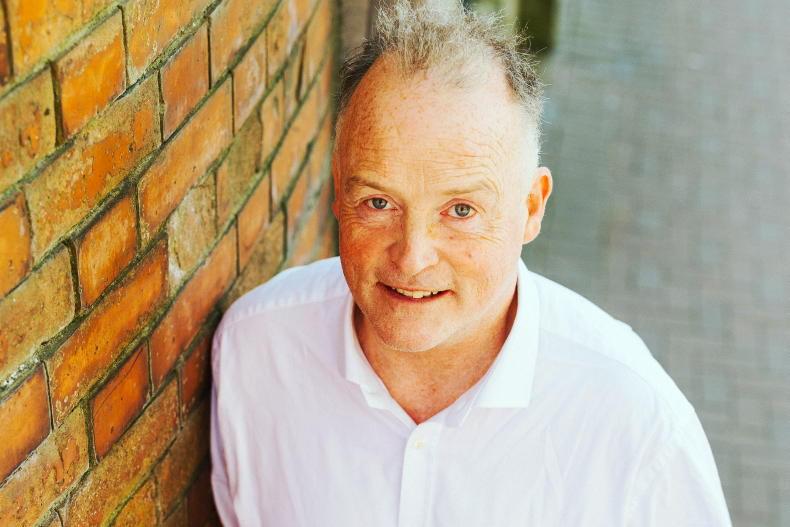
Niall Hurson is a 2024 Nuffield Ireland scholar.
Irish farming stands at a turning point. Our sector has never been more visible, more regulated, or more discussed, yet rarely by those who actually work the land.
The public debate about food, the environment, and rural life has become a battleground of perception, where farmers too often find themselves defending their existence rather than defining their future, and that must change.
Across six continents, during my Nuffield scholarship research, one lesson came through again and again: those that lead the conversation shape the road ahead. Those that merely react get written out of the story.
The narrative
For decades, Irish farmers enjoyed deep public trust, but that same trust today must be earned, not inherited.
Environmental expectations, urbanisation, and social media have transformed how people see agriculture.
When Ireland’s Environmental Protection Agency (EPA) suggested online that people should eat less red meat to be “healthier, wealthier and more fabulous”, it wasn’t policy, it was PR. But it showed how far removed the conversation about food has drifted from the realities
of farming.
If farmers don’t challenge these narratives with facts, transparency, and their own voices, those headlines will stick.
Once the story hardens, the policy soon follows.
Irish farming’s influence once commanded respect, even fear, in political circles. Former Minister Ivan Yates recalls that governments were “half afraid of farmers”.
That’s no longer the case.
Multiple organisations now compete to speak for agriculture, often at cross purposes. As former Minister Simon Coveney notes “the more fragmented the representation, the less clarity there is on message.” In Brussels, that lack of unity weakens Ireland’s hand, and at home, it confuses
the public.
It’s not that farmers have nothing to say, it’s that too many are saying it separately. A coherent, farmer-led narrative built around shared purpose and long-term vision would carry far more weight than another round of reactive statements.
Defensiveness has become a default mode, especially online.
But outrage and rebuttal rarely change minds. They serve to feed algorithms, not understanding.
Journalist and farmer Darragh McCullough puts it bluntly: “If your narrative is a bad one, it’ll still stink no matter how nicely you tell everyone it smells.”
A shepherd herds his flock in the mountains of Morocco.
The credibility farmers need won’t come from polished slogans or crisis PR.
It comes from authenticity, from people speaking openly about what they do, why they do it, and how they’re improving.
That’s the thinking behind Bord Bia’s new Our Food Connects initiative, but its success will depend on farmers being at the centre of it, not on the sidelines.
Consumers trust people, not press releases.
The quickest route to change is reward, not regulation. New Zealand’s Fonterra co-op pays differential milk prices based on environmental performance, a small gap today that’s already shifting behaviour. Irish co-ops have also introduced milk price-based rewards for sustainability actions.
Cows in the Netherlands.
Ireland has begun to adopt that model within the CAP. Farmers who go beyond compliance on water, emissions, or biodiversity should see that effort reflected in their payments. It would show the public that sustainability isn’t just rhetoric, it’s rewarded. At the same time, scrapping the CAP or dismantling supports would be self-defeating. The answer is smarter, fairer, and more targeted funding that values public goods as well as food production.
Reconnecting people with farming starts long before adulthood. Agricultural science should be a core subject in schools, not a niche choice for rural pupils.
In Switzerland, city children regularly visit farms; they see that agriculture is not a problem to solve but a partner in sustainability. Ireland could do the same.
Grain silos on the Gunn and Davidson farm in Australia.
While we talk about sustainability, we must also sustain the people who make it possible.
European Commissioner for Agriculture Christophe Hansen warned that suicide rates among farmers are far higher than the EU average.
Research at DCU found one in four Irish farmers showing signs of burnout.
Bureaucracy, public pressure, and financial strain are taking a toll that no balance sheet records.
The mental health of farmers is part of the story too, one that deserves as much attention as emissions targets.
Ireland’s presidency of the EU Council in 2026 offers a rare platform to redefine agriculture’s image in Europe.
Rather than treating it as a ceremonial duty, the government and farm leaders should use it to showcase how a small island nation can produce world-class food while striving to meet ambitious climate goals.
But to seize that moment, Ireland must first speak with one voice; confident, constructive, and united.
Niall Hurson and Nuffield USA scholar Martin Chavez.
This Nuffield journey taught me that farming’s future will not be secured by policy alone, but by perception, by how farmers are seen, heard, and believed.
The world is watching agriculture more closely than ever.
If we let others frame the story, we’ll spend the next decade defending ourselves.
But if we define it, with honesty, courage, and a clear sense of purpose, we can shape a future that works for farmers, consumers, and the planet alike.
Because the future of farming truly does belong to those who can define it, not those who defend it.
Niall Hurson is a 2024 Nuffield Ireland scholar.






SHARING OPTIONS