At the outset of my studies, I believed that bovine TB eradication in Ireland was simply a matter of sufficient funding, consistent implementation of science-based measures, and the courage to make tough decisions.
The journey since has revealed something far more complex, a disease deeply entangled not only in biology and science, but also in culture, history, and social realities.
In 1957 when Ireland’s national eradication programme began, Ireland had around 250,000 herds with 4.5m cattle, and reactor incidence was 17%. By 2016, the herd incidence had fallen to a historic low of 3.27%.
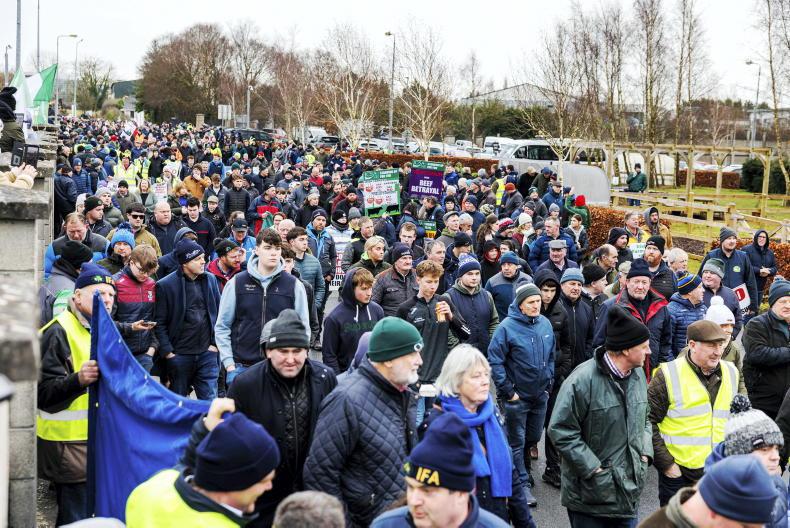
Yet progress has since reversed. Herd incidence rose to 4.33% in 2021, and continued upwards through 2023 and 2024. Now, in 2025, herd incidence has risen above 6%. This isn’t just a herd; it’s a farmer and their family behind each breakdown.
Programme costs have escalated too, with exchequer expenditure of €82m in 2015 rising to over €100m in 2024, and with a budget allocation of €157m for 2026, while farmers face hidden costs in lost production, labour, and stress.

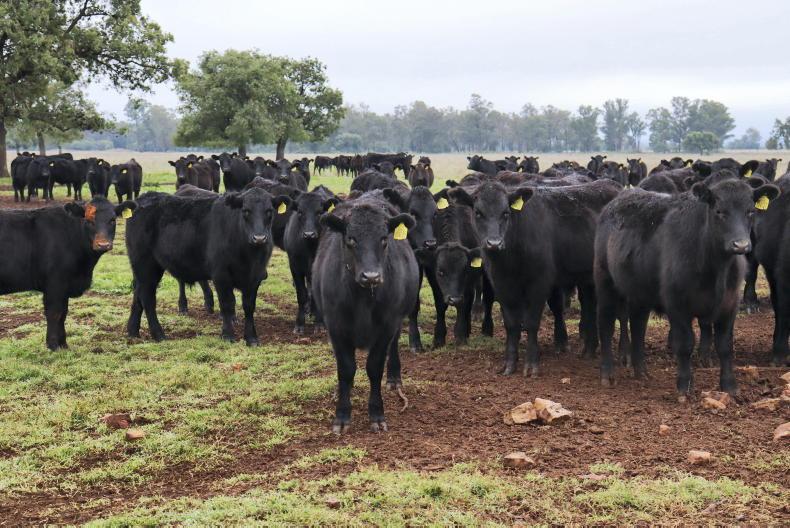
Catlle being loaded for TB testing in a crush in America.
Culture counts as much as science
While science must remain central, the wider cultural and social implications also play an integral part in eradication efforts. New Zealand’s approach, based on regionalisation and tough measures consistently implemented on both wildlife and herds experiencing a breakdown, has proved successful.
Developing a regionalisation approach to disease eradication has been proven in both Australia and New Zealand to be effective at reducing herd incidence and reactor numbers. At present both England and Wales are implementing a regionalised approach to TB disease management. A pilot “proof of concept” trial for regionalisation is also planned to be implemented in Northern Ireland in the coming years.
Technological advances offer new possibilities. Whole genome sequencing can illuminate transmission pathways and sharpen decision-making. Genetic selection for natural resistance within cattle breeding programmes deserves investment.
Ongoing vaccine development work in the UK is a significant opportunity for TB eradication efforts in Ireland. If a market-deployable vaccine is ready for use in the coming years, Ireland needs to be prepared for its introduction.
To this end it is essential that the Department of Agriculture continues to engage with the Animal and Plant Health Agency (APHA) in the UK and support trials and research as appropriate. Some uncertainties remain around the deployment of such a vaccine.
Issues around market access for products coming from vaccinated livestock is currently a regulatory issue. Efficacy of the vaccine is also an area where earlier trials conducted in Mexico, New Zealand and Ethiopia have yielded conflicting results.

Weanling heifers being prepared for TB testing in New Zealand.
Measures critical
Farm-level measures are also critical. International experience from New Zealand, Australia, the UK and beyond proves the importance of strong biosecurity and movement controls.
These measures can be burdensome, yet Irish farmers who have endured breakdowns consistently told me: “I would take the hit and the heartache if I knew it wouldn’t happen again.” That sentiment underscores the need for measures with proven efficacy abroad to be adopted here unless there is strong justification against them.
Risk-based trading, stricter cattle movement oversight, and routine farm-level biosecurity planning should all form part of annual herd health strategies, not just crisis responses.

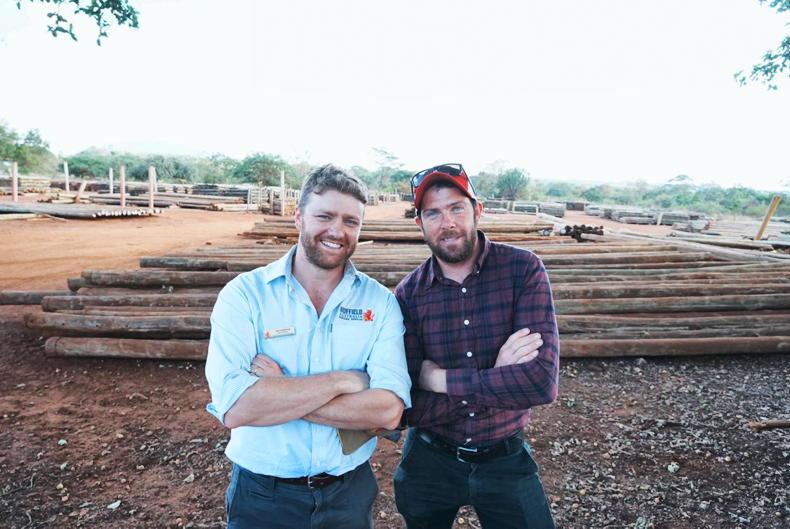
John Keane with Kenyan dairy farmer Mary Blackbeard on her farm in Kenya.
Radical overhaul is required in Ireland
The eradication programme in Ireland needs a radical overhaul. Measures introduced in September 2025 by Minister for Agriculture Martin Heydon around testing and animal movements are grounded in science and will find disease sooner and reduce onward transmission. However, the 30-point action plan has no targets set for herd incidence or reactor numbers for the years ahead based on the implementation of the new measures.
In the absence of a complete overhaul of all aspects of the programme including wildlife management, cattle transmission pathways and targeted implementation of specific area-based measures, a “new” action plan will be developed every few years, and farmers will continue to bear the brunt of the failures.
International best practice has shown that in order for the disease to be eradicated there needs to be a public–private agency tasked with the management of the eradication programme, with regional structure-based underneath it similar to what exists within many of our dairy co-ops.
A regionalised approach to disease management in terms of wildlife and cattle is needed. Front loading of funding for focused, targeted, on the ground, implementable measures. More staff for wildlife management and farmer support is needed. All the above must then be consistently implemented across all areas. Consistency is key. My Nuffield report extends to over 60 recommendations all grounded in international learnings and science.
To avoid the looming “tragedy on the horizon”, Ireland must confront uncomfortable realities, reform wildlife control, embrace technological innovation, adopt global best practice, and balance cultural considerations with scientific imperatives. Only then can we hope to achieve true eradication of TB.
At the outset of my studies, I believed that bovine TB eradication in Ireland was simply a matter of sufficient funding, consistent implementation of science-based measures, and the courage to make tough decisions.
The journey since has revealed something far more complex, a disease deeply entangled not only in biology and science, but also in culture, history, and social realities.
In 1957 when Ireland’s national eradication programme began, Ireland had around 250,000 herds with 4.5m cattle, and reactor incidence was 17%. By 2016, the herd incidence had fallen to a historic low of 3.27%.
Yet progress has since reversed. Herd incidence rose to 4.33% in 2021, and continued upwards through 2023 and 2024. Now, in 2025, herd incidence has risen above 6%. This isn’t just a herd; it’s a farmer and their family behind each breakdown.
Programme costs have escalated too, with exchequer expenditure of €82m in 2015 rising to over €100m in 2024, and with a budget allocation of €157m for 2026, while farmers face hidden costs in lost production, labour, and stress.
Catlle being loaded for TB testing in a crush in America.
Culture counts as much as science
While science must remain central, the wider cultural and social implications also play an integral part in eradication efforts. New Zealand’s approach, based on regionalisation and tough measures consistently implemented on both wildlife and herds experiencing a breakdown, has proved successful.
Developing a regionalisation approach to disease eradication has been proven in both Australia and New Zealand to be effective at reducing herd incidence and reactor numbers. At present both England and Wales are implementing a regionalised approach to TB disease management. A pilot “proof of concept” trial for regionalisation is also planned to be implemented in Northern Ireland in the coming years.
Technological advances offer new possibilities. Whole genome sequencing can illuminate transmission pathways and sharpen decision-making. Genetic selection for natural resistance within cattle breeding programmes deserves investment.
Ongoing vaccine development work in the UK is a significant opportunity for TB eradication efforts in Ireland. If a market-deployable vaccine is ready for use in the coming years, Ireland needs to be prepared for its introduction.
To this end it is essential that the Department of Agriculture continues to engage with the Animal and Plant Health Agency (APHA) in the UK and support trials and research as appropriate. Some uncertainties remain around the deployment of such a vaccine.
Issues around market access for products coming from vaccinated livestock is currently a regulatory issue. Efficacy of the vaccine is also an area where earlier trials conducted in Mexico, New Zealand and Ethiopia have yielded conflicting results.
Weanling heifers being prepared for TB testing in New Zealand.
Measures critical
Farm-level measures are also critical. International experience from New Zealand, Australia, the UK and beyond proves the importance of strong biosecurity and movement controls.
These measures can be burdensome, yet Irish farmers who have endured breakdowns consistently told me: “I would take the hit and the heartache if I knew it wouldn’t happen again.” That sentiment underscores the need for measures with proven efficacy abroad to be adopted here unless there is strong justification against them.
Risk-based trading, stricter cattle movement oversight, and routine farm-level biosecurity planning should all form part of annual herd health strategies, not just crisis responses.
John Keane with Kenyan dairy farmer Mary Blackbeard on her farm in Kenya.
Radical overhaul is required in Ireland
The eradication programme in Ireland needs a radical overhaul. Measures introduced in September 2025 by Minister for Agriculture Martin Heydon around testing and animal movements are grounded in science and will find disease sooner and reduce onward transmission. However, the 30-point action plan has no targets set for herd incidence or reactor numbers for the years ahead based on the implementation of the new measures.
In the absence of a complete overhaul of all aspects of the programme including wildlife management, cattle transmission pathways and targeted implementation of specific area-based measures, a “new” action plan will be developed every few years, and farmers will continue to bear the brunt of the failures.
International best practice has shown that in order for the disease to be eradicated there needs to be a public–private agency tasked with the management of the eradication programme, with regional structure-based underneath it similar to what exists within many of our dairy co-ops.
A regionalised approach to disease management in terms of wildlife and cattle is needed. Front loading of funding for focused, targeted, on the ground, implementable measures. More staff for wildlife management and farmer support is needed. All the above must then be consistently implemented across all areas. Consistency is key. My Nuffield report extends to over 60 recommendations all grounded in international learnings and science.
To avoid the looming “tragedy on the horizon”, Ireland must confront uncomfortable realities, reform wildlife control, embrace technological innovation, adopt global best practice, and balance cultural considerations with scientific imperatives. Only then can we hope to achieve true eradication of TB.






SHARING OPTIONS