After spending two years travelling on my Nuffield scholarship through some of the world’s biggest beef-producing regions, from the dusty plains of Nebraska to the tropical heat of the Amazon and the beef-soaked streets of Buenos Aires, one thing became abundantly clear: Ireland may be small, but we punch far above our weight.
And if we play our cards right, we can continue to do so in a global beef market that’s about to get a whole lot more competitive.
My Nuffield research set out to answer one simple but uncomfortable question: how do we future-proof Irish beef in an era of globalisation, falling EU production, and the looming Mercosur deal?
Brazil, as I quickly learned, is a beef machine. For 30 days straight, I ate Brazilian beef sometimes twice a day. But what struck me most wasn’t the volume; it was the potential. The country is a “sleeping lion” of global beef production, poised to take an even bigger share of world markets.
Yes, deforestation and lack of traceability dog its reputation. But when a shopper in Birmingham sees Brazilian burgers for £5 less than the Irish ones, it’s amazing how quickly the rainforest slips their mind. This is the challenge Irish beef faces – global competition that’s cheaper, faster and increasingly well-marketed.

Nelore cattle graze under Teka trees in Brazil. \ Michael Martin

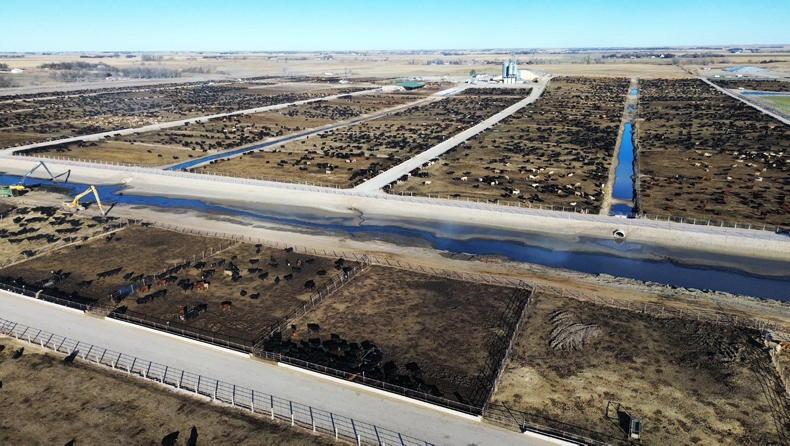
A feedlot in Brazil. \ Michael Martin
Europe is shrinking
While Brazil grows, Europe retreats. France, Germany and Italy have all seen beef production fall, with France predicting a 30% reduction by 2035.
Succession, regulation, and plain old poor profitability are driving farmers out.
Herein lies Ireland’s golden opportunity. As Europe winds down, we can step up if we protect the family farm model that underpins our own production. Over 90% of Irish beef is exported, half of it into the EU. Without that market, our farm incomes would collapse by 30% overnight.
We can’t match Brazil on scale or the US on efficiency (growth hormones). But we can beat both on trust, traceability and quality.
During my travels, one comparison hit home: Brazil determines the age of cattle at slaughter by counting the teeth in their head on an abattoir line; an Irish farmer could tell you the calf’s birthday, parentage, and probably what the weather was like that morning too.
This is our superpower. But we’ve gotten lazy in how we tell that story.
Countries like Uruguay and Argentina have mastered the art of beef branding. Meanwhile, Ireland often leans on the same old “green fields, happy cows” approach, while the world around us gets more sophisticated.
If we don’t up our game, we risk becoming the quiet lad in the corner of the party – nice, polite, but forgotten about.

Angus cows grazing maize tops in Colorado State University research farm. \ Michael Martin
Dairy beef
Over two-thirds of Irish beef now originates in the dairy herd. And while that relationship has always been a bit like a marriage of convenience, we have improved greatly in recent years with better calves, better breeding decisions, and a system that encourages dairy farmers to produce animals beef farmers actually want to buy.
Mandatory genotyping, more widespread use of sexed semen, and a dedicated dairy-beef quality assurance label could revolutionise the value and reputation of dairy-origin beef. If live exports falter, we’ll need these calves to stay and thrive at home.
One of my key recommendations is the introduction of a €100/head beef finishing bonus for farmers finishing fewer than 50 cattle using 100% Irish-grown grain. Why? Because 27% of our beef is now coming from controlled finishing units, and that’s not the Ireland consumers believe in or want to buy from.
This bonus packs three benefits into one:
1. For the small family farms that anchor rural Ireland.2. For the tillage sector crying out for stable markets. 3. For the image of Irish beef as local, traceable, and sustainably produced.
Michael Martin at the Fort Worth stock yards.
Next level traceability
One of the most exciting opportunities for Ireland lies in taking our already-strong traceability system to the next level.
Imagine a simple QR code printed on a steak in a Paris supermarket that, when scanned, brings the consumer directly to the Irish farm where that animal was reared, showing the fields, the farmer and verified carbon, welfare and environmental data.
While other countries are only starting to talk about transparency, Ireland has the infrastructure to deliver it now and use it as a premium selling point in an increasingly climate-conscious European market.
Consumers ultimately decide our fate, yet many don’t know a Hereford from a horsebox. That’s why I’m proposing farm to fork workshops in every primary school in Ireland.
I piloted one in Rathnure and found children deeply curious once they saw the link between Irish farms and their dinner plates.
Educate the kids, influence the parents, and build tomorrow’s informed consumers today.
Ireland will never win on scale or price, but we can lead Europe by doing what no one else can: backing our family farms, producing quality dairy-beef with purpose, and proving every steak’s story with world-class traceability.
If we invest in the people and systems that make Irish beef unique, we can fill Europe’s growing supply gap with confidence. In a global race to the bottom, Ireland’s future lies in standing proudly at the top.
After spending two years travelling on my Nuffield scholarship through some of the world’s biggest beef-producing regions, from the dusty plains of Nebraska to the tropical heat of the Amazon and the beef-soaked streets of Buenos Aires, one thing became abundantly clear: Ireland may be small, but we punch far above our weight.
And if we play our cards right, we can continue to do so in a global beef market that’s about to get a whole lot more competitive.
My Nuffield research set out to answer one simple but uncomfortable question: how do we future-proof Irish beef in an era of globalisation, falling EU production, and the looming Mercosur deal?
Brazil, as I quickly learned, is a beef machine. For 30 days straight, I ate Brazilian beef sometimes twice a day. But what struck me most wasn’t the volume; it was the potential. The country is a “sleeping lion” of global beef production, poised to take an even bigger share of world markets.
Yes, deforestation and lack of traceability dog its reputation. But when a shopper in Birmingham sees Brazilian burgers for £5 less than the Irish ones, it’s amazing how quickly the rainforest slips their mind. This is the challenge Irish beef faces – global competition that’s cheaper, faster and increasingly well-marketed.
Nelore cattle graze under Teka trees in Brazil. \ Michael Martin
A feedlot in Brazil. \ Michael Martin
Europe is shrinking
While Brazil grows, Europe retreats. France, Germany and Italy have all seen beef production fall, with France predicting a 30% reduction by 2035.
Succession, regulation, and plain old poor profitability are driving farmers out.
Herein lies Ireland’s golden opportunity. As Europe winds down, we can step up if we protect the family farm model that underpins our own production. Over 90% of Irish beef is exported, half of it into the EU. Without that market, our farm incomes would collapse by 30% overnight.
We can’t match Brazil on scale or the US on efficiency (growth hormones). But we can beat both on trust, traceability and quality.
During my travels, one comparison hit home: Brazil determines the age of cattle at slaughter by counting the teeth in their head on an abattoir line; an Irish farmer could tell you the calf’s birthday, parentage, and probably what the weather was like that morning too.
This is our superpower. But we’ve gotten lazy in how we tell that story.
Countries like Uruguay and Argentina have mastered the art of beef branding. Meanwhile, Ireland often leans on the same old “green fields, happy cows” approach, while the world around us gets more sophisticated.
If we don’t up our game, we risk becoming the quiet lad in the corner of the party – nice, polite, but forgotten about.
Angus cows grazing maize tops in Colorado State University research farm. \ Michael Martin
Dairy beef
Over two-thirds of Irish beef now originates in the dairy herd. And while that relationship has always been a bit like a marriage of convenience, we have improved greatly in recent years with better calves, better breeding decisions, and a system that encourages dairy farmers to produce animals beef farmers actually want to buy.
Mandatory genotyping, more widespread use of sexed semen, and a dedicated dairy-beef quality assurance label could revolutionise the value and reputation of dairy-origin beef. If live exports falter, we’ll need these calves to stay and thrive at home.
One of my key recommendations is the introduction of a €100/head beef finishing bonus for farmers finishing fewer than 50 cattle using 100% Irish-grown grain. Why? Because 27% of our beef is now coming from controlled finishing units, and that’s not the Ireland consumers believe in or want to buy from.
This bonus packs three benefits into one:
1. For the small family farms that anchor rural Ireland.2. For the tillage sector crying out for stable markets. 3. For the image of Irish beef as local, traceable, and sustainably produced.
Michael Martin at the Fort Worth stock yards.
Next level traceability
One of the most exciting opportunities for Ireland lies in taking our already-strong traceability system to the next level.
Imagine a simple QR code printed on a steak in a Paris supermarket that, when scanned, brings the consumer directly to the Irish farm where that animal was reared, showing the fields, the farmer and verified carbon, welfare and environmental data.
While other countries are only starting to talk about transparency, Ireland has the infrastructure to deliver it now and use it as a premium selling point in an increasingly climate-conscious European market.
Consumers ultimately decide our fate, yet many don’t know a Hereford from a horsebox. That’s why I’m proposing farm to fork workshops in every primary school in Ireland.
I piloted one in Rathnure and found children deeply curious once they saw the link between Irish farms and their dinner plates.
Educate the kids, influence the parents, and build tomorrow’s informed consumers today.
Ireland will never win on scale or price, but we can lead Europe by doing what no one else can: backing our family farms, producing quality dairy-beef with purpose, and proving every steak’s story with world-class traceability.
If we invest in the people and systems that make Irish beef unique, we can fill Europe’s growing supply gap with confidence. In a global race to the bottom, Ireland’s future lies in standing proudly at the top.






SHARING OPTIONS