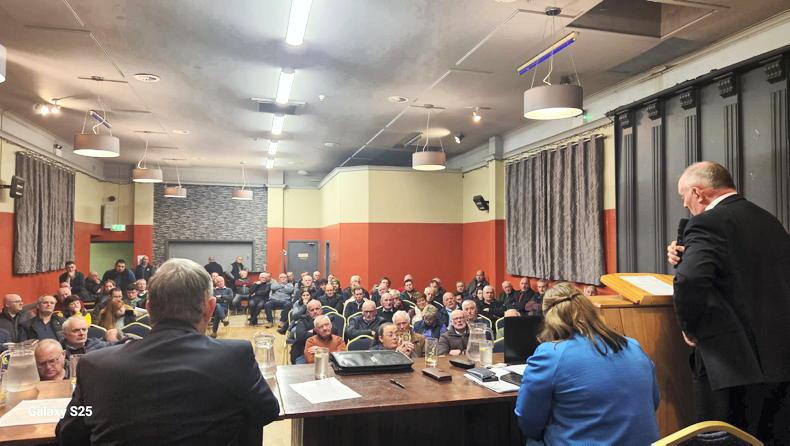
Francie Gorman didn't mince his words last Monday night. The IFA president was speaking at the Wexford AGM, and knew he was on safe ground for the agenda he wanted to pursue.
"In my view, we have got to reward activity," he said. "Otherwise, how would anyone get young farmers into the business. No one would want to come home and farm. We need to have an honest discussion within the association around where this money goes and who it supports. I know there may be blood on the floor in the Farm Centre discussing it, but we owe it to our members to have an honest discussion on that.
"I don’t know what it looks like, but for me, CAP funding should be in the main used to support people who grow the crops, calve cows, lamb ewes or whatever," he said.
I don’t think these were throwaway or off the cuff remarks. I think that Francie Gorman meant every word he said. He was speaking in one of the more active counties in Ireland. Wexford accounts for 10% of Ireland’s agricultural output off 3.6% of it’s landmass. So he was preaching to the converted when he said this current Common Agricultural Policy (CAP) reform must prioritise active farmers.
Wexford farmers have lost heavily from the last two CAP reforms, as convergence and CRISS (front-loading) curbed higher entitlements to fund the increase in lower entitlements. When Gorman revealed that his own entitlements had plunged from €720 to €350, many farmers nodded in acknowledgement of their common experience.
Gorman clearly anticipates that convincing the IFA’s national council that active farmers should be prioritised will prove divisive. He didn’t just say ”blood on the floor” once, he repeated it later in an answer to a question from the floor.
This time, under Gorman, the IFA seems to be saying that historical payments have been cut to the point where they no longer can underpin high-output drystock and tillage farmers incomes
At least he has a clear policy priority, and is prepared to push it forward. At this point of the last CAP, the IFA were focussed on increasing the budget, with their main policy priority being “upward-only convergence”. This idea, of course, would require a much bigger budget, as you can’t increase lower entitlement rates in a static budget scenario without cutting higher entitlements.
This time, under Gorman, the IFA seems to be saying that historical payments have been cut to the point where they no longer can underpin high-output drystock and tillage farmers incomes, and that needs to change.
Possible pathways
The very concept of what actually defines an active farmer is one the EU has been wrestling with since 2010. Then Commissioner Dacian Ciolos stated that active farmers would be the focus of his CAP reform. Since then, hours and weeks have been spent wrestling with exactly what an active farmer is. I have no intention of adding any more to that hollow exercise.
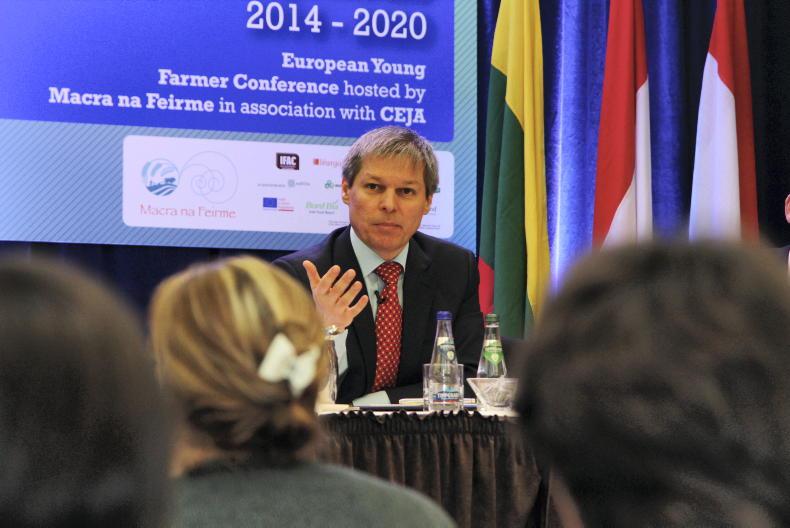
Former European Commissioner for Agriculture and Rural Affairs, Dacian Ciolos
Instead, I’ll offer an alternative proposition. A simple one. Recouple payments. That will send funds toward the farmer who calves the cow, lambs the ewe, grows the crop. It will reward risk, enterprise and investment.
Farmers who don’t do much or any of these activities are effectively land managers, not food producers. And those people need to be supported in that endeavour, as land management is hugely important for our environment across water, air and soil quality and the carbon footprint of our land use.
But these people, and that non-farm or barely farm activity, should be funded outside the CAP. The CAP is the Common Agricultural Policy, after all. Ursula von der Leyen’s big wheeze of bundling CAP money in with the funding for other EU programmes should be called out for what it is - a three card trick.
Definition derby
The European Commission would love nothing more than another round of the big, long, and drawn-out debate as to what constitutes an active farmer. They'd love it to result in an elaborate technical description, which would involve a load of validation by farmers and a lot of investigation by the various Departments of Agriculture around Europe. A bureaucratic solution to the issue.
By way of analogy, imagine if the European Commission was supporting athletes. And they proposed to define an active athlete by a range of criteria that then would have to be validated by a bureaucratic process.
They would probably start by asking the question “are you a part-time athlete or a full-time athlete". And if you're a part time athlete, you can’t be supported. Completely ignoring the fact that most people are part-time athletes because there isn’t enough money in athletics to allow more than a small proportion of athletes to be full-time. Just like there isn't enough money in agriculture to support even half of the farmers across Europe to be full-time.
The second thing they might say is that you need need to provide evidence that you have athletic equipment. Have you got a javelin or a pole vault? Have you got a discus or a hammer? Have you got three track suits and four running singlets? What kind of boots or runners do you have? So you'd have to list all the athletic equipment you had, and then they'd come and check that it exists, that you aren't being fraudulent. And then perhaps they would ask what athletic training you received in school or college. And then they would either say, "yes, you're an athlete", or "no, you aren’t an athlete".
That would be the bureaucratic solution. The better answer staring them in the face would be to support people who take part in athletics actively, who run in races or compete in track and field competitions. It makes more sense, doesn’t it?
Recoupling is essentially a reversal of the Fischler reforms of 2002, but they have been in place for longer than market supports or coupled payments were, so perhaps their time has come and gone.

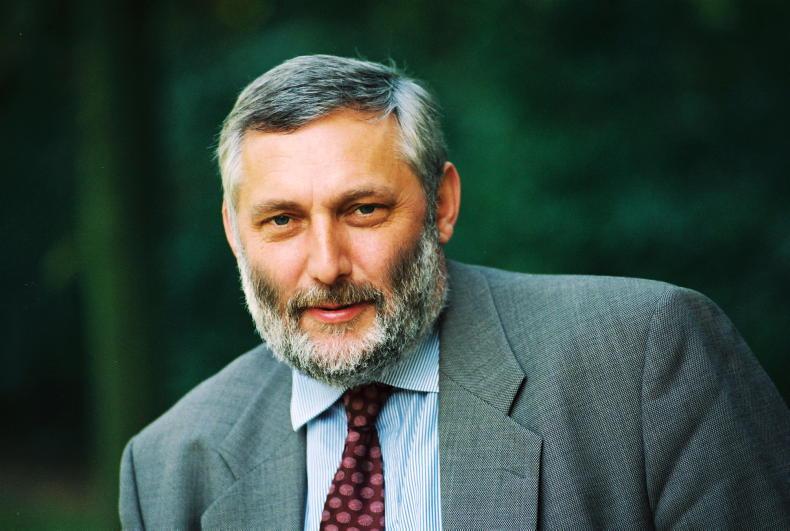
European Agricultural Commissioner Franz Fischler (1995–2004)
Some people will say, “well, what about the WTO?”
“What about the WTO?” would be my instant response, because the World Trade Organisation is increasingly irrelevant. It was silent over the last 12 months as Donald Trump imposed, increased, and cut tariffs like a medieval king dispensing titles, tithes and taxes among his courtiers. It has been completely defenestrated. It's now 18 years since the collapse of the Doha round of talks, and nothing that the WTO has done since then has managed to resurrect them in any meaningful way. There never will be a completion of the Doha around; it's over.
And in any case, it is perfectly permissible to have supports for vulnerable sectors. They can go in the green box. With suckler numbers falling in Ireland and across Europe, and ewe numbers falling in Ireland and across Europe, and tillage farmers losing money hand over fist in Ireland and across Europe, it's not very hard to portray them as vulnerable sectors. It's not as easy for dairy farmers. But then again, the dairy beef calf is an essential part of the beef sector, so that is a route to payment.
I’m not proposing a complete scrapping of a per hectare payment. Let it be like Dacian Ciolos suggested, a flat rate payment for every hectare in the EU, but that should only constitute a minority of the CAP budget. And recouple the rest, or face the prospect of the productive family farm fading from view by 2035.
Francie Gorman didn't mince his words last Monday night. The IFA president was speaking at the Wexford AGM, and knew he was on safe ground for the agenda he wanted to pursue.
"In my view, we have got to reward activity," he said. "Otherwise, how would anyone get young farmers into the business. No one would want to come home and farm. We need to have an honest discussion within the association around where this money goes and who it supports. I know there may be blood on the floor in the Farm Centre discussing it, but we owe it to our members to have an honest discussion on that.
"I don’t know what it looks like, but for me, CAP funding should be in the main used to support people who grow the crops, calve cows, lamb ewes or whatever," he said.
I don’t think these were throwaway or off the cuff remarks. I think that Francie Gorman meant every word he said. He was speaking in one of the more active counties in Ireland. Wexford accounts for 10% of Ireland’s agricultural output off 3.6% of it’s landmass. So he was preaching to the converted when he said this current Common Agricultural Policy (CAP) reform must prioritise active farmers.
Wexford farmers have lost heavily from the last two CAP reforms, as convergence and CRISS (front-loading) curbed higher entitlements to fund the increase in lower entitlements. When Gorman revealed that his own entitlements had plunged from €720 to €350, many farmers nodded in acknowledgement of their common experience.
Gorman clearly anticipates that convincing the IFA’s national council that active farmers should be prioritised will prove divisive. He didn’t just say ”blood on the floor” once, he repeated it later in an answer to a question from the floor.
This time, under Gorman, the IFA seems to be saying that historical payments have been cut to the point where they no longer can underpin high-output drystock and tillage farmers incomes
At least he has a clear policy priority, and is prepared to push it forward. At this point of the last CAP, the IFA were focussed on increasing the budget, with their main policy priority being “upward-only convergence”. This idea, of course, would require a much bigger budget, as you can’t increase lower entitlement rates in a static budget scenario without cutting higher entitlements.
This time, under Gorman, the IFA seems to be saying that historical payments have been cut to the point where they no longer can underpin high-output drystock and tillage farmers incomes, and that needs to change.
Possible pathways
The very concept of what actually defines an active farmer is one the EU has been wrestling with since 2010. Then Commissioner Dacian Ciolos stated that active farmers would be the focus of his CAP reform. Since then, hours and weeks have been spent wrestling with exactly what an active farmer is. I have no intention of adding any more to that hollow exercise.
Former European Commissioner for Agriculture and Rural Affairs, Dacian Ciolos
Instead, I’ll offer an alternative proposition. A simple one. Recouple payments. That will send funds toward the farmer who calves the cow, lambs the ewe, grows the crop. It will reward risk, enterprise and investment.
Farmers who don’t do much or any of these activities are effectively land managers, not food producers. And those people need to be supported in that endeavour, as land management is hugely important for our environment across water, air and soil quality and the carbon footprint of our land use.
But these people, and that non-farm or barely farm activity, should be funded outside the CAP. The CAP is the Common Agricultural Policy, after all. Ursula von der Leyen’s big wheeze of bundling CAP money in with the funding for other EU programmes should be called out for what it is - a three card trick.
Definition derby
The European Commission would love nothing more than another round of the big, long, and drawn-out debate as to what constitutes an active farmer. They'd love it to result in an elaborate technical description, which would involve a load of validation by farmers and a lot of investigation by the various Departments of Agriculture around Europe. A bureaucratic solution to the issue.
By way of analogy, imagine if the European Commission was supporting athletes. And they proposed to define an active athlete by a range of criteria that then would have to be validated by a bureaucratic process.
They would probably start by asking the question “are you a part-time athlete or a full-time athlete". And if you're a part time athlete, you can’t be supported. Completely ignoring the fact that most people are part-time athletes because there isn’t enough money in athletics to allow more than a small proportion of athletes to be full-time. Just like there isn't enough money in agriculture to support even half of the farmers across Europe to be full-time.
The second thing they might say is that you need need to provide evidence that you have athletic equipment. Have you got a javelin or a pole vault? Have you got a discus or a hammer? Have you got three track suits and four running singlets? What kind of boots or runners do you have? So you'd have to list all the athletic equipment you had, and then they'd come and check that it exists, that you aren't being fraudulent. And then perhaps they would ask what athletic training you received in school or college. And then they would either say, "yes, you're an athlete", or "no, you aren’t an athlete".
That would be the bureaucratic solution. The better answer staring them in the face would be to support people who take part in athletics actively, who run in races or compete in track and field competitions. It makes more sense, doesn’t it?
Recoupling is essentially a reversal of the Fischler reforms of 2002, but they have been in place for longer than market supports or coupled payments were, so perhaps their time has come and gone.
European Agricultural Commissioner Franz Fischler (1995–2004)
Some people will say, “well, what about the WTO?”
“What about the WTO?” would be my instant response, because the World Trade Organisation is increasingly irrelevant. It was silent over the last 12 months as Donald Trump imposed, increased, and cut tariffs like a medieval king dispensing titles, tithes and taxes among his courtiers. It has been completely defenestrated. It's now 18 years since the collapse of the Doha round of talks, and nothing that the WTO has done since then has managed to resurrect them in any meaningful way. There never will be a completion of the Doha around; it's over.
And in any case, it is perfectly permissible to have supports for vulnerable sectors. They can go in the green box. With suckler numbers falling in Ireland and across Europe, and ewe numbers falling in Ireland and across Europe, and tillage farmers losing money hand over fist in Ireland and across Europe, it's not very hard to portray them as vulnerable sectors. It's not as easy for dairy farmers. But then again, the dairy beef calf is an essential part of the beef sector, so that is a route to payment.
I’m not proposing a complete scrapping of a per hectare payment. Let it be like Dacian Ciolos suggested, a flat rate payment for every hectare in the EU, but that should only constitute a minority of the CAP budget. And recouple the rest, or face the prospect of the productive family farm fading from view by 2035.






SHARING OPTIONS