


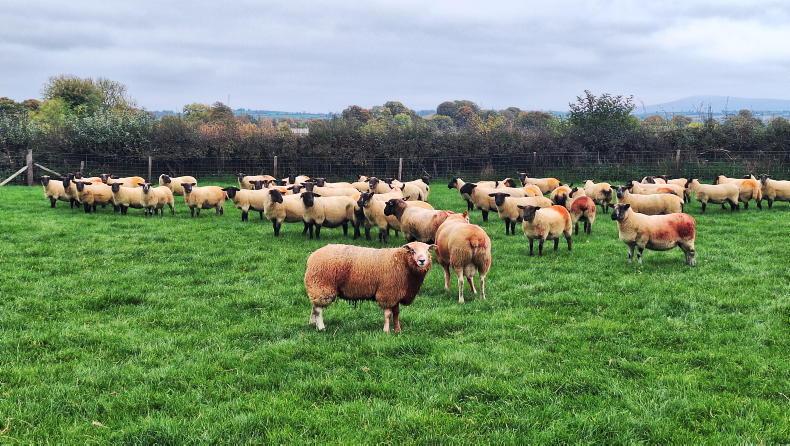
Breeding has kicked off or is about to get under way in a high percentage of mid-season lambing flocks.
Ewes are on average in good condition after a relatively good year, which should also deliver a benefit in ewes coming into season in quick succession.
In the short term, this could put pressure on rams where there is a high ewe-to-ram ratio.
This can be particularly problematic where ram lambs are coming off a high-concentrate diet and joined with ewes without an acclimatisation or transition period to a grass-based diet.
In such a situation, the ewe-to-ram ratio may unfortunately need to be reduced to one ram lamb to 25 to 30 ewes.
Ram lambs should ideally not be mated with ewe lambs, with mature rams more experienced in seeking out sheep in heat.
Monitor performance
It is important at the start of breeding to monitor the performance and breeding activity of rams to ensure ewes are being served correctly.
It is not unknown for rams to appear to be serving ewes correctly, including raddling but not actually mating satisfactorily.
The only way this will be picked up is by spending some time observing mating.
The greatest fault is rams mounting ewes as normal, but not actually serving.
This can be an issue with inexperienced rams or it can also be an issue with rams that are lame in the back legs, with mating not carried out due to pain being exacerbated when rams mount ewes and pressure comes on the point of pain.
Fertility issues
Running rams in groups will help guard against fertility issues, with the exception of two rams being run in a group and a dominant ram preventing others from mating.
Raddling rams is the easiest method of picking up fertility problems and should ideally be operated both where running rams individually and in groups.
This is particularly important where single-sire mating is practised.
A recommended approach to lessen the potential impact of infertility where practising single-sire mating is also to switch rams where possible between groups after each cycle.
This is likely to give the best balance between achieving the aim of mating a particular ram with a batch of ewes for breeding reasons and reducing the risk of problems being identified and lambing being pushed out too far.



SHARING OPTIONS