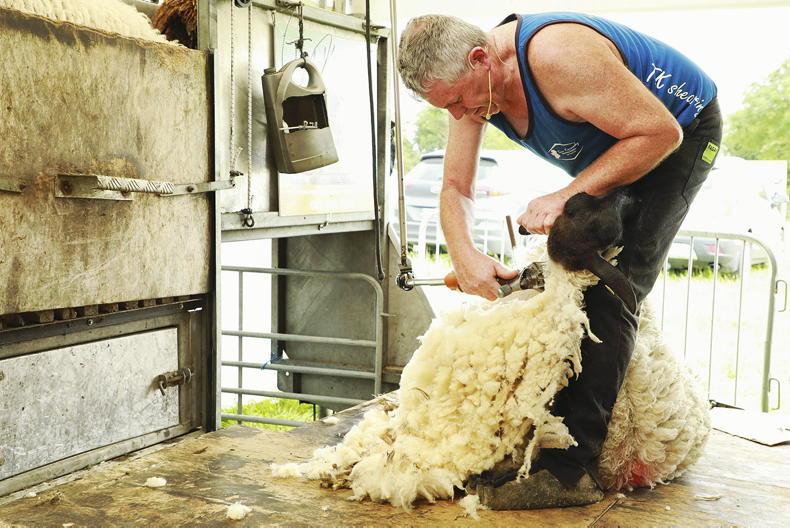
Shearing the required number of breeding ewes forms part of the scheme actions.
ADVERTISEMENT
SWS actions: The main details of how the National Sheep Welfare Scheme (NSWS) will operate in 2026 is in this week's sheep feature.
A brief summary of actions is outlined as follows.
Category A – shearing: this action is straightforward and essentially involves shearing the required number of breeding ewes. The terms and conditions state that documentary evidence of completion of this action will include but is not been limited to, completion of the Scheme Action Record Sheets, receipts from a shearing contractor and/or evidence of sale of the wool to a wool merchant.
In addition the terms and conditions state that “if shearing has been carried out by the applicant, a photograph of the shorn sheep will be required. If wool has not been sold to a wool merchant, a photograph of the wool on the holding will be required”.
ADVERTISEMENT
Category A – body condition scoring: farmers selecting the body condition scoring action must carry out the practice twice within designated time periods. The first assessment must be carried out between 15 April and 15 July 2026 and the second between 1 August 2026 and 13 October/24 November. These assessments must take place at least eight weeks apart.
The terms and conditions advise that breeding ewes in the flock with a BCS score of one or two should be separated and given access to preferential feeding such as high-quality grass/forage. The number of breeding ewes that were identified as thin (BCS 1 or 2) should be clearly recorded.
Category A – vaccination: for clostridial vaccination farmers selecting this option must carry out vaccination of breeding ewes, or alternatively on lambs born to the payable number of ewes, before the deadline dates of 13 October/24 November.
The terms and conditions advise that breeding ewes that have been vaccinated previously should be given an annual vaccination four to six weeks before the expected lambing date. Where lambs are being vaccinated they must be vaccinated from three weeks of age onwards and a second booster vaccination must be administered.
For bluetongue virus vaccination, the vaccine must be administered as per manufacturer’s guidelines. It is advised to administer in spring before the higher risk period.
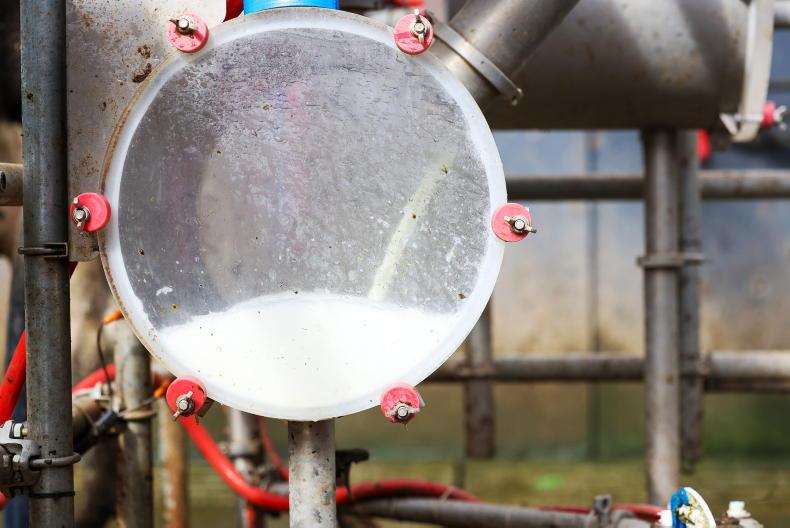
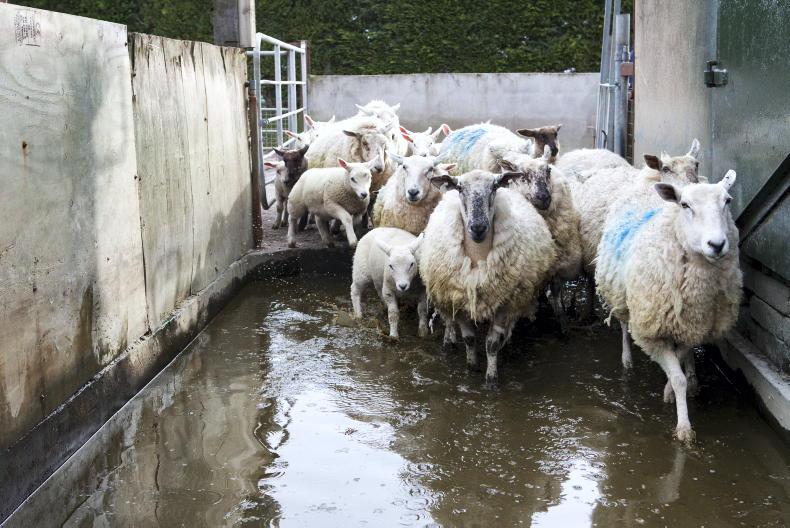
Category B – plunge dipping: this action must be carried out on the number of breeding ewes entered in the application. It can be carried out on farm where a dipping tank is present or by a mobile plunge dipping operator. Shower units will not be accepted as an alternative to plunge dipping.
Documentary evidence of completion include completion of the scheme action record sheets, receipts from a contractor and/or receipts for the purchase of the appropriate volume of dipping material.
Category B – footbathing: footbathing should be carried out a minimum of twice over the period from 1 April to 13 October /24 November and a minimum of two weeks should be left between footbathing. Documentary evidence of completion of this action will include but is not limited to, completion of the Scheme Action Record Sheets, receipts from a contractor and/or receipts for the purchase of appropriate products.
A biocidal product to a depth of 5cm is recommended with copper or zinc sulphate not eligible for the scheme.
Register for free to read this story and our free stories.
This content is available to digital subscribers and loyalty code users only. Sign in to your account, use the code or subscribe to get unlimited access.
The reader loyalty code gives you full access to the site from when you enter it until the following Wednesday at 9pm. Find your unique code on the back page of Irish Country Living every week.
CODE ACCEPTED
You have full access to the site until next Wednesday at 9pm.
CODE NOT VALID
Please try again or contact support.
SWS actions: The main details of how the National Sheep Welfare Scheme (NSWS) will operate in 2026 is in this week's sheep feature.
A brief summary of actions is outlined as follows.
Category A – shearing: this action is straightforward and essentially involves shearing the required number of breeding ewes. The terms and conditions state that documentary evidence of completion of this action will include but is not been limited to, completion of the Scheme Action Record Sheets, receipts from a shearing contractor and/or evidence of sale of the wool to a wool merchant.
In addition the terms and conditions state that “if shearing has been carried out by the applicant, a photograph of the shorn sheep will be required. If wool has not been sold to a wool merchant, a photograph of the wool on the holding will be required”.
Category A – body condition scoring: farmers selecting the body condition scoring action must carry out the practice twice within designated time periods. The first assessment must be carried out between 15 April and 15 July 2026 and the second between 1 August 2026 and 13 October/24 November. These assessments must take place at least eight weeks apart.
The terms and conditions advise that breeding ewes in the flock with a BCS score of one or two should be separated and given access to preferential feeding such as high-quality grass/forage. The number of breeding ewes that were identified as thin (BCS 1 or 2) should be clearly recorded.
Category A – vaccination: for clostridial vaccination farmers selecting this option must carry out vaccination of breeding ewes, or alternatively on lambs born to the payable number of ewes, before the deadline dates of 13 October/24 November.
The terms and conditions advise that breeding ewes that have been vaccinated previously should be given an annual vaccination four to six weeks before the expected lambing date. Where lambs are being vaccinated they must be vaccinated from three weeks of age onwards and a second booster vaccination must be administered.
For bluetongue virus vaccination, the vaccine must be administered as per manufacturer’s guidelines. It is advised to administer in spring before the higher risk period.
Category B – plunge dipping: this action must be carried out on the number of breeding ewes entered in the application. It can be carried out on farm where a dipping tank is present or by a mobile plunge dipping operator. Shower units will not be accepted as an alternative to plunge dipping.
Documentary evidence of completion include completion of the scheme action record sheets, receipts from a contractor and/or receipts for the purchase of the appropriate volume of dipping material.
Category B – footbathing: footbathing should be carried out a minimum of twice over the period from 1 April to 13 October /24 November and a minimum of two weeks should be left between footbathing. Documentary evidence of completion of this action will include but is not limited to, completion of the Scheme Action Record Sheets, receipts from a contractor and/or receipts for the purchase of appropriate products.
A biocidal product to a depth of 5cm is recommended with copper or zinc sulphate not eligible for the scheme.
If you would like to speak to a member of our team, please call us on 01-4199525.
Link sent to your email address
We have sent an email to your address. Please click on the link in this email to reset your password. If you can't find it in your inbox, please check your spam folder. If you can't find the email, please call us on 01-4199525.
ENTER YOUR LOYALTY CODE:
The reader loyalty code gives you full access to the site from when you enter it until the following Wednesday at 9pm. Find your unique code on the back page of Irish Country Living every week.





SHARING OPTIONS