


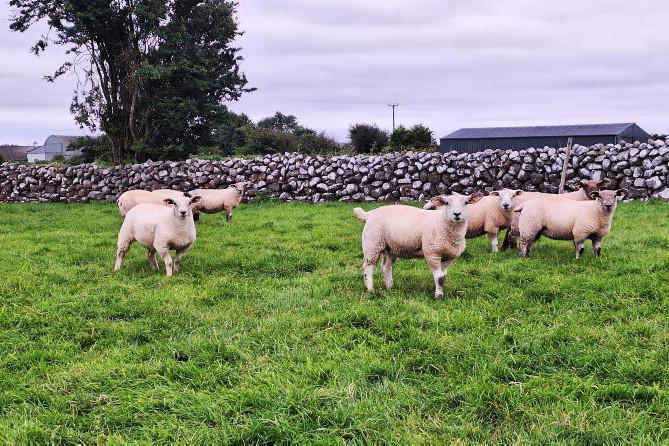
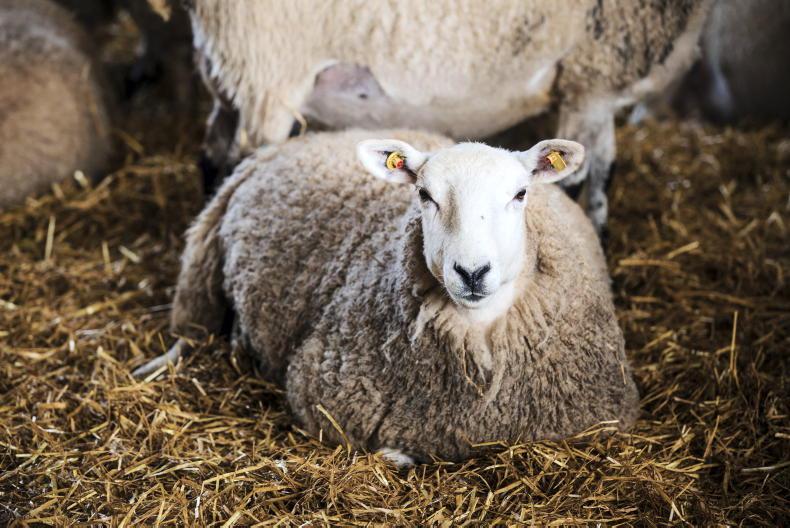
Breeding ewe lambs: numerous trials and studies have shown that breeding ewe lambs can increase ewe lifetime performance. Studies carried out in the Agri-Food and Biosciences Institute (AFBI) showed that breeding ewe lambs can increase lifetime output by 1.22 lambs compared to breeding two-tooth hoggets.
The practice requires more precise management however, with a number of factors having a marked role in the success of the system. Teagasc research shows that the weight of ewe lambs at joining with rams has a central role in influencing productivity – the heavier ewe lambs are, the greater the chance is of producing an average of one lamb per ewe lamb joined to rams.
At a minimum, ewe lambs should weight 60% of mature weight at joining. Weight also has an influence on lambs entering polyestrous and subsequent conception rates, but the effect of this wanes as the year progresses and lambs naturally enter a seasonal breeding cycle.
Breeding below target weight can increase issues such as lambing difficulties or insufficient colostrum/milk yield, with high levels of management required throughout lactation to prevent reduced breeding performance as hogget (two-tooth) ewes.
The optimum management of ewe lambs in early pregnancy is to avoid under or overfeeding, with a compromise of lambs gaining in the region of 0.5kg per week. Access to good-quality grass is sufficient to drive this level of weight gain. The other major factor that has an influence on lamb output is the lambing difficulty of rams – select proven easy lambing breeds.
FECs for SIS hill flocks: hill sheep flocks participating in the Sheep Improvement Scheme and which selected the faecal egg count action have until 31 December 2025 to complete this action. However, delaying completion of this action will also delay the processing of this year’s payment, as approved laboratories need to signal that it is complete before payments can be processed.
Therefore for farmers to ensure prompt payment in advance of the payment date of late November 2025, it is important to ensure that if this is the action selected that at least one FEC is submitted to a lab for analysis as soon as possible, if not already complete. If unsure about what actions have been selected, this can be reviewed via MyAgfood.ie or by speaking with your adviser. Any questions can be sent to sheepschemes@agriculture.gov.ie.
Farmyard manure: the last day permitted for spreading farmyard manure (FYM) is 31 October, with the prohibited application period starting on 1 November.
The same rule applies across all zones and to farmers in Northern Ireland.
Farmyard manure cannot be field stored during the prohibited application period. It can only be stored under a roof or on a concrete slab/dungstead where run-off can be collected.
LambPlus participation: the application portal for existing LambPlus breeders or for new breeders to sign-up for 2026 is now open on www.sheep.ie. The deadline for signing up is 16 December. Breeders of sheep breed societies hosted by Sheep Ireland must have an active membership with the society first.
New members who may be breeders of societies not hosted by Sheep Ireland or commercial or hill farmers/breeders who wish to performance record using the LambPlus facility can contact Sheep Ireland to create an account.



SHARING OPTIONS