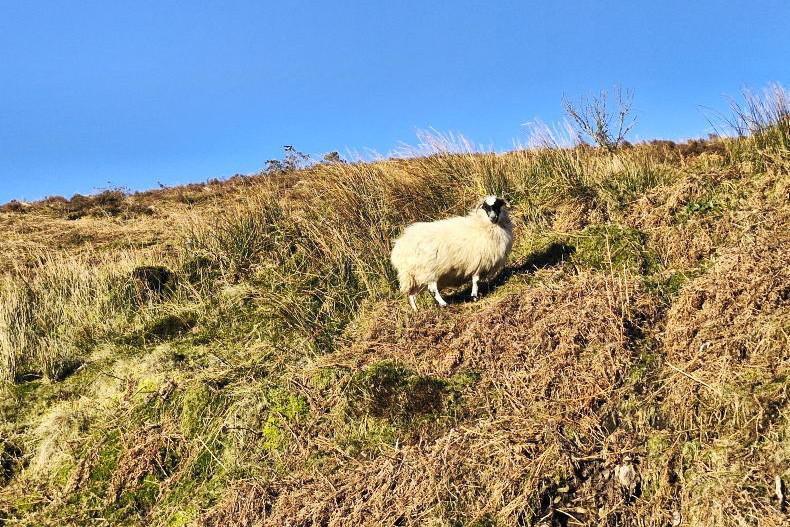
Supplementing hill ewes: some scanning operators are reporting certain hill flocks in poorer body condition. This is not surprising, given the persistent inclement weather and tight forage supplies on hill/mountain areas.
If supplementary feeding is not introduced, there is a high risk of ewes losing significant condition and subsequent higher mortality in lambs and ewes.
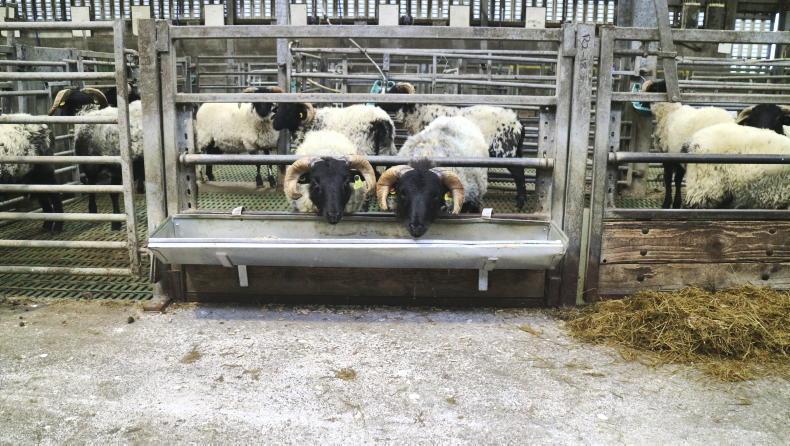
The options available on harder hills and mountain terrain are more limited compared to lowland flocks, but options such as feed buckets or even targeted concentrate feeding every second day may be feasible to bridge a nutritional deficit. Offering good-quality forage may be an option where there is access to the area in which sheep are congregating.
Where possible, removing aged ewes or ewes in poor body condition around scanning time and bringing them to lower ground for preferential treatment will deliver big benefits in safeguarding condition and minimising the risk of issues at lambing.
Assessing ewe lambs: weather is challenging for all outwintered sheep, with reports also indicating that potential ewe hogget replacements are showing the effects of weather.
Where there is plans to review the quality of such hoggets, with a view to selling those not deemed as suitable, then it is worth completing this task sooner rather than later, so that sheep can be selected before losing any more condition.
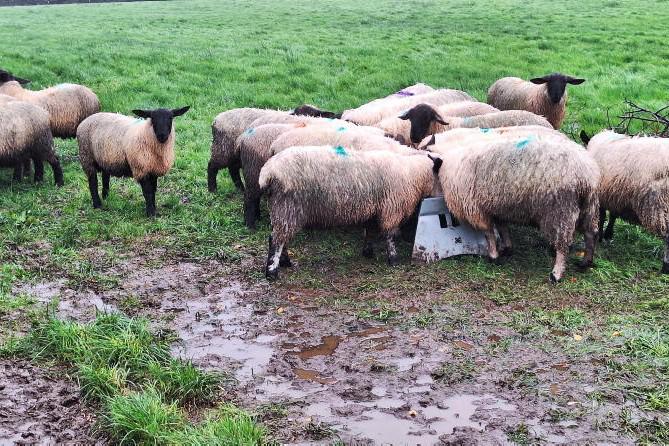
It is also important to ensure that performance in ewe hogget replacements is not stunted. Offering a small level of supplementary feed where forage supplies are low will keep hoggets ticking along until weather improves and grass growth kicks in.
An allocation of 0.5kg concentrates or access to good-quality hay/silage will be sufficient to maintain condition where grass supplies are not fully depleted.
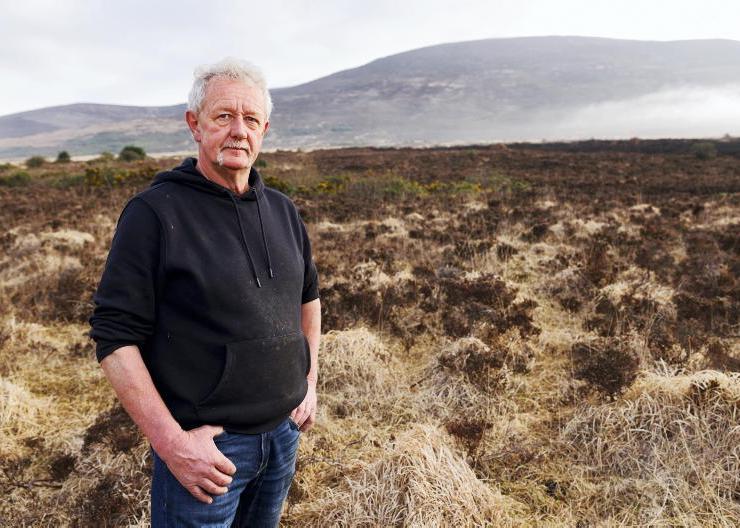
Hill sheep conference: the Teagasc hill sheep conference takes place on Wednesday 18 February 2026 at 7pm in the Westport Woods Hotel, Westport, Co Mayo (F28 KW53). The conference is addressing topical issues pertinent to the sector with water quality, key research outcomes and marketing of hill lambs on the agenda.
Key messages from the Teagasc hill research programme will be discussed by Frank Campion, including finishing blueprints for lambs, breeding and genetics, and factors influencing farm output and income. Water quality is typically of high quality in uplands regions, but there are some areas where more can be done to safeguard quality. This will be addressed by Shaun Roarty, Teagasc ASSAP advisor.
The conference will conclude with a forum and panel discussion on the marketing of hill lamb. Panellists include Seamus McMenamin, Bord Bia, James Smyth, Irish Country Meats, Brendan Joyce, Galway hill sheep farmer, and Teresa Gibsey, mart manager Aurivo Ballinrobe Mart.
Final census reminder: the final date to submit the 2025 annual sheep and goat census via myagfood.ie is 14 February. Remember a census still needs to be submitted even if you had no sheep on the holding on 31 December 2025 and are registered as a sheep keeper.
Timely submission of the sheep census is an eligibility requirement for participation in many schemes, so it is vital that it is submitted by 14 February. The Department’s sheep identification section helpline can be contacted on 01-5058723, or sheepid@agriculture.gov.ie.
Supplementing hill ewes: some scanning operators are reporting certain hill flocks in poorer body condition. This is not surprising, given the persistent inclement weather and tight forage supplies on hill/mountain areas.
If supplementary feeding is not introduced, there is a high risk of ewes losing significant condition and subsequent higher mortality in lambs and ewes.
The options available on harder hills and mountain terrain are more limited compared to lowland flocks, but options such as feed buckets or even targeted concentrate feeding every second day may be feasible to bridge a nutritional deficit. Offering good-quality forage may be an option where there is access to the area in which sheep are congregating.
Where possible, removing aged ewes or ewes in poor body condition around scanning time and bringing them to lower ground for preferential treatment will deliver big benefits in safeguarding condition and minimising the risk of issues at lambing.
Assessing ewe lambs: weather is challenging for all outwintered sheep, with reports also indicating that potential ewe hogget replacements are showing the effects of weather.
Where there is plans to review the quality of such hoggets, with a view to selling those not deemed as suitable, then it is worth completing this task sooner rather than later, so that sheep can be selected before losing any more condition.
It is also important to ensure that performance in ewe hogget replacements is not stunted. Offering a small level of supplementary feed where forage supplies are low will keep hoggets ticking along until weather improves and grass growth kicks in.
An allocation of 0.5kg concentrates or access to good-quality hay/silage will be sufficient to maintain condition where grass supplies are not fully depleted.
Hill sheep conference: the Teagasc hill sheep conference takes place on Wednesday 18 February 2026 at 7pm in the Westport Woods Hotel, Westport, Co Mayo (F28 KW53). The conference is addressing topical issues pertinent to the sector with water quality, key research outcomes and marketing of hill lambs on the agenda.
Key messages from the Teagasc hill research programme will be discussed by Frank Campion, including finishing blueprints for lambs, breeding and genetics, and factors influencing farm output and income. Water quality is typically of high quality in uplands regions, but there are some areas where more can be done to safeguard quality. This will be addressed by Shaun Roarty, Teagasc ASSAP advisor.
The conference will conclude with a forum and panel discussion on the marketing of hill lamb. Panellists include Seamus McMenamin, Bord Bia, James Smyth, Irish Country Meats, Brendan Joyce, Galway hill sheep farmer, and Teresa Gibsey, mart manager Aurivo Ballinrobe Mart.
Final census reminder: the final date to submit the 2025 annual sheep and goat census via myagfood.ie is 14 February. Remember a census still needs to be submitted even if you had no sheep on the holding on 31 December 2025 and are registered as a sheep keeper.
Timely submission of the sheep census is an eligibility requirement for participation in many schemes, so it is vital that it is submitted by 14 February. The Department’s sheep identification section helpline can be contacted on 01-5058723, or sheepid@agriculture.gov.ie.






SHARING OPTIONS