


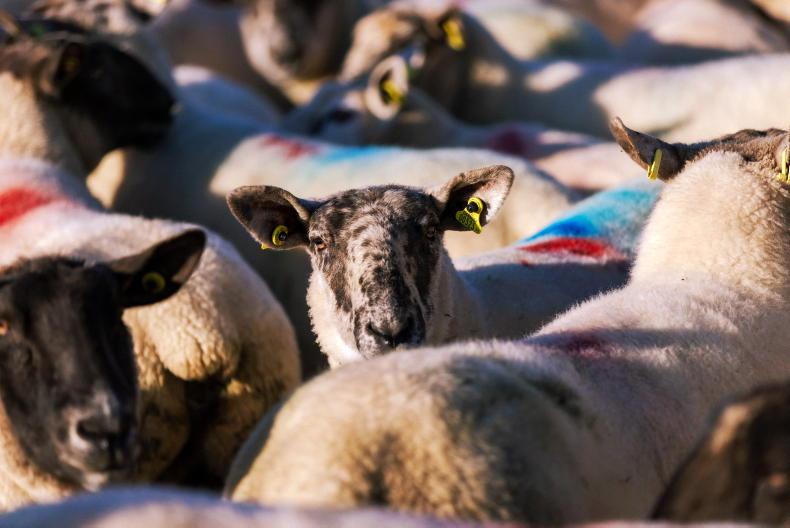
SWS footbathing change: The Department of Agriculture issued correspondence to Farm Advisory System advisers on Wednesday, informing of a rule change regarding the footbathing action in the 2026 National Sheep Welfare Scheme.
The use of copper and zinc sulphate is now permitted to be used in the footbathing action. This follows an initial ruling where only registered biocidal products could be used.
The Department correspondence states: “The 2026 NSWS T&Cs have been updated and are available on gov.ie. The update relates to the footbathing section on pages 20 and 21 to allow the use of copper sulphate and zinc sulphate where that is being used to improve overall hoof health and thus reduce lameness in sheep.”
The updated advice in the terms and conditions reads: “Frequent footbathing with biocidal products will help prevent infection spreading between animals and reduce lameness, while footbathing with other substances such as copper sulphate/zinc sulphate may be used to improve overall hoof health to help reduce lameness.”
The scheme remains opened for applications until 11.59pm on 15 May 2026.
Haemonchus contortus: Both the Department of Agriculture and the Agri-Food Biosciences Institute (AFBI) released nematodirus warning in the last week.
The AFBI warning also marked farmers cards as to the growing threat of haemonchus contortus or what is often known as barbers pole worm.
The AFBI advice stated: “In the recent years, unprecedented, localised increase in haemonchus infection in sheep was noted, likely linked to the mild wet climatic conditions. As a result, pasture in affected areas is likely to be contaminated by parasite eggs surviving from last season, and yearling animals are likely to be carrying hypobiotic larvae, which will be a source of infection for growing stock later in the season.
“Haemonchus infection causes profound anaemia in lambs, often with scour which may be blood-stained. Animals succumb rapidly, and numerous losses can occur in affected flocks.” It advised farmers who think they may have an issue to consult their veterinary surgeon at an early stage.
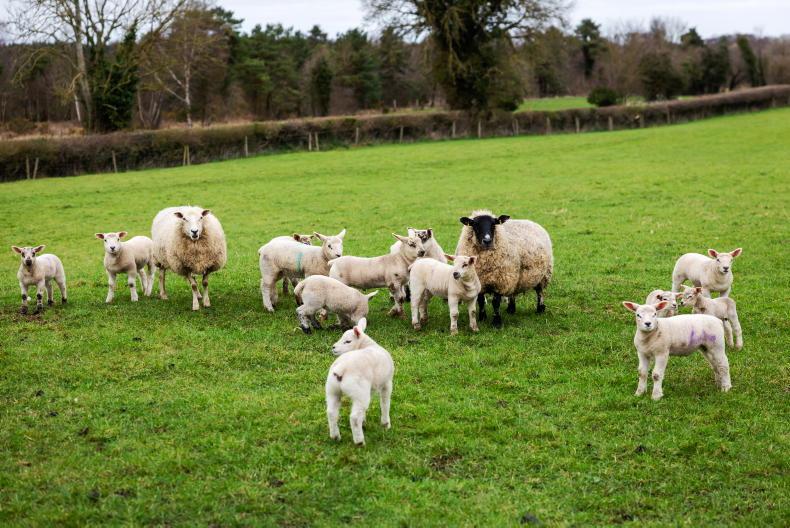
Yearling hoggets: Reports indicate that yearling hoggets rearing twin lambs are finding it particularly challenging to cope with current weather and low dry matter levels in grass.
Such hoggets should be supplemented for at least the first five weeks of lactation. Supplementation is similar to triplet suckling ewes and again can vary from 0.5kg on good grass supplies, to upwards of 1kg where grass supplies are scarce or utilisation is poor.
Management of hoggets rearing single lambs will depend on condition and age but where any doubt exists then supplementation with concentrates for even a short period of time will deliver a return on investment. The aim should be to ensure the hoggets own performance is not compromised which may hinder lifetime productivity.
Remember also that as the season progresses yearling hoggets rearing lambs should be considered for worm control, ideally on the basis of faecal egg count analysis, with these animals taking longer to develop natural immunity.




SHARING OPTIONS