


The Department of Agriculture, Food and the Marine (DAFM) recently published the results of their 2022 Annual Sheep and Goat Census. The census is taken on 31 December and is used to track sheep numbers in Ireland on an overall and county-by-county basis.
The latest census shows that the total number of sheep in Ireland at the end of 2022 was recorded at 4,010,571.
This represents a reduction of 14,156 head, or a 0.35% drop, on 2021 levels.
The figure hides some variability between different categories of sheep. The number of breeding ewes on farms fell by 35,877 head to 2,662,015 and reflects lower confidence due to input costs escalating and margins coming under pressure throughout 2022.
In contrast the ‘other sheep’ category which includes 2022-born lambs was recorded at 1,262,754 head, a lift of 22,135 sheep. This is lower than anticipated with a higher figure forecast due to lower lamb performance in 2022 (unfavourable weather and lower meal feeding).
The other figure which makes up total sheep numbers is the number of rams on farms.
This was recorded at 85,802 head, down marginally by 414 head, or 0.5%, on the previous year. The number of holdings registered on the Department database was 35,555 which decreased by 600 holdings on 2021.
County dynamics
Donegal remains the county with the largest sheep flock despite ewe numbers reducing by 9,216 head to 368,223.
As can be seen in Figure 1, the number of ewes on farms on 31 December was lower than the year previous in the majority of counties.
Numbers in Mayo, which has the second largest number of sheep, fell ever so slightly by 67 head to 327,142, while Galway’s sheep flock (third largest sheep numbers) reduced by 1,893 head to 287,584.
Kerry is the only other county with ewe numbers in excess of 200,000 head and numbers here reduced by 2,075 head to 251,272. These four counties combined possess over 46% of the total number of ewes in the country.
Sheep numbers remain under pressure in counties where there is a strong trend of conversions to dairying in recent years.
The number of ewes in Wexford reduced by a high percentage of 5% (4,308 head), while ewe numbers in Kilkenny fell by 5.4% (2,360 head), Laois fell by 5.9% (1,804 head) and Tipperary by 3.6% (2,781).
Limerick recorded the smallest number of sheep with just 0.5% of the national population. Dublin and Clare were next with both counties possessing just less than 20,000 ewes at the end of 2022.
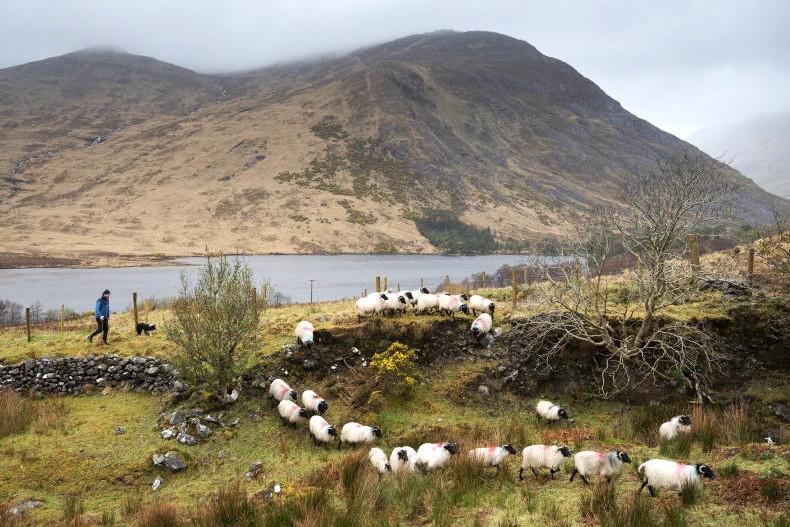
The factor underpinning ewe numbers in counties with the most sheep is a large land base and a significant area of mountain/hill–type lands which sustains a high number of mountain/hill ewes. Approximately 47% (1.87m) of the total sheep flock was classified as mountain/mountain cross breeds in 2022. The greatest number of mountain sheep were kept in Mayo with 229,260 head with Donegal possessing the highest number of mountain-cross sheep at 112,829 head.
Galway possesses the highest number of lowland/lowland – cross sheep.
The average flock size is 113 sheep, a slight increase of two sheep per flock on December 2021 levels.
Wicklow has the highest average flock size of 185 sheep followed by Waterford (178) and Kildare (164). Clare has the lowest average flock size with an average of just 49 sheep.
The next lowest average flock sizes are Limerick (73) and Longford (74). Table 1 details the number of flocks falling in to different flock sizes.
It is quickly apparent that the Irish national flock is dominated by smaller flocks with 40% of flocks with less than 50 sheep and 65% with less than 100 sheep.


SHARING OPTIONS